Showing posts with label helmet. Show all posts

Tuesday, January 26, 2016

Helmets may increase risk-taking behaviors

A study shows that wearing a helmet may increase risk-taking behaviors.

Wearing a helmet in an effort to stay safe is likely to increase sensation seeking and could conversely make us less safe and more inclined to take risks, according to a significant new study from researchers at the University of Bath.
The latest findings call into question the effectiveness of certain safety advice, notably in relation to helmets for various leisure activities, including for cycling. But, the researchers suggest, the conclusions have wider-reaching implications in other contexts too, potentially even for decision making on the battlefield.
For their latest study published in the journal Psychological Science, Dr Tim Gamble and Dr Ian Walker, from the University of Bath's Department of Psychology, measured sensation-seeking behaviour and analysed risk taking in adults aged 17-56 using a computer-based simulation.
Under the pretence that participants were taking part in an eye-tracking experiment, the researchers split 80 participants into two groups: half wore a bicycle helmet and half wore a baseball cap. Individuals were tasked with inflating an on-screen animated balloon whilst wearing either the cap or the helmet -- which they were told was just there to support an eye-tracking device.
In the experiment, each inflation of the balloon earned participants points (a fictional currency) and they were told at any stage they could 'bank' their earnings. If the balloon burst, all earnings would be lost. Over 30 trials, the researchers tested each individual's propensity to keep on inflating and used this to measure the likelihood of them taking more risks, comparing those wearing a cap with those wearing a helmet.
Dr Ian Walker explains: "The helmet could make zero difference to the outcome, but people wearing one seemed to take more risks in what was essentially a gambling task. The practical implication of our findings might be to suggest more extreme unintended consequences of safety equipment in hazardous situations than has previously been thought. Replicated in real-life settings, this could mean that people using protective equipment might take risks against which that protective equipment cannot reasonably be expected to help.
"Several studies in the past have looked at so-called 'risk compensation', suggesting that people might drive differently when wearing seatbelts, or make more aggressive American football tackles when wearing helmets. But in all those cases, the safety device and the activity were directly linked -- there's a certain logic to sports people being more aggressive when wearing equipment that is specifically intended to make their sport safer. This is the first suggestion that a safety device might make people take risks in a totally different domain."
Previous studies from Ian Walker have also hinted that safety equipment might not be as effective as many people assume. He has suggested that high-vis clothing does not stop drivers overtaking cyclists dangerously and that wearing a helmet might make drivers pass cyclists closer when overtaking.
Dr Tim Gamble expands: "All this is not to say that people shouldn't wear safety equipment, but rather to say that the whole topic is far more complicated than most people think. We need to be mindful of the unintended consequences which might exist and not just apply 'common sense' when it comes to addressing safety concerns.
"If feeling protected does make people generally more reckless -- which is what these findings imply -- then this could affect all sorts of situations, perhaps even how soldiers make strategic decisions when wearing body armour. This all suggests that making people safe in dangerous situations isn't a simple issue, and policy makers need to remember this. Countries that have tried to solve the issue of cycling safety by making bicycle helmets compulsory, for example, might want to ask whether this is really the right approach for making people safe."
Read more here

Wednesday, April 15, 2015

Study: Most NHL and Youth Hockey Helmets are Unsafe

A study shows that most helmets used in the NHL and by youth hockey players are not safe.

A new independent study has found that hockey players, ranging across the National Hockey League, or NHL to the youth leagues, are at the risk of concussion from hits during matches due to a lack of protection thanks to poor quality helmets.
The study, conducted by Virginia Polytechnic Institute and State University, tested 32 helmets available in the market on their ability to protect the players from concussion. The study aimed to rank the helmets on a scale of five stars. It was not funded by the NHL, cost $500,000 and took three years to complete.
According to the study, published publicly last Monday, none of the helmets got a 4-star or 5-star rating. Only one helmet, made by Warrior Sports, got a 3-star rating. Nine helmets failed to get even a single star, and the rest got a 1-star or 2-star rating.
"We don't think anybody should be playing in these helmets," Stefan Duma, the head of Virgina Tech’s biomedical engineering department said, as reported by ESPN.
Players wearing the poorly rated could be at risk of anywhere between six to eight concussions per season, the report claimed. The two most expensive helmets available in the market, made by Bauer and CCM, received just one star.
The report raises questions over the testing methods used to certify hockey helmets, as it claims all 32 helmets were approved by the Hockey Equipment Certification Council. The report raises questions as to whether more can be done to improve the safety standards of a sport played by millions in the United States.  
Steps are, however, being taken to reduce the risk of concussions. These include coaching players to avoid head-on clashes, safer techniques to tackle, avoiding fights, among others. 
"There will never be a perfect helmet that will prevent all concussions. It's about risk reduction. The reality is when you look at the bottom and the top helmets, you're talking about massive reductions in acceleration, over half. I think almost all biomechanical engineers would agree that that's a significant difference," Duma said.
Read more here

Saturday, April 04, 2015

A 24 year-old NFL player retired due to concussion risks

This article explains why Chris Borland, a linebacker for the 49ers, retired from the NFL at age 24 due to the high risks of concussions.

One of the NFL's most promising young players has announced that he is quitting professional football today, blaming the risk of concussion and serious brain injury on his decision to walk away from the sport. Chris Borland, linebacker for the San Francisco 49ers, told ESPN that he was retiring because he wanted to do what was best for his health, and didn't think football was "worth the risk." By leaving the league at only 24 years old, after a stellar rookie season, Borland rapidly becomes one of the most damning examples of the NFL's ongoing concussion crisis.
Borland says his decision to quit came from him wanting to "be proactive," leaving the sport while his brain is still healthy. The linebacker began to have doubts about his long-term career as a professional football player in his very first NFL training camp, during which he received a suspected concussion on a running play but decided to play through it in a bid to make the team. He told ESPN "I just thought to myself, 'What am I doing? Is this how I'm going to live my adult life, banging my head, especially with what I've learned and knew about the dangers?'" After the fourth game of his rookie season, Borland told his parents his time as a pro player would be short.
The linebacker told ESPN that he currently feels as sharp as he's ever been, but that he had researched the issue heavily, speaking with concussion researchers and former players, more than 4,500 of whom have sued the NFL for failing to adequately protect them from head injuries during their time in the league.
In his statement, Borland thanked the 49ers, saying the team "truly looked out for players' best interests," but his departure from the league is made even more notable by coinciding with the exit of several prominent young players. Borland was scheduled to be one of the stars of the San Francisco 49ers defense, playing the last season as the heir apparent to Patrick Willis, another top-tier defensive player who chose this year to retire from the sport after developing chronic pain in his feet. He was joined by by Steelers linebacker Jason Worilds, who announced this month that he was retiring from pro football to pursue other interests.
The NFL has had a long-running problem with concussions and head injuries, and its lackluster methods of protecting players, as detailed in the PBS documentary League of Denial. Many who have played the sport have gone on to suffer debilitating brain diseases. A number of players, including standout San Diego Chargers and New England Patriots linebacker Junior Seau, have committed suicide in the years after their retirement. Seau shot himself in the chest so his brain could be studied after his death — after autopsy, it was determined that he had been from chronic traumatic encephalopathy (CTE), a type of degenerative brain damage found in other players.
The NFL has made advances in technology designed to help reduce head injuries, but players such as Jahvid Best, a former first-round draft pick who sued both the NFL and helmet maker Riddell after receiving three concussions in two years, are still receiving knockout blows on the field of play that could disable them in later life. The league has also come under fire for a too-weak concussion protocol that allows clearly woozy players back onto the field. In October last year, Chargers defensive back Jahleel Addae played an entire game after being knocked out on the first play. In the fourth quarter, several hours after taking the blow to the head, Addae seemed to lose control of his body after making another hit, jerking his limbs and stepping awkwardly as he attempted to stay upright.
By stepping away from the sport at 24, Borland will avoid the kind of head injuries that could leave him crippled, with diminished mental faculties, or prone to fly into uncontrollable rages. Meanwhile, instead of pouring its efforts into keeping its players safe, the NFL still appears to be in favor of extending the regular season to a gruelling 18 games, despite arguments from the people who actually play the sport.
Read more here

Wednesday, March 11, 2015

Concussion risk not lowered by helmet add-ons

A study on helmet add-ons indicated that the add-ons may not reduce the risk of having a concussion. 


While the sporting industry continues to cash in on equipment that promises to reduce the risk of player injury, a new study on helmet add-ons suggests that the buyer should beware.
The study conducted by Florida’s BRAINS Inc. and presented at the American Academy of Neurology, tested four different sporting technologies targeting football helmets that are sold on the premise of reducing head injuries.
A concussion, a type of traumatic brain injury (TBI), can be caused by a bump, blow or jolt to the head, or by a blow to the body that causes the head and brain to move rapidly back and forth, according to the Centers for Disease Control and Prevention (CDC). The sudden movement can cause the brain to bounce around or twist in the skull, stretching and damaging brain cells which may create chemical changes in the brain.
Researchers used a crash test dummy head and neck to simulate head impact by modifying the standard drop test system approved by the National Operating Committee on Standards for Athletic Equipment. Sensors were placed in the dummy’s head to measure linear and angular rotational responses to helmet impacts at 10, 12 and 14 miles per hour.
They then evaluated four football helmet add-ons currently on the market: Guardian Cap, UnEqual Technologies’ Concussion Reduction Technology, Shockstrips and Helmet Glide. Each technology was placed on the Riddell Revolution Speed and Xenith X1 football helmet and impacted five times from drop heights of 1.0, 1.5 and 2.0 meters.
Researchers found that while the helmet add-ons reduced linear acceleration impact by about 11 percent, they only reduced angular acceleration impact by 2 percent. The Helmet Glide was even shown to have no effect on either.
“Currently helmets and helmet add-ons are only designed to reduce the linear acceleration, not the angular acceleration. The linear acceleration is responsible for the contusion injuries on the brain, skull fractures and bruising on the head. Angular accelerations are the forces associated with concussions,” study author Dr. John Llyod, the research director at BRAINS Inc. and board certified ergonomist and brain injury specialist in Florida, told FoxNews.com. 
The researchers noted that manufactures do not test the angular metric of injury prevention-based sporting equipment, but also that the add-ons do not have any negative affect on a player.
“The main issue with the add-ons is if you as a parent or even as an individual walk into Sports Authority or Dick’s Sporting, you ask ‘What are these for?’ and [salesmen] are going to say ‘They’re for preventing concussions,’” study co-author Dr. Francis Conidi, assistant professor of neurology at Florida State University College of Medicine and concussion specialist told FoxNews.com.
“First and most importantly, their intent is to market them to prevent concussions and they’re not training the individuals selling the devices. The parents are getting a false sense of safety, while the results show they offer little to no protection of concussion,” Conidi said.
Conidi explained that a concussion is more-so a whiplash-type injury than a straight-on impact, which is what the linear testing measures.
“If I hit you straight on with a baseball bat, I would not induce concussion,” he said. “I would probably fracture your skull, but I would not concuss it.”
“It’s really the angular and rotational mechanism of the skull that causes the tearing of brain cells, which causes the ion cells to leak out,” Conidi said.
The researchers conclude that because there is no device on the market right now that adequately protects an athlete against a concussion, athletes must be taught proper tackling techniques from an early age.
Conidi, who has treated numerous athletes of all levels for concussions, suggested working with the athlete to strengthen the cervical muscles so the head doesn’t bend to the side or rotate as easily.
“Most importantly, be educated on the signs and symptoms, especially the athletes themselves, and the parents and coaches. When in doubt, sit them out,” he said.
Currently, an estimated 173,285 sports and recreation-related TBIs are treated among children and adolescents in the U.S. each year. According to the CDC, for males aged 10-19 years, sports-and recreation-related TBIs occurred most often while playing football or bicycling.
The study’s authors hope their findings will lead to more rigorous testing of helmets and add-ons.
Read more here

Thursday, January 08, 2015

Players may be protected from concussions by 3D printed materials in helmets

3D printed materials may be able to replace foam inside helmets to help protect players from concussions.

A team of researchers from UCLA and Architected Materials that is developing breakthrough technology to reduce the number and severity of head injuries to football players today was named a winner of the Head Health Challenge II.

The Head Health Challenge is part of the four-year, $60 million Head Health Initiative, which is sponsored by the National Football League, General Electric and Under Armour. It is focused on improving the prevention, diagnosis and treatment of concussions and traumatic brain injury. Seven winning research teams were selected from among more than 450 Head Health Challenge II entrants from 19 countries.

The award comes with a grant of $500,000 for research, testing and development of the technology in the first year, with the potential for another $1 million in the second year.

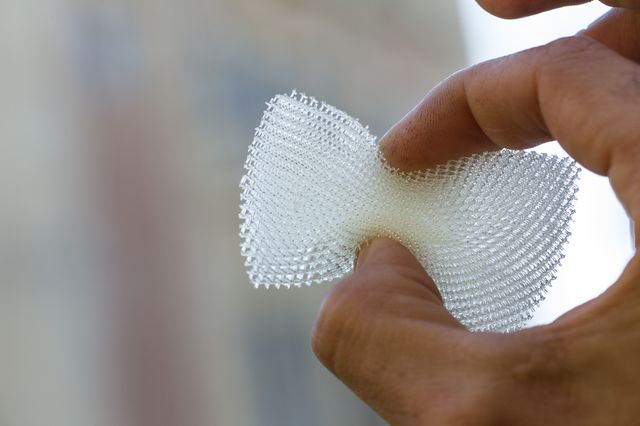
The UCLA–Architected Materials group is developing a novel, energy-absorbing microlattice material, Architected Lattice, to improve the performance of football helmets. The material, designed to replace the foam used inside of today’s football helmets, will help prevent concussion and traumatic brain injury by absorbing energy upon impact while limiting peak loads.

Architected Lattice is light and breathable, and can be enhanced with a strain-sensing “smart lattice” to detect and transmit data about the impact of a collision. This data could help engineers and product designers make further improvements in helmet design and performance.

“We are honored to have been selected by the NFL, Under Armour and General Electric, and excited about the potential impact of developing the next generation of helmet pads with the Architected Lattice,” said Larry Carlson, director of advanced materials at the Institute for Technology Advancement at the UCLA Henry Samueli School of Engineering and Applied Science. “We believe that in addition to preventing or reducing injuries from high-impact collisions on the football field, this material can be used in a variety of sports and recreational applications.”

The research team includes material designers from Ventura, California-based Architected Materials, mechanical impact experts from UCLA Engineering, and brain science specialists at the David Geffen School of Medicine at UCLA. Along with Carlson, the research’s principal investigators are Alan Jacobsen, co-founder of Architected Materials, and Dr. Christopher Giza, director of the UCLA Steve Tisch BrainSPORT Program and a professor of pediatrics and neurosurgery.

“One of the key innovations with our Architected Lattice technology is that it can be manufactured quickly and cost-effectively, which differentiates our technology from traditional 3-D printing techniques,” Jacobsen said.
In preliminary tests, the material has outperformed commonly used vinyl nitrile for reducing transmitted peak force, a key metric for helmet pads.

“In addition to offering the potential to reduce sports concussions, the helmet’s unique material functions as a sensor that monitors impact to the brain,” Giza said. “Collaborative efforts like these powerfully showcase UCLA research teams’ role in developing innovative new ways to benefit public health.” 

With more than 500 neuroscientists throughout campus, UCLA is a leader in research to understand the human brain, including efforts to treat, cure and prevent traumatic brain injury and brain disorders such as Alzheimer’s disease and epilepsy. The BrainSPORT Program was founded by Giza in 2012 and supported by a $10 million gift in May 2014 from philanthropist Steve Tisch.

In this video produced by General Electric, Under Armour and the NFL, researchers display a new helmet liner that absorbs significantly more energy than current materials, better protecting athletes from brain injury.

Read more here

Helmet technology may help with concussions

Forbes recently published the following article explaining why current helmets cannot prevent concussions, but that new helmet technology may be able to help.

The veil of denial and misinformation that has clouded awareness of the long term dangers of athletic concussion has started to lift.  As the general public and especially families of collision sports athletes begin to realize the threat to a normal life posed by the heightened risk of Alzheimers, ALS, Parkinson’s, dementia, Chronic Traumatic Encepalopathy and depression that multiple concussions trigger–the search for solution becomes more intense. One focus in prevention is helmets. Athletes in football, baseball, hockey, field hockey, auto and horse racing all wear helmets.

There is a prevalent belief that those helmets play a major role in preventing concussion–they do not. Current helmets are primarily designed to prevent skull fracture. There obviously is some protective benefit–but the energy wave from a collision currently moves through the plastic and the liner of a helmet and enters the athlete’s head. Tate Technology, headed by CEO Jenny Tate Morgan, has devised a solution. Morgan comes from a family background in helmetry. Her grandfather, John Tate Riddell designed the first plastic helmet, and founded Riddell Football. Her father, also CEO of Riddell, co-ventured with Jack Welch and GE Plastics to use new polycarbonate materials on helmets in 1957. Riddell innovated a series of designs also used in military helmets.

Tate Technology assembled a scientific team of industry experts, engineers, PhD’s and MD’s along with a seasoned board of directors from Fortune 500 companies to find better solutions.  ”Advanced Concussion Technology” (ACT) is a solution which has gone through research, development and some testing. It uses a system of coils designed to dissipate energy and attenuate at the first point of impact. This is done through ”compression” instead of the energy flowing into “tension.” The energy wave moves directly into the head. The system of coil and compression in the helmet can reduce the impact of a hit by as much as half. This company is licensing the technology, which can adapt to any of the currently made helmets; it will not manufacture them itself.

I don’t pretend to be an engineer with in-depth knowledge of energy attentuation. But in lay terms, reducing the energy in a hit so it never penetrates the head and the brain, seems like a solution that could revolutionize helmetry. What works on sports helmets, can work on military, bicycle and motorcycle helmets. Tate’s ACT is ready to be installed in helmets now.

Kudos to those inventive individuals and companies that are trying to tackle a problem that is a largely undiagnosed public health epidemic. Otherwise, the number of concussions will continue to rise, and the trauma will manifest earlier than ever before. This is the result of larger, stronger, faster bodies colliding. It will be exciting to see how fast Jenny Morgan’s ACT technology can begin providing relief.I have always felt that once American corporations with engineering capacity worked on the helmet problem, progress would occur. In the same way neutraceutical and pharmaceutical solutions to brain damage have occurred. The race for solution is producing a variety of promising approaches, such as Prevacus nasal spray. In helmetry, Vicis Company has developed a helmet with impact absorbing filaments that also offers hope.

Read more here

Thursday, December 04, 2014

Magnets in helmets may help reduce concussions

This article explains how adding magnets to football helmets could help reduce concussions by using a magnet's the repulsive forces.

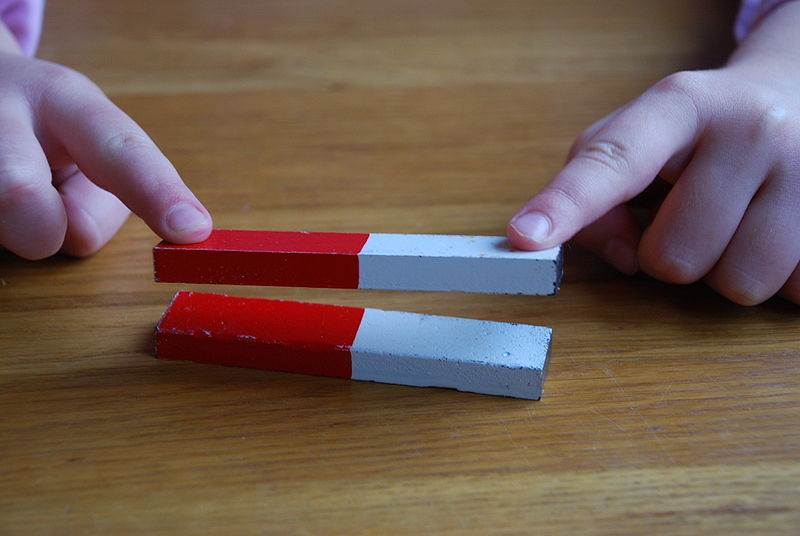
Adding magnets to football helmets could reduce the risk of concussions, new research suggests. When two players collide, the magnets in their helmets would repel each other, reducing the force of the collision.

“All helmet design companies and manufacturers have the same approach, which is to try to disperse the impact energy after the impact’s already occurred,” neuroscientist Raymond Colello said November 15 at the annual meeting of the Society for Neuroscience.

The magnets, he says, would put a brake on the impact before it happens.

The idea hasn’t been tested yet in helmets with real players, said Judy Cameron, a neuroscientist at the University of Pittsburgh. “But a lot of thought has gone into it, and the data that was shown about the ability of the magnets to actually repel each other looked extremely promising.” 

On the field, football players can run at nearly 20 miles per hour and can experience up to 150 g’s of force upon impact. Concussions readily occur at impacts greater than 100 g’s. Every year there are 100,000 concussions at all levels of play among the nearly 1.2 million people who play football in the United States.

Colello, of Virginia Commonwealth University in Richmond, is testing magnets made in China from the rare-earth element neodymium. They are the most powerful commercially available magnets and weigh about one-third of a pound each (football helmets weigh from 3.5 to 5.5 pounds). When placed one-fourth of an inch away from each other, two magnets with their same poles face-to-face exert nearly 100 pounds of repulsive force.

Colello tested his magnets with the same procedure that the National Operating Committee on Standards for Athletic Equipment uses to evaluate football helmets. He placed magnets on the front of a weight and let it drop from various heights onto another magnet. The heights Colello tested (between 6 inches and 4 feet) represent the impact forces athletes normally experience on the playing field.

“At 48 inches, if you dropped a standard helmet and it hit a stationary object, it would create 120 g’s of force,” says Colello. “With the magnets we drop that below 100 g’s.”

The magnets would complement existing helmet safety features. Colello speculates that adding magnets to a helmet would raise the price by $50 to $100. (Professional helmets today can cost several hundred dollars.) Amateur players, who will not experience impacts as crushing as pros do, could use helmets with cheaper, less powerful magnets.

Though the magnets do attract metallic objects, the National Football League prohibits athletes from wearing jewelry during games. Another safety concern is whether the magnets are dangerous to have near human heads. Colello says that a 30 minute- to one-hour MRI procedure produces magnetic fields 10 to 30 times as strong as those in helmet magnets.

Colello is now awaiting customized arc-shaped magnets that can be fitted inside helmets so he can begin field-testing them. First he will run crash-test dummy heads donning the helmets on a zip line; when the heads collide, accelerometers will measure the linear and rotational forces caused by the impact.

If the magnets make it through field tests, they could theoretically reduce the relative risk of concussions by up to 80 percent without changing the appearance or intensity of the game, Colello says.

Read more here

Thursday, August 28, 2014

Age and brand of football helmet do not influence concussion risk

A recent study shows that both the brand and age of a football helmet do not change the risk of concussion for high school students.

A University of Wisconsin study suggests there is no difference in concussion risk for high school football players based on different brands or ages of helmets, according to a release.
The study involved 2,081 football players at 34 high schools in Wisconsin during the 2012 and 2013 football seasons, according to the release. Players completed a pre-season demographic and injury questionnaire, and sport-related concussions were recorded throughout the year.
A total of 206 players, about 9 percent, sustained a total of 211 SRCs during the study, officials said. During the study, players wore Riddell, Schutt and Xenith helmets.
The study also found that custom-fitted mouth guards increased SRC risk by 60 percent compared to generic guards; the rate of SRC was nearly seven times higher during competition than practice and four times higher during full-contact practice than no-contact practice; and age, BMI, grade in school or competition level was not associated with an increased risk of SRC.
Another important finding was that players who sustained an SRC during the previous 12 months were almost twice as likely to sustain another one compared to players with a history of SRC, according to the release.
“This was surprising because we found that the increased risk exists even when controlling for the players’ use of protective equipment, years of football experience and player characteristics, such as their grade in school and competition level,” said Tim McGuine, UW sports medicine researcher and co-author of the study. “These results highlight the need for medical providers to document a history of SRC in young football players and for more education among parents, coaches and the players about the increased concussion risk in these individuals.”
The researchers said other than learning appropriate tackling and other on-field techniques, properly maintained and fitted helmets remain one of the most important ways to prevent skull fractures and scalp lacerations in football players.
Read more here

Monday, August 11, 2014

Do girl's lacrosse players need helmets

This article discusses the need for helmets in lacrosse, especially girls lacrosse which is perceived to he less of a contact sport than boy's lacrosse.

Lacrosse is one of the fastest-growing high school sports in the country. It also has one of the hottest debates regarding its rules — specifically, whether girls who play should be required to wear helmets, as boys are.
Boys lacrosse is a physical sport with heavy doses of contact. Girls lacrosse is regarded as more of a skill sport, with less contact. Players in the girls game are required to wear protective eyewear and mouth guards, but not helmets.
A study recently published in The American Journal of Sports Medicine looked at the types of injuries high school lacrosse players suffer. The study, conducted by researchers from the Center of Injury Research and Policy at Nationwide's Children Hospital and the Colorado School of Public Health, evaluated injuries players suffered from 2008-12. The research found that the most common injury, at 38 percent, were sprains and strains, followed by concussions at more than 22 percent.
Dawn Comstock, a professor at the Colorado School of Public Health and one of the researchers, said the most surprising discovery was how players got concussions.
"In boys, nearly 75 percent of all of the concussions were due to athlete-athlete contact," Comstock said. "Not surprising, since boys lacrosse is a full contact sport. But girls, over 60 percent of the concussions resulted when a girl was struck in the head by a ball or the stick."
Even though girls lacrosse is regarded as a noncontact sport, researchers found that almost 25 percent of concussions came from athlete-to-athlete contact. About 63 percent of the concussions resulted from being hit in the head by a ball or a stick.
According to rules from U.S. Lacrosse, which the National Federation of State High School Associations endorses, girls may wear soft headgear but not hard helmets. Only goalies can wear helmets. Field players wear protective eyewear and mouth guards.
Denver East High School coach Mallory Cleveland would like to see helmets mandated in girls lacrosse. Cleveland played one year of lacrosse without goggles before they were required.
"At that time it was kind of a pain and people didn't like them and there was some lash out," Cleveland said. "But I would say now that it's just a part of the sport, it's something that's a given and everyone is used to them and wears them now. Helmets will definitely be the same thing once they are implemented."
Cleveland said a handful of players on the Denver East varsity and lower-level teams suffered concussions this past school year.
In June, the Florida High School Athletics Association announced that in 2015 all girls lacrosse players will be required to wear helmets.
Comstock said helmets can't eliminate concussions but can help minimize head injuries. When two players run into each other, often the head of one of the players snaps back. This results in brain sloshing, when the brain moves around inside the skull, and can result in a concussion. Comstock said a helmet can help protect against the direct transfer of force when a player gets hit in the head.
Some players and coaches worry that adding helmets will change their game. Cherry Creek assistant coach Ashley Thompson said girls lacrosse is about finesse and technical skills, not physical play. If helmets are required, she's afraid the cost might turn away interested players. Thompson added that coaches are more aware about concussions than in the past.
Denver East senior-to-be Shelby Parks said she would be upset if helmets are required to play girls lacrosse. She said she's never had a concussion and has seen only one player get a concussion during a game. Implementing helmets would make the players more aggressive, she said.
"When you're wearing a helmet or you see someone wearing a helmet, it means they're protected and anything goes," Parks said. "Lacrosse can get aggressive, but the refs are there for a reason and people shouldn't get hit in the head, because that's not a part of the game."
Read more here

Tuesday, July 22, 2014

Sensors to immediately detect concussion

A project from Western Michigan University aims to create sensors that go inside helmets that can immediately detect a concussion.

A new piece of technology that's developed in west Michigan could soon be keeping athletes safe.

At Western Michigan University, a professor and team of students are working on sensors that can fit in any kind of helmet. 

The goal is to use them to detect concussions right after a big impact.

It may not look like much at first glance, but the first test helmet could soon bring the latest in sports safety. 

"It can be used for football and hockey helmets, as well as any other protective head gear," said WMU Professor Masood Atashbar.  

Lightweight and flexible sensors are placed in the lining of a helmet. 

They send a wireless signal to an application on a smartphone or tablet. 

"It measures and reports to the coaches any dangerous impact that athletes experience on their skull," Atashbar said.  

The program is so sharp, its creators say it can pinpoint how severe the hit was and where it happened. 

Professor Masood Atashbar said this is vital information considering athletes don't always report injuries and may not even know they have a concussion. 

"Coaches and parents can know that their kids have experienced a dangerous impact and they can act on it," Atashbar said. 

The professor and several students have been working on the cutting edge design. 

So far they've only done tests in the lab, like hitting the helmet with a hammer. 

Students are excited they have access to this right here in Kalamazoo. 

"The university has given us a lot of help in developing this technology. I'm very happy," said PHD student Binu Narakathu.  

The group has even started a company to promote the technology. 

Right now they're pricing it at $100 each; that would include the sensors and app. 

"Thinking about, okay, you can help protect these players on the field, that's pretty interesting because you're saving people's lives," said PHD student Ali Eshkeiti. 

The next step is getting funding so they can do tests outside the lab with actual athletes. 

Then they hope to get it out on the market.

Read more here

Monday, July 21, 2014

No difference in helmet brands

A study shows that there is no difference in how many concussions player get based on helmet brand.

The University of Wisconsin reports that its new study showed no difference in the rate of concussions based on what helmet brand is used.

The university recently completed the first large-scale, prospective study in a field-based sports setting to examine if the rate of concussion is affected by the protective equipment that is worn by high school football players.

Not only did the brand not make a difference in the rate of concussions, there also was no difference in the severity of those concussions, either.

The research concluded that well-maintained and fitted football helmets remain important to reduce the risk of skull fracture and intracranial hemorrhage, but there is serious doubt to whether a helmet can ever be designed to prevent concussions.

In addition, the research found a similar concussion risk regardless of the age of the helmet.

Dr. Alison Brooks, assistant professor at University of Wisconsin-Madison, spearheaded the study with Dr. Tim McGuine. Brooks called out the increased risk among previously injured athletes.

“Players in this study who had a history of previous concussion were at higher risk of sustaining another concussion, regardless of the helmet brand worn,” said Brooks. “Rather than focus on the belief that a specific helmet can ‘prevent’ concussions, which is not supported by the current scientific literature, our efforts may be better spent educating players, parents and coaches about the increased risk of concussion in these previously concussed young athletes.”

A concussion in football is a very complex event involving different and changing forces, linear (straight motion or direct hit) and rotational (circular motion of head or torque) accelerations, helmet fit, player position, impact duration, player concussion history and overall health.

Schutt Sports has the two highest 5 STAR helmets in 2014, yet the company admits that the ratings do not support a conclusion that the helmets will limit or prevent concussions.

“Schutt Sports would never represent to somebody that they’re not going to get a concussion if they wear one of our helmets,” said Robert Erb, CEO of Schutt Sports. “As a manufacturer of a helmet considered by this rating system to be the best available, I believe telling people that an athlete is less likely to get a concussion if they use a 5 STAR helmet is irresponsible. The best helmet is the one that carries NOCSAE certification, fits the player, fits the position, is configured with the proper mask and the player is comfortable in it.”

Consumers should also know that the rating given to helmets applies only to size large adult.

According to the Virginia Tech website, “It is possible that the same helmet models of different size may produce different results; however, we do not have any data on this, and we only tested large helmets as a first step.”

Read more here

Friday, July 04, 2014

CDC's Heads Up app helps to spot symptoms of concussions in children

Summer concussions are from falls and accidents. I see many water sport induced brain injuries.

 If your child is not right, trust your instincts. Trust your child if they feel they are not right. See a physician! - JR

An app created by the CDC helps to spot symptoms of concussions in children.

Need a primer on how to spot the signs of a concussion for your child? The Centers For Disease Control and Prevention's Heads Up app will help you learn how to recognize the signs and symptoms, and what to do if you think a child has a concussion or other serious brain injury.

This is crucial information that you can find easily in the app to act quickly if needed. Children and teen athletes are more susceptible to concussion than older athletes, and they have an increased risk compared to adults for traumatic brain injury with greater severity and prolonged recovery due to their developing brains.

The app says that signs and symptoms generally appear soon after an injury, but the seriousness of the injury and some symptoms may not appear for hours or days. In rare cases of a hematoma (a collection of blood in the brain), you would need to take your child immediately to the emergency room. If a child does suffer from a concussion, there is information on recovery, such as when to return to school and sports.

This app can also help you pick the right helmet for your child's activity, including what to look for and what to avoid. For example, you can choose hockey to find out about the correct size and fit, tips for finding a good helmet, and how long it should last.

Besides sports, there are safety tips to prevent brain injuries at home, playground, cars, homes, and bikes.

Lastly, the CDC encourages to share information on concussions with others. In May, President Obama at the Healthy Kids and Safe Sports Concussion Summit called for the end of the culture in youth sports where kids are encouraged to “suck it up” after sustaining head injuries.

“We have to change a culture that says you suck it up,” said President. “Identifying a concussion and being able to self-diagnose that this is something that I need to take care of doesn’t make you weak - it means you’re strong.”
Read more here

Wednesday, June 25, 2014

Will sensors be in all helmets by 2015?

A research study is looking into adding sensors into helmets. The results may be strong enough to put sensors into all helmets by 2015.

A pilot program designed to provide more information for concussion research could become more widespread, and put sensors in every helmet by 2015.
According to Tom Pelissero of USA Today, two teams participated in the program for part of last year, and researchers are trying to fine-tune the technology to measure head impact in games.
The work is being done by University of North Carolina researcher Kevin Guskiewicz, who is a member of both league and union safety committees.
“We need a sample of these players across all positions and studying every play type possible,” Guskiewicz said. “So, that’s the next step. Then I hope from there that, if we find (the devices) have utility that could actually help an individual player … my hope would be that we would go league-wide.”
Guskiewicz said the project still needs to be approved by the league and union, and getting that kind of agreement has been an issue in the past.
But he said he was “thrilled” that teams are buying into the idea of collecting data, though hurdles remain.
“I personally believe that there is valuable information to be gained for a player to learn how to perhaps modify his behavior, to track the way in which he’s leading with his head possibly or positioning his body on a certain play type that could help protect him,” Guskiewicz said.
“So, we just sort of have to go through this in a methodical approach to work on the feasibility. This year, I hope that we’re able to move forward with answering some of the questions that we have around potential rules changes, and then the following year, who knows?”
As with most issues, getting players and management to agree to anything is difficult, but if the technology can present a step forward in the accurate diagnosis of concussions and head injuries, then players and the league need to find a way to implement.
Read more here

Friday, June 20, 2014

NOCSAE statement on concussions and helmets

The following article discusses a comment made by the NOCSAE on helmets and concussions.

The National Operating Committee on Standards for Athletic Equipment (NOCSAE) applauds and encourages the growing research in the area of concussion protection for athletes, including the work released this month by Virginia Tech. Coaches, consumers and parents should be aware that while the STAR rating system suggests the purchase of specific football helmets, scientific evidence does not support the claim that a particular helmet brand or model is more effective in reducing the occurrence of concussive events.
“Helmets which meet the NOCSAE standard are extremely effective at doing what they are designed to do, limiting linear accelerations that result from impacts to the head and helmet,” said Mike Oliver, NOCSAE executive director. “The STAR ratings are not standards. They are a theoretical method of comparing one helmet against another. Unfortunately many have misunderstood the purpose and limitations of the STAR ratings. A 5 STAR rating does not mean that the helmet is great at preventing concussions. It simply means that it might be better than another helmet with a lower rating. Because of this misunderstanding, the effectiveness of helmets in protecting against concussions has become exaggerated, taking focus away from steps known to have a more immediate and much greater effect on concussion reduction.”
For concussion protection to be truly effective, actions must be taken on and off the field by student athletes, parents and coaches. According to the CDC Foundation’s Heads Up to Parents program, making sure equipment fits properly, ensuring young athletes are taught proper blocking and tackling techniques and demanding enforcement of rules that prohibit players from leading with their helmets to hit other players are important ways to reduce concussion risk.
The University of Wisconsin recently completed the first large scale, prospective study in a field-based sports setting to examine if the rate of sport-related concussion is affected by the protective equipment that is worn by high school football players. The results show no difference in the rate of concussions or severity of concussions by helmet brand. The research concluded that well maintained and fitted football helmets remain important to reduce the risk of skull fracture and intracranial hemorrhage, but there is serious doubt to whether a helmet can ever be designed to prevent concussions. In addition, the research found a similar concussion risk regardless of the age of the helmet.
Dr. Alison Brooks, assistant professor at University of Wisconsin-Madison, spearheaded the study with Dr. Tim McGuine. Dr. Brooks would prefer to see emphasis on rule enforcement and coaching education on tackling technique to limit or avoid contact to the head. She also called out the increased risk among previously injured athletes.
“Players in this study who had a history of previous concussion were at higher risk of sustaining another concussion, regardless of the helmet brand worn,” said Dr. Brooks. “Rather than focus on the belief that a specific helmet can ‘prevent’ concussions, which is not supported by the current scientific literature, our efforts may be better spent educating players, parents and coaches about the increased risk of concussion in these previously concussed young athletes.”
A concussion in football is a very complex event involving different and changing forces, linear (straight motion or direct hit) and rotational (circular motion of head or torque) accelerations, helmet fit, player position, impact duration, player concussion history and overall health.
Schutt Sports has the two highest 5 STAR helmets in 2014, yet they admit that the ratings do not support a conclusion that the helmets will limit or prevent concussions. “Schutt Sports would never represent to somebody that they’re not going to get a concussion if they wear one of our helmets,” said Robert Erb, CEO of Schutt Sports. “As a manufacturer of a helmet considered by this rating system to be the best available, I believe telling people that an athlete is less likely to get a concussion if they use a 5 STAR helmet is irresponsible. The best helmet is the one that carries NOCSAE certification, fits the player, fits the position, is configured with the proper mask and the player is comfortable in it.”
Consumers should also know that the rating applies only to size large adult helmets. According to the Virginia Tech website, “It is possible that the same helmet models of different size may produce different results; however, we do not have any data on this, and we only tested large helmets as a first step.” No adult X-Large, Medium, Small, X-Small or any youth-size helmets were tested as part of this rating. Until other sizes are tested, the only helmet that can claim any STAR rating are adult large. The rating is based on a theoretical calculation from collegiate level data. When helmets receive a higher rating, it does not mean the helmet has met a safe level of concussion protection; instead it is an attempt to compare one helmet to another based on the results. According to an independent statistical review of the Virginia Tech test data there is no significant statistical difference between 5 STAR, 4 STAR and 3 STAR helmets.
“The Virginia Tech Helmet Ratings™ system approaches the very broad and complex issue of concussion protection from a narrow vantage point of linear accelerations only and does not address other biomechanical variables such as rotational accelerations,” said Oliver. “Scientific experts agree that rotational accelerations are involved in most concussive events, but there is still no agreement on what level of rotational force can be considered safe or dangerous for athletes.”
Read more here