Showing posts with label app. Show all posts

Monday, April 27, 2015

App offers non-medication treatment for ADD/ADHD

An app created in Israel offers a medication-free alternative treatment for children with ADD and ADHD.

Aziz Kaddan, one of the co-founders of Myndlift, didn’t flinch when asked in front of an audience at the recent BrainTech conference in Tel Aviv how he plans to go up against the better-funded American companies with his alternative non-drug treatment for attention deficit disorder (ADD) and attention deficit hyperactivity disorder (ADHD).
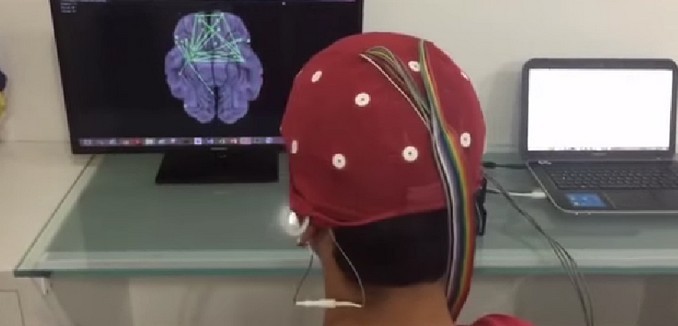
Myndlift uses neurofeedback, also known as electroencephalographic (EEG) biofeedback, to train the brain to focus. It’s a computer-based technique developed and tested by NASA to improve attention, focus, and learning. Kaddan, the 22-year-old phenom taking Israel’s brain-tech world by storm, knows the path to changing hyperactivity treatment is a tough one, but he’s positive his app-based, wearable neurofeedback solution, coupled with specially tailored mobile games that only work through concentration, can increase attention levels with just 10 minutes of play time a day.
“I know that I have a product that has a value to a lot of people,” he said, from his co-working space for high-tech entrepreneurship and innovation at Tel Aviv’s public library. Myndlift’s idea is to get sufferers of ADD and ADHD off medications like Ritalin, which suppresses appetite and has other negative side effects, and help them focus their minds using a mobile app, neurofeedback, and a brain-sensing wearable technology.
“Myndlift brings personalized neurofeedback training to mobile, making it easier for people with hyperactivity, professionals in demanding careers, students, athletes and anyone concerned about brain fitness to improve concentration abilities effectively without prescription drugs, inconvenience to visit specialized clinics and huge bills, thus saving thousands of dollars and tens of commuting hours,” according to the company’s elevator pitch.
Read more here

Saturday, April 18, 2015

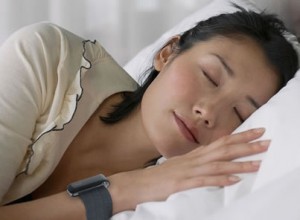
Technology to help you sleep

While we hear a lot about how technology keeps people up at night, some technology, like the ones described below, are made to help you sleep.
Nothing throws off your day like a lack of sleep the night before. It ruins your concentration, makes you impatient, cause memory lapses and worse. Over the long term, sleep deprivation can lead to depression, diabetes, hypertension and obesity.
It can also be deadly. According to AAA, people who only sleep 6 to 7 hours per night are twice as likely to be involved in a car accident as those who sleep 8 hours or more. Sleep less than 5 hours per night and you are four or five times more likely to be in a car accident.
That's a bigger problem when the Centers for Disease Control reports that 30 percent of adults say they sleep an average of 6 hours, and up to 70 million Americans will have a sleep disorder at some point. Fortunately, technology can actually help sleep.
1. SLEEP-RECORDING GADGETS
There's been an explosion of gadgets that are designed to monitor your sleep and help you improve it. The market for these gadgets is headed for more than $125 million in 2017.
Sense, for example, is a little orb that sits in your room monitoring noise, light, temperature, humidity and air particles, and can wake you up at the ideal part of your sleep cycle. A tiny clip attached to your pillow tracks your movements. In the morning, it can tell you through an Apple app how much sleep you really got, and if something in your environment is disturbing your rest. It's currently available for pre-order on Kickstarter for $99 and will cost $129 when it ships in November.
Some similar monitors already available include Beddit ($149), which also tracks your heart rate and breathing, and SleepRate ($100), which has an app full of useful information plus a wearable heart rate sensor. Withings Aura ($300) is another upcoming gadget that not only monitors your sleep, but it cycles through light and sound programs to try and improve your sleep.
2. SLEEP-RECORDING APPS
You probably already have a sleep-improving gadget sitting next to you at night. I'm talking, of course, about your smartphone.
A sleep-recording app coupled with your smartphone's sensors can give you a good idea of your sleep patterns. You usually just have to put your phone on the bed near your pillow and let it do the rest.
Important warning: Never put your phone under your pillow or cover it with a blanket. The phone could overheat and catch on fire.
Some popular sleep-tracking apps are Sleep Better (Android, Apple; Free), SleepBot (Android, Apple, Free) and Sleep Cycle Alarm (Android, Apple; $1). They all track your movements during sleep.
Sleep Better includes a journal to keep track of sleep-affecting factors like diet, exercise and even your dreams. So it's good for tracking down lifestyle choices that may be hurting your sleep.
SleepBot tracks your sleep like the others, but also includes sound recording so you can detect problems like sleep apnea, or find out what nighttime sounds cause you to move around.
Sleep Cycle Alarm is the one to get if you generally sleep OK, but seem to always wake up at a bad time. It uses your movements to predict the perfect time for you to wake up, and includes plenty of restful alarms.
3. HIGH-TECH MATTRESSES
Soon, you might not need a stand-alone sleep-tracking gadget. Everything you need will be built right into your mattress, and that future is now if you're willing to pay for it.
I'm sure you've seen commercials for Sleep Number mattresses. These mattresses let you continually adjust how hard or soft the mattress is to get the perfect sleeping experience. They can even have dual zones so you and your significant other can each tailor the bed to your preference.
Now, Sleep Number offers SleepIQ. The mattress includes sensors that track your breathing rate, heart rate and movements. You can then pull up your sleep statistics on the companion app to see how long you slept and how well. There's also a journal function to keep track of your diet, exercise and more that could be impacting your sleep. For those with a partner in bed, SleepIQ can track their sleep as well and even figure out how your sleep patterns affect each other.
Naturally, any new mattress is going to be a serious financial commitment, and SleepIQ is no exception, starting at $999.98 for a queen mattress. While it might be worth the cost in the long run, you might be hesitant in the short run.
If that's the case, take a look at Luna. It's a mattress cover that adds SleepIQ-style sensors and tracking to any mattress. So it keeps tabs on your sleep cycle, heart rate and breathing rate over time so you know if your sleep is improving or not. However it has some other impressive features. For example, it includes temperature adjustment so you have just the right level of comfort for sleep. There are two zones, naturally, so you and your partner won't need to argue about how warm is too warm.
Because Luna tracks your sleep cycle, it can work with your alarm clock to wake you at the ideal moment in your sleep cycle; no more groggy mornings. It can even learn your habits, so it knows when you typically go to bed and starts adjusting the temperature in advance. You can control it remotely using your smartphone. Luna is available for pre-order right now starting at $235 and should be shipping in late Summer 2015.
BONUS TIP: THE PRACTICAL OPTION
While technology is rushing to cure sleep problems, one growing cause of poor sleep is technology itself. It's easy to get sucked in to Facebook, playing a hot new game, or binge-watching a show on Netflix instead of going to bed on time. Then there's that text from a friend that makes your phone light up right as you're dropping off to dreamland.
I know forcing yourself to turn off the gadgets, or silence your phone, is tough but it is worth it. There are some ways you can help yourself out if you're struggling. Go poking in your network router settings and you'll see that you can schedule it to cut off Internet access at night. The parental controls for most video game consoles include blackout times as well. For Android gadgets, an app like Tasker lets you program times and places to cut off communications.
Of course, even using technology near bedtime is still a problem. The blue light from most screens tricks your brain into thinking it is daytime even when it isn't. That's why many sleep experts recommend shutting down your gadgets at least two hours before bedtime.
If that isn't possible, a program like F.lux for computers and Apple gadgets, and Lux for Android, tints your screen red at night. That reassures your brain it's night time, and that means you'll fall asleep easier.
Read more here

Friday, August 01, 2014

Usefulness of sleep tracking devices

This article discusses how useful sleep tracking devices are to those who may have issues sleeping.

The average adult needs at least seven hours of sleep each night, though unfortunately many get a lot less. Approximately 70 million Americans have a sleep disorder, which may be why there's tremendous interest in popular fitness trackers that allow you to quantify and evaluate the quality of your sleep -- without the expense of a sleep specialist.
Personal sleep trackers seem like a great investment for anyone suffering from insomnia or sleep deprivation. But are they accurate?
"The reason why these devices are so good is it puts greater emphasis on sleep," Michelle Primeau, clinical instructor at the Stanford Center for Sleep Sciences & Medicine told CNET reporter Sumi Das. "Most adults in the U.S. are somewhat sleep deprived."
Fitness trackers with sleep tracking capabilities, such as Fitbit, work by keeping track of how much you toss and turn in your bed to provide data on your sleep quality. This is done with accelerometers.
"They are measuring an indirect approximation of sleep through movement," said Primeau. "In order to make these estimations of deep or light sleep they are probably using an algorithm that takes into account the relative amount of movement that a person is having in the course of a night."
On the other hand, sleep specialists base their treatments and diagnoses on polysomnography, a special multifaceted test that typically involves sleeping in a controlled environment -- a sleep lab -- hooked up to plenty of wires. This gold-standard for sleep specialists measures everything from your brain activity, heart rate and breathing to your eye and muscle movements. Polysomnography generates far more information than currently any personal sleep tracker can, and is used to diagnose problems such as sleep apnea, circadian rhythm disorders, nighttime movement disorders and other health issues.
"Polysomnography is a collection of different physiological measurements that we use to define and characterize sleep," explained Primeau. "We start with EEG which are little electrical wires that measure your brainwaves. It also includes measures like a snore mic. Belts around you chest and abdomen will also record your breathing."
But some experts argue that sleeping in a controlled setting, such as a sleep lab, messes up the evaluation before it even has the chance to begin, since the person won't sleep the same as in their own bed. In general, a personal sleep tracker could be a good starting point for a better night of sleep, but these devices may not be enough to diagnose and solve your shuteye challenges.
If you're desperately tired but still skeptical, a sleep app for a smartphone may be a good place to start, since it will only set you back a few dollars compared with a hundred or more for a tracker device. Sleep Cycle, Sleep as Android and Sleepbot operate on the accelerometers built into a phone.
Read more here

Monday, July 28, 2014

App to track migraine headaches

An app, currently only available overseas, helps people track what triggers their migraine headaches.

A new migraine tracking smartphone app analyses what causes your headaches and suggests how to stop them from happening.

The app, Migraine Buddy, asks questions about your migraine, habits, and medication with a questionnaire.

It also collects data about your sleep and movement patterns using your smartphone’s sensors.

Once the app collects enough data, it creates a report highlighting when the symptoms happened, and what were the top triggers.

It also finds out the most effective medication for you by recording when you used them and comparing that information with the severity of the migraines, Mashable reported.

“It mimics how a doctor prescribes different medication to patients to figure out what works,” said Veronica Chew, co-founder of Healint, the Singapore-based company behind Migraine Buddy.

“Most other migraine apps are not as comprehensive. We collect data that’s action-driven, so that we can help patients make the right decisions,” Chew said.

Currently, the application is only available in Singapore through a neurologist that is working with Healint.

Read more here

Tuesday, July 22, 2014

Sensors to immediately detect concussion

A project from Western Michigan University aims to create sensors that go inside helmets that can immediately detect a concussion.

A new piece of technology that's developed in west Michigan could soon be keeping athletes safe.

At Western Michigan University, a professor and team of students are working on sensors that can fit in any kind of helmet. 

The goal is to use them to detect concussions right after a big impact.

It may not look like much at first glance, but the first test helmet could soon bring the latest in sports safety. 

"It can be used for football and hockey helmets, as well as any other protective head gear," said WMU Professor Masood Atashbar.  

Lightweight and flexible sensors are placed in the lining of a helmet. 

They send a wireless signal to an application on a smartphone or tablet. 

"It measures and reports to the coaches any dangerous impact that athletes experience on their skull," Atashbar said.  

The program is so sharp, its creators say it can pinpoint how severe the hit was and where it happened. 

Professor Masood Atashbar said this is vital information considering athletes don't always report injuries and may not even know they have a concussion. 

"Coaches and parents can know that their kids have experienced a dangerous impact and they can act on it," Atashbar said. 

The professor and several students have been working on the cutting edge design. 

So far they've only done tests in the lab, like hitting the helmet with a hammer. 

Students are excited they have access to this right here in Kalamazoo. 

"The university has given us a lot of help in developing this technology. I'm very happy," said PHD student Binu Narakathu.  

The group has even started a company to promote the technology. 

Right now they're pricing it at $100 each; that would include the sensors and app. 

"Thinking about, okay, you can help protect these players on the field, that's pretty interesting because you're saving people's lives," said PHD student Ali Eshkeiti. 

The next step is getting funding so they can do tests outside the lab with actual athletes. 

Then they hope to get it out on the market.

Read more here

Friday, July 04, 2014

CDC's Heads Up app helps to spot symptoms of concussions in children

Summer concussions are from falls and accidents. I see many water sport induced brain injuries.

 If your child is not right, trust your instincts. Trust your child if they feel they are not right. See a physician! - JR

An app created by the CDC helps to spot symptoms of concussions in children.

Need a primer on how to spot the signs of a concussion for your child? The Centers For Disease Control and Prevention's Heads Up app will help you learn how to recognize the signs and symptoms, and what to do if you think a child has a concussion or other serious brain injury.

This is crucial information that you can find easily in the app to act quickly if needed. Children and teen athletes are more susceptible to concussion than older athletes, and they have an increased risk compared to adults for traumatic brain injury with greater severity and prolonged recovery due to their developing brains.

The app says that signs and symptoms generally appear soon after an injury, but the seriousness of the injury and some symptoms may not appear for hours or days. In rare cases of a hematoma (a collection of blood in the brain), you would need to take your child immediately to the emergency room. If a child does suffer from a concussion, there is information on recovery, such as when to return to school and sports.

This app can also help you pick the right helmet for your child's activity, including what to look for and what to avoid. For example, you can choose hockey to find out about the correct size and fit, tips for finding a good helmet, and how long it should last.

Besides sports, there are safety tips to prevent brain injuries at home, playground, cars, homes, and bikes.

Lastly, the CDC encourages to share information on concussions with others. In May, President Obama at the Healthy Kids and Safe Sports Concussion Summit called for the end of the culture in youth sports where kids are encouraged to “suck it up” after sustaining head injuries.

“We have to change a culture that says you suck it up,” said President. “Identifying a concussion and being able to self-diagnose that this is something that I need to take care of doesn’t make you weak - it means you’re strong.”
Read more here

Monday, June 02, 2014

An app to screen for autism

This article discusses an app that helps to screen for autism.

Most schools across the United States provide simple vision tests to their students -- not to prescribe glasses, but to identify potential problems and recommend a trip to the optometrist. Researchers are now on the cusp of providing the same kind of service for autism.
Researchers at Duke University have developed software that tracks and records infants' activity during videotaped autism screening tests. Their results show that the program is as good at spotting behavioral markers of autism as experts giving the test themselves, and better than non-expert medical clinicians and students in training.
"We're not trying to replace the experts," said Jordan Hashemi, a graduate student in computer and electrical engineering at Duke. "We're trying to transfer the knowledge of the relatively few autism experts available into classrooms and homes across the country. We want to give people tools they don't currently have, because research has shown that early intervention can greatly impact the severity of the symptoms common in autism spectrum disorders."
The study focused on three behavioral tests that can help identify autism in very young children.
In one test, an infant's attention is drawn to a toy being shaken on the left side and then redirected to a toy being shaken on the right side. Clinicians count how long it takes for the child's attention to shift in response to the changing stimulus. The second test passes a toy across the infant's field of view and looks for any delay in the child tracking its motion. In the last test, a clinician rolls a ball to a child and looks for eye contact afterward -- a sign of the child's engagement with their play partner.
In all of the tests, the person administering them isn't just controlling the stimulus, he or she is also counting how long it takes for the child to react -- an imprecise science at best. The new program allows testers to forget about taking measurements while also providing more accuracy, recording reaction times down to tenths of a second.
"The great benefit of the video and software is for general practitioners who do not have the trained eye to look for subtle early warning signs of autism," said Amy Esler, an assistant professor of pediatrics and autism researcher at the University of Minnesota, who participated in some of the trials highlighted in the paper.
"The software has the potential to automatically analyze a child's eye gaze, walking patterns or motor behaviors for signs that are distinct from typical development," Esler said. "These signs would signal to doctors that they need to refer a family to a specialist for a more detailed evaluation."
According to Hashemi and his adviser, Guillermo Sapiro, professor of electrical and computer engineering and biomedical engineering at Duke, because the program is non-invasive, it could be useful immediately in homes and clinics. Neither, however, expects it to become widely used -- not because clinicians, teachers and parents aren't willing, but because the researchers are working on an even more practical solution.
Later this year, the Duke team (which includes students and faculty from engineering and psychiatry) plans to test a new tablet application that could do away with the need for a person to administer any tests at all. The program would watch for physical and facial responses to visual cues played on the screen, analyze the data and automatically report any potential red flags. Any parent, teacher or clinician would simply need to download the app and sit their child down in front of it for a few minutes.
The efforts are part of the Information Initiative at Duke, which connects researchers from disparate fields to experts in computer programming to help analyze large data sets.
"We're currently working with autism experts at Duke Medicine to determine what sorts of easy tests could be used on just a computer or tablet screen to spot any potential concerns," said Sapiro. "The goal is to mimic the same sorts of social interactions that the tests with the toys and balls measure, but without the toys and balls. The research has shown that the earlier autism can be spotted, the more beneficial intervention can be. And we want to provide everyone in the world with the ability to spot those signs as early as possible."
Read more here

Friday, May 09, 2014

An app to treat insomnia

A new phone app from the UK claims to treat insomnia more effectively than sleeping pills can.

We’ve all encountered apps capable of putting users to sleep, but that’s rarely their stated intention. Now one doctor has released a piece of software she claims will replace sleeping pills and help send insomniacs into a deep slumber.

Dr Kirstie Anderson, one of the UK’s foremost sleep experts, has made a career out of studying how humans nod off. Working with tech experts at Teeside University, Newcastle, she created an app called Sleepstation which she claimed is more effective than drugs.

She said: “I’m a neurologist that specializes in sleep disorders, there isn’t a great deal of us that work in sleep medicine. The most common sleep disorder is insomnia, which many of us will suffer from at some point in our lives.
“But the people who have chronic insomnia dread climbing the stairs and going to bed. It’s a life-altering condition that has a massive health and well-being impact.”
Her app uses Cognitive Behavioural Therapy (CBT) techniques to ensure a good night’s rest. Based on a recognized and effective treatment for insomnia, it shows users videos detailing the best ways to sleep and allows them to keep a diary .
“The CBT for insomnia program is a very good simple package with lots of research evidence for benefit,” Anderson continued. “It works at least as well as sleeping tablets, but without any of the side effects, and lasts for longer. Up to 80% of people who receive the treatment see improved sleep following the program.”
In clinical tests, more than 80 percent of insomniacs reported better sleep after using Sleepstation. Key to its success is the level of interactivity it offers. It is personalized for each user and changes its advice based on their sleep pattern. Insomniacs are first assessed by a doctor, before being supported remotely as they go through the CBT course, which is exactly the same one already offered by NHS staff.
If it’s money worries that are keeping you up at night, this app probably won’t help. At £59 ($100), it isn’t exactly the cheapest app on the market. But in the UK, the National Health Service are now prescribing it, meaning that insomniacs will be able to get it for free, or at a nominal cost.
“Between five to 10% of the population will have chronic insomnia at any stage and it affects other parts of a person’s wellbeing,” Anderson added. “If you’ve had a first bout of depression one of the most important risk factors for a second bout of depression is ongoing insomnia.
“The main treatment for insomnia at the moment is sleeping pills, with 10 million people taking then nationally. These pills come with a lot of side effects and little effect on chronic insomnia. Bearing this in mind SleepStation really could make a massive difference to potentially millions of people’s lives.”
SleepStation is not the first sleep app and is unlikely to be the last. Sleep As Android, for instance, and Sleep Cycle both monitor a snoozing person’s sleeping pattern and then wake them at the optimal point in the morning.SleepRate goes a step further by  shipping along with a heart rate monitor, which is strapped to an insomniac’s chest when they go to bed. A unique sleep plan is then drawn up based on the results. There are even apps which allows you to count sheep,  a distinctly old school method of getting your head down.
Nonetheless, Anderson’s link up with the NHS will give her app’s chances of success a clear boost, although it won’t help outside of the UK. With so many apps already on the market, Anderson had better make sure she’s not caught napping if she wants to beat the competition.
Read more here

Sunday, August 11, 2013

iPod and iPad apps help children with autism communicate

A study shows that apps on the iPod and iPad tremendously help children with autism communicate.

Already embraced by millions for their portability and ease-of-use, new Canadian research suggests that smart technologies such as the iPad and iPod may also serve as therapeutic tools for a very specific group: children with autism.
Rhonda McEwen, an assistant professor with the Institute of Communication Culture and Information Technology at the University of Toronto Mississauga in Ontario, and her team found that such devices can go a considerable distance in terms of helping these kids significantly improve their ability to express themselves and engage with others.
"I was surprised by some of the findings, and so were the teachers who participated in the research," McEwen said. "Using the touch devices, the study participants demonstrated knowledge gathered throughout their education that could not be elicited via traditional assessment means that rely on verbal communication. We can surmise that the receptive communication skills are more advanced than first thought," she said.
"Further, the role that the devices play in brokering peer-to-peer social interaction was unanticipated," McEwen added. "Finally, the progress in expressive communication among study participants exceeded expectations."
McEwen and her team were scheduled to discuss their findings Friday at the American Psychological Association annual convention in Honolulu.
Autism experts hailed the effort to unlock this technology's potential.
"We have heard from many parents about how much their children enjoy mobile devices like the iPad, and how it is helping with learning and communication," noted Andy Shih, senior vice president of scientific affairs at Autism Speaks in New York City. "[So] we need more research in this rapidly developing field to understand how to maximize the benefits these devices can deliver to individuals and families living with autism."
McEwen and her colleagues set out to assess how off-the-shelf consumer technology might be harnessed to boost communication and social skills among children with autism.
In 2010, the Canadian team launched a case study in a downtown Toronto public elementary school.
Investigators initially studied 12 children in six specific classrooms, all of whom had been diagnosed as having autism spectrum disorder and most of whom were classified as "nonverbal."
Two hand-held touch technology devices currently sold by the computer manufacturer Apple were introduced into the classroom setting: the phone-sized iPod Touch and the tablet-sized iPad.
Costing roughly between $200 to $600 a piece, the mobile devices incorporate brightly illuminated screens that display a multitude of applications that range in price from free to less than $10 each. In turn, users can manipulate and respond to visual and audio content by means of simple finger gestures, such as touching or swiping.
Over a six-month trial, the students became accustomed to using the two devices.
The result: nine of the students showed a statistical improvement ranging from mild to significant in their overall communication skills. For example, when one boy took a visual identification quiz on an iPad, his teacher realized the child knew far more than the teacher had thought.
This meant that using the devices helped to boost motivation among 75 percent of the children, while also increasing their attention span and ability to interact socially. The researchers now have detailed data on 36 students.
But why and how?
According to Brenda Smith Myles, an autism consultant for the Ohio Center for Autism and Low Incidence in Columbus, Ohio, this kind of readily accessible technology works by "evening the playing field for individuals with autism."
"Many are nonverbal or low-verbal, and even those who are highly verbal often have a big degree of anxiety when interacting with someone," she noted. "They tend to like structure and predictability, and are largely visual learners. And these platforms and these apps address all three of those issues in a very nonstigmatizing and motivating way. They allow our folks to reach out in a way that is comfortable, so they can really communicate what they know," Myles explained.
"Of course, in addition, the technology is also cool, and automatically draws interest from other peers," said Myles, who was formally chief of programs for the Autism Society of America. "But certainly not all apps will work for all children, or will work in the same way. You do have to match the app to the learner, and each learner will be different. But generally speaking, these devices enhance skills and interest in communication. And they're easy to learn, easy to use and, best of all, low-cost."
The importance of the latter point is not lost on Dr. Jeffrey Brosco, associate director of the Mailman Center for Child Development at the University of Miami Miller School of Medicine.
"Practically speaking, the older tech was extraordinarily expensive and cumbersome," he noted. "So this is a real advance, because you're not comparing the cost of an iPad and apps with books and other low-tech tools. You're really comparing these new devices with the old world of technology, in which machines that produce language cost thousands of dollars."
But what should parents make of this finding?
"Certainly, many families worry that if they rely too much on a communication device it will interfere with their autistic child's ability to talk," acknowledged Brosco. "But we find that it's actually a bridge to talking, because it gives these children a different mode with which to communicate. It helps them use language in a functional capacity, by giving them a way to get there faster and more efficiently. So, in general, I'd say this is a wonderful boon to families of autistic children."
The data and conclusions of research presented at meetings should be viewed as preliminary until published in a peer-reviewed journal.
Read more here

Sunday, April 21, 2013

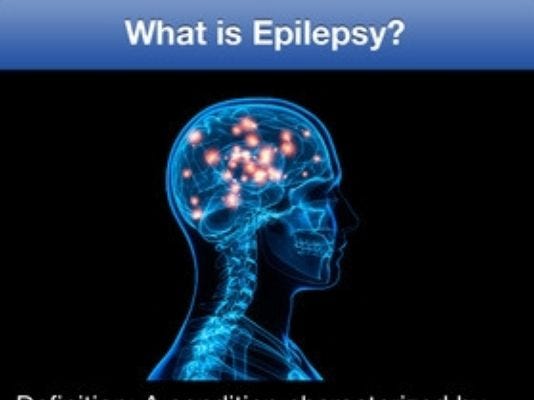
App is a great resource for those with epilepsy

A free app provides great information and resources for those with epilepsy and their family and friends.

Whether you're one of the 2.2 million Americans living with epilepsy, or have friends or family affected by the neurological disorder, a new app serves as an excellent resource for your iPhone, iPad or iPod touch.

Called E-Action Info, this free App Store download provides medical info, media and an educational game -- all designed to teach about epilepsy in a clear, accessible manner.

For those living with epilepsy, the app covers management tips, a FAQ (Frequently Asked Questions) section, an interactive and color-coded 3D model of the brain (zoom and rotate to learn about all of its areas and functions), links to epilepsy associations and the option to start a journal, called MyEpilepsyDiary, to help keep an accurate account of when seizures happen.

Be aware, however, this diary feature links to a login page at epilepsy.com opposed to an integrated diary located within the app. While this requires an Internet connection, at least the info is not located on the iOS device itself, which could be a privacy issue if lost, stolen or damaged. Users are encouraged to login with a password to track their seizures, medicines and progress -- all of which are accessible on a computer, smartphone, tablet or other device with a web browser. If desired, users can share this information with their physicians to optimize treatment, plus there's an option to request therapy reminders by email, text or smartphone notification.

E-Action Info was also designed for those close to someone living with epilepsy. For example, along with educational info and a video (Internet connection required), there's a section on the different kinds of seizures and a helpful First Aid resource for caregivers and the public (that is, what to do if you witness someone having a seizure).

While the app was funded by a pharmaceutical company (UCB Pharma SA), there is no mention of the company, its products or even links to its website.

E-Action Info is only available for iOS devices at this point.

Read more here


Wednesday, November 07, 2012

App Helps Migraine Sufferers Track and Analyze Pain

A new mobile app helps those who have migraine headaches track and analyze their headaches and pain.

Dr. Alexandre DaSilva, director of the Headache & Orofacial Pain Effort (H.O.P.E.) at the U-M School of Dentistry and one of the project developers, said the app will help people with migraine, temporomandibular disorders (TMD) and other types of facial nerve pain. Such pain can change over time, have multiple triggers, or the same patient might respond differently to the same treatment from one attack to the next. But to develop a successful pain management plan, the researchers say it's crucial that patients, especially migraine sufferers, relay this information to physicians. However, it can be difficult to keep a pain diary in the midst of an attack. DaSilva said PainTrek makes it easy: Patients just screen tap a 3D skull to pinpoint pain location and answer questions regarding pain intensity, external influences and other factors. The app was developed for iPhone, iPad and iPod platforms. The Apple app store will tentatively release the free app in November.

Read more here