Showing posts with label young athletes. Show all posts

Thursday, January 08, 2015

Increased concussion awareness helping student athletes

This article explains why concussion laws and increased concussion awareness are beneficial for student athletes.

A large increase in the number of U.S. school-age athletes receiving treatment for concussions is likely due to new laws and increased public awareness, a new study suggests.
Researchers examined data collected from privately insured 12- to 18-year-olds across the United States between 2006 and 2012 in order to assess the impact of concussion laws. Since 2009, all 50 states and the District of Columbia have enacted laws about concussion treatment.
In states where such laws were in place during the study period, there was a 92 percent increase in the number of young athletes receiving treatment for concussion. Even in states without such laws, there was a 75 percent increase in concussion treatment for student players, according to the researchers.
"There are two stories here," study senior author Steven Broglio, an associate professor at the University of Michigan School of Kinesiology and director of the NeuroSport Research Laboratory, said in a university news release.
"First, the legislation works. The other story is that broad awareness of an injury has an equally important effect. We found large increases in states without legislation, showing that just general knowledge plays a huge part."
The study was published online Dec. 22 in the journal JAMA Pediatrics.
Read more here

Helmet technology may help with concussions

Forbes recently published the following article explaining why current helmets cannot prevent concussions, but that new helmet technology may be able to help.

The veil of denial and misinformation that has clouded awareness of the long term dangers of athletic concussion has started to lift.  As the general public and especially families of collision sports athletes begin to realize the threat to a normal life posed by the heightened risk of Alzheimers, ALS, Parkinson’s, dementia, Chronic Traumatic Encepalopathy and depression that multiple concussions trigger–the search for solution becomes more intense. One focus in prevention is helmets. Athletes in football, baseball, hockey, field hockey, auto and horse racing all wear helmets.

There is a prevalent belief that those helmets play a major role in preventing concussion–they do not. Current helmets are primarily designed to prevent skull fracture. There obviously is some protective benefit–but the energy wave from a collision currently moves through the plastic and the liner of a helmet and enters the athlete’s head. Tate Technology, headed by CEO Jenny Tate Morgan, has devised a solution. Morgan comes from a family background in helmetry. Her grandfather, John Tate Riddell designed the first plastic helmet, and founded Riddell Football. Her father, also CEO of Riddell, co-ventured with Jack Welch and GE Plastics to use new polycarbonate materials on helmets in 1957. Riddell innovated a series of designs also used in military helmets.

Tate Technology assembled a scientific team of industry experts, engineers, PhD’s and MD’s along with a seasoned board of directors from Fortune 500 companies to find better solutions.  ”Advanced Concussion Technology” (ACT) is a solution which has gone through research, development and some testing. It uses a system of coils designed to dissipate energy and attenuate at the first point of impact. This is done through ”compression” instead of the energy flowing into “tension.” The energy wave moves directly into the head. The system of coil and compression in the helmet can reduce the impact of a hit by as much as half. This company is licensing the technology, which can adapt to any of the currently made helmets; it will not manufacture them itself.

I don’t pretend to be an engineer with in-depth knowledge of energy attentuation. But in lay terms, reducing the energy in a hit so it never penetrates the head and the brain, seems like a solution that could revolutionize helmetry. What works on sports helmets, can work on military, bicycle and motorcycle helmets. Tate’s ACT is ready to be installed in helmets now.

Kudos to those inventive individuals and companies that are trying to tackle a problem that is a largely undiagnosed public health epidemic. Otherwise, the number of concussions will continue to rise, and the trauma will manifest earlier than ever before. This is the result of larger, stronger, faster bodies colliding. It will be exciting to see how fast Jenny Morgan’s ACT technology can begin providing relief.I have always felt that once American corporations with engineering capacity worked on the helmet problem, progress would occur. In the same way neutraceutical and pharmaceutical solutions to brain damage have occurred. The race for solution is producing a variety of promising approaches, such as Prevacus nasal spray. In helmetry, Vicis Company has developed a helmet with impact absorbing filaments that also offers hope.

Read more here

Sunday, November 30, 2014

Brain damage from mild concussions

This article explains how football players can have brain damage from milder concussions.

A new, enhanced MRI diagnostic approach was, for the first time, able to identify significant damage to the blood-brain barrier (BBB) of professional football players following "unreported" trauma or mild concussions. Published in the current issue of JAMA Neurology, this study could improve decision making on when an athlete should "return to play."
According to Prof. Alon Friedman, from the Ben-Gurion University Brain Imaging Research Center and discoverer of the new diagnostic, "until now, there wasn't a diagnostic capability to identify mild brain injury early after the trauma. In the NFL, other professional sports and especially school sports, concern has grown about the long-term neuropsychiatric consequences of repeated mild Traumatic Brain Injury (mTBI) and specifically sports-related concussive and sub-concussive head impacts."
The paper, published by researchers at Ben-Gurion University of the Negev (BGU) and Soroka University Medical Center, describes a new diagnostic approach using Magnetic Resonance Imaging (MRI) for detection and localization of vascular pathology and blood-brain barrier breakdown in football players.
The images from the Ben-Gurion University of the Negev JAMA Neurology study represent Blood-Brain Barrier (BBB) Permeability in Football Players (A) vs. a control group (B). The players in the pathological-BBB group (B) presented focal BBB lesions in different cortical regions including the temporal (player 4), frontal (player 5), and parietal (player 6) lobes. Both gray and white matter were involved.
"The goal of our study was to use our new method to visualize the extent and location of BBB dysfunction in football players using Dynamic Contrast-Enhanced Magnetic Resonance Imaging (DCE-MRI) on a Phillips 3-T Ingenia. Specifically, it generates more detailed brain maps showing brain regions with abnormal vasculature, or a 'leaky BBB.' "
Study participants included 16 football players from Israel's professional football team, Black Swarm, as well as 13 track and field athletes from Ben-Gurion University who served as controls. All underwent the newly developed MRI-based diagnostic.
The DCE-MRIs were given between games during the season and revealed significant damage.
Forty percent of the examined football players with unreported concussions had evidence of "leaky BBB" compared to 8.3 percent of the control athletes.
"The group of 29 volunteers was clearly differentiated into an intact-BBB group and a pathological-BBB group," Friedman explains. "This showed a clear association between football and increased risk for BBB pathology that we couldn't see before. In addition, high-BBB permeability was found in six players and in only one athlete from the control group."
Friedman also explains that not all the players showed pathology. This indicates that repeated, mild concussive events might impact some players differently than others. This level of diagnosis of individual players can provide the basis of more rational decision making on "return to play" for professionals as well amateurs of any age.
"Generally, players return to the game long before the brain's physical healing is complete, which could exacerbate the possibility of brain damage later in life," says Friedman.
A decade of research in the BGU Laboratory for Experimental Neurosurgery has shown that vascular pathology, and specifically dysfunction of the blood-brain barrier (BBB), plays a key role in brain dysfunction and degeneration, and may be an underlying cause of neurodegenerative complications after brain injuries.
The BBB is a highly selective permeable membrane that separates circulating blood from extracellular fluid. It protects the brain by preventing many dangerous substances from penetrating, and therefore is not meant to be damaged.
Medical researchers, including Friedman's group at BGU, are working to find ways to find drugs that will target the BBB and facilitate its repair, allowing for the prevention of Alzheimer's disease and other brain-related disease.
"Prof. Friedman has been able to conduct this breakthrough brain research using the state-of-the-art MRI machine donated as a result of contributions from American Associates, Ben-Gurion University of the Negev (AABGU)," explains Doron Krakow, AABGU executive vice president. "We believe that with continued support, Prof. Friedman and the DCE-MRI can help render more accurate and informed decisions by athletes and others exposed to mild concussions about when to resume activities."
Read more here

Sunday, October 19, 2014

A parent's thoughts on concussions can hinder treatment and recovery

A study shows that a parent's misconceptions about concussions and treatment hinders treatment and recovery.

With football season in full swing, there's no shortage of talk about young players -- from high school down to the pee wee levels -- suffering from concussions. Yet many parents may lack knowledge about this mild traumatic brain injury, according to two studies to be presented Oct. 10 at a pre-conference symposium on pediatric sports medicine at the American Academy of Pediatrics (AAP) National Conference & Exhibition in San Diego.
Nearly 175,000 children are treated in U.S. emergency rooms each year for concussions due to sports-related activities, according to the Centers for Disease Control and Prevention. Parental knowledge of the signs and symptoms of concussion and recognizing that this is a brain injury is important to ensure children are diagnosed in a timely manner and get appropriate treatment.
Two separate studies looked at parents' knowledge of concussion and common misconceptions. They will be presented as part of the Peds21 symposium, "1, 2, 3, Go! Sports in the World of Pediatrics -- Playing it Safe and Making it Fun!" in the San Diego Convention Center.
For the first abstract, titled "Parental Knowledge of Concussion," 511 parents of children ages 5-18 years who sought care at a pediatric emergency department within two weeks of their child suffering a head injury filled out a 24-item survey. They were asked questions about their demographics, their child's head injury, and general questions related to their knowledge of concussion and its treatment.
Results showed about half of parents correctly identified a concussion as a brain injury that could lead to symptoms such as headache or difficulty concentrating. No parental demographics (age, sex, education or prior history of sports participation) significantly predicted parents' knowledge about concussions.
The survey also indicated that almost all parents (92 percent) were aware that they should stop their child from playing and see a physician if they suspected a concussion. Yet only 26 percent were aware of guidelines on when their child could return to sports and school work.
"Our study showed that the vast majority of parents knew what to do if they suspected a concussion in their child and in most cases understood the clinical importance of this injury as a brain injury," said lead author Kirstin D. Weerdenburg, MD, FAAP, pediatric emergency medicine fellow at Hospital for Sick Children, Toronto, Ontario, Canada.
"The study also highlights that a physician visit shortly after the injury is important to confirm the diagnosis for parents and to inform parents of return to play/learn guidelines to ensure a proper recovery and prevent a second concussion while the brain is still healing," Dr. Weerdenburg said.
The authors of the second abstract, "Parental Misconceptions Regarding Sports-Related Concussion," also surveyed parents to assess their knowledge of concussions. The online survey was completed by two groups -- 214 parents whose children were evaluated at a sports medicine clinic for musculoskeletal or mild traumatic brain injuries (group 1) and 250 parents of students at a local private school (group 2).
The survey included questions that gauged their knowledge of and attitudes about concussions as well as demographic information.
The majority of parents in both groups did well overall but had several misconceptions:
  • About 70 percent in group 1 and 49 percent in group 2 incorrectly believed that brain imaging (CT/MRI scans) can be used to diagnose concussion.
  • About 55 percent in group 1 and 52 percent in group 2 did not know that "bell ringer or ding" is synonymous with concussion.
  • Reduced breathing rate was incorrectly identified as a symptom by 25 percent and 29 percent, respectively.
  • Difficulty speaking was incorrectly identified as a symptom by 75 percent and 79 percent, respectively.
"Our study highlights the fact that many parents are still in need of education regarding concussion identification and post-injury evaluation. Even those highly educated parents were prone to misconceptions," said senior author Tracy Zaslow, MD, FAAP, medical director of the sports medicine and concussion program at Children's Orthopaedic Center, Children's Hospital Los Angeles. "False perceptions such as the ones pinpointed by our study may impact when medical care is sought after concussion and lead to less than optimal home care."
Read more here

Monday, September 08, 2014

Athletes worsen after recovering from concussion and returning to exercise

A study showed that athletes who have recovered from a concussion can worsen after returning to exercise.

Athletes who seem to have recovered from a concussion may actually show a subtle worsening in a particular mental ability after they return to exercise, a small study suggests.
The findings come from a study of 19 high school athletes who suffered a concussion and then got medical clearance to return to physical activity -- most often football, although a few were on soccer, wrestling or volleyball teams.
Researchers found that for 12 of those athletes, a particular mental ability that had been improving post-concussion reversed course once they were up and moving again.
Specifically, the athletes' ability to simultaneously walk and do simple mental tasks "regressed," the researchers report in the journal Medicine & Science in Sports & Exercise.
In real-life terms, that means walking down the street while talking to a friend would be a bit harder, explained Li-Shan Chou, one of the researchers on the study.
The shift would be too subtle for a person to actually notice, said Chou, a professor of human physiology at the University of Oregon in Eugene.
But he and his colleagues were able to detect the regression in lab tests where the athletes walked while performing basic mental tasks -- like listening to a spoken word, then saying whether it was a high or low pitch.
What does it all mean? That's not clear, said Kenneth Podell, a concussion expert who was not involved in the study.
For one, since the study group was so small, the findings need to be replicated in larger studies to know whether they are "real," according to Podell, co-director of the Houston Methodist Concussion Center in Texas.
He also questioned how the athletes could show an improvement in their test performance early on, when they were "most concussed," but then worsen after all their other signs and symptoms had improved.
Chou agreed that the implications of his findings are unclear. For now, he said the study highlights the importance of giving concussions time to heal.
"Have patience, and give the brain time to recover," Chou added.
According to the American Academy of Neurology (AAN), more than 1 million athletes in the United States suffer a concussion each year.
Concussion symptoms include headache, dizziness, nausea, ringing in the ears, fatigue and confusion -- though these problems may not become noticeable until hours after the jolt to the head. And contrary to popular belief, concussions usually do not cause unconsciousness.
When athletes are recovering from a concussion, the "standard of care" is to gradually return them to physical activity before they can get back on the field, Podell said.
In fact, all 50 states and the District of Columbia now have some kind of law on youth concussions, protecting athletes from returning to the playing fields too soon.
But there is no "set timeline" for safe return to play, according to the AAN. And judging recovery is subjective, Chou said, because it involves asking patients how they feel.
The current findings are based on 19 high school athletes who were periodically assessed for two months after sustaining a concussion. All returned to physical activity, with medical clearance, during that time.
Chou's team found that once they were active again, 12 of the athletes showed some reversal in their ability to walk and perform mental tasks simultaneously. The problem showed up as a subtle change in their walking speed or balance.
Still, Podell said, it's not clear what to make of that. Even if the athletes' gait did regress when they first started physical activity, it might have been "fine" by the time they got back into their sport, he noted.
"The take-away for parents is, the return from concussion is complex, and the best clinical practice calls for a slow and gradual return to activity under the guidance of professionals," Podell said.
But it's not only physical activity that matters, he added. Concussed kids should also take a break from mental stress and only gradually return to schoolwork.
"Just because a student-athlete is ready to exercise does not mean they are 100-percent ready for a full load at school," Podell said.
Read more here

Thursday, August 28, 2014

Age and brand of football helmet do not influence concussion risk

A recent study shows that both the brand and age of a football helmet do not change the risk of concussion for high school students.

A University of Wisconsin study suggests there is no difference in concussion risk for high school football players based on different brands or ages of helmets, according to a release.
The study involved 2,081 football players at 34 high schools in Wisconsin during the 2012 and 2013 football seasons, according to the release. Players completed a pre-season demographic and injury questionnaire, and sport-related concussions were recorded throughout the year.
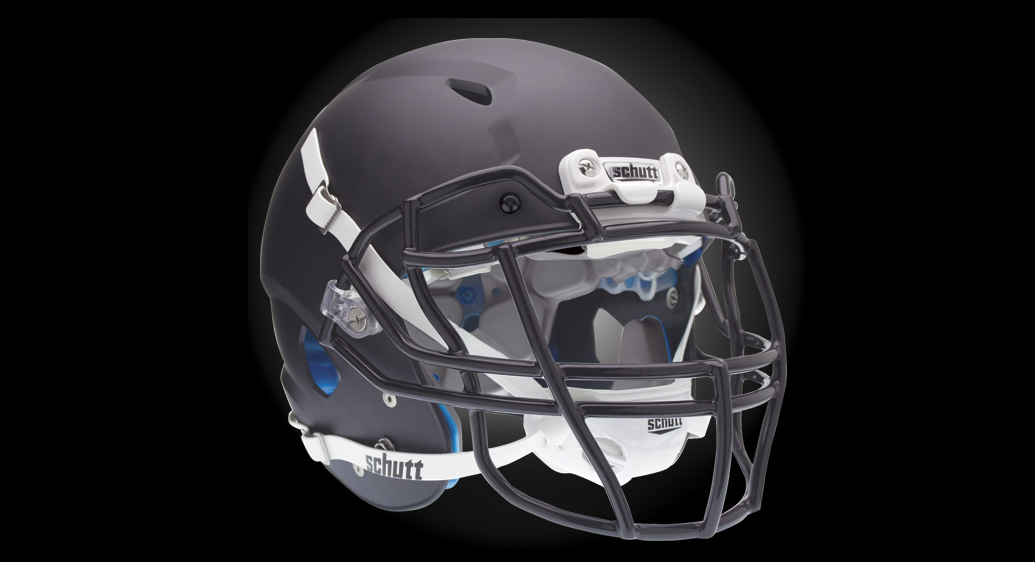
A total of 206 players, about 9 percent, sustained a total of 211 SRCs during the study, officials said. During the study, players wore Riddell, Schutt and Xenith helmets.
The study also found that custom-fitted mouth guards increased SRC risk by 60 percent compared to generic guards; the rate of SRC was nearly seven times higher during competition than practice and four times higher during full-contact practice than no-contact practice; and age, BMI, grade in school or competition level was not associated with an increased risk of SRC.
Another important finding was that players who sustained an SRC during the previous 12 months were almost twice as likely to sustain another one compared to players with a history of SRC, according to the release.
“This was surprising because we found that the increased risk exists even when controlling for the players’ use of protective equipment, years of football experience and player characteristics, such as their grade in school and competition level,” said Tim McGuine, UW sports medicine researcher and co-author of the study. “These results highlight the need for medical providers to document a history of SRC in young football players and for more education among parents, coaches and the players about the increased concussion risk in these individuals.”
The researchers said other than learning appropriate tackling and other on-field techniques, properly maintained and fitted helmets remain one of the most important ways to prevent skull fractures and scalp lacerations in football players.
Read more here

Friday, August 22, 2014

How teens experience concussions

This article explains how teens experience concussions, and the relationship between physical and emotional symptoms that results from them.

With multiple concussions between the two of them, Dan Han and Lisa Koehl's latest research interest isn't surprising.
"I played competitive soccer through high school and continue to play recreationally," says Koehl, a doctoral candidate in the University of Kentucky's Department of Psychology, "so I have firsthand experience with the dynamics that come into play when a teen suffers a concussion."
As a former high school assistant principal in the Chicago public school system, Han was responsible for overseeing student-athletes' return to school after a concussion. Han left educational administration to pursue his doctorate in neuropsychology. Now director of the Multidisciplinary Concussion Program at the UK HealthCare, Han has a reputation for top-notch clinical work and research on concussion.
"There aren't many places in Kentucky where you find a true multidisciplinary concussion program," Han says. "UK HealthCare's Multidisciplinary Concussion Program embraces an interdepartmental group effort -- from Neurology, from Neurosurgery, Sports Medicine, Physical Medicine and Rehabilitation, from the Trauma team -- we all work together to look at how brain injury affects the cognitive, physical and emotional state of our patients."
This group effort puts the athlete's safety first. For that reason, UK HealthCare's concussion program is the go-to for the athletics programs at Fayette County Public Schools, the University of Kentucky, Eastern Kentucky University, and Kentucky State University, who all rely on the UK Multidisciplinary Concussion Program's clinical expertise in sports concussion for state-of-the-art input to help make decisions affecting an athlete's return to play.
Add to Han's clinical skills a lifelong love of full contact martial arts (Han practices kickboxing and Brazilian jujitsu), and it's easy to see how Han and Koehl are well-suited to study the symptoms of sports concussions.
Drawing from a large UK database of patients with brain injury, Koehl and Han used a subset of 37 athletes aged 12 to 17 to explore post-concussion changes in physical, emotional, and cognitive symptoms over time.
According to Koehl, 22 of the 37 study participants demonstrated post-concussive emotional symptoms. Of those, 23 percent were sensitive to light while 14 percent were sensitive to noise. In comparison, of the 15 teens without emotional symptoms, 13 percent were sensitive to light and no teens were sensitive to noise.
There were no differences between the two groups in factors such as what percentage experienced loss of consciousness, amnesia, nausea and/or headaches, indicating that the groups were likely comparable in the level of severity of concussion.
"We discovered a bidirectional relationship between both emotional symptoms developing in conjunction with physical symptoms, and also emotional symptoms developing because of the physical symptoms," said Koehl.
In other words, said Koehl, "This research gives us a better understanding of the interaction between physical and emotional symptoms in concussion and will allow us to explore ways to help adolescents recover in a more timely fashion."
According to Han, teens in the study who reported anxiety were 55 percent more likely to experience attention difficulties than those without anxiety, while teens with irritability/aggression were 35 percent more likely to self-report problems with attention than teens without irritability.
"While these findings are preliminary and require a larger sample size to predict outcomes with more confidence, we are intrigued by the potential these data offer in terms of providing teens with a better treatment plan based on their unique cognitive, physical and emotional response to concussion," Han said.
"Identifying factors that affect a teen's experience after concussion may help in planning for the appropriate treatment and in making decisions about when to return to play and what accommodations are needed at school during recovery."
Read more here

Top-of-head concussions are more severe

A study claims that concussions on the top of a person's head have a higher level of severity than other concussions.

As we head into the start of the new school year, many young people will begin signing up for the football team. Though team sports are a great way for kids to boost their self-esteem and increase physical activity, there are certain risks involved with contact sports, including concussions. Now, a recent study from the American Academy of Pediatrics investigates how the location of impact could affect concussion severity.
Prior to this study, published in the journal Pediatrics, very little research had focused on how location of impact on the head could yield differentconcussion outcomes.
According to the Centers for Disease Control and Prevention (CDC), a concussion is a traumatic brain injury(TBI) that is the result of a bump, blow or jolt to the head that can change how the brain normally works.
To investigate further, researchers used data from the National High School Sports-Related Injury Surveillance Study to calculate rates and circumstances of concussions that occurred during football as a result of player-to-player collisions.
The team observed that most concussions of this type (44.7%) occurred on the front of the head, while 22.3% occurred on the side of the head. Based on where the impact occurred, the number and type of symptoms, symptom resolution time, and length of time before returning to play did not vary significantly.
But the data revealed that more football players whose concussions resulted from top-of-head impacts lost consciousness than those whose impacts were located elsewhere on the head.
In detail, 8% of players with top-of-head concussions experienced loss of consciousness, compared with only 3.5% of those with impacts on other areas.
Read more here


Tuesday, July 22, 2014

Only a doctor can determine when an athlete can return post-concussion

This article claims that only doctors can help determine when a player returns to play post-concussion.

An editorial published today in The Lancet Neurology calls for sports authorities to take into consideration the long term neurological problems that repeated concussions can cause.
Cerebral concussion is the most common form of sports-related traumatic brain injury (TBI), and the long-term effects of repeated concussions may include dementia, amyotrophic lateral sclerosis, and other neurological disorders, say the journal editors.
However, what is perhaps more concerning, is that even when the symptoms of concussion are delayed, or if they come and go quickly, neurological damage can remain without detection. This can lead to footballers, such as Uruguayan defender Álvaro Pereira during the 2014 FIFA World Cup, overruling doctors' advice to be substituted and returning to play after sustaining a head injury.
The journal editors argue that the decision for players to return to a game after sustaining a concussion should be made only by healthcare professionals, and "should surely be taken out of the hands of those with a vested interest in the player's performance."
According to the journal editors, "Many sporting organisations now acknowledge the potentially serious consequences of mild TBI and have drawn up new protocols to protect athletes who sustain a head injury'. However FIFPro, the world players' union, has called for an investigation of concussion protocols and return-to-play standards following Pereira's injury."
Read more here

Thursday, July 17, 2014

Do doctors have an obligation to protect athletes from concussions?

This article discusses if doctors have an ethical obligation to teach and protect athletes from concussions.

The American Academy of Neurology (AAN), the largest professional association of neurologists and a leading authority on sports concussion, is releasing a new position paper that states doctors have an ethical obligation to educate and protect athletes from sports concussion and clear them to play only when the athlete is medically ready, standing firm against objections from players, parents or coaches. The statement is published in the July 9, 2014, online issue of Neurology®, the medical journal of the AAN, and is being released ahead of The Sports Concussion Conference, July 11-13, 2014, in Chicago, where the AAN will share the latest scientific advances in diagnosing and treating sports concussion.
The AAN position statement calls for doctors to safeguard the future mental and physical health of athletes as a top priority, especially regarding return-to-play decision-making. Physicians also must educate patients and their families about the dangers of concussion in all relevant sports, according to the statement.
The Academy has spent several years analyzing all of the available research and ethical issues to develop this official position paper, which corresponds with the AAN's guideline on sports concussion.
"With nearly four million sports-related concussions in the US each year, it is imperative doctors are educated and protect these athletes who may have sustained a concussion," said lead author Matthew P. Kirschen, MD, PhD, a neurologist with The Children's Hospital of Philadelphia and a member of the American Academy of Neurology. "Concussions can have devastating effects such as short-term impairments in athletes' cognitive and athletic performance. Repeat concussions have been linked to long-term impairments in brain function, such as problems with learning, memory and behavior."
The statement also:
• Supports wider use of baseline cognitive testing
• Recommends that concussion evaluation and management training be added to neurology residency programs
• Suggests the development of a national concussion registry with mandatory reporting, which may help to document more rigorously the incidence and recurrence of concussion at all levels of play
Ethically, the statement concludes that physicians caring for athletes during and after a sports-related concussion should have adequate training and experience in the recognition and evaluation of both the existence and severity of potential brain injury.
"These strategies could help identify the threshold at which the number and severity of head injuries leads to irreversible brain injury. They may also help to clarify how concussion risk varies with factors like age, gender, puberty stage and ethnicity so athletes and parents can make informed decisions about playing contact sports," said Kirschen.
Read more here

Monday, July 07, 2014

Signs of concussion in children

This article discusses concussions in children and how parents can spot them.

What is a concussion?

A concussion is an injury to the brain that may be caused by a blow, bump, or jolt to the head. Concussions may also happen after a fall or hit that jars the brain. A blow elsewhere on the body can cause a concussion, even if an athlete does not hit his/her head directly. Concussions can range from mild to severe, and athletes can get a concussion even if they are wearing a helmet.
Signs and symptoms of a concussion
Athletes do not have to be "knocked out" to have a concussion. In fact, less than one out of 10 concussions results in loss of consciousness. Concussion symptoms can develop right away, or up to 48 hours after the injury. Ignoring any signs or symptoms of a concussion puts your child's health at risk!
Signs observed by parents or guardians
* Appears dazed or stunned
* Confused about assignment or position
* Forgets plays
* Unsure of game, score or opponent
* Moves clumsily
* Answers questions slowly
* Loses consciousness (even briefly)
* Shows behavior or personality changes (irritability, sadness, nervousness, feeling more emotional)
* Can't recall events before or after hit or fall
Symptoms reported by athlete
* Any headache or "pressure" in head (how badly it hurts does not matter)
* Nausea or vomiting
* Balance problems or dizziness
* Double or blurry vision
* Sensitivity to light and/or noise
* Feeling sluggish, hazy, foggy or groggy
* Concentration or memory problems
* Confusion
* Does not "feel right"
* Trouble falling asleep
* Sleeping more or less than usual
Be honest - your child must be honest
Encourage your athlete to be honest with you, his/her coach and your health care provider about his/her symptoms. Many young athletes get caught up in the moment and/or feel pressured to return to sports before they are ready. It is better to miss one game than the entire season - or risk permanent damage!
No athlete should return to activity on the same day he/she gets a concussion.
Athletes should NEVER return to practices/games if they still have ANY symptoms.
Parents and coaches should never pressure any athlete to return to play.
The dangers of returning too soon
Returning to play too early may cause Second Impact Syndrome (SIS) or Post-Concussion Syndrome (PCS). SIS occurs when a second blow to the head happens before an athlete has completely recovered from a concussion. This second impact causes the brain to swell, possibly resulting in brain damage, paralysis, and even death. PCS can occur after a second impact. PCS can result in permanent, long-term concussion symptoms. The risk of SIS and PCS is the reason no athlete should be allowed to participate in any physical activity before they are cleared by a qualified health care professional.
Recovery
A concussion can affect school, work, and sports. Along with coaches and teachers, the school nurse, athletic trainer, employer, and other school administrators should be aware of the athlete's injury and their roles in helping the child recover.
During the recovery time after a concussion, physical and mental rest are required. A concussion upsets the way the brain normally works, and causes it to work longer and harder to complete even simple tasks. Activities that require concentration and focus may make symptoms worse and cause the brain to heal slower. Studies show that children's brains take several weeks to heal, following a concussion.
Read more here

Tuesday, June 10, 2014

Study: Concussions take longer to heal from than previously believed

A study analysed people's cerebrospinal fluid to show that it takes longer to heal from concussions than previously believed.

Scientists at the Sahlgrenska Academy, University of Gothenburg, have shown that analysis of the cerebrospinal fluid after concussion can be used to determine the magnitude of brain injury and to follow its course. The studies show that recovery from concussion takes much longer time than previously known, and this may be of major significance for athletes of all ages in return to play considerations.
Sanna Neselius is a scientist at the Sahlgrenska Academy and member of the medical commission of the Swedish Boxing Federation. Her previous studies have shown that amateur boxing causes damage to nerve cells, that can take more than two weeks to heal. This discovery led to her being offered a place in the International Olympic Committee's expert group for boxing-related head injuries.
Sanna Neselius has now defended her doctoral thesis at the Sahlgrenska Academy, in which she shows that sports-related concussion heals much slower than previously known.
Four months recovery
"It has previously been believed that concussion heals in 7-10 days, and the Swedish Boxing Federation has decided the rest period to be of one month after a concussion, in order to be on the safe side. But our studies show that a concussion, such as may be experienced after being knocked out, can take more than four months to heal," says Sanna Neselius, who is herself a former boxer.
Further, the results show that repetitive head trauma in boxing, damages nerve cells in the brain, even though the boxer may not show any concussion symptoms.
Prevent resuming too early
Concussion is one of the most common sports-related injuries, and more athletes experience it every year. In recent years, focus has been directed on the effects of repeated concussions, in which athletes in such sports as ice hockey may be affected by long-term effects.
The cerebrospinal fluid samples analysed by Sanna Neselius and her colleagues can be followed until normalization and thereby be a valuable tool to prevent athletes resuming sport too early.
"The assessment today is often based on physical symptoms, neuropsychological tests, and the neurological examination of the athlete. Our studies show that these tests are not sensitive enough, nor can we rely on the athletes self-reported lack of symptoms. Concussion symptoms usually pass after a few days, but the neurological damage may still be present," says Sanna Neselius.
Safe rehabilitation
She continues: "The first sample is recommended to be taken 10-14 days after the concussion. This allows us to see the magnitude of the injury, and gives an idea of how long the healing process will be. I hope that brain injury markers in the cerebrospinal fluid, and hopefully also later in blood, can be used at all levels in all sports. By this we can use individual measurements to plan and guarantee safe rehabilitation."
Sanna Neselius points out that the brains of children and adolescents are more sensitive and require longer time to heal.
Read more here

Thursday, May 29, 2014

Study: Concussion rates double in high schoolers

A study claims that rates of concussions have doubled between 2005 and 2012 for high school athletes.

The rate of concussions in U.S. high school athletes more than doubled between 2005 and 2012, new research shows.
The trend probably reflects an increased awareness and more legislation governing concussions in student athletes, and not more danger in sports, the study authors noted.
"The bottom line is that rates have gone up," said lead researcher Dr. Joseph Rosenthal, an assistant professor of physical medicine and rehabilitation at Ohio State University. "We don't know the exact reason. This was an observational study, so I can't say for sure, but I believe what is explaining the increase is the increased awareness, not that sports are more dangerous. It's just that the concussions are being recognized more, which is good news."
The study was published recently in The American Journal of Sports Medicine.
Concussions are usually due to a blow to the head, often in sports such as football or ice hockey, but they also occur in other sports.
The researchers analyzed data from a sample of 100 U.S. high schools that have one or more certified athletic trainers on staff.
Rosenthal's team found that the concussion rate increased from 0.23 to 0.51 concussions for every 1,000 athlete exposures. An athletic exposure is defined as a single athlete participating in one competition or a practice.
From 2005 through 2012, just over 4,000 concussions occurred in seven sports. These included football, soccer, volleyball, basketball, wrestling, baseball and softball.
Five of those sports had increases that were statistically significant. These included football, boys' basketball, boys' wrestling, boys' baseball and girls' softball. High school football had the highest rates of concussion, according to the study.
Increased awareness is probably behind the higher numbers, agreed Steven Broglio, an athletic trainer and director of the Neurosport Research Lab, at the University of Michigan in Ann Arbor. He is also chair of the National Athletic Trainers' Association position statement on the management of sport-related concussion.
"I'm not entirely surprised at this uptick," said Broglio. More concussions are being recognized due to a number of factors, including increased media coverage on the dangers of concussions and position statements about concussion management from organizations such as his, he added.
Another recent study suggested that awareness about the dangers of concussions is higher. Researchers from Children's Hospital Colorado tracked the compliance of high school athletes who suffered from concussions and how well they followed the return-to-play guidelines.
The researchers found that half of the athletes they tracked were compliant in 2007, but by 2013, 80 percent were. Those findings were presented at the recent annual meeting of the American Society for Sports Medicine in New Orleans.
All 50 states and the District of Columbia have some kind of law designed to protect young athletes from returning to play too soon after a concussion. Experts agree that children who have a concussion need evaluation by a health care professional and need to be cleared before they can return to sports.
Read more here

Sunday, March 02, 2014

Helmets do not protect the side of your head

This article reports that helmets do not adequately protect the side of an athlete's head from injury.

Players using current football helmets aren't adequately protected against hits to the side of the head, which can lead to sometimes-lethal concussions and brain swelling, researchers said.

Ten helmets tested by researchers reduced the likelihood of traumatic brain injury by an average of 20 percent compared with no helmet in a simulation using crash test dummies. The most effective helmet reduced the risk by only 30 percent, according to data released Monday.

Concussion risks in sports are under increasing scrutiny as some deaths among young football players may have been prevented if those with head injuries had been kept off the field, according to a 2011 study in the journal Pediatrics. Research published in January 2013 found abnormalities in the brains of former National Football League players compared with those who didn't play the game. Current tests of helmets focus on impacts that lead to broken skulls, and don't adequately assess the chances of traumatic brain injury, researchers said.

"None of them are fantastic, sadly, and maybe that's the take-home message," John Lloyd, the study author and the research director at San Antonio, Florida-based Brains Inc., said in a telephone interview. "Maybe if football players realized that their helmet only reduced their concussion risk by 20 to 30 percent, they'd lead with the head less often."

Professional sports leagues, including the NFL and Major League Baseball, have changed their medical protocols for treating players with head injuries in response to concussion data. Football is the deadliest sport among youths, and 12 percent of football deaths are caused by head or neck injuries involving students who returned to the game after a concussion. Helmets may provide another target to make sports safer, Lloyd said.

The researchers used a crash-test dummy head and neck to see how well they'd respond with and without helmets to 12 mile- per-hour impacts. They conducted 300 tests, and also tried to measure how much the brain twists in the head. The tests allowed the neck to flex on impact, to better simulate rotational forces.

"When the head comes to a sudden stop, if it's rotating, the brain material is twisting inside the head," Lloyd said. "That can cause concussion and brain injury, including life- threatening subdural hematomas."

The best helmet reduced the likelihood of concussion by 30 percent, Lloyd said. That may be because it was lighter than the other helmets, causing the head and neck to rotate less. It wasn't as good at providing protection against direct impacts that might shatter the skull, and didn't perform as well on standard tests, he said.

The study also found that football helmets fared better against linear impacts, which lead to bruising and skull fracture. Compared with dummies with no helmets, the football helmets reduced the risk of skull fracture by 60 to 70 percent and reduced the risk of brain bruising by 70 to 80 percent.

The research was released in advance of a presentation at the American Academy of Neurology's annual meeting starting April 26 in Philadelphia.

Lloyd suggested that taking the facemask off the helmet and switching to a soft helmet may help diffuse the impact, leading to fewer brain injuries. This is how the scalp works to protect the brain, moving to allow force to be spread and absorbed, he said. Helmets made of softer materials and without facemasks were used in football more than 50 years ago.

"If we got away from hard helmets, we could use advanced materials to provide protection for the head and brain," he said. "The only downside is you wouldn't have anything to attach a faceguard to."

Brains Inc., a company focused on the biomechanics of traumatic brain injury, supported the study.

Read more here

Saturday, February 01, 2014

Study claims concussions are common in middle school-aged girls playing soccer

A recent study claims that girls who are middle school-aged and play soccer commonly have concussions.

Girls who play soccer in middle school are vulnerable to concussions, new research shows.
And despite medical advice to the contrary, many play through their injury, increasing the risk of a second concussion, the study found.
Although awareness has increased about sports concussions, little research has been done on middle school athletes, especially girls, noted study co-author Dr. Melissa Schiff, a professor of epidemiology at the University of Washington School of Public Health in Seattle.
In the study, which evaluated 351 soccer players between the ages of 11 and 14, Schiff and her colleagues found 59 concussions. A concussion is defined as a traumatic injury to the brain after a blow, shaking or spinning. In the study, the girls' symptoms included headache, dizziness, drowsiness and concentration problems.
That rate of injuries, Schiff said, is higher than what has been reported at either high school or college level of women's soccer.
Heading the ball was to blame for about 30 percent of the injuries. This involves hitting the ball with your forehead to redirect the ball in play. More than half of the concussions were from contact with another player.
Experts recommend those who have a concussion be evaluated by a doctor or other health care professional trained in the injury, but Schiff found that ''56 percent were never evaluated." Experts also advise that players not return to practice or games until symptoms disappear, but 58 percent of the players in the study continued to play even with symptoms persisting, she said.
The study was published online Jan. 20 in the journal JAMA Pediatrics.
Awareness about the dangers of concussions has increased, Schiff said, beginning with the National Football League's attention to the problem. Research about the problem has slowly increased to encompass college-level, high school, and now middle school players, she said.
In this study, the researchers randomly selected 33 of 72 elite teams from four youth soccer clubs in the Puget Sound region of Washington state. The study continued from 2008 to 2012. Players reported injuries and symptoms.
With so many injuries blamed on heading the ball, should it be banned?
Schiff thinks that is unrealistic. "It's part of the soccer sport," she said. However, it was found to result in concussion 23 times more often in a game than in practice. One suggestion, she said, is to teach middle school athletes heading in practice but tell them not to do it in games until they are older. The researchers speculate that younger players' less mature brains and weaker neck muscles, along with poorer heading technique, may contribute to the number of concussions.
The new study ''calls attention to the high incidence of concussion in this age group," said Dr. John Kuluz, director of traumatic brain injury and neurorehabilitation at Miami Children's Hospital.
The number of injuries blamed on heading the ball, 30 percent, is not surprising, he said. "I see it all the time," Kuluz explained. Often, he noted, a heading injury occurs along with colliding with another player.
Kuluz advises young athletes who have had a concussion to avoid heading the ball.
Parents need to pay attention to their child during and after soccer, he suggested. "In the event of an injury, pay attention to symptoms," Kuluz said. He added that if a concussion is suspected, a young athlete must be evaluated by a doctor or trainer who has experience with concussions.
"Soccer can be done safely," he said, but parents and coaches need to be aware of concussion symptoms and obtain good medical evaluation and care.
Read more here