Showing posts with label football concussion. Show all posts

Saturday, October 31, 2015

Concerns about concussions in high school football

Concussion awareness is raising concerns about the safety of football for high schoolers.- JR

Awareness of the seriousness of concussions has been at the forefront of recent discussions involving the dangers of playing football.

Earlier this year, the NFL settled a class-action lawsuit with more than 5,000 ex-players who asserted that the league willfully hid information about the dangers of concussions.

While many hailed that as progress, high school coaches wonder if the risks involved with concussions will affect the numbers of participants in the future.

“As a high school coach, my big worry is that parents start moving kids away from the game,” Steele coach Scott Lehnhoff said. “We’re going to do everything we can to make sure protocols are followed and kids aren’t going back until it’s completely safe for them.”

The University Interscholastic League, which governs most high school sports in Texas, has a “return-to-play” protocol in which an athlete who has been diagnosed with a concussion must get a doctor’s approval before returning to play.

“If something looks like a possible concussion, then we get him out of there and make sure there are no coaches jumping in and saying, ‘Get him back in there,’” Highlands coach Juan Morales said.
But what more can be done?

Some things are already in place. Players are penalized for leading with their helmets. Helmet-to-helmet contact is also flagged as a penalty. Therefore, players are being taught not to lead with the heads.

“We need to try to take the head out of the game as much as possible,” Lehnhoff said. “As a coach in the past, maybe if a kid tackled with his head, you didn’t say anything, but now you are going to say something.”

Read more here

Monday, July 21, 2014

No difference in helmet brands

A study shows that there is no difference in how many concussions player get based on helmet brand.

The University of Wisconsin reports that its new study showed no difference in the rate of concussions based on what helmet brand is used.

The university recently completed the first large-scale, prospective study in a field-based sports setting to examine if the rate of concussion is affected by the protective equipment that is worn by high school football players.

Not only did the brand not make a difference in the rate of concussions, there also was no difference in the severity of those concussions, either.

The research concluded that well-maintained and fitted football helmets remain important to reduce the risk of skull fracture and intracranial hemorrhage, but there is serious doubt to whether a helmet can ever be designed to prevent concussions.

In addition, the research found a similar concussion risk regardless of the age of the helmet.

Dr. Alison Brooks, assistant professor at University of Wisconsin-Madison, spearheaded the study with Dr. Tim McGuine. Brooks called out the increased risk among previously injured athletes.

“Players in this study who had a history of previous concussion were at higher risk of sustaining another concussion, regardless of the helmet brand worn,” said Brooks. “Rather than focus on the belief that a specific helmet can ‘prevent’ concussions, which is not supported by the current scientific literature, our efforts may be better spent educating players, parents and coaches about the increased risk of concussion in these previously concussed young athletes.”

A concussion in football is a very complex event involving different and changing forces, linear (straight motion or direct hit) and rotational (circular motion of head or torque) accelerations, helmet fit, player position, impact duration, player concussion history and overall health.

Schutt Sports has the two highest 5 STAR helmets in 2014, yet the company admits that the ratings do not support a conclusion that the helmets will limit or prevent concussions.

“Schutt Sports would never represent to somebody that they’re not going to get a concussion if they wear one of our helmets,” said Robert Erb, CEO of Schutt Sports. “As a manufacturer of a helmet considered by this rating system to be the best available, I believe telling people that an athlete is less likely to get a concussion if they use a 5 STAR helmet is irresponsible. The best helmet is the one that carries NOCSAE certification, fits the player, fits the position, is configured with the proper mask and the player is comfortable in it.”

Consumers should also know that the rating given to helmets applies only to size large adult.

According to the Virginia Tech website, “It is possible that the same helmet models of different size may produce different results; however, we do not have any data on this, and we only tested large helmets as a first step.”

Read more here

Wednesday, June 25, 2014

Will sensors be in all helmets by 2015?

A research study is looking into adding sensors into helmets. The results may be strong enough to put sensors into all helmets by 2015.

A pilot program designed to provide more information for concussion research could become more widespread, and put sensors in every helmet by 2015.
According to Tom Pelissero of USA Today, two teams participated in the program for part of last year, and researchers are trying to fine-tune the technology to measure head impact in games.
The work is being done by University of North Carolina researcher Kevin Guskiewicz, who is a member of both league and union safety committees.
“We need a sample of these players across all positions and studying every play type possible,” Guskiewicz said. “So, that’s the next step. Then I hope from there that, if we find (the devices) have utility that could actually help an individual player … my hope would be that we would go league-wide.”
Guskiewicz said the project still needs to be approved by the league and union, and getting that kind of agreement has been an issue in the past.
But he said he was “thrilled” that teams are buying into the idea of collecting data, though hurdles remain.
“I personally believe that there is valuable information to be gained for a player to learn how to perhaps modify his behavior, to track the way in which he’s leading with his head possibly or positioning his body on a certain play type that could help protect him,” Guskiewicz said.
“So, we just sort of have to go through this in a methodical approach to work on the feasibility. This year, I hope that we’re able to move forward with answering some of the questions that we have around potential rules changes, and then the following year, who knows?”
As with most issues, getting players and management to agree to anything is difficult, but if the technology can present a step forward in the accurate diagnosis of concussions and head injuries, then players and the league need to find a way to implement.
Read more here

Friday, January 17, 2014

New helmets may be able to reduce concussions

New helmets with fluid-filled patches to protect the head may be effective in reducing concussions in football players.

Researchers in Florida believe they have come up with a low-cost way to improve football helmets and better protect players against the glancing blows that experts say contribute to most concussions.
Protective sports helmets on the market today are largely designed to absorb shock from direct linear hits, like head butts, which force the head straight back, says University of Florida (UF) engineering professor Ghatu Subhash.
But Subhash's new strategy makes use of fluid-filled pouches that, his tests show, also protect the brain from the rotational or shearing force of off-center hits on helmets.
"The fluid-filled cells within the helmet respond, so no matter the angle of impact, the helmet automatically protects any part of the head," said Subhash, who came up with the idea while working on improving helmets and body armor for the military.
Subhash, along with his collaborators - UF neurosurgeon Ian Heger and UF radiologist Keith Peters - is set to unveil the safer helmet on Thursday. He will demonstrate its effectiveness on January 20 for venture capitalists, who could fund wider scale testing and manufacturing.
Subhash said he hopes to have low-cost pouches suitable for retrofitting existing helmets available in stores within two years.
The pouches also can be used in helmets for the military, firefighters and constructions workers, he said.
A growing body of academic research shows the repeated hits to the head to which football players are subjected can lead to chronic traumatic encephalopathy, a condition linked to the loss of decision-making control, aggression and dementia.
The National Football League agreed last year to pay more than $760 million to settle a lawsuit brought by more than 4,500 former players.
Subhash said cushions and water- or air-filled pouches typically have been used to help protect against linear blows.
But to blunt shearing or rotational forces, he adds pouches filled with non-Newtonian fluids, which he says increase resistance when stressed.
Think kids' Flubber or Silly Putty, which can flow or break depending on stress, or chilled caramel ice cream topping which is easily spoonable yet stays put in an overturned jar. Non-Newtonian fluids also are used in some modern automobile shock absorbers, Subhash said.
Subhash said when one of his fluid-filled cells is struck, the fluid squeezes through a tube into a second cell, thus neutralizing the force. The fluid then returns to its original cell, making the pouches reusable.
Concern over the long-term impact of blows to the head has created a market for expensive helmets that claim to protect players from concussions.
"There are no helmets that will protect against concussions," said Frederick Mueller, research director for the standard-setting body, National Operating Committee on Standards for Athletic Equipment.
"Helmet manufactures may say that, but none at the present time protect against concussion injuries," he said.
Mueller's organization has warned about the limitations of the testing used in a popular 5-Star helmet rating system created by Virginia Tech, including the lack of consideration of rotational forces.

"Many people believe that the rotational forces are more important than linear when you talk about concussions," Mueller said.
Read more here

Saturday, January 11, 2014

A blood test may help diagnose concussions

This article discusses research that claims that a blood test could be a non-subjective way to diagnose a concussion.

A report Monday in the journal Pediatrics says kids who suffer concussions should lay off reading, homework and video games. By giving their brains a rest, most can recover in 20 to 50 days, about twice as fast as those who keep doing those activities.
We also have news regarding how concussions are diagnosed. Researchers are developing a test that could be a game changer.
Quarterback Taylor Kelly of the Arizona State Sun Devils understands the mindset of college football players when it comes to injuries: They are going to want to keep playing.
"Guys just want to go out and play it, you know?  They don't care if their heads are a little banged up," Kelly said.
Neurologist Dr. Javier Cardenas specializes in brain injury. He says overcoming the reluctance of athletes to admit symptoms is only one of the problems in diagnosing concussions.
"Right now when we identify a concussion it is purely subjective. We look at symptoms. Do they have headaches? Do they have dizziness? There is no objective information. Having something objective is the holy grail of concussion," said Cardenas.
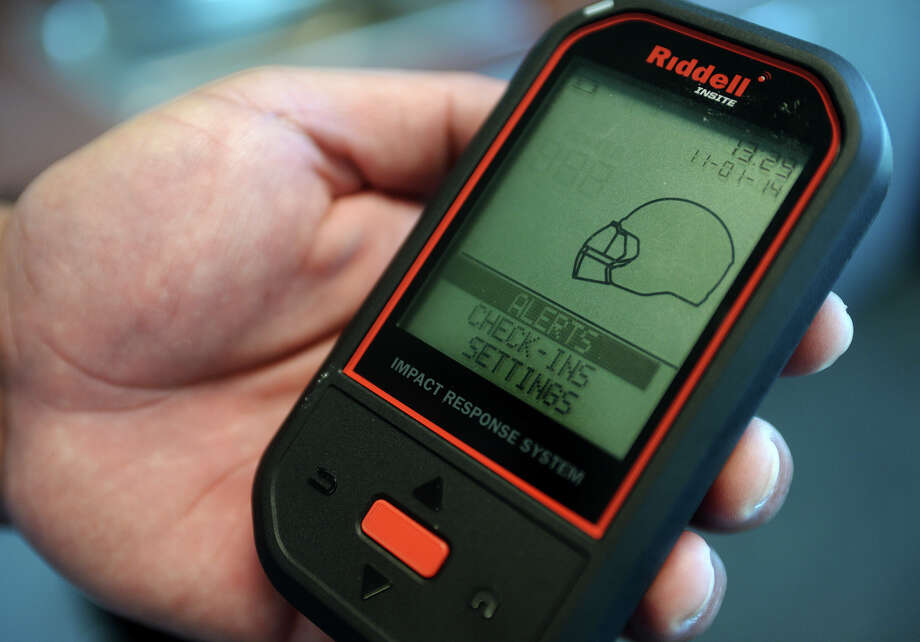
This season, Kelly and his teammates took part in a study trying to find a better way to detect concussion. Riddell, the athletic equipment company, supplied the team with helmets that measure all head impacts during practices and games. Then, after every game, the players gave samples of their blood, saliva and urine.
These are now being analyzed at the Translational Genomics Research Institute in Phoenix to see whether evidence of head trauma shows up in body fluids as a so-called biomarker.
Brain cells contain generic material call microRNA. Normally, tiny spheres containing that material break off and make their way into the spinal fluid, then the bloodstream. During a concussion, the bran actually bounces against the skull, and researchers believe the impact can cause changes in the microRNA, changes they hope can be detected in blood tests.
TGen scientists are comparing the RNA in each player's body fluids with the impact data from his helmet to see if they match up.
"It might be that we can actually protect players. So identify players who are at risk but have them take it easy, sit out more, based how their biomarkers are rising over time," said Kendall Van Keuren-Jenses, a member of the research team.
The scientists have data illustrating how the technology might have helped one of the players in the study.
The graphic shows the head impacts recorded in his helmet over several weeks. One hit was the equivalent of four times the punch b a heavyweight boxer – the hardest impact received by any player in the study. He continued to play, and was diagnosed with a concussion 10 days later.
Read more here

Saturday, January 04, 2014

Why no helmet can prevent concussions

This comprehensive article gives an overview of the research that has been done on helmets and concussions, and the article discusses what this research means for football players.

It's a glorious time to be a football fan.
The NFL playoffs are underway, the Super Bowl is just weeks away. The national rite of football gives so many people so many exciting moments. Maybe that's why it can be hard to wrap one's mind around one of the game's huge downsides: what it may do to the brains of the young men who play it.
The spotlight on head injuries in sports, particularly football, has grown more intense in recent years. Last fall, the NFL settled for $765 million dollars in a class action lawsuit by former players over concussions, a case heard in Philadelphia.
Last week, a Mississippi father filed a federal class action suit on behalf of all student athletes asking the bodies governing college and high school sports to provide better and more uniform information on concussion risks.
Many of the sports Americans and young adults in particular love to play – not just football, but hockey, soccer and the rest – risk collisions and jolts to the head that can lead to concussions. Sometimes the signs are obvious, as was the case with Emily Panchak and Patrick Crowley, high school athletes in the Wilmington area.
"I didn't get knocked out, but I was crying, and it hurt really bad," says Panchak, who right after a head collision last spring, couldn't remember the bus ride over to the soccer game that day.
"The way I landed, the way I hit the back of my head on the ground, it just riled me pretty bad," recalls Patrick Crowley, Concord Raiders' football captain, of a concussion that put him out of play for several weeks a few years ago.
Injuries can also be more subtle, cautions Rosemarie Scolaro Moser, a neuropsychologist who runs the Sports Concussion Center of New Jersey.
"The problem with a concussion is true symptoms often don't show till hours or days later," Moser recently told The Pulse. "And with youth, they're more vulnerable to a second hit. So for example, if they haven't fully recovered and they get hit again, that second hit, even if it might not have caused a concussion to begin with on its own, can cause serious damage."
Searching for the magic bullet
Trying to change how games are played to avoid collisions has proven difficult and controversial. It has led to a search for the magic bullet, in hopes of sharply reducing the risk of concussion: better equipment. In football, this often means the helmet.
Some companies have marketed claims to young athletes their headgear could be the better mousetrap.
At Schuylkill Valley Sports in Easton, Pa., Mike Morris estimates two to three high school football players per team have come in to buy their own, more expensive, helmet this past season.
"They're looking to get something better," says Morris. "They're just looking for something that will minimize the risk of concussion."
But do any football helmets really cut down the risk of concussion? And are certain models worth the extra money?
What role do helmets play? 
Halfway across the country, Alison Brooks had a similar experience to Mike Morris at Schuylkill Valley Sports. Brooks specializes in sports medicine at the University of Wisconsin. Parents and young athletes kept asking her which helmets they should get. Many were feeling pressure at school to buy newer ones.
So she designed a prospective study, observing over 1,000 high school football players last year who wore the three most common helmets, including some of the newest models. She parsed out the number of reported concussions based on helmet brand, model and age, to see if there was any big variation.
There wasn't.
"You know as best we can tell they all adequately do what they were designed to do, which is prevent skull fractures, prevent intracranial bleeds, prevent superficial scalp and face injuries," Brooks recently told The Pulse. "But there's not any evidence that any one of them is particularly going to reduce your concussion risk."
Brooks' findings are preliminary, and may not account for other possible external factors. But the results don't surprise Robb Rehberg, a concussion specialist and professor of athletic training at William Patterson University in New Jersey. Rehberg thinks some helmets are doing a better job at protecting the head and "attenuating the forces that typically cause concussion," but while helmet design has improved a lot compared to ten years ago none can, nor should, claim to prevent a concussion.
Other research points to similar takeaways.
Evidence limited
In general, scientists don't know how effective helmets are when it comes to concussions in kids ages 5 to 21.
Kristy Arbogast and Susan Margulies reviewed all the evidence to date for a recent Institute of Medicine Report: Sports-Related Concussions in Youth – Improving the Science, Changing the Culture. Margulies, a bioengineer at the University of Pennsylvania, says part of the challenge is the science behind concussions isn't there yet. There's no standard, objective way for actually identifying and reporting them.
"Evidence that a concussion has occurred is really entirely based on the athlete saying that I think I've had a head injury," says Margulies.
So imagine trying to diagnose an ACL tear and come up with a rehab plan solely on the athlete's description of knee pain rather than an MRI, where the actual injury can be objectively visualized. The IOM report points to another major challenge when it comes to identifying concussions: the culture of sports and pressure to hide injuries.
"Probably one of the most important things we stress to the kids is you have to be honest," George Kasonovich recently told The Pulse.
Kasonovich, head football coach at Concord High School in Delaware, says schools have much better protocols nowadays,thanks to improved education, regulations and awarenessregarding concussions. If one is even suspected on the field, a player's out and can't return without a physician's note.
But Kasonovich's mindset isn't universal. And, athletes also face a lot of pressure to hide injuries. Seniors Patrick Crowley and Keyon Powell are Concord's co-captains. Both have suffered from concussions in the past, and had to sit out for several weeks.
"Some of the worst people to talk to about that are your teammates and your friends because they're always going to want you go out there no matter what you're feeling," says Crowley.
"It's basically the pride of it, you don't want to sit on the sideline, you always want to be out there helping your teammates," says Powell.
It makes the job of the school's athletic trainer, Scott Klabunde even trickier. He doesn't joke around.
"I'm not going to lie, I've threatened them," says Klabunde. "It was 'hey, if you really screw this up, you could die.'"
Technology outpacing science
While helmets do protect against head injuries like skull fractures, relying on them to prevent concussions is problematic for another reason: the limitations in how helmets are assessed.
Arbogast, with the Children's Hospital of Philadelphia, says helmet standards and effectiveness have historically been based on a drop test.
"They take a helmet, they put a humanoid head form - a plastic rubber head form in the helmet - and they drop it a given height and measure its acceleration," says Arbogast. "And there are thresholds below which every helmet must meet."
But in the real world you don't always hit your head in a straight line that way. Arbogast and Margulies both say the manor and direction your head moves are big factors in developing a concussion.
"We know it's a combination of linear movements along a straight line and rotational movements," says Arbogast. "But we don't know the specific level, the magnitude of those movements."
"Nodding your head yes verses 'I don't know' are two rotational motions," says Margulies. "They could have very different risks associated with concussion.
Those concussion risks could also vary based on a kids' age and individual experience. No one hit and reaction is alike. The science, they say, just hasn't caught up with the product development.
"And so without that fundamental data we can't really answer a question about whether a given helmet protects against concussion or not," says Arbogast.
"Current helmets may mitigate rotational accelerations, but we're not measuring it now," Margulies adds.
For the recent IOM youth concussion report, Margulies and Arbogast also examined other kinds of protective equipment, like facial masks and mouth guards. They found no evidence those devices reduce concussion risk, though they are important when it comes to protecting against other kinds of injuries.
Their chapter notes that solely relying on helmets as a way to reduce concussions might have another unintended effect, a phenomenon called "risk compensation" which has been studied a lot in safety literature: "the athlete may be emboldened by the increased protection to take additional risks, thus mitigating any benefits of the protective device."
More to preventing concussions
Despite helmet limitations, concussion specialists caution against relying only on that bit of equipment to prevent or lessen the risk of getting a concussion, anyway.
"The helmet isn't all of the story here," says Arbogast. "We need to understand how particular practice methods or aspects of the game might be able to be modified to protect the head."
Arbogast says that includes teaching different tackling techniques, and developing strategies that go well beyond the playing field, in terms of education and following up for when a concussion occurs, to ensure a full a recovery.
Read more here

Thursday, November 07, 2013

Self-reporting concussions in youth sports is dealing with a "culture of resistance"

Youth sports are currently trying to deal with the "culture of resistance" that has formed around self-reporting concussions.

Young athletes in the U.S. face a "culture of resistance" to reporting when they might have a concussion and to complying with treatment plans, which could endanger their well-being, says a new report from the Institute of Medicine and National Research Council. The report provides a broad examination of concussions in a variety of youth sports with athletes aged 5 to 21. Overall, reported concussions rates are more frequent among high school athletes than college athletes in some sports -- including football, men's lacrosse and soccer, and baseball; higher for competition than practice (except for cheerleading); and highest in football, ice hockey, lacrosse, wrestling, soccer, and women's basketball. Concussion rates also appear higher for youths with a history of prior concussions and among female athletes.
Although the committee that wrote the report examined useful scientific information to inform its study, it discovered that research about youth concussions is limited. To address these gaps in knowledge, the committee identified several areas for further research, including establishing a national surveillance system to accurately determine the number of sports-related concussions, identifying changes in the brain following concussions in youth, conducting studies to assess the consequences and effects of concussions over a life span, and evaluating the effectiveness of sports rules and playing practices in reducing concussions.
"The findings of our report justify the concerns about sports concussions in young people," said Robert Graham, chair of the committee and director of the national program office for Aligning Forces for Quality at George Washington University, Washington, D.C. "However, there are numerous areas in which we need more and better data. Until we have that information, we urge parents, schools, athletic departments, and the public to examine carefully what we do know, as with any decision regarding risk, so they can make more informed decisions about young athletes playing sports."
The committee found little evidence that current sports helmet designs reduce the risk of concussions. It stressed that properly fitted helmets, face masks, and mouth guards should still be used, because they reduce the risk of other injuries -- such as skull fractures; bleeding inside the skull; and injuries to the eyes, face, and mouth. The marketing for some protective devices designed for youth athletes, such as mouth guards and headbands for soccer, has advertised that these devices reduce concussion risk, but there is a lack of scientific evidence to support such claims, the committee said.
The committee examined scientific literature on concussion recognition, diagnosis, and management and found that the signs and symptoms of concussion are usually placed into four categories -- physical, cognitive, emotional, and sleep -- with patients experiencing one or more symptoms from one or more categories. Typically, youth athletes recover from a concussion within two weeks of the injury, but in 10 percent to 20 percent of cases concussion symptoms persist for a number of weeks, months, or even years. A potentially concussive injury requires removing the athlete from play, caring for the injury appropriately in both the acute stage and during the recovery process, and returning to play only when he or she has recovered demonstrably and is no longer having any symptoms, the committee said. An individualized treatment plan that includes physical and mental rest may be beneficial for recovery from a concussion, but current research does not indicate a standard or universal level and duration of rest needed. Athletes who return to play before their brain has fully healed may place themselves at increased risk for prolonged recovery or more serious consequences if they sustain a second brain injury.
The committee examined data on the effects of single and multiple concussions and found some observed impairments in the areas of memory and processing speed. It also determined that a history of previous concussions is a predictor of increased risk for future concussions, although the extent to which the risk is increased is unknown. In several studies, the number and severity of concussion symptoms is greater in athletes with a history of two or more concussions. Additionally, athletes with a history of prior concussions may have more severe subsequent concussions and may take longer to recover. The time interval between concussions may also be an important factor in the risk for and the severity of subsequent concussions. Whether repetitive head impacts and multiple concussions sustained in youth lead to long-term neurodegenerative disease, such as Chronic Traumatic Encephalopathy (CTE), remains unclear.
The committee reviewed surveys of retired professional athletes, which provided some evidence that a history of multiple concussions increases risk for depression. In a survey of more than 2,500 retired professional football players, approximately 11 percent reported having a prior or current diagnosis of clinical depression. Very little research has evaluated the relationship between concussions and suicidal thoughts and behaviors. There currently are no data to evaluate this relationship because existing post-concussion symptom evaluations do not assess suicidal thoughts.
Some studies have shown that enforcement of sports rules by coaches and officials and adherence to these rules by players may help reduce the incidence and severity of sport-related concussions in youths. Several organizations have called for a "hit count" in youth sports to limit the amount of head contact a particular player should experience over a given amount of time. While the concept of limiting the number of head impacts is fundamentally sound, the committee found that implementing a specific threshold for the number of impacts or the magnitude of impacts per week or per season is without scientific basis.
The committee included additional noteworthy findings in the report:
  • The reported number of individuals aged 19 and under treated in U.S. emergency departments for concussions and other non-fatal, sports- and recreation-related TBIs increased from 150,000 in 2001 to 250,000 in 2009.
  • Football, ice hockey, lacrosse, wrestling, and soccer are associated with the highest rates of reported concussions for U.S. male athletes at the high school and college levels.
  • Soccer, lacrosse, and basketball are associated with the highest rates of reported concussions for U.S. female athletes at the high school and college levels. Women's ice hockey at the collegiate level has the highest rate of reported concussions.
  • Youths with a history of prior concussion have higher rates of reported sports-related concussions.
  • Among military personnel, mild traumatic brain injuries, of which concussions are one category, represent about 85 percent of all TBIs.
  • Among military personnel, about 80 percent of mild TBIs do not occur in the deployed setting and are commonly caused by automobile crashes involving privately owned and military vehicles, falls, sports and recreation activities, and military training.
Read more here

Tuesday, October 08, 2013

Hello! Cumulative subconcussive blows are important! The spectrum of disease in chronic traumatic encephalopathy!

 2012 Apr 30;45(7):1265-72. doi: 10.1016/j.jbiomech.2012.01.034. Epub 2012 Feb 28.

Biomechanical correlates of symptomatic and asymptomatic neurophysiological impairment in high schoolfootball.

Source

School of Mechanical Engineering, Purdue University, West Lafayette, IN 47907-2088, United States.

Abstract

Concussion is a growing public health issue in the United States, and chronic traumatic encephalopathy (CTE) is the chief long-term concern linked to repeated concussions. Recently, attention has shifted toward subconcussive blows and the role they may play in the development of CTE. We recruited a cohort of high school football players for two seasons of observation. Acceleration sensors were placed in the helmets, and all contact activity was monitored. Pre-season computer-based neuropsychological tests and functional magnetic resonance imaging (fMRI) tests were also obtained in order to assess cognitive and neurophysiological health. In-season follow-up scans were then obtained both from individuals who had sustained a clinically-diagnosed concussion and those who had not. These changes were then related through stepwise regression to history of blows recorded throughout the football season up to the date of the scan. In addition to those subjects who had sustained a concussion, a substantial portion of our cohort who did not sustain concussions showed significant neurophysiological changes. Stepwise regression indicated significant relationships between the number of blows sustained by a subject and the ensuing neurophysiological change. Our findings reinforce the hypothesis that the effects of repetitive blows to the head are cumulative and that repeated exposure to subconcussive blows is connected to pathologically altered neurophysiology.
Copyright © 2012 Elsevier Ltd. All rights reserved.
PMID:
 
22381736
 
[PubMed - indexed for MEDLINE]


 2013 Jan;136(Pt 1):43-64. doi: 10.1093/brain/aws307. Epub 2012 Dec 2.

The spectrum of disease in chronic traumatic encephalopathy.

Source

United States Department of Veterans Affairs, VA Boston Healthcare System, Boston, MA 02130, USA. ann.mckee@va.gov

Abstract

Chronic traumatic encephalopathy is a progressive tauopathy that occurs as a consequence of repetitive mild traumatic brain injury. We analysed post-mortem brains obtained from a cohort of 85 subjects with histories of repetitive mild traumatic brain injury and found evidence of chronic traumatic encephalopathy in 68 subjects: all males, ranging in age from 17 to 98 years (mean 59.5 years), including 64 athletes, 21 military veterans (86% of whom were also athletes) and one individual who engaged in self-injurious head banging behaviour. Eighteen age- and gender-matched individuals without a history of repetitive mild traumatic brain injury served as control subjects. In chronic traumatic encephalopathy, the spectrum of hyperphosphorylated tau pathology ranged in severity from focal perivascular epicentres of neurofibrillary tangles in the frontal neocortex to severe tauopathy affecting widespread brain regions, including the medial temporal lobe, thereby allowing a progressive staging of pathology from stages I-IV. Multifocal axonal varicosities and axonal loss were found in deep cortex and subcortical white matter at all stages of chronic traumatic encephalopathy. TAR DNA-binding protein 43 immunoreactive inclusions and neurites were also found in 85% of cases, ranging from focal pathology in stages I-III to widespread inclusions and neurites in stage IV. Symptoms in stage I chronic traumatic encephalopathy included headache and loss of attention and concentration. Additional symptoms in stage II included depression, explosivity and short-term memory loss. In stage III, executive dysfunction and cognitive impairment were found, and in stage IV, dementia, word-finding difficulty and aggression were characteristic. Data on athletic exposure were available for 34 American football players; the stage of chronic traumatic encephalopathy correlated with increased duration offootball play, survival after football and age at death. Chronic traumatic encephalopathy was the sole diagnosis in 43 cases (63%); eight were also diagnosed with motor neuron disease (12%), seven with Alzheimer's disease (11%), 11 with Lewy body disease (16%) and four with frontotemporal lobar degeneration (6%). There is an ordered and predictable progression of hyperphosphorylated tau abnormalities through the nervous system inchronic traumatic encephalopathy that occurs in conjunction with widespread axonal disruption and loss. The frequent association of chronic traumatic encephalopathy with other neurodegenerative disorders suggests that repetitive brain trauma and hyperphosphorylated tau protein deposition promote the accumulation of other abnormally aggregated proteins including TAR DNA-binding protein 43, amyloid beta protein and alpha-synuclein.
PMID:
 
23208308
 
[PubMed - indexed for MEDLINE] 
PMCID:
 
PMC3624697
 [Available on 2014/1/1]