Showing posts with label concussions. Show all posts

Wednesday, April 15, 2015

Study: Most NHL and Youth Hockey Helmets are Unsafe

A study shows that most helmets used in the NHL and by youth hockey players are not safe.

A new independent study has found that hockey players, ranging across the National Hockey League, or NHL to the youth leagues, are at the risk of concussion from hits during matches due to a lack of protection thanks to poor quality helmets.
The study, conducted by Virginia Polytechnic Institute and State University, tested 32 helmets available in the market on their ability to protect the players from concussion. The study aimed to rank the helmets on a scale of five stars. It was not funded by the NHL, cost $500,000 and took three years to complete.
According to the study, published publicly last Monday, none of the helmets got a 4-star or 5-star rating. Only one helmet, made by Warrior Sports, got a 3-star rating. Nine helmets failed to get even a single star, and the rest got a 1-star or 2-star rating.
"We don't think anybody should be playing in these helmets," Stefan Duma, the head of Virgina Tech’s biomedical engineering department said, as reported by ESPN.
Players wearing the poorly rated could be at risk of anywhere between six to eight concussions per season, the report claimed. The two most expensive helmets available in the market, made by Bauer and CCM, received just one star.
The report raises questions over the testing methods used to certify hockey helmets, as it claims all 32 helmets were approved by the Hockey Equipment Certification Council. The report raises questions as to whether more can be done to improve the safety standards of a sport played by millions in the United States.  
Steps are, however, being taken to reduce the risk of concussions. These include coaching players to avoid head-on clashes, safer techniques to tackle, avoiding fights, among others. 
"There will never be a perfect helmet that will prevent all concussions. It's about risk reduction. The reality is when you look at the bottom and the top helmets, you're talking about massive reductions in acceleration, over half. I think almost all biomechanical engineers would agree that that's a significant difference," Duma said.
Read more here

Thursday, January 08, 2015

Increased concussion awareness helping student athletes

This article explains why concussion laws and increased concussion awareness are beneficial for student athletes.

A large increase in the number of U.S. school-age athletes receiving treatment for concussions is likely due to new laws and increased public awareness, a new study suggests.
Researchers examined data collected from privately insured 12- to 18-year-olds across the United States between 2006 and 2012 in order to assess the impact of concussion laws. Since 2009, all 50 states and the District of Columbia have enacted laws about concussion treatment.
In states where such laws were in place during the study period, there was a 92 percent increase in the number of young athletes receiving treatment for concussion. Even in states without such laws, there was a 75 percent increase in concussion treatment for student players, according to the researchers.
"There are two stories here," study senior author Steven Broglio, an associate professor at the University of Michigan School of Kinesiology and director of the NeuroSport Research Laboratory, said in a university news release.
"First, the legislation works. The other story is that broad awareness of an injury has an equally important effect. We found large increases in states without legislation, showing that just general knowledge plays a huge part."
The study was published online Dec. 22 in the journal JAMA Pediatrics.
Read more here

Players may be protected from concussions by 3D printed materials in helmets

3D printed materials may be able to replace foam inside helmets to help protect players from concussions.

A team of researchers from UCLA and Architected Materials that is developing breakthrough technology to reduce the number and severity of head injuries to football players today was named a winner of the Head Health Challenge II.

The Head Health Challenge is part of the four-year, $60 million Head Health Initiative, which is sponsored by the National Football League, General Electric and Under Armour. It is focused on improving the prevention, diagnosis and treatment of concussions and traumatic brain injury. Seven winning research teams were selected from among more than 450 Head Health Challenge II entrants from 19 countries.

The award comes with a grant of $500,000 for research, testing and development of the technology in the first year, with the potential for another $1 million in the second year.

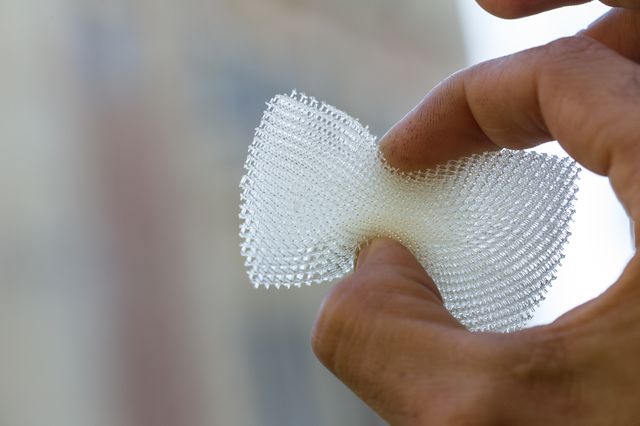
The UCLA–Architected Materials group is developing a novel, energy-absorbing microlattice material, Architected Lattice, to improve the performance of football helmets. The material, designed to replace the foam used inside of today’s football helmets, will help prevent concussion and traumatic brain injury by absorbing energy upon impact while limiting peak loads.

Architected Lattice is light and breathable, and can be enhanced with a strain-sensing “smart lattice” to detect and transmit data about the impact of a collision. This data could help engineers and product designers make further improvements in helmet design and performance.

“We are honored to have been selected by the NFL, Under Armour and General Electric, and excited about the potential impact of developing the next generation of helmet pads with the Architected Lattice,” said Larry Carlson, director of advanced materials at the Institute for Technology Advancement at the UCLA Henry Samueli School of Engineering and Applied Science. “We believe that in addition to preventing or reducing injuries from high-impact collisions on the football field, this material can be used in a variety of sports and recreational applications.”

The research team includes material designers from Ventura, California-based Architected Materials, mechanical impact experts from UCLA Engineering, and brain science specialists at the David Geffen School of Medicine at UCLA. Along with Carlson, the research’s principal investigators are Alan Jacobsen, co-founder of Architected Materials, and Dr. Christopher Giza, director of the UCLA Steve Tisch BrainSPORT Program and a professor of pediatrics and neurosurgery.

“One of the key innovations with our Architected Lattice technology is that it can be manufactured quickly and cost-effectively, which differentiates our technology from traditional 3-D printing techniques,” Jacobsen said.
In preliminary tests, the material has outperformed commonly used vinyl nitrile for reducing transmitted peak force, a key metric for helmet pads.

“In addition to offering the potential to reduce sports concussions, the helmet’s unique material functions as a sensor that monitors impact to the brain,” Giza said. “Collaborative efforts like these powerfully showcase UCLA research teams’ role in developing innovative new ways to benefit public health.” 

With more than 500 neuroscientists throughout campus, UCLA is a leader in research to understand the human brain, including efforts to treat, cure and prevent traumatic brain injury and brain disorders such as Alzheimer’s disease and epilepsy. The BrainSPORT Program was founded by Giza in 2012 and supported by a $10 million gift in May 2014 from philanthropist Steve Tisch.

In this video produced by General Electric, Under Armour and the NFL, researchers display a new helmet liner that absorbs significantly more energy than current materials, better protecting athletes from brain injury.

Read more here

Helmet technology may help with concussions

Forbes recently published the following article explaining why current helmets cannot prevent concussions, but that new helmet technology may be able to help.

The veil of denial and misinformation that has clouded awareness of the long term dangers of athletic concussion has started to lift.  As the general public and especially families of collision sports athletes begin to realize the threat to a normal life posed by the heightened risk of Alzheimers, ALS, Parkinson’s, dementia, Chronic Traumatic Encepalopathy and depression that multiple concussions trigger–the search for solution becomes more intense. One focus in prevention is helmets. Athletes in football, baseball, hockey, field hockey, auto and horse racing all wear helmets.

There is a prevalent belief that those helmets play a major role in preventing concussion–they do not. Current helmets are primarily designed to prevent skull fracture. There obviously is some protective benefit–but the energy wave from a collision currently moves through the plastic and the liner of a helmet and enters the athlete’s head. Tate Technology, headed by CEO Jenny Tate Morgan, has devised a solution. Morgan comes from a family background in helmetry. Her grandfather, John Tate Riddell designed the first plastic helmet, and founded Riddell Football. Her father, also CEO of Riddell, co-ventured with Jack Welch and GE Plastics to use new polycarbonate materials on helmets in 1957. Riddell innovated a series of designs also used in military helmets.

Tate Technology assembled a scientific team of industry experts, engineers, PhD’s and MD’s along with a seasoned board of directors from Fortune 500 companies to find better solutions.  ”Advanced Concussion Technology” (ACT) is a solution which has gone through research, development and some testing. It uses a system of coils designed to dissipate energy and attenuate at the first point of impact. This is done through ”compression” instead of the energy flowing into “tension.” The energy wave moves directly into the head. The system of coil and compression in the helmet can reduce the impact of a hit by as much as half. This company is licensing the technology, which can adapt to any of the currently made helmets; it will not manufacture them itself.

I don’t pretend to be an engineer with in-depth knowledge of energy attentuation. But in lay terms, reducing the energy in a hit so it never penetrates the head and the brain, seems like a solution that could revolutionize helmetry. What works on sports helmets, can work on military, bicycle and motorcycle helmets. Tate’s ACT is ready to be installed in helmets now.

Kudos to those inventive individuals and companies that are trying to tackle a problem that is a largely undiagnosed public health epidemic. Otherwise, the number of concussions will continue to rise, and the trauma will manifest earlier than ever before. This is the result of larger, stronger, faster bodies colliding. It will be exciting to see how fast Jenny Morgan’s ACT technology can begin providing relief.I have always felt that once American corporations with engineering capacity worked on the helmet problem, progress would occur. In the same way neutraceutical and pharmaceutical solutions to brain damage have occurred. The race for solution is producing a variety of promising approaches, such as Prevacus nasal spray. In helmetry, Vicis Company has developed a helmet with impact absorbing filaments that also offers hope.

Read more here

Wednesday, December 24, 2014

Concussions impact teen drivers

This article explains how concussions can impact teen drivers.

Researchers at Cincinnati Children's Hospital Medical Center are currently studying teenagers who have suffered concussions in order to help doctors determine when teen drivers are ready to get back behind the wheel of a vehicle.
A driving study is currently taking place that uses assessments of eye tracking within a driving simulator to evaluate potential impairments to reaction times following a concussion.
"This is the only pediatric driving study that I know of that's examining the behavior of concussed patients," said Dr. Adam Kiefer, assistant professor of pediatrics at Cincinnati Children's Sports Medicine. "We are looking for novel ways to assess these teens and to allow them to return to the road safely."
Cincinnati Children's Sports Medicine recently received a grant from the Ohio Department of Transportation to perform the study. Researchers are testing patients between the ages of 16-19 who have suffered a concussion within 7-10 days. They are comparing them to their peers of the same age who are healthy and driving.
They will collect the data over the next several months. The research team with expertise in sports medicine, behavioral medicine and neurology will then analyze the results.
"One of the biggest issues teens and adults face when dealing with concussions is a decreased ability to react quickly to objects in their environment," said Dr. Kiefer. "This can be a major problem, especially during driving, and that's why I think it's important for this type of research to be done."
Read more here

Monday, December 15, 2014

Increase in concussions seen in Ontario's children

A study showed that concussions in Ontario's children significantly increased between 2003 and 2010.

The number of children and youth treated for concussions in both emergency departments and physician's offices in Ontario increased significantly between 2003 and 2010, with falls, hockey and skating injuries identified as the leading causes of pediatric concussion, according to a new joint study out of York University and the Institute for Clinical Evaluative Sciences (ICES).
The study," A population-based study of pediatric emergency department and office visits for concussions from 2003 to 2010," published in the journal Paediatrics & Child Health, analyzed all visits related to a concussion by school-aged youth (three to 18 years) in Ontario from 2003 to 2010.
"This study is the first to examine pediatric concussions evaluated in both emergency departments and physicians' offices," says York University Professor Alison Macpherson, the study's lead author. "By examining all of the pediatric concussions evaluated in multiple facilities, we were able to minimize the issue of under-reporting and obtain a more accurate number of concussions treated in Ontario."
Between 2003 and 2010, researchers found a total of 88,688 pediatric concussions were treated in either an emergency department or a physician's office, and there was a significant trend in both locations. The total rate of concussions per 100,000 increased from 466.7 to 754.3 (for boys), and from 208.6 to 440.7 (for girls) during the study period. The numbers also showed that over time more children were being evaluated in physician's offices than emergency departments.
When the sources of concussion were broadly examined, falls were found to be the most common cause of concussion in an emergency department, representing 34 per cent of all emergency department visits, followed closely by exposure to force (25.5 per cent) and motor vehicle collisions (12.3 per cent). When specific causes were examined in more detail, hockey and skating -- common sports in North America -- were the most common causes of concussions that were treated in an emergency department.
"Our findings reinforced that falls in general are the most common cause of pediatric concussions, and that evidence-based prevention initiatives to help reduce the incidence of concussion are warranted -- particularly in sports and recreation programs," says senior scientist and chief science officer at ICES, Dr. Astrid Guttmann, the study's senior author. "Sports-related concussions can be minimized by taking preventive action, such as reducing body checking in hockey or wearing a helmet while cycling."
Macpherson says that future studies can attempt to differentiate between the true incidence of concussions and an increase in those seeking a health evaluation due to increased awareness of concussion and subsequent health consequences.
Read more here

Thursday, December 04, 2014

Magnets in helmets may help reduce concussions

This article explains how adding magnets to football helmets could help reduce concussions by using a magnet's the repulsive forces.

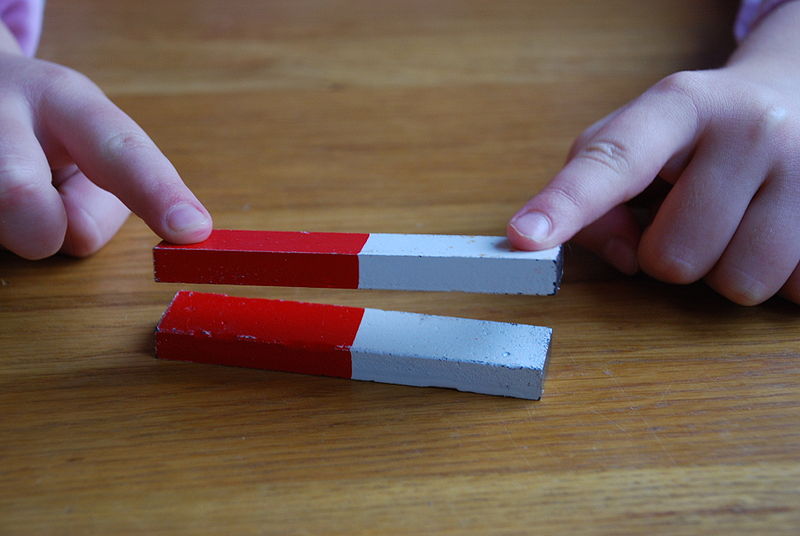
Adding magnets to football helmets could reduce the risk of concussions, new research suggests. When two players collide, the magnets in their helmets would repel each other, reducing the force of the collision.

“All helmet design companies and manufacturers have the same approach, which is to try to disperse the impact energy after the impact’s already occurred,” neuroscientist Raymond Colello said November 15 at the annual meeting of the Society for Neuroscience.

The magnets, he says, would put a brake on the impact before it happens.

The idea hasn’t been tested yet in helmets with real players, said Judy Cameron, a neuroscientist at the University of Pittsburgh. “But a lot of thought has gone into it, and the data that was shown about the ability of the magnets to actually repel each other looked extremely promising.” 

On the field, football players can run at nearly 20 miles per hour and can experience up to 150 g’s of force upon impact. Concussions readily occur at impacts greater than 100 g’s. Every year there are 100,000 concussions at all levels of play among the nearly 1.2 million people who play football in the United States.

Colello, of Virginia Commonwealth University in Richmond, is testing magnets made in China from the rare-earth element neodymium. They are the most powerful commercially available magnets and weigh about one-third of a pound each (football helmets weigh from 3.5 to 5.5 pounds). When placed one-fourth of an inch away from each other, two magnets with their same poles face-to-face exert nearly 100 pounds of repulsive force.

Colello tested his magnets with the same procedure that the National Operating Committee on Standards for Athletic Equipment uses to evaluate football helmets. He placed magnets on the front of a weight and let it drop from various heights onto another magnet. The heights Colello tested (between 6 inches and 4 feet) represent the impact forces athletes normally experience on the playing field.

“At 48 inches, if you dropped a standard helmet and it hit a stationary object, it would create 120 g’s of force,” says Colello. “With the magnets we drop that below 100 g’s.”

The magnets would complement existing helmet safety features. Colello speculates that adding magnets to a helmet would raise the price by $50 to $100. (Professional helmets today can cost several hundred dollars.) Amateur players, who will not experience impacts as crushing as pros do, could use helmets with cheaper, less powerful magnets.

Though the magnets do attract metallic objects, the National Football League prohibits athletes from wearing jewelry during games. Another safety concern is whether the magnets are dangerous to have near human heads. Colello says that a 30 minute- to one-hour MRI procedure produces magnetic fields 10 to 30 times as strong as those in helmet magnets.

Colello is now awaiting customized arc-shaped magnets that can be fitted inside helmets so he can begin field-testing them. First he will run crash-test dummy heads donning the helmets on a zip line; when the heads collide, accelerometers will measure the linear and rotational forces caused by the impact.

If the magnets make it through field tests, they could theoretically reduce the relative risk of concussions by up to 80 percent without changing the appearance or intensity of the game, Colello says.

Read more here

Sunday, November 30, 2014

Brain damage from mild concussions

This article explains how football players can have brain damage from milder concussions.

A new, enhanced MRI diagnostic approach was, for the first time, able to identify significant damage to the blood-brain barrier (BBB) of professional football players following "unreported" trauma or mild concussions. Published in the current issue of JAMA Neurology, this study could improve decision making on when an athlete should "return to play."
According to Prof. Alon Friedman, from the Ben-Gurion University Brain Imaging Research Center and discoverer of the new diagnostic, "until now, there wasn't a diagnostic capability to identify mild brain injury early after the trauma. In the NFL, other professional sports and especially school sports, concern has grown about the long-term neuropsychiatric consequences of repeated mild Traumatic Brain Injury (mTBI) and specifically sports-related concussive and sub-concussive head impacts."
The paper, published by researchers at Ben-Gurion University of the Negev (BGU) and Soroka University Medical Center, describes a new diagnostic approach using Magnetic Resonance Imaging (MRI) for detection and localization of vascular pathology and blood-brain barrier breakdown in football players.
The images from the Ben-Gurion University of the Negev JAMA Neurology study represent Blood-Brain Barrier (BBB) Permeability in Football Players (A) vs. a control group (B). The players in the pathological-BBB group (B) presented focal BBB lesions in different cortical regions including the temporal (player 4), frontal (player 5), and parietal (player 6) lobes. Both gray and white matter were involved.
"The goal of our study was to use our new method to visualize the extent and location of BBB dysfunction in football players using Dynamic Contrast-Enhanced Magnetic Resonance Imaging (DCE-MRI) on a Phillips 3-T Ingenia. Specifically, it generates more detailed brain maps showing brain regions with abnormal vasculature, or a 'leaky BBB.' "
Study participants included 16 football players from Israel's professional football team, Black Swarm, as well as 13 track and field athletes from Ben-Gurion University who served as controls. All underwent the newly developed MRI-based diagnostic.
The DCE-MRIs were given between games during the season and revealed significant damage.
Forty percent of the examined football players with unreported concussions had evidence of "leaky BBB" compared to 8.3 percent of the control athletes.
"The group of 29 volunteers was clearly differentiated into an intact-BBB group and a pathological-BBB group," Friedman explains. "This showed a clear association between football and increased risk for BBB pathology that we couldn't see before. In addition, high-BBB permeability was found in six players and in only one athlete from the control group."
Friedman also explains that not all the players showed pathology. This indicates that repeated, mild concussive events might impact some players differently than others. This level of diagnosis of individual players can provide the basis of more rational decision making on "return to play" for professionals as well amateurs of any age.
"Generally, players return to the game long before the brain's physical healing is complete, which could exacerbate the possibility of brain damage later in life," says Friedman.
A decade of research in the BGU Laboratory for Experimental Neurosurgery has shown that vascular pathology, and specifically dysfunction of the blood-brain barrier (BBB), plays a key role in brain dysfunction and degeneration, and may be an underlying cause of neurodegenerative complications after brain injuries.
The BBB is a highly selective permeable membrane that separates circulating blood from extracellular fluid. It protects the brain by preventing many dangerous substances from penetrating, and therefore is not meant to be damaged.
Medical researchers, including Friedman's group at BGU, are working to find ways to find drugs that will target the BBB and facilitate its repair, allowing for the prevention of Alzheimer's disease and other brain-related disease.
"Prof. Friedman has been able to conduct this breakthrough brain research using the state-of-the-art MRI machine donated as a result of contributions from American Associates, Ben-Gurion University of the Negev (AABGU)," explains Doron Krakow, AABGU executive vice president. "We believe that with continued support, Prof. Friedman and the DCE-MRI can help render more accurate and informed decisions by athletes and others exposed to mild concussions about when to resume activities."
Read more here

Sunday, October 19, 2014

A parent's thoughts on concussions can hinder treatment and recovery

A study shows that a parent's misconceptions about concussions and treatment hinders treatment and recovery.

With football season in full swing, there's no shortage of talk about young players -- from high school down to the pee wee levels -- suffering from concussions. Yet many parents may lack knowledge about this mild traumatic brain injury, according to two studies to be presented Oct. 10 at a pre-conference symposium on pediatric sports medicine at the American Academy of Pediatrics (AAP) National Conference & Exhibition in San Diego.
Nearly 175,000 children are treated in U.S. emergency rooms each year for concussions due to sports-related activities, according to the Centers for Disease Control and Prevention. Parental knowledge of the signs and symptoms of concussion and recognizing that this is a brain injury is important to ensure children are diagnosed in a timely manner and get appropriate treatment.
Two separate studies looked at parents' knowledge of concussion and common misconceptions. They will be presented as part of the Peds21 symposium, "1, 2, 3, Go! Sports in the World of Pediatrics -- Playing it Safe and Making it Fun!" in the San Diego Convention Center.
For the first abstract, titled "Parental Knowledge of Concussion," 511 parents of children ages 5-18 years who sought care at a pediatric emergency department within two weeks of their child suffering a head injury filled out a 24-item survey. They were asked questions about their demographics, their child's head injury, and general questions related to their knowledge of concussion and its treatment.
Results showed about half of parents correctly identified a concussion as a brain injury that could lead to symptoms such as headache or difficulty concentrating. No parental demographics (age, sex, education or prior history of sports participation) significantly predicted parents' knowledge about concussions.
The survey also indicated that almost all parents (92 percent) were aware that they should stop their child from playing and see a physician if they suspected a concussion. Yet only 26 percent were aware of guidelines on when their child could return to sports and school work.
"Our study showed that the vast majority of parents knew what to do if they suspected a concussion in their child and in most cases understood the clinical importance of this injury as a brain injury," said lead author Kirstin D. Weerdenburg, MD, FAAP, pediatric emergency medicine fellow at Hospital for Sick Children, Toronto, Ontario, Canada.
"The study also highlights that a physician visit shortly after the injury is important to confirm the diagnosis for parents and to inform parents of return to play/learn guidelines to ensure a proper recovery and prevent a second concussion while the brain is still healing," Dr. Weerdenburg said.
The authors of the second abstract, "Parental Misconceptions Regarding Sports-Related Concussion," also surveyed parents to assess their knowledge of concussions. The online survey was completed by two groups -- 214 parents whose children were evaluated at a sports medicine clinic for musculoskeletal or mild traumatic brain injuries (group 1) and 250 parents of students at a local private school (group 2).
The survey included questions that gauged their knowledge of and attitudes about concussions as well as demographic information.
The majority of parents in both groups did well overall but had several misconceptions:
  • About 70 percent in group 1 and 49 percent in group 2 incorrectly believed that brain imaging (CT/MRI scans) can be used to diagnose concussion.
  • About 55 percent in group 1 and 52 percent in group 2 did not know that "bell ringer or ding" is synonymous with concussion.
  • Reduced breathing rate was incorrectly identified as a symptom by 25 percent and 29 percent, respectively.
  • Difficulty speaking was incorrectly identified as a symptom by 75 percent and 79 percent, respectively.
"Our study highlights the fact that many parents are still in need of education regarding concussion identification and post-injury evaluation. Even those highly educated parents were prone to misconceptions," said senior author Tracy Zaslow, MD, FAAP, medical director of the sports medicine and concussion program at Children's Orthopaedic Center, Children's Hospital Los Angeles. "False perceptions such as the ones pinpointed by our study may impact when medical care is sought after concussion and lead to less than optimal home care."
Read more here

Friday, August 01, 2014

Katy's coaches and players taught to spot concussions

Football players and coaches in Katy, Texas are being educated to make sure they know how to spot concussions.

Players and coaches from Katy Youth Football completed their first of at least four safety training sessions Saturday to make sure all are properly educated on how to understand, as well as avoid, head trauma on the field.
Taking place at Cinco Ranch High School, Saturday’s seminar featured the “Heads Up” program, an initiative by USA Football — the sport’s national governing body — to certify that coaches know current standards for concussion awareness and equipment fit, as well as heat and hydration. Through “Heads Up”, USA Football is striving to create standards for terminology and technique from the little league level, up to the pro level.
“Where we’re seeing more concussions is actually during the tackle,” said Chad Hester, USA Football master trainer. “So we’re starting with ‘Heads Up Tackling’. We’re teaching them proper tackling techniques to get the head out of the game — where they should be making first contact, instead of the head.”
USA Football teaches players by advancing through “levels of contact”, where technique is learned through different types of resistance — beginning with air, to bags, designated winners and losers, with the final stage called “thud”. Thud is a term by USA Football used to designate an assigned drill where players stay on their feet, and all contact is above the waist — a quick whistle ending play.
KYF President Anthony Biello said 2014 is the second year for KYF to participate in Heads Up. Besides just learning technique, KYF is limiting the amount of “live-action” players participate in during practice. The 35-year old league, boasting 1,500 players, has adopted the UIL’s standard of no more than 90 minutes of full-contact per week, per player. Full-contact is defined as game speed, where players tackle and block to the ground.
“If we have coaches that are out there just banging kids into each other, we have talks with those coaches. In some cases, we remove those kinds of coaches,” Biello said. “If you’re lining two kids up, five or ten yards apart and tell them to run full-speed and hit each other head-on — we don’t want to see that happen on our fields.”
He said the league doesn’t endorse several old-school contact exercises, such as “Bull in the Ring”, where players line up in a circle around one player, targeting the man in the middle for hit after hit, or the “Oklahoma Drill”, where a blocker and ball-carrier are pitted against a defender head-on within a tight width of space.
Kenneth Podell, neuropsychologist from the Methodist Neurological Institute, came to KYF’s training to educate coaches and players on what concussions actually are, as well as how to recognize and treat them. Podell remembers when some football coaches didn’t actually consider concussions a legitimate injury.
“At one time, a concussion test might have been, ‘how many fingers am I holding up?” Podell said. He indicated that has changed, where now medical staff uses a Standardized Concussion Assessment Tool (SCAT), where players go through a variety of mental assessments, also participating in balance and coordination tests.
“We try to objectify this is much as possible,” he said.
However, if there’s even an inkling of head injury by game officials, training staff or coaches, Biello said KYF requires players to sit out for at least a week and to be cleared medically by a qualified physician before returning to play.
While lawsuits against the NFL by former players diagnosed with the disease called CTE — thought by some to be caused by multiple sub-concussive hits — have spurred the movement for concussion awareness, Podell said he considers this a different type of injury, and one that’s still being studied by doctors. At this point in time, Podell said he believes athletes from little league on to high school bare significantly less risk than college or pro players, but that every parent must access their own risk level.

Hester recommends that parents look for a USA Football certified league when signing their kids up to play, as leagues that aren’t aligned with USA Football may not have the same level of standards. He hopes through these types of trainings, players will develop muscle memory for the Heads Up techniques. USA Football is looking to add “Heads Up Blocking” to their current instruction in future years.
Read more here

Tuesday, July 22, 2014

Only a doctor can determine when an athlete can return post-concussion

This article claims that only doctors can help determine when a player returns to play post-concussion.

An editorial published today in The Lancet Neurology calls for sports authorities to take into consideration the long term neurological problems that repeated concussions can cause.
Cerebral concussion is the most common form of sports-related traumatic brain injury (TBI), and the long-term effects of repeated concussions may include dementia, amyotrophic lateral sclerosis, and other neurological disorders, say the journal editors.
However, what is perhaps more concerning, is that even when the symptoms of concussion are delayed, or if they come and go quickly, neurological damage can remain without detection. This can lead to footballers, such as Uruguayan defender Álvaro Pereira during the 2014 FIFA World Cup, overruling doctors' advice to be substituted and returning to play after sustaining a head injury.
The journal editors argue that the decision for players to return to a game after sustaining a concussion should be made only by healthcare professionals, and "should surely be taken out of the hands of those with a vested interest in the player's performance."
According to the journal editors, "Many sporting organisations now acknowledge the potentially serious consequences of mild TBI and have drawn up new protocols to protect athletes who sustain a head injury'. However FIFPro, the world players' union, has called for an investigation of concussion protocols and return-to-play standards following Pereira's injury."
Read more here

Sensors to immediately detect concussion

A project from Western Michigan University aims to create sensors that go inside helmets that can immediately detect a concussion.

A new piece of technology that's developed in west Michigan could soon be keeping athletes safe.

At Western Michigan University, a professor and team of students are working on sensors that can fit in any kind of helmet. 

The goal is to use them to detect concussions right after a big impact.

It may not look like much at first glance, but the first test helmet could soon bring the latest in sports safety. 

"It can be used for football and hockey helmets, as well as any other protective head gear," said WMU Professor Masood Atashbar.  

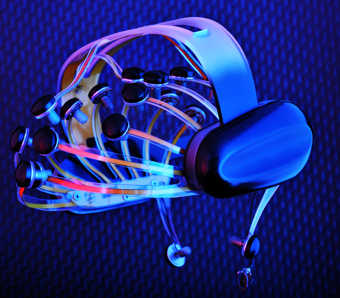
Lightweight and flexible sensors are placed in the lining of a helmet. 

They send a wireless signal to an application on a smartphone or tablet. 

"It measures and reports to the coaches any dangerous impact that athletes experience on their skull," Atashbar said.  

The program is so sharp, its creators say it can pinpoint how severe the hit was and where it happened. 

Professor Masood Atashbar said this is vital information considering athletes don't always report injuries and may not even know they have a concussion. 

"Coaches and parents can know that their kids have experienced a dangerous impact and they can act on it," Atashbar said. 

The professor and several students have been working on the cutting edge design. 

So far they've only done tests in the lab, like hitting the helmet with a hammer. 

Students are excited they have access to this right here in Kalamazoo. 

"The university has given us a lot of help in developing this technology. I'm very happy," said PHD student Binu Narakathu.  

The group has even started a company to promote the technology. 

Right now they're pricing it at $100 each; that would include the sensors and app. 

"Thinking about, okay, you can help protect these players on the field, that's pretty interesting because you're saving people's lives," said PHD student Ali Eshkeiti. 

The next step is getting funding so they can do tests outside the lab with actual athletes. 

Then they hope to get it out on the market.

Read more here

Wednesday, June 25, 2014

Portable brain scanners may be present in more locker rooms

A portable brain scanner could become present in more locker rooms which could change the way concussions are understood in the long-term.

A portable imaging tool could change the way the medical community analyzes and understands the long-term effects of sports-related concussions.
Research conducted by Humboldt State Kinesiology professor Rock Braithwaite has played a significant role in demonstrating the usefulness of computerized neurocognitive testing in determining the extent of the effects of concussion on cognition and performance among student athletes and military personnel.
"This preliminary study, although small, showed us where in the brain a patient is affected and to what cognitive extent," said Michael Collins, director of a current study being conducted on functional near infrared spectroscopy (fNIRS) as a low-cost, portable device for imaging sports and military concussions.
Braithwaite collaborated with former HSU professor Anthony Kontos, a professor for the University of Pittsburgh Schools of the Health Sciences, and two other University of Pittsburgh professors, on the fNIRS research that is considered the largest statistical review of computerized testing to date. The study, published in the March Journal of International Neuropsychological Society, supplied data for Kontos' study.
Braithwaite's study evaluated prior research of published computerized concussion testing to date, covering 37 studies and 3,960 participants all within the first week of sustaining a concussion. The study produced two key findings:
- Middle school and younger high-school students displayed more pronounced cognitive effects and greater performance deterioration according to neurocognitive testing after a concussion than their senior high school and college-aged counterparts.
- ImPACT® -- a computerized neurocognitive test battery designed to assess mild traumatic brain injury -- demonstrated the strongest performance for detecting cognitive impairment because it measured the types of tasks that this meta-analysis identified as most effective at detecting post-concussion issues including: processing speed, verbal memory, visual memory and recall. The success of this technology indicates computerized testing -- as conducted with the fNIRS -- is the most accurate evaluation method.
"ImPACT found the largest effects for individuals who had been concussed -- across all outcomes," said Braithwaite, who conceived of the idea for this study. "Memory, processing speed, recall … ImPACT was able to better detect changes compared to the other computerized tests."
"In the past decade and a half, many in the field of concussion science have tried to find an imaging tool that could help us in a clinical setting -- and failed to find anything with consistency," said Collins. "[Braithwaite's study] was enough evidence for us to keep pushing further with this potential tool."
Read more here

Will sensors be in all helmets by 2015?

A research study is looking into adding sensors into helmets. The results may be strong enough to put sensors into all helmets by 2015.

A pilot program designed to provide more information for concussion research could become more widespread, and put sensors in every helmet by 2015.
According to Tom Pelissero of USA Today, two teams participated in the program for part of last year, and researchers are trying to fine-tune the technology to measure head impact in games.
The work is being done by University of North Carolina researcher Kevin Guskiewicz, who is a member of both league and union safety committees.
“We need a sample of these players across all positions and studying every play type possible,” Guskiewicz said. “So, that’s the next step. Then I hope from there that, if we find (the devices) have utility that could actually help an individual player … my hope would be that we would go league-wide.”
Guskiewicz said the project still needs to be approved by the league and union, and getting that kind of agreement has been an issue in the past.
But he said he was “thrilled” that teams are buying into the idea of collecting data, though hurdles remain.
“I personally believe that there is valuable information to be gained for a player to learn how to perhaps modify his behavior, to track the way in which he’s leading with his head possibly or positioning his body on a certain play type that could help protect him,” Guskiewicz said.
“So, we just sort of have to go through this in a methodical approach to work on the feasibility. This year, I hope that we’re able to move forward with answering some of the questions that we have around potential rules changes, and then the following year, who knows?”
As with most issues, getting players and management to agree to anything is difficult, but if the technology can present a step forward in the accurate diagnosis of concussions and head injuries, then players and the league need to find a way to implement.
Read more here

Friday, June 20, 2014

NOCSAE statement on concussions and helmets

The following article discusses a comment made by the NOCSAE on helmets and concussions.

The National Operating Committee on Standards for Athletic Equipment (NOCSAE) applauds and encourages the growing research in the area of concussion protection for athletes, including the work released this month by Virginia Tech. Coaches, consumers and parents should be aware that while the STAR rating system suggests the purchase of specific football helmets, scientific evidence does not support the claim that a particular helmet brand or model is more effective in reducing the occurrence of concussive events.
“Helmets which meet the NOCSAE standard are extremely effective at doing what they are designed to do, limiting linear accelerations that result from impacts to the head and helmet,” said Mike Oliver, NOCSAE executive director. “The STAR ratings are not standards. They are a theoretical method of comparing one helmet against another. Unfortunately many have misunderstood the purpose and limitations of the STAR ratings. A 5 STAR rating does not mean that the helmet is great at preventing concussions. It simply means that it might be better than another helmet with a lower rating. Because of this misunderstanding, the effectiveness of helmets in protecting against concussions has become exaggerated, taking focus away from steps known to have a more immediate and much greater effect on concussion reduction.”
For concussion protection to be truly effective, actions must be taken on and off the field by student athletes, parents and coaches. According to the CDC Foundation’s Heads Up to Parents program, making sure equipment fits properly, ensuring young athletes are taught proper blocking and tackling techniques and demanding enforcement of rules that prohibit players from leading with their helmets to hit other players are important ways to reduce concussion risk.
The University of Wisconsin recently completed the first large scale, prospective study in a field-based sports setting to examine if the rate of sport-related concussion is affected by the protective equipment that is worn by high school football players. The results show no difference in the rate of concussions or severity of concussions by helmet brand. The research concluded that well maintained and fitted football helmets remain important to reduce the risk of skull fracture and intracranial hemorrhage, but there is serious doubt to whether a helmet can ever be designed to prevent concussions. In addition, the research found a similar concussion risk regardless of the age of the helmet.
Dr. Alison Brooks, assistant professor at University of Wisconsin-Madison, spearheaded the study with Dr. Tim McGuine. Dr. Brooks would prefer to see emphasis on rule enforcement and coaching education on tackling technique to limit or avoid contact to the head. She also called out the increased risk among previously injured athletes.
“Players in this study who had a history of previous concussion were at higher risk of sustaining another concussion, regardless of the helmet brand worn,” said Dr. Brooks. “Rather than focus on the belief that a specific helmet can ‘prevent’ concussions, which is not supported by the current scientific literature, our efforts may be better spent educating players, parents and coaches about the increased risk of concussion in these previously concussed young athletes.”
A concussion in football is a very complex event involving different and changing forces, linear (straight motion or direct hit) and rotational (circular motion of head or torque) accelerations, helmet fit, player position, impact duration, player concussion history and overall health.
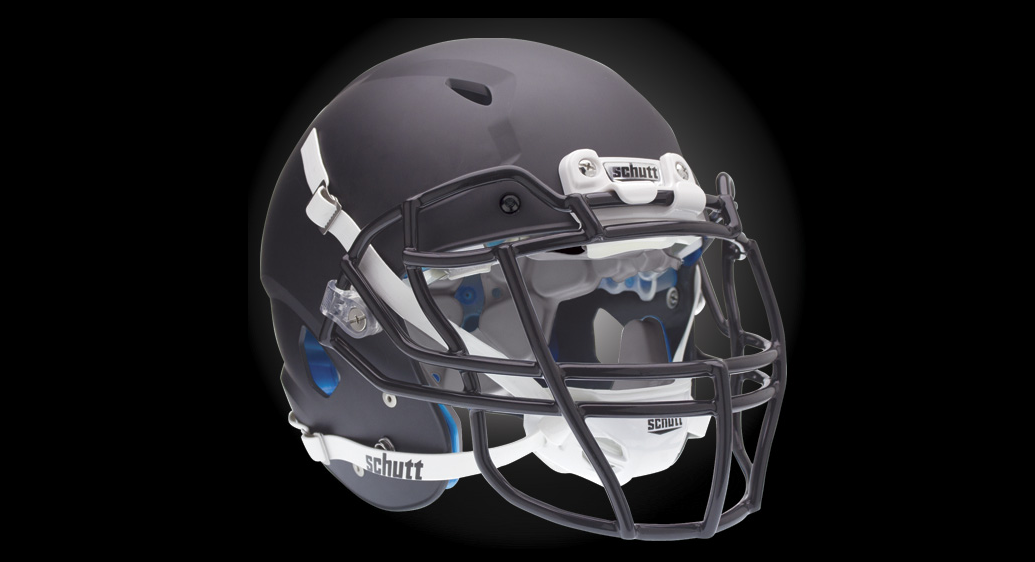
Schutt Sports has the two highest 5 STAR helmets in 2014, yet they admit that the ratings do not support a conclusion that the helmets will limit or prevent concussions. “Schutt Sports would never represent to somebody that they’re not going to get a concussion if they wear one of our helmets,” said Robert Erb, CEO of Schutt Sports. “As a manufacturer of a helmet considered by this rating system to be the best available, I believe telling people that an athlete is less likely to get a concussion if they use a 5 STAR helmet is irresponsible. The best helmet is the one that carries NOCSAE certification, fits the player, fits the position, is configured with the proper mask and the player is comfortable in it.”
Consumers should also know that the rating applies only to size large adult helmets. According to the Virginia Tech website, “It is possible that the same helmet models of different size may produce different results; however, we do not have any data on this, and we only tested large helmets as a first step.” No adult X-Large, Medium, Small, X-Small or any youth-size helmets were tested as part of this rating. Until other sizes are tested, the only helmet that can claim any STAR rating are adult large. The rating is based on a theoretical calculation from collegiate level data. When helmets receive a higher rating, it does not mean the helmet has met a safe level of concussion protection; instead it is an attempt to compare one helmet to another based on the results. According to an independent statistical review of the Virginia Tech test data there is no significant statistical difference between 5 STAR, 4 STAR and 3 STAR helmets.
“The Virginia Tech Helmet Ratings™ system approaches the very broad and complex issue of concussion protection from a narrow vantage point of linear accelerations only and does not address other biomechanical variables such as rotational accelerations,” said Oliver. “Scientific experts agree that rotational accelerations are involved in most concussive events, but there is still no agreement on what level of rotational force can be considered safe or dangerous for athletes.”
Read more here

Tuesday, June 10, 2014

Helmet that can detect concussions

The makers of a new helmet claim this helmet can detect if a person had a concussion.

A sports helmet that raises the alarm if a player suffers concussion is being developed in the hope that it will change behaviour on the pitch.
The Contego, designed by University of Brighton student Nik Hannay, carries sensors which pick up changes to skull pressure and switch on a red light if a concussion is detected.
It also flashes red if there are signs of serious injury, a university spokesman said.
Players and referees would instantly see the light, while coaches and doctors on the touchline would be alerted by a signal from the helmet to laptops, tablets and smart phones.
Mr Hannay, 24, who is in his final year of a sustainable product design degree, came up with the idea during a visit to America. His research revealed 100,000 concussion injuries in the National Football League every year, 60% of them from head-to-head clashes.
The helmet includes a transparent polycarbonate visor that improves peripheral vision and shows more of the head and face to the opposition.
Mr Hannay said: “Players will see exactly what they are crashing into — people’s skulls — and the idea is to discourage players from using their helmets as offensive weapons.”
Read more here

Study: Concussions take longer to heal from than previously believed

A study analysed people's cerebrospinal fluid to show that it takes longer to heal from concussions than previously believed.

Scientists at the Sahlgrenska Academy, University of Gothenburg, have shown that analysis of the cerebrospinal fluid after concussion can be used to determine the magnitude of brain injury and to follow its course. The studies show that recovery from concussion takes much longer time than previously known, and this may be of major significance for athletes of all ages in return to play considerations.
Sanna Neselius is a scientist at the Sahlgrenska Academy and member of the medical commission of the Swedish Boxing Federation. Her previous studies have shown that amateur boxing causes damage to nerve cells, that can take more than two weeks to heal. This discovery led to her being offered a place in the International Olympic Committee's expert group for boxing-related head injuries.
Sanna Neselius has now defended her doctoral thesis at the Sahlgrenska Academy, in which she shows that sports-related concussion heals much slower than previously known.
Four months recovery
"It has previously been believed that concussion heals in 7-10 days, and the Swedish Boxing Federation has decided the rest period to be of one month after a concussion, in order to be on the safe side. But our studies show that a concussion, such as may be experienced after being knocked out, can take more than four months to heal," says Sanna Neselius, who is herself a former boxer.
Further, the results show that repetitive head trauma in boxing, damages nerve cells in the brain, even though the boxer may not show any concussion symptoms.
Prevent resuming too early
Concussion is one of the most common sports-related injuries, and more athletes experience it every year. In recent years, focus has been directed on the effects of repeated concussions, in which athletes in such sports as ice hockey may be affected by long-term effects.
The cerebrospinal fluid samples analysed by Sanna Neselius and her colleagues can be followed until normalization and thereby be a valuable tool to prevent athletes resuming sport too early.
"The assessment today is often based on physical symptoms, neuropsychological tests, and the neurological examination of the athlete. Our studies show that these tests are not sensitive enough, nor can we rely on the athletes self-reported lack of symptoms. Concussion symptoms usually pass after a few days, but the neurological damage may still be present," says Sanna Neselius.
Safe rehabilitation
She continues: "The first sample is recommended to be taken 10-14 days after the concussion. This allows us to see the magnitude of the injury, and gives an idea of how long the healing process will be. I hope that brain injury markers in the cerebrospinal fluid, and hopefully also later in blood, can be used at all levels in all sports. By this we can use individual measurements to plan and guarantee safe rehabilitation."
Sanna Neselius points out that the brains of children and adolescents are more sensitive and require longer time to heal.
Read more here