Showing posts with label parkinson's. Show all posts

Friday, August 19, 2016

Can Parkinsonian Symptoms Be Brought On by Traumatic Brain Injury?

TBI linked to Parkinson’s and Parkinson-related brain defects


Researchers at the Group Health Research Institute relates research to Muhammad Ali—and how we can prevent late-life injuries and falls for our families and ourselves.-JR

by Eric B. Larson, MD, MPH, executive director of Group Health Research Institute and vice president for research at Group Health
Traumatic brain injury (TBI), including concussion, is a big problem in older adulthood, the stage of life when accidents—especially falls—happen most often. Yet we hear a lot about TBI from sports, particularly football head injuries in younger people.
Muhammad Ali, who recently died, had a symptom complex called Parkinsonism. It’s very likely that multiple blows to the head from boxing set the stage for this condition. A new study that I helped to lead confirms concern over effects of TBI that threaten the structure and function of brain cells.

Here’s what we found—and didn’t find

With colleagues from the University of Washington (UW), Mt. Sinai School of Medicine, Cleveland Clinic, Rush University Medical Center, and the University of Utah, Paul Crane, MD, MPH, and I recently published “Association between Traumatic Brain Injury and Late Life Neurodegenerative Conditions and Neuropathological Findings" in JAMA Neurology. Dr. Crane is a professor of general internal medicine at the UW School of Medicine, an adjunct professor of health services at the UW School of Public Health, and an affiliate investigator at Group Health Research Institute (GHRI).

How to prevent falls

On a practical level, though, this research should remind us of just how important it is to prevent falls and other accidents. Here’s how you can prevent falls:
  • Get regular exercise for general conditioning, strength, and balance training. 
  • Avoid drugs that impair balance and judgment, such as narcotics, anticholinergics, and tranquilizers, and avoid over-treating high blood pressure and diabetes.
  • Eliminate hazards in your environment—like inadequate lighting, rugs and cords that can cause tripping.
  • Wear shoes or slippers with good soles that are not too thick. The ACT study has shown that older people are much more likely to fall in the home if they walk barefoot or in stocking feet.  
  • At some point, consider using a cane or walker to avoid falls.

Thursday, June 11, 2015

Nerve cells discovered that act like a speedometer

Scientists have identified nerve cells in mice's brains that provide information like a speedometer. It is thought that these cells also exist in humans, and their existence may have implications for Parkinson's disease.

Scientists at the German Center for Neurodegenerative Diseases (DZNE) and the University of Bonn led by Prof. Stefan Remy report on this in the journal Neuron. Their investigations give new insights into the workings of spatial memory. Furthermore, they could also help improve our understanding of movement related symptoms associated with Parkinson's disease.
In a familiar environment our movements are purposeful. For example, if we leave our office desk for a coffee break, we naturally follow a predefined route that has been stored in our memory: Through the office door, left into the hall, past the windows. To keep us on track, our brain has to process varying sensory impressions quickly. "This is a fundamental issue our brain has to deal with. Not just on our way to the coffee machine, but any time we move in space. For example when we are on a bike or in a car," explains Remy. With increasing speed, the data rate also increases, he emphasizes: "The faster we move, the less time the brain has to take in environmental cues and to associate them with a location on our memorized spatial map. Our perception therefore has to keep pace with the speed of movement so that we remember the right way to go. Otherwise we end up at the copy machine instead of the coffee machine."
Rhythmic fluctuations
It has been known for some time that the hippocampus -- the part of the brain that controls memory, particularly spatial memory -- adjusts to the speed of locomotion. "The electrical activity of the hippocampus undergoes rhythmic fluctuations. The faster we move, the faster certain nerve cells are activated," says Remy. "This increased activation rate sensitizes the brain. It becomes more receptive to the changing sensory impressions that have to be processed when moving."
But how does the brain actually know how fast a movement is? Previously there was no answer to this question. Now, Remy and his colleagues have decoded the mechanism. For this, they stimulated specific areas within the mouse brain and recorded the ensuing brain activity and the mice's locomotion. "We have identified the neural circuits in mice that link their spatial memory to the speed of their movement. This interplay is an important foundation for a functioning spatial memory," says Remy. "We assume that humans have similar nerve cells, as the brains of mice and humans have a very similar structure in these regions."
Small cell group
The cells in question are located in the "medial septum," a part of the brain directly connected to the hippocampus. They make up a relatively small group comprising a few thousand cells. "They gather information from sensory and locomotor systems, determine the speed of movement and transmit this information to the hippocampus. In this way, they tune the spatial memory systems for optimized processing of sensory stimuli during locomotion," explains Remy. However, these circuits have even more functions. "We have found that they also give the start signal for locomotion and that they actively control its speed. Until now, this control function was almost exclusively ascribed to the motor cerebral cortex."
These newly discovered nerve cells are linked with areas of the brain that are affected by Parkinson's in humans. This disease is associated with movement-related symptoms and can cause dementia. "In this respect, our results go beyond the workings of spatial memory; they also have the potential to provide new insights into how memory systems and the execution of movements are affected in Parkinson's disease," says Remy.
Read more here

Thursday, January 08, 2015

Helmet technology may help with concussions

Forbes recently published the following article explaining why current helmets cannot prevent concussions, but that new helmet technology may be able to help.

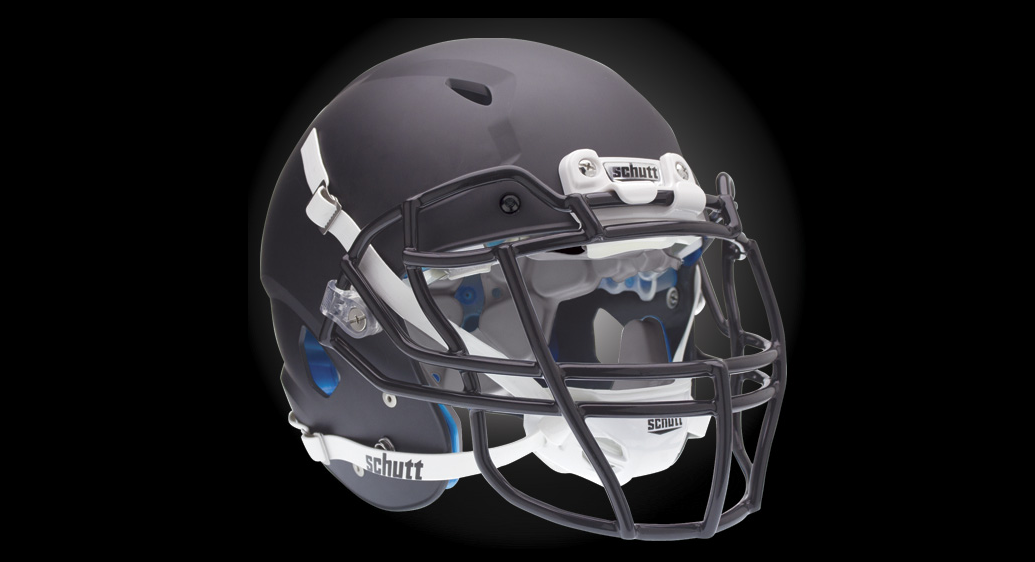
The veil of denial and misinformation that has clouded awareness of the long term dangers of athletic concussion has started to lift.  As the general public and especially families of collision sports athletes begin to realize the threat to a normal life posed by the heightened risk of Alzheimers, ALS, Parkinson’s, dementia, Chronic Traumatic Encepalopathy and depression that multiple concussions trigger–the search for solution becomes more intense. One focus in prevention is helmets. Athletes in football, baseball, hockey, field hockey, auto and horse racing all wear helmets.

There is a prevalent belief that those helmets play a major role in preventing concussion–they do not. Current helmets are primarily designed to prevent skull fracture. There obviously is some protective benefit–but the energy wave from a collision currently moves through the plastic and the liner of a helmet and enters the athlete’s head. Tate Technology, headed by CEO Jenny Tate Morgan, has devised a solution. Morgan comes from a family background in helmetry. Her grandfather, John Tate Riddell designed the first plastic helmet, and founded Riddell Football. Her father, also CEO of Riddell, co-ventured with Jack Welch and GE Plastics to use new polycarbonate materials on helmets in 1957. Riddell innovated a series of designs also used in military helmets.

Tate Technology assembled a scientific team of industry experts, engineers, PhD’s and MD’s along with a seasoned board of directors from Fortune 500 companies to find better solutions.  ”Advanced Concussion Technology” (ACT) is a solution which has gone through research, development and some testing. It uses a system of coils designed to dissipate energy and attenuate at the first point of impact. This is done through ”compression” instead of the energy flowing into “tension.” The energy wave moves directly into the head. The system of coil and compression in the helmet can reduce the impact of a hit by as much as half. This company is licensing the technology, which can adapt to any of the currently made helmets; it will not manufacture them itself.

I don’t pretend to be an engineer with in-depth knowledge of energy attentuation. But in lay terms, reducing the energy in a hit so it never penetrates the head and the brain, seems like a solution that could revolutionize helmetry. What works on sports helmets, can work on military, bicycle and motorcycle helmets. Tate’s ACT is ready to be installed in helmets now.

Kudos to those inventive individuals and companies that are trying to tackle a problem that is a largely undiagnosed public health epidemic. Otherwise, the number of concussions will continue to rise, and the trauma will manifest earlier than ever before. This is the result of larger, stronger, faster bodies colliding. It will be exciting to see how fast Jenny Morgan’s ACT technology can begin providing relief.I have always felt that once American corporations with engineering capacity worked on the helmet problem, progress would occur. In the same way neutraceutical and pharmaceutical solutions to brain damage have occurred. The race for solution is producing a variety of promising approaches, such as Prevacus nasal spray. In helmetry, Vicis Company has developed a helmet with impact absorbing filaments that also offers hope.

Read more here

Monday, July 21, 2014

What causes sleep issues for Parkinson's patients?

This article discusses the link between Parkinson's disease and sleep issues, and what may cause sleep issues for people with Parkinson's disease.

Up to 70% of Parkinson’s disease (PD) patients experience sleep problems that negatively impact their quality of life. Some patients have disturbed sleep/wake patterns such as difficulty falling asleep or staying asleep, while other patients may be subject to sudden and involuntary daytime sleep “attacks.” In the extreme, PD patients may exhibit REM-sleep behavior disorder (RBD), characterized by vivid, violent dreams or dream re-enactment, even before motor symptoms appear. A review in the Journal of Parkinson’s Disease discusses the underlying causes of sleep problems in PD, as well as medications, disease pathology, and comorbidities, and describes the most appropriate diagnostic tools and treatment options.
Sleep problems in PD patients can have wide-ranging adverse effects and can worsen in later stages of the disease. Sleepiness socially isolates patients and excessive sleepiness can put patients at risk of falls or injury, and can mean patients must give up driving. Sleepiness can impair cognition and concentration, exacerbate depression, and interfere with employment. Wakefulness at night impairs daytime wakefulness and may also cause mood instabilities and can exhaust caregivers.
“Diagnosis and effective treatment and management of these problems are essential for improving the quality of life and reducing institutionalization of these patients,” says lead author Wiebke Schrempf, MD, Technische Universität Dresden, Faculty of Medicine Carl Gustav Carus, Department of Neurology, Division of Neurodegenerative Diseases, Dresden, Germany.
Dr. Schrempf and colleagues describe some of the complexities associated with treating sleep problems in PD patients, such as the worsening of sleep problems by dopaminergic medications used to treat motor symptoms. Lower doses of levodopa or dopamine agonists are able to improve sleep quality partly by reducing motor symptoms such as nighttime hypokinesia (decreased body movement), dyskinesia (abnormal voluntary movements), or tremor (involuntary shaking), which interfere with normal sleep. However, the same medications may also cause excessive daytime sleepiness. The report describes how changing medication, dose, duration of treatment, or timing of administration can improve outcomes.
The presence of other conditions common in PD patients such as depression, dementia, hallucinations, and psychosis may interfere with sleep. Unfortunately, some antidepressants can also impair sleep.
Sleep problems may also be harbingers of future neurodegenerative disease. Patients with RBD exhibit intermittent loss of normal muscle relaxation during REM sleep and engage in dream enactment behavior during which they may shout, laugh, or exhibit movements like kicking and boxing. “RBD seems to be a good clinical predictor of emerging neurodegenerative diseases with a high specificity and low sensitivity, whereas other early clinical features of PD, such as olfactory dysfunction and constipation, are less specific,” says Dr. Schrempf. “These early clues may help identify PD patients before motor symptoms appear, when disease-modifying therapies may be most beneficial.”
PD is the second most common neurodegenerative disorder in the United States, affecting approximately one million Americans and five million people worldwide. Its prevalence is projected to double by 2030. The most characteristic symptoms are movement-related, such as involuntary shaking and muscle stiffness. Non-motor symptoms, such as worsening depression, cognition, and anxiety, olfactory dysfunction, and sleep disturbances, can appear prior to the onset of motor symptoms.
Read more here

Friday, May 09, 2014

Sleep disorder could be a sign of Parkinson's and Alzheimer's

Research shows that a brain disorder that causes people to act out their dreams may be a sign of Parkinson's or Alzheimer's.

A sleep disorder that causes people to act out their dreams is a predictor of brain diseases like Alzheimer's and Parkinson's, a new research has found. 
"Rapid-eye-movement sleep behaviour disorder (RBD) is not just a precursor but also a critical warning sign of neurodegeneration that can lead to brain disease," said associate professor and lead author Dr John Peever from the University of Toronto in Canada. 
"In fact, as many as 80 to 90 per cent of people with RBD will develop a brain disease," said Peever. 
The disturbance occurs during the rapid-eye-movement (REM) stage of sleep and causes people to act out their dreams, often resulting in injury to themselves and/or bed partner, researchers said. 
In healthy brains, muscles are temporarily paralysed during sleep to prevent this from happening. 
"It's important for clinicians to recognise RBD as a potential indication of brain disease in order to diagnose patients at an earlier stage," said Peever. 
"This is important because drugs that reduce neurodegeneration could be used in RBD patients to prevent (or protect) them from developing more severe degenerative disorders," Peever said. 
His research examines the idea that neurodegeneration might first affect areas of the brain that control sleep before attacking brain areas that cause more common brain diseases like Alzheimer's. 
Peever said he hopes the results of his study lead to earlier and more effective treatment of neurodegenerative diseases. 

Read more here