Showing posts with label repeat concussions in children. Show all posts

Thursday, January 08, 2015

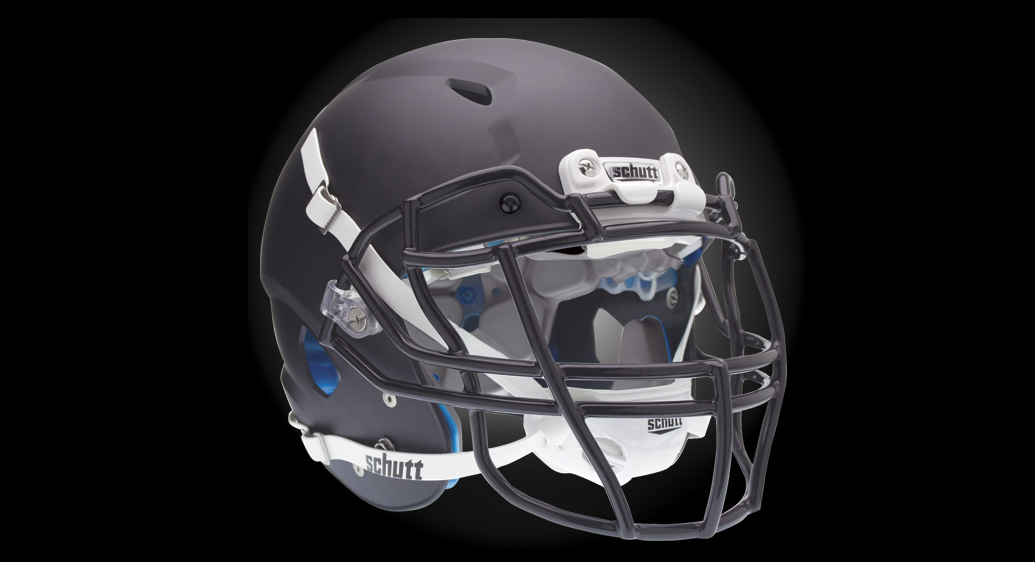
Helmet technology may help with concussions

Forbes recently published the following article explaining why current helmets cannot prevent concussions, but that new helmet technology may be able to help.

The veil of denial and misinformation that has clouded awareness of the long term dangers of athletic concussion has started to lift.  As the general public and especially families of collision sports athletes begin to realize the threat to a normal life posed by the heightened risk of Alzheimers, ALS, Parkinson’s, dementia, Chronic Traumatic Encepalopathy and depression that multiple concussions trigger–the search for solution becomes more intense. One focus in prevention is helmets. Athletes in football, baseball, hockey, field hockey, auto and horse racing all wear helmets.

There is a prevalent belief that those helmets play a major role in preventing concussion–they do not. Current helmets are primarily designed to prevent skull fracture. There obviously is some protective benefit–but the energy wave from a collision currently moves through the plastic and the liner of a helmet and enters the athlete’s head. Tate Technology, headed by CEO Jenny Tate Morgan, has devised a solution. Morgan comes from a family background in helmetry. Her grandfather, John Tate Riddell designed the first plastic helmet, and founded Riddell Football. Her father, also CEO of Riddell, co-ventured with Jack Welch and GE Plastics to use new polycarbonate materials on helmets in 1957. Riddell innovated a series of designs also used in military helmets.

Tate Technology assembled a scientific team of industry experts, engineers, PhD’s and MD’s along with a seasoned board of directors from Fortune 500 companies to find better solutions.  ”Advanced Concussion Technology” (ACT) is a solution which has gone through research, development and some testing. It uses a system of coils designed to dissipate energy and attenuate at the first point of impact. This is done through ”compression” instead of the energy flowing into “tension.” The energy wave moves directly into the head. The system of coil and compression in the helmet can reduce the impact of a hit by as much as half. This company is licensing the technology, which can adapt to any of the currently made helmets; it will not manufacture them itself.

I don’t pretend to be an engineer with in-depth knowledge of energy attentuation. But in lay terms, reducing the energy in a hit so it never penetrates the head and the brain, seems like a solution that could revolutionize helmetry. What works on sports helmets, can work on military, bicycle and motorcycle helmets. Tate’s ACT is ready to be installed in helmets now.

Kudos to those inventive individuals and companies that are trying to tackle a problem that is a largely undiagnosed public health epidemic. Otherwise, the number of concussions will continue to rise, and the trauma will manifest earlier than ever before. This is the result of larger, stronger, faster bodies colliding. It will be exciting to see how fast Jenny Morgan’s ACT technology can begin providing relief.I have always felt that once American corporations with engineering capacity worked on the helmet problem, progress would occur. In the same way neutraceutical and pharmaceutical solutions to brain damage have occurred. The race for solution is producing a variety of promising approaches, such as Prevacus nasal spray. In helmetry, Vicis Company has developed a helmet with impact absorbing filaments that also offers hope.

Read more here

Wednesday, June 26, 2013

Repeat concussions in children mean longer recovery time

A new study shows that children who receive repeat concussions take longer to recover.

Young people may take longer to recover after their second or third concussion, a new study suggests.
Researchers typically believe the average athlete needs up to two weeks to stop having symptoms - such as headaches and memory problems - after a concussion.
But in the new study, children and young adults who had just suffered their second concussion in the last year took an average of 35 days to get back to normal.
"We have to be cautious in terms of after two weeks, if you still have symptomatic athletes, that you're not trying to hurry them back," said Dr. Paul Comper, a concussion researcher from the University of Toronto.
"The most important piece of information that comes out of this study is, if you've had prior concussions, the 10- to 14-day (recovery) thing may be completely out the window," Comper, who wasn't involved in the new study, told Reuters Health.
"For you, it might be a month."
He said the findings aren't totally surprising - it's clear that multiple head injuries are a bad thing - but they give doctors more information to pass on to their young patients after a concussion.
Studies have been piling up showing the potential harms of concussions among kids (see Reuters Health story of March 4, 2012 here: http://reut.rs/yKlv85).
And the apparent suicides of Junior Seau and other professional football and hockey players, some of whose brains showed damage from multiple head injuries, have raised concerns about depression tied to repeat concussions.
The new study included 280 youth, age 11 to 22, who came to the emergency room within a few days of having a concussion. About two-thirds of them were injured playing sports, most commonly hockey, soccer, football and basketball.
After going home, kids filled out up to six questionnaires about their symptoms over the next 12 weeks, and reported the last day they had any concussion-related problems.
Of the 235 kids who completed the study, 68 had a history of concussion.
On average, participants who had never had a concussion before took 12 days to recover from their head injury. That compared to 24 days among those with at least one past concussion, and 35 days if that prior concussion had been within the last year, the study team reported Monday in Pediatrics.
That finding, the lead author said, gives parents and doctors "even more reason for caution" when deciding how long a child should be kept out of sports or school after a head injury.
"Even after symptoms have improved and even after these neuropsychological tests have returned to normal, there's still a vulnerability that can lead to a much more severe second concussion," Dr. Matthew Eisenberg, from Boston Children's Hospital, told Reuters Health.
The researchers said one limitation to their study was that they relied on kids to report when their symptoms were gone - and some may have had incentives to say they were better to return to sports, or to say they weren't to stay home from school.
Eisenberg said the next goal is to look for something on a blood test, urine test or brain scan that will tell doctors when a child is truly back to normal.
There's also a need for follow-up research on kids with concussions, he said, because what parents want to know most is whether their child will have any lingering issues years down the line.
"The big question that still needs to be answered is, what are the long-term effects of these concussions?"
Read more here