Showing posts with label iphone. Show all posts

Monday, April 27, 2015

App offers non-medication treatment for ADD/ADHD

An app created in Israel offers a medication-free alternative treatment for children with ADD and ADHD.

Aziz Kaddan, one of the co-founders of Myndlift, didn’t flinch when asked in front of an audience at the recent BrainTech conference in Tel Aviv how he plans to go up against the better-funded American companies with his alternative non-drug treatment for attention deficit disorder (ADD) and attention deficit hyperactivity disorder (ADHD).
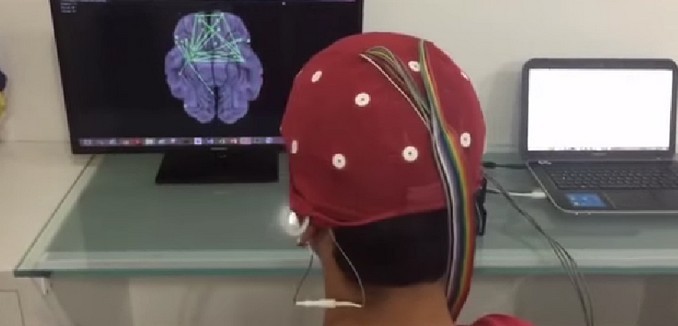
Myndlift uses neurofeedback, also known as electroencephalographic (EEG) biofeedback, to train the brain to focus. It’s a computer-based technique developed and tested by NASA to improve attention, focus, and learning. Kaddan, the 22-year-old phenom taking Israel’s brain-tech world by storm, knows the path to changing hyperactivity treatment is a tough one, but he’s positive his app-based, wearable neurofeedback solution, coupled with specially tailored mobile games that only work through concentration, can increase attention levels with just 10 minutes of play time a day.
“I know that I have a product that has a value to a lot of people,” he said, from his co-working space for high-tech entrepreneurship and innovation at Tel Aviv’s public library. Myndlift’s idea is to get sufferers of ADD and ADHD off medications like Ritalin, which suppresses appetite and has other negative side effects, and help them focus their minds using a mobile app, neurofeedback, and a brain-sensing wearable technology.
“Myndlift brings personalized neurofeedback training to mobile, making it easier for people with hyperactivity, professionals in demanding careers, students, athletes and anyone concerned about brain fitness to improve concentration abilities effectively without prescription drugs, inconvenience to visit specialized clinics and huge bills, thus saving thousands of dollars and tens of commuting hours,” according to the company’s elevator pitch.
Read more here

Monday, July 28, 2014

App to track migraine headaches

An app, currently only available overseas, helps people track what triggers their migraine headaches.

A new migraine tracking smartphone app analyses what causes your headaches and suggests how to stop them from happening.

The app, Migraine Buddy, asks questions about your migraine, habits, and medication with a questionnaire.

It also collects data about your sleep and movement patterns using your smartphone’s sensors.

Once the app collects enough data, it creates a report highlighting when the symptoms happened, and what were the top triggers.

It also finds out the most effective medication for you by recording when you used them and comparing that information with the severity of the migraines, Mashable reported.

“It mimics how a doctor prescribes different medication to patients to figure out what works,” said Veronica Chew, co-founder of Healint, the Singapore-based company behind Migraine Buddy.

“Most other migraine apps are not as comprehensive. We collect data that’s action-driven, so that we can help patients make the right decisions,” Chew said.

Currently, the application is only available in Singapore through a neurologist that is working with Healint.

Read more here

Monday, July 07, 2014

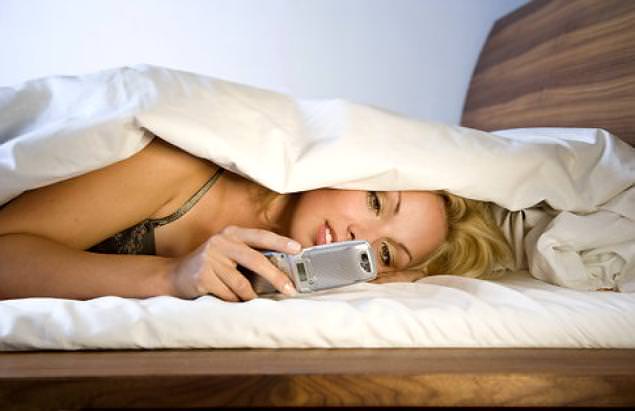
Cell phones cause sleep problems for people

This article discusses how checking your phone before bed can affect your sleep.


Checking your phone before bed and keeping it close by as you sleep is now believed to cause serious sleep problems, which could lead to poor health.
Wayne Conn, a sleep coordinator at Texoma Medical Center, said using your phone right before bed is unhealthy.
"It wakes the brain up. It gets you overstimulated and you're not going to be able to fall asleep," he said. "It's almost like a two year old that's really excited for a birthday party."
Conn said you should stop using your phone two hours before going to sleep. If you really need to make a phone call, use a land line phone.
He equated using your cell before bed to exercising. You don't exercise before sleep, so you shouldn't stimulate your brain, either.
And when falling asleep, another cell phone related problem could occur.
"Radio frequency with cell phones is thought to possibly sleep latency, which means when you got to sleep it might take you ten minutes as opposed to fifteen minutes to fall asleep," he said.
But the problem with cell phones and sleep doesn't stop there.
Even once you're asleep, it can still create a problem, even if you're unaware of it.
A phone that lights up during the night could cause a change in melatonin production.
"Any blue lights or yellow lights may cause some problems where you might not be able to go to sleep," he explained. "Any red lights are okay. You're going to have good production and sleep regularly."
The solution to the light problem is simple -- turn your phone over.
As for the radio frequency, however, Conn recommends placing your phone at least six feet away from you at night.
He challenged those people who sleep near their cell phones by saying, "Try it for two weeks. Put your phone six feet away. Turn it off, limit your usage before bed and throughout the night and see what happens."
The long term effect of the issue is sleep disruption, which can eventually cause high blood pressure, anxiety disorder and type 2 diabetes. 
Read more here

Friday, July 04, 2014

CDC's Heads Up app helps to spot symptoms of concussions in children

Summer concussions are from falls and accidents. I see many water sport induced brain injuries.

 If your child is not right, trust your instincts. Trust your child if they feel they are not right. See a physician! - JR

An app created by the CDC helps to spot symptoms of concussions in children.

Need a primer on how to spot the signs of a concussion for your child? The Centers For Disease Control and Prevention's Heads Up app will help you learn how to recognize the signs and symptoms, and what to do if you think a child has a concussion or other serious brain injury.

This is crucial information that you can find easily in the app to act quickly if needed. Children and teen athletes are more susceptible to concussion than older athletes, and they have an increased risk compared to adults for traumatic brain injury with greater severity and prolonged recovery due to their developing brains.

The app says that signs and symptoms generally appear soon after an injury, but the seriousness of the injury and some symptoms may not appear for hours or days. In rare cases of a hematoma (a collection of blood in the brain), you would need to take your child immediately to the emergency room. If a child does suffer from a concussion, there is information on recovery, such as when to return to school and sports.

This app can also help you pick the right helmet for your child's activity, including what to look for and what to avoid. For example, you can choose hockey to find out about the correct size and fit, tips for finding a good helmet, and how long it should last.

Besides sports, there are safety tips to prevent brain injuries at home, playground, cars, homes, and bikes.

Lastly, the CDC encourages to share information on concussions with others. In May, President Obama at the Healthy Kids and Safe Sports Concussion Summit called for the end of the culture in youth sports where kids are encouraged to “suck it up” after sustaining head injuries.

“We have to change a culture that says you suck it up,” said President. “Identifying a concussion and being able to self-diagnose that this is something that I need to take care of doesn’t make you weak - it means you’re strong.”
Read more here

Friday, May 09, 2014

An app to treat insomnia

A new phone app from the UK claims to treat insomnia more effectively than sleeping pills can.

We’ve all encountered apps capable of putting users to sleep, but that’s rarely their stated intention. Now one doctor has released a piece of software she claims will replace sleeping pills and help send insomniacs into a deep slumber.

Dr Kirstie Anderson, one of the UK’s foremost sleep experts, has made a career out of studying how humans nod off. Working with tech experts at Teeside University, Newcastle, she created an app called Sleepstation which she claimed is more effective than drugs.

She said: “I’m a neurologist that specializes in sleep disorders, there isn’t a great deal of us that work in sleep medicine. The most common sleep disorder is insomnia, which many of us will suffer from at some point in our lives.
“But the people who have chronic insomnia dread climbing the stairs and going to bed. It’s a life-altering condition that has a massive health and well-being impact.”
Her app uses Cognitive Behavioural Therapy (CBT) techniques to ensure a good night’s rest. Based on a recognized and effective treatment for insomnia, it shows users videos detailing the best ways to sleep and allows them to keep a diary .
“The CBT for insomnia program is a very good simple package with lots of research evidence for benefit,” Anderson continued. “It works at least as well as sleeping tablets, but without any of the side effects, and lasts for longer. Up to 80% of people who receive the treatment see improved sleep following the program.”
In clinical tests, more than 80 percent of insomniacs reported better sleep after using Sleepstation. Key to its success is the level of interactivity it offers. It is personalized for each user and changes its advice based on their sleep pattern. Insomniacs are first assessed by a doctor, before being supported remotely as they go through the CBT course, which is exactly the same one already offered by NHS staff.
If it’s money worries that are keeping you up at night, this app probably won’t help. At £59 ($100), it isn’t exactly the cheapest app on the market. But in the UK, the National Health Service are now prescribing it, meaning that insomniacs will be able to get it for free, or at a nominal cost.
“Between five to 10% of the population will have chronic insomnia at any stage and it affects other parts of a person’s wellbeing,” Anderson added. “If you’ve had a first bout of depression one of the most important risk factors for a second bout of depression is ongoing insomnia.
“The main treatment for insomnia at the moment is sleeping pills, with 10 million people taking then nationally. These pills come with a lot of side effects and little effect on chronic insomnia. Bearing this in mind SleepStation really could make a massive difference to potentially millions of people’s lives.”
SleepStation is not the first sleep app and is unlikely to be the last. Sleep As Android, for instance, and Sleep Cycle both monitor a snoozing person’s sleeping pattern and then wake them at the optimal point in the morning.SleepRate goes a step further by  shipping along with a heart rate monitor, which is strapped to an insomniac’s chest when they go to bed. A unique sleep plan is then drawn up based on the results. There are even apps which allows you to count sheep,  a distinctly old school method of getting your head down.
Nonetheless, Anderson’s link up with the NHS will give her app’s chances of success a clear boost, although it won’t help outside of the UK. With so many apps already on the market, Anderson had better make sure she’s not caught napping if she wants to beat the competition.
Read more here

Monday, February 24, 2014

Smartphones hurting our ability to sleep and work

An article from the Wall Street Journal discusses how smartphones make us tired which can both hurt our ability to sleep at night and to be productive during the day.

For a productive day at work tomorrow, give the smartphone a rest tonight.
Reading and sending work email on a smartphone late into the evening doesn’t just make it harder to get a decent night’s sleep. New research findings show it also exhausts workers by morning and leaves them disengaged by the next afternoon.
That means the way most knowledge workers do their jobs—monitoring their iPhones for notes from the boss long after the office day is done and responding to colleagues at all hours—ultimately makes them less effective, posit researchers from University of Florida, Michigan State University and University of Washington.
The scholars conducted two studies of workers’ nighttime technology habits, sleep duration and quality, energy and workplace engagement. In the first study, 82 mid- to high-level managers were asked every morning how many minutes they used their smartphone after 9:00 pm the night before and how many hours they slept. Then, they were asked to rate their agreement with statements like “I feel drained” and “Right now, it would take a lot of effort for me to concentrate on something.”
In the afternoon, they had to assess statements about work engagement, such as “Today while working, I forgot everything else around me.”
Prior studies have shown that staying focused and resisting distractions takes a lot of effort, so when smartphone use interferes with sleep, it takes a toll the next day.
“The benefit of smartphone use may…be offset by the inability of employees to fully recover from work activities while away from the office,” the researchers write.
After accounting for sleep quality, the researchers found that work-related smartphone use in the evening was associated with fewer hours of sleep. The subjects who recorded shorter nights also reported depleted reserves of self-control, and those who felt morning exhaustion also indicated they were less engaged during the day, a domino effect that shows how an unending workday ultimately leads to poorer work.
The second study, which involved 161 workers, measured how late-night tech use—on smartphones, laptops, tablets and TV—can disrupt sleep and next-day work engagement.
In her book, “Sleeping With Your Smartphone,” Harvard Business School professor Leslie Perlow studied executives at Boston Consulting Group who were given a chance to disconnect on a regular basis. The executives became more excited about their work, felt more satisfied about their professional and personal lives and even became more collaborative and efficient.
Using any kind of electronic device affects sleep quantity and focus the following day, but smartphones are especially draining. That’s partly because the always-on, always-handy phone the first device we turn to, says Christopher M. Barnes, an assistant professor of management at University of Washington’s Michael G. Foster School of Business and a co-author of the paper. Having a screen so close to our faces probably doesn’t help us prepare for sleep, he adds.
The researchers don’t yet know if there’s a particular threshold at which smartphone use begins to affect sleep habits, but even 30 minutes before bedtime can take a toll, Barnes says.
The fix, researchers say, is to put down the phone and enjoy the evening. But that’s easier said than done, so long as managers send emails at 10:30 p.m. and expect responses by 10:31 pm. Barnes says real change will have to come from the top, with managers setting an example by not sending those messages in the first place, or at least toning down expectations on response time.
Read more here

Thursday, February 13, 2014

Blue light can fight fatigue during the day

A study shows that blue light from phones and computers can alleviate fatigue throughout the day.

Researchers from Brigham and Women's Hospital (BWH) have found that exposure to short wavelength, or blue light, during the biological day directly and immediately improves alertness and performance. These findings are published in the February issue ofSleep.
"Our previous research has shown that blue light is able to improve alertness during the night, but our new data demonstrates that these effects also extend to daytime light exposure," said Shadab Rahman, PhD, a researcher in BWH's Division of Sleep Medicine and lead author of this study. "These findings demonstrate that prolonged blue light exposure during the day has an an alerting effect."
In order to determine which wavelengths of light were most effective in warding off fatigue, the BWH researchers teamed with George Brainard, PhD, a professor of neurology at Thomas Jefferson University, who developed the specialized light equipment used in the study. Researchers compared the effects of blue light with exposure to an equal amount of green light on alertness and performance in 16 study participants for 6.5 hours over a day. Participants then rated how sleepy they felt, had their reaction times measured and wore electrodes to assess changes in brain activity patterns during the light exposure.
The researchers found that participants exposed to blue light consistently rated themselves as less sleepy, had quicker reaction times and fewer lapses of attention during the performance tests compared to those who were exposed to green light. They also showed changes in brain activity patterns that indicated a more alert state.
"These results contribute to our understanding of how light impacts the brain and open up a new range of possibilities for using light to improve human alertness, productivity and safety," explained Steven Lockley, PhD, neuroscientist at BWH and senior investigator of the study. "While helping to improve alertness in night workers has obvious safety benefits, day shift workers may also benefit from better quality lighting that would not only help them see better but also make them more alert."
Researchers note that the next big challenge is to figure out how to deliver better lighting. While natural light is ideal, many people do not have access to daylight in their schools, homes or work places. In addition to improvements in daylight access, the advent of new, more controllable lighting technologies may help enable researchers to develop 'smart' lighting systems designed to maximize the beneficial effects of light for human health, productivity and safety.
Read more here

Friday, November 22, 2013

Why technology doesn't belong in a child's bedroom

This article discusses why technology in a child's bedroom is detrimental to their sleep quality.

Technology such as computers and smartphones in children's bedrooms can cause anxiety and sleep loss, scientists at Canada's Dalhousie University report.

Having technology such as televisions, smartphones and game consoles in the bedroom teaches the brain to see the room as an entertainment experience rather than a place for quiet and rest, they said.

Playing violent video games in the bedroom conditions the brain to see it as a place of danger, leading it to stay in a state of alert rather than resting, they added.

"One of the biggest culprits for inadequate and disturbed sleep is technology," Dalhousie researcher Jennifer Vriend, the study's lead author, said.

"Many teenagers sleep with their phones and they are awakened regularly by it ringing or vibrating throughout the night when they get a text, email or Facebook message.

"Having televisions and game consoles in the bedroom is also a problem," she said. "It sets up the brain to see the room as an entertainment zone rather than a quiet, sleepy environment."

Losing just one hour's sleep can reduce a child's performance at school, the study published in the Journal of Pediatric Psychology found.

"Even modest differences in sleep duration, accumulated over a few days, can affect critical cognitive and emotional functions in children," the study authors wrote.

Read more here

Tuesday, June 04, 2013

Technology hurting your sleep

Light from phones, tablets and computers can interfere with a person's natural melatonin production and interfere with sleep.

Smartphones and tablets can make for sleep-disrupting bedfellows. One cause is believed to be the bright light-emitting diodes that allow the use of mobile devices in dimly lit rooms; the light exposure can interfere with melatonin, a hormone that helps control the natural sleep-wake cycle. But there may be a way to check your mobile device in bed and still get a good night's sleep. A Mayo Clinic study suggests dimming the smartphone or tablet brightness settings and holding the device at least 14 inches from your face while using it will reduce its potential to interfere with melatonin and impede sleep.


The research was among Mayo Clinic studies being presented at SLEEP 2013, the Associated Professional Sleep Societies annual meeting in Baltimore.
"In the old days people would go to bed and read a book. Well, much more commonly people go to bed and they have their tablet on which they read a book or they read a newspaper or they're looking at material. The problem is it's a lit device, and how problematic is the light source from the mobile device?" says co-author Lois Krahn, M.D., a psychiatrist and sleep expert at Mayo Clinic in Scottsdale, Ariz.
"There's a lot of concern about using mobile devices and that prompted me to wonder, are they always a negative factor for sleep?" Dr. Krahn says. "We found that only at the highest setting was the light over a conservative threshold that might affect melatonin levels. If it's at the mid setting or at a low setting it's bright enough to use."
In the study, researchers experimented with two tablets and a smartphone in a dark room, using a meter on its most sensitive setting to measure the light the devices emitted at various settings when held various distances from a person's face. They discovered that when brightness settings were lowered and the devices were held just over a foot from a user's face, it reduced the risk that the light would be bright enough to suppress melatonin secretion and disrupt sleep.
Other Mayo research presented at the conference includes the finding that some sleep apnea patients may not need annual follow-up visits. Patients with obstructive sleep apnea being treated with positive airway pressure are less likely to need a yearly check-up.
The researchers suggest developing a screening tool to assess which of these patients need annual follow-up visits.
Read more here

Thursday, May 02, 2013

Texting children with asthma improves health outcomes

Providing information to children with asthma through text messages resulted improved health outcomes.

Simply sending children with asthma a text message each day asking about their symptoms and providing knowledge about their condition can lead to improved health outcomes.


In a study by the Georgia Institute of Technology, pediatric patients who were asked questions about their symptoms and provided information about asthma via SMS text messages showed improved pulmonary function and a better understanding of their condition within four months, compared to other groups.
"It appears that text messages acted as an implicit reminder for patients to take their medicine and by the end of the study, the kids were more in tune with their illness," said study leader Rosa Arriaga, senior research scientist in the College of Computing's School of Interactive Computing at Georgia Tech.
T.J. Yun, former Georgia Tech Ph.D. student, and Arriaga will present their research, "A Text Message a Day Keeps the Pulmonologist Away", today at the ACM SIGCHI Conference on Human Factors in Computing Systems 2013 in Paris.The research won a best paper award in the Replichi category, which highlights best practices in study methodology.
It is also a replication study of an SMS health intervention for pediatric asthma patients originally published in early 2012 in the Proceedings of the 2nd ACM SIGHIT International Health Informatics Symposium.
The results of the research hold promise for the future of mHealth studies, a trend based on the idea that mobile devices can be used to improve health and wellness.
Asthma is the most prevalent chronic respiratory disorder in the U.S., affecting about 17.3 million individuals, including more than 5 million children. Medication is the main way patients manage symptoms, but research shows less than 30 percent of teens use their inhalers regularly.
Texting, on the other hand, is something teens do regularly and enjoy. Nearly 75 percent of American teens have mobile devices. Georgia Tech researchers were interested in seeing if this ubiquitous, easy-to-use technology could help young patients manage their asthma.
In both studies, the researchers randomly assigned 30 asthmatic children from a private pediatric pulmonology clinic in Atlanta into three groups -- a control group that did not receive any SMS messages; a group that received text messages on alternate days and a group that received texts every day. The children were between 10 and 17 years old, owned a mobile phone and could read at least at a fifth grade level.
Over four months, the intervention groups received and responded to SMS messages 87 percent of the time, and the average response time was within 22 minutes. After the study, the research team analyzed patients who had follow-up visits with their physician and found that sending at least one text message a day, whether it was a question about symptoms or about asthma in general, improved clinical outcomes.
"The results indicate that both awareness and knowledge are crucial to individuals engaging in proactive behavior to improve their condition," Arriaga said.
In another mHealth study that highlighted the role that online social networks can have on wellness, Arriaga, Georgia Tech Regents Professor of Interactive Computing Gregory Abowd and graduate student Hwajung Hong investigated whether social networking could help individuals with autism improve their social connectedness.
One of the challenges individuals with autism face is not having a large enough network of people who can provide advice about everyday situations, such as home upkeep, financial planning or relationships. They tend to over-rely on a primary caregiver, which limits their independence and may burden the caregiver.
The study involved three individuals with Asperger's Syndrome, a diagnosis that reflects average or above average language skills, but impaired social skills and patterns of behaviors and interests. Individuals with Asperger's Syndrome can have difficulty using traditional social networking sites such as Facebook because it requires a degree of social nuance. They also may be vulnerable to users trying to take advantage of them.
To address this issue, Georgia Tech researchers set up a specialized social network for participants using the commercial cross-platform service, GroupMe. Each participant was linked with a small, pre-determined number of family and friends that he or she could reach out to about everyday life issues and questions.
Over four weeks, GroupME motivated each participant to communicate with this trusted circle of members and reduce reliance on his or her primary caregiver. The circle actively engaged and shared the responsibility for responding to the participant's queries. Primary caregivers gave positive reviews of the specialized social network, saying that they were happy with the diversity of feedback that the system provided and that the load felt lighter thanks to the help of the circle members. Results indicate that positive online interactions lead to real-life interactions between the individuals and their circle members.
Read more here

Wednesday, August 31, 2011

Insomnia cures via Android and iOS apps


Unfortunately there are times when most of us will suffer some from of insomnia at one time or another. So today we are looking at insomnia cures via Android and iOS apps to help you get that good nights sleep.

First up we have Natural Cures for Insomnia 1.0 which is available for owners of the iPhone, iPad, and iPod Touch. The application has been designed to help users to beat insomnia without resorting to drugs or other methods. It teaches you how to prepare your body for relaxation, set the right mood for a comfortable sleep atmosphere, use music and other relaxation techniques, and much more.

It also shows users how to use herbal teas and warm drinks which can help relaxation, and what herbs and vitamins that can promote natural sleep. There are even recipes for herbal teas and instructions on how to make your own herbal satchels. The application is stored directly to the device so no internet connection is needed.

Find the feature packed Natural Cures for Insomnia 1.0 on the App Store for only $0.99/£0.69. iOS 3.0 or later required. The Natural Cures For Insomnia is an application for users of Android devices.

Overcoming Insomnia – Learn to Sleep Like a Baby 1.0 is another application for owners of iDevices and is currently on offer on the App Store. The application is packed with all the information you need with chapters that include the sleep cycle, diagnosing insomnia, medications that can help, natural cures for insomnia, and much more.

The application is ideal for those people who don’t want to resort to sleeping pills but still get a good night’s sleep. Overcoming Insomnia – Learn to Sleep Like a Baby 1.0 is available worldwide on theApp Store for the discounted price of $0.99/£0.69. iOS 2.0 or later required.

Insomnia or Sleep Disorder is another application which is available for users of the Android platform, and is also currently on offer. The application will teach users the difference between insomnia and sleeping disorders, how depression relates to insomnia, details of how insomnia can affect your health, whether over the counter remedies work, and much more.


Read more at: http://www.product-reviews.net/2011/08/30/insomnia-cures-via-android-and-ios-apps/

Wednesday, August 17, 2011

Cool Concussion Related Technology - Concussion testing app and chinstrap


I found these two technologies for concussion monitoring including an app for concussion testing and a chin strap that measures impacts.


Iphone/Ipad Concussion evaluation tool - free field test

http://www.scat2.org/

http://itunes.apple.com/us/app/pocket-scat2/id453095629?mt=8


Impact Inidicator

The Impact Indicator takes sports safety to an historic new level. Small in size but big in benefit, it measures the force and duration of a hit to a player’s helmet. Instantly, players and coaches can know when or if a possible head injury is detected. Once alerted, a coach can get the player to the sideline for evaluation maximizing treatment, recovery and preventing further injury.


http://www.battlesportsscience.com/index.php/products/impact-indicator/about-the-indicator