Showing posts with label youth concussions. Show all posts

Wednesday, January 27, 2016

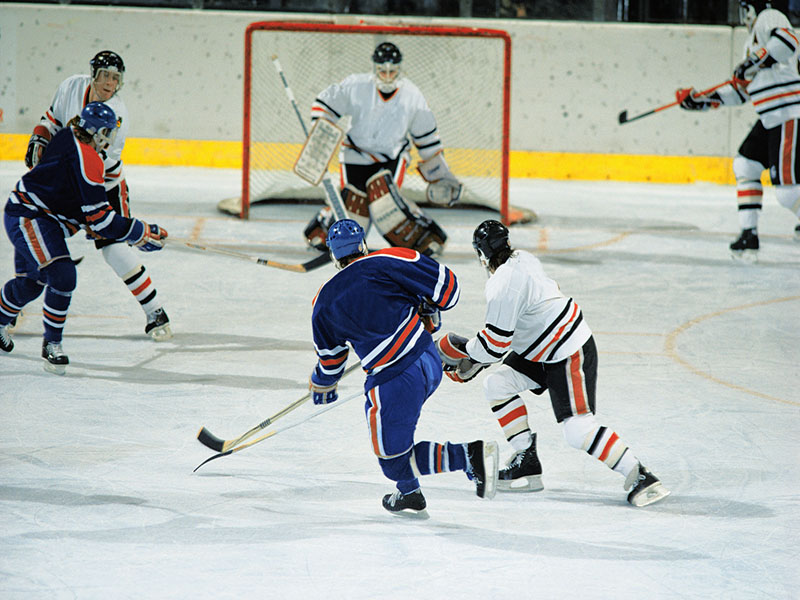
Concussions in youth hockey

Concussions in youth hockey are more likely to occur during illegal hits.

Concussions in youth ice hockey are as common as in youth football and soccer, and often occur when players break the rules of the game, a new study finds.
While the concussion rates in youth ice hockey are no greater than in other contact sports, more than 40 percent are caused by illegal hits, especially from behind, researchers said.
And younger players were at higher risk, according to the report.
"These findings highlight the importance of providing medical assistance, not only during ice hockey games, but also during practices, where more concussions occurred than expected," said Anthony Kontos, the study's lead author. Kontos is research director of the University of Pittsburgh Medical Center's Sports Medicine Concussion Program.
According to the USA Hockey Coaching Education Program, illegal moves include hitting from behind, crossing arms to hit a player in the neck and jumping on a player to push him into the wall.
Kontos suggested that training kids to obey the rules and enforcing penalties may reduce the number of concussions.
"Better enforcement of existing penalties for illegal hits -- especially those from behind when players are less able to protect themselves -- may help to limit concussions in youth ice hockey," he said.
The report was published online Jan. 8 in the journal Pediatrics.
For the study, the researchers followed nearly 400 ice hockey players aged 12 to 18 who took part in more than 23,000 games and practices during the 2012-13 and 2013-14 seasons.
There were 37 diagnosed concussions, all of which involved player-to-player contact, such as checking or collision. Illegal plays resulting in penalties accounted for 43 percent of the concussions, Kontos and colleagues found.
Concussions were three times more likely to happen during games than practices. However, ice hockey players were more likely to get a concussion during practice than kids in other sports practices, including football, the investigators found.
Most youth ice hockey concussions were suffered by players aged 12 to 14, rather than older players, the findings showed. This is in contrast to other youth sports, such as football, where concussion rates increase as players get older.
"Younger players may be at higher risk for concussion than older players, possibly due to unfamiliarity with checking and disparities in body size and strength, which highlights the need for concussion awareness and clinical care in this at-risk age group," Kontos said.
Symptoms of a concussion include severe headache, dizziness, blurred vision, sensitivity to light and, in severe cases, recurrent vomiting, the researchers said.
When a concussion occurs, the player should be taken out of the game and not be allowed to play again until all the symptoms are gone and a doctor has been consulted, Kontos added.
But if the symptoms are serious, such as a severe headache or recurrent vomiting or dizziness to the point of having trouble walking, then the player should go to the emergency room, he advised.
Dr. John Kuluz, director of traumatic brain injury and neurorehabilitation at Nicklaus Children's Hospital in Miami, said kids should play sports for all the positive things the games can do for children.
"But follow the rules," he added.
"A lot of improvement is needed in terms of the players and how they play the game within the rules," Kuluz said. "Make sure your kid plays for a coach and a team that appreciates the seriousness of concussion."
Read more here

Wednesday, July 01, 2015

Concussions occur during youth football practice

Many concussions happen during youth football practice, a recent study claims.

Most concussions among high school and college football players occur during practice, a new study finds.
Data on more than 20,000 young football players across the United States revealed that more than 57 percent of concussed high school and college players were injured at practice, not games.
Among youth football players, almost half of concussions were sustained during practice, according to the study published online May 4 in the journal JAMA Pediatrics.
Evaluating and modifying techniques used during practice may offer opportunities for prevention, experts say.
"While it is harder to change concussion incidence during games without major rule changes, a substantial number of concussions occur during practice across all levels," said lead researcher Thomas Dompier, president of Datalys Center for Sports Injury Research and Prevention Inc., in Indianapolis.
Policy makers and coaches could reduce the odds of serious head injury by limiting player-to-player, or full body, contact during practices, Dompier said.
Dr. John Kuluz, concussion director at Nicklaus Children's Hospital in Miami, said he isn't surprised so many concussions occur during football practice.
"There are a lot of concussions occurring in practices, but of course there are a lot more practices than games," he said. Kuluz pointed out that, according to the study, younger players had about three practices for each game; high school players had about four practices for each game; and college players had nearly 10 practices for a game.
Despite the greater number of practices, games are still more dangerous in terms of head trauma, Kuluz said.
Kuluz agreed that modifying physical contact -- the main cause of concussions -- would help reduce the odds of injury.
"You can't eliminate all player-to-player contact in practice," he said. "But there are alternatives -- like hitting dummies or using sleds -- rather than hitting each other," he said.
As awareness of long-term brain trauma increases, sports-related concussions are a growing public health concern, the researchers pointed out.
Schools are more aware than ever of the risk of concussions, Kuluz said. "All the schools I talk to are aware that there is a big risk of concussion when you play football," he said.
The study results are based on an analysis of data from three sources: the Youth Football Surveillance System; the National Athletic Treatment, Injury and Outcomes Network; and the National Collegiate Athletic Association Injury Surveillance Program.
The researchers found that during the 2012 and 2013 seasons 1,198 concussions occurred -- almost 12 percent of them among youth athletes, 66 percent among high school players, and 22 percent on the college field.
In all, concussions accounted for 9.6 percent of reported youth injuries, 4 percent of high school injuries and 8 percent of college injuries, the researchers found.
During practice, concussion rates were lower among college players than among high school players, the study found.
In 2012 and 2013, youth football players had the lowest concussion risk -- less than 4 percent both seasons. The one-season concussion risk was highest in high school at nearly 10 percent, and college players at 5.5 percent, the researchers said.
Among kids ages 5 to 7 there were no football-related concussions during that study period, researchers say.
Each year, approximately 3 million youth athletes, 1.1 million high school athletes and 100,000 college athletes play football, the researchers noted.
"Across all levels of football, policy makers, coaches, researchers and sports medicine officials should continue to seek ways to reduce concussion incidence," Dompier said.
Read more here

Wednesday, April 15, 2015

Study: Most NHL and Youth Hockey Helmets are Unsafe

A study shows that most helmets used in the NHL and by youth hockey players are not safe.

A new independent study has found that hockey players, ranging across the National Hockey League, or NHL to the youth leagues, are at the risk of concussion from hits during matches due to a lack of protection thanks to poor quality helmets.
The study, conducted by Virginia Polytechnic Institute and State University, tested 32 helmets available in the market on their ability to protect the players from concussion. The study aimed to rank the helmets on a scale of five stars. It was not funded by the NHL, cost $500,000 and took three years to complete.
According to the study, published publicly last Monday, none of the helmets got a 4-star or 5-star rating. Only one helmet, made by Warrior Sports, got a 3-star rating. Nine helmets failed to get even a single star, and the rest got a 1-star or 2-star rating.
"We don't think anybody should be playing in these helmets," Stefan Duma, the head of Virgina Tech’s biomedical engineering department said, as reported by ESPN.
Players wearing the poorly rated could be at risk of anywhere between six to eight concussions per season, the report claimed. The two most expensive helmets available in the market, made by Bauer and CCM, received just one star.
The report raises questions over the testing methods used to certify hockey helmets, as it claims all 32 helmets were approved by the Hockey Equipment Certification Council. The report raises questions as to whether more can be done to improve the safety standards of a sport played by millions in the United States.  
Steps are, however, being taken to reduce the risk of concussions. These include coaching players to avoid head-on clashes, safer techniques to tackle, avoiding fights, among others. 
"There will never be a perfect helmet that will prevent all concussions. It's about risk reduction. The reality is when you look at the bottom and the top helmets, you're talking about massive reductions in acceleration, over half. I think almost all biomechanical engineers would agree that that's a significant difference," Duma said.
Read more here

Wednesday, March 11, 2015

Concussions detectable on the sidelines in children as young as 5

A vision test that can be done on sidelines to detect concussions was shown effective in children as young as 5 years old.

New research from the NYU Langone Concussion Center finds that a simple eye test, which can be administered in less than two minutes, can effectively diagnose a concussion and help determine whether a student athlete as young as 5 years old should return to a game.
The new study, published online in the Journal of Neuro-Ophthalmology, was conducted on 89 NCAA athletes and a younger subset of 243 youth athletes under age 17, and shows how the eye test, known as the King-Devick test, could help mitigate the problems that face concussion diagnosis in youth sports.
Study author Steven Galetta, MD, the Philip K. Moskowitz, MD Professor and Chair of Neurology at NYU Langone Medical Center, says the test can easily be administered on the sidelines by parents and non-health care professionals when athletic trainers and doctors are not available to monitor sidelines at youth sports games.
"Our findings in children and collegiate athletes show how a simple vision test can aid in diagnosis of concussion at all levels of sport," says Dr. Galetta, who is also a professor of ophthalmology at NYU Langone. "Adding the King-Devick test to the sideline assessment of student athletes following a head injury can eliminate the guesswork for coaches and parents when deciding whether or not a student should return to play."
As part of the King-Devick test, athletes read numbers off of three pieces of paper while being timed with a stopwatch. A worsened performance from a baseline reading suggests a concussion has occurred.
"Given that concussions may cause devastating short- and long-term cognitive effects, tools like vision testing that can objectively diagnose a concussion are critical," says Laura Balcer, MD, co-director of the NYU Langone Concussion Center, and a professor of neurology, ophthalmology and population health at NYU Langone.
Some sideline tests only measure cognition and balance, but visual testing is rarely performed, despite longstanding evidence that vision is commonly affected by concussion, according to a review article published by Dr. Galetta and Dr. Balcer in the March 3 print issue of Journal of Neuro-Ophthalmology. Previous research suggests about 50 percent of the brain's pathways are tied to vision.
The King-Devick test was developed in 1976 by optometrists Dr. Alan King and Steven Devick. Previous studies have looked at the test for neurological conditions that can affect vision like multiple sclerosis, before the researchers began testing it on athletes.
While earlier studies by the NYU Langone researchers looked at the King-Devick test on college athletes, this is the first to administer the test in children.
For the new study, researchers recruited 243 male and female athletes between the ages of 5 and 17 years old participating in a local youth hockey and lacrosse leagues, and 89 athletes who played these sports at the collegiate level. All of them underwent a baseline King-Devick test before the start of the sports season.
As part of the test, participants read numerical on cards from left to right as quickly as possible. Times for all three reading cards are added together, and then that number is compared with the baseline score: higher testing times suggest a worsening of performance consistent with a concussion.
All the student athletes were also given a brief cognitive test called the Standardized Assessment of Concussion (SAC) which measures memory, concentration and recall, and a Timed Tandem Gait Test, which is a timed walking trial.
Researchers determined 12 athletes sustained a concussion during the season. After matching them to control subjects of the same age and sport who did not experience a head injury, the study showed the King-Devick test outperformed the other two tests in distinguishing a concussed athlete versus an uninjured control subject with 92 percent accuracy (compared to 87 percent for Tandem Gait and 68 percent for SAC test).
Among concussed athletes, K-D scores worsened by an average of 5.2 seconds compared to baseline scores, while non-concussed athletes improved their times by 6.4 seconds compared with baseline.
Up to 3.9 million sports-related mild traumatic brain injuries, or concussions, occur annually in the United States, according to the Centers for Disease Control and Prevention, but researchers say that number is likely higher since the CDC only tracks emergency room visits.
Experiencing a concussion in a game increases an athlete's risk for sustaining a second condition in the same season by three times. Other complications include the dangerous second impact syndrome, or other short- and long-term side effects.
The group next plans to study the underlying mechanisms of the fast eye movements required for rapid number naming using electronic quantitative eye movement recordings in collaboration with Janet Rucker, MD, the Bernard A. and Charlotte Marden Associate Professor of Neurology and J.R. Rizzo, MD, director of the Visuomotor Integration Lab at Rusk Rehabilitation. According to Dr Balcer, these observations may permit more precise anatomical correlations of performance data and concussive symptoms.
Read more here

Experts claim better concussion prevention is needed in youth sports

This article discusses an expert's claim that better preventative measures for concussions are needed in youth sports.

Dina Morrissey, M.D., M.P.H., research associate for The Injury Prevention Center at Hasbro Children's Hospital, recently led a study that found that while compliance with mandated provisions in youth sports concussion laws was high among Rhode Island Interscholastic League (RIIL) high schools, compliance with recommended concussion protocols was very limited. The study, recently published in the Journal of Trauma and Acute Care Surgery, suggests that more concussion related standards and protocols need to be written into law in order to raise compliance rates among youth sports groups.
"An estimated 7.7 million children and adolescents participate in organized sports each year and the Centers for Disease Control and Prevention estimates that they sustain between 1.6 and 3.8 million sports-related concussions annually," said Morrissey. "In response to this, the state of Rhode Island passed the School and Youth Programs Concussion Act (SYPCA) in July 2010. The law outlines both mandatory and recommended provisions in regard to managing student athletes with a suspected concussion. Our study assessed compliance with this law among Rhode Island high schools and community league organizations."
In a 2013 statewide assessment of Rhode Island concussion law compliance among RIIL member high schools, non-member high schools and selected community league sports organizations, the study team found nearly universal compliance with mandated elements of SYPCA.
All athletic directors surveyed reported that they require concussion information sheets to be signed by both student athletes and parents prior to the start of each sports season. The research team also found that all coaches and 93 percent of volunteers have completed annual concussion training.
One hundred percent of surveyed groups also reported that any student athlete with a suspected concussion is immediately removed from play, and 93 percent reported that those students cannot return to play until they receive written clearance from a licensed physician, all per the SYPCA mandates.
"These SYPCA laws only apply to schools that are RIIL members," said Michael Mello, M.D., M.P.H., director of the Injury Prevention Center and co-author of the study. "When we explored other non-RIIL schools and sports organizations where SYPCA is recommended but not required, and also any of the recommendations that are not legally required of RIIL members, we found a very different compliance rate."
Only a handful of schools require student athletes to complete any type of pre-season neurocognitive testing, and nearly 20 percent don't offer it to student athletes at all. Half of the surveyed groups reported developing a written return to play protocol.
"These compliance statistics show us that in order to best protect youth athletes in Rhode Island, all recommendations outlined in the SYPCA law should be made mandatory," said Mello. "Additionally, non-RIIL schools, as well as community sports organizations, should also be required to comply with the law."
Neha Raukar, M.D., director of the Center for Sports Medicine and a co-author of the study, sees many youth athletes in her clinic for concussion treatment. "If a concussion is not treated properly and student athletes return to play too soon, they are at high risk for prolonging their symptoms, meaning more time out of the classroom and on the bench. They are also at risk for experiencing a devastating post-concussion event, such as second impact syndrome, which can be fatal," said Raukar.
"We are only just beginning to understand the long-term consequences of sustaining repeated head trauma and concussions," said Raukar. "Physicians, coaches and school staff alike all need to know the importance of properly diagnosing concussions, as well as the criteria for when a student athlete can both return to school and return to sports."
But, Morrissey also urges that the public needs to play a role and ensure that their school or community sports organization follows all the recommendations in the concussion law. "One example of our community pushing for better concussion protection for our students can be seen in school nurse annual training," said Morrissey. "At the time of our survey, only one quarter of surveyed groups required school nurses to complete annual concussion training. But now there is a new law in place to try to correct this, and Rhode Island is one of only a handful of states to reach out to school nurses for training. This is a clear step in the right direction."
Read more here

Saturday, February 28, 2015

Brain imaging study of youth hockey players shows early markers for concussion damage.

A brain imaging study of youth hockey players shows early markers for concussion damage.

James Hudziak, M.D., has two children who love ice hockey. His son skates for his college team and one of his daughters plays in high school.
As a pediatric neuropsychiatrist and director of the Vermont Center for Children, Youth and Families at the University of Vermont (UVM) College of Medicine, Hudziak believes in the benefits of ice hockey and other sports for kids. Athletic activities help a young person build organizational skills, improve motor and emotional control, reduce anxiety and boost confidence.
Now, though, Hudziak is looking into the potential dangers of ice hockey for young athletes. He and UVM colleagues Matthew Albaugh, Ph.D., Catherine Orr, Ph.D., and Richard Watts, Ph.D., have published a groundbreaking study in the February issue of TheJournal of Pediatrics that shows a relationship between concussions sustained by young ice hockey players and subtle changes in the cortex, the outer layer of the brain that controls higher-level reasoning and behavior.
Each year, more than 300,000 sports-related concussions (SRC) occur across all sports and all levels in the United States, according to a 2013 "Ice Hockey Summit II" report to which Hudziak and Boston University (BU) School of Medicine's Ann McKee, M.D., contributed. The report's authors advised the elimination of head hits from all levels of hockey, a change in body-checking policies and the elimination of fighting in all amateur and professional hockey. "Ice hockey SRC prevalence is high," the report states. "Hockey players compete at high speeds as they mature, risking injury from intentional and accidental collisions, body checks, illegal on-ice activity and fighting."
The UVM team used advanced imaging technology and cognitive testing to assess 29 Vermont ice hockey players between ages 14 and 23, some diagnosed with a sports-related concussion. As the severity of the athletes' concussion symptoms increased, the researchers found, the cortex got thinner in areas where it should be dense at those players' ages -- areas that relate to attention control, memory, and emotion regulation.
"We believe that injury to a developing brain may be more severe than injury to an adult brain," Hudziak says.
What the study indicates for the future health and function of an ice hockey player is unclear. The researchers hope to do further studies, ideally following the brains of these athletes over a couple of decades and factoring for their involvement and time in the sport as well as other influences, such as smoking and alcohol use.
"The concern is that what we are finding may be an early marker of brain damage," Albaugh says. "Years of playing contact sports and repeatedly getting your head knocked around probably isn't good for the brain, especially in young children whose brains are still maturing" he adds.
Their findings contribute to research into the consequences of brain injury in other sports, including the brain damage discovered in older professional football players by McKee, a neurology and pathology professor at BU and director of the "brain banks" in various centers of study for the university and the Veterans Administration. Her work was a cornerstone of "League of Denial: The NFL's Concussion Crisis," an investigative report by the public television program "Frontline" on the National Football League's response to players' brain trauma.
"It just adds to our information base about young athletes playing contact sports," McKee says of Hudziak's study. "It's a first step. It needs to be looked at longitudinally. We need to know if these athletes recover."
McKee says she wouldn't necessarily expect the brain changes in young hockey players to lead to chronic traumatic encephalopathy (CTE), a serious but uncommon disease that she found prevalent in retired NFL players. Instead, she expects that further study in the ice hockey arena will show that young players' brains can recover from early blows. Brains have a chance for rehabilitation after injury, she says.
"We're hopeful that these changes can be reversed," she says of the cortex thinning observed in Hudziak's study. "I would look at this as an opportunity to make a difference, and not a cause of irrevocable damage in these players."
Hudziak and his UVM colleagues would like to help the organizations running professional, collegiate, junior and youth hockey leagues make better decisions about how best to treat players' head injuries; how and when to return players to the ice after an injury; when to pull them from the sport entirely; and how to prevent injuries from occurring. Players and coaches at the national, college and youth levels of hockey have talked to Hudziak about his findings, he says.
In Hudziak's study, he and his colleagues cite research indicating "that cerebral concussion accounts for 15 to 22.2 percent of all reported injuries" in hockey.
The key challenges for them, says Hudziak, are that the definition of "concussion" is so slippery and reports of the incidence of concussions are inconsistent. Some people think a concussion happens when someone is hit in the head or gets dizzy; others think a person has to be "knocked out" to have a concussion.
His study focuses on the symptoms recorded after a diagnosed concussion. But Hudziak wonders whether lesser head injuries, what he calls sub-concussive events, could have as many or more consequences for the brain over time as a single major blow.
On the computer in his office, Hudziak shows a video of a professional hockey game during which a player gets body checked. It doesn't look like a very serious hit, though he's carried off the ice.
Then, the video reverses to just a few minutes earlier in the game, when that same player collides with another and flips violently backwards, throwing off his helmet before his head hits the ice. That suggests the potential harm inside a person's skull that can occur from cumulative assault.
As Hudziak puts it, "The sum is greater than the individual parts."
That player flew into Burlington, Vt. to meet with Hudziak and his team, so they can learn more from his brain.
Ideally, Hudziak says, they want to apply their current study to female and male ice hockey players ages 8 to 14, then to college-age skaters of both genders and finally to retired professional hockey players. They'd like to compare their findings at each age group to nonathletes and to the same groups in soccer -- a sport typically involving less-severe head injuries.
"We don't have any sense that hockey's going to be worse than soccer," Hudziak points out.
Already, in a follow-up study, Hudziak's team has found more evidence of increased problems in the brains of athletes, compared with nonathletes. This work focuses on "hyperintensities," which look like little bright white spots on a brain image. His research suggests a higher volume of these bright spots may correlate with decreased thickness in the cortex.
"As a general rule of thumb, you're allowed one of these bright spots every 10 years of your life," Albaugh says.
So a 50-year-old should have about five of these bright spots. One of the college-age athletes in the study has 18 spots, Albaugh says. Hudziak now has to call some parents to tell them of the "clinically concerning findings" in their children's brain images.
Hudziak doesn't want to warn parents to keep their kids out of hockey or other team play. As the founder of the unique Vermont Family-Based Approach, which incorporates all aspects of a child's life to address emotional and behavioral problems, he prescribes hockey, soccer and other sports to help eliminate behavior, attention and psychological disorders. It is his hope that through brain training and health promotion the brain may recover.
"My goal is not to rid the world of these sports," Hudziak says. "My goal is to make these sports safer, so that more people can play them."
Read more here

Friday, August 01, 2014

Katy's coaches and players taught to spot concussions

Football players and coaches in Katy, Texas are being educated to make sure they know how to spot concussions.

Players and coaches from Katy Youth Football completed their first of at least four safety training sessions Saturday to make sure all are properly educated on how to understand, as well as avoid, head trauma on the field.
Taking place at Cinco Ranch High School, Saturday’s seminar featured the “Heads Up” program, an initiative by USA Football — the sport’s national governing body — to certify that coaches know current standards for concussion awareness and equipment fit, as well as heat and hydration. Through “Heads Up”, USA Football is striving to create standards for terminology and technique from the little league level, up to the pro level.
“Where we’re seeing more concussions is actually during the tackle,” said Chad Hester, USA Football master trainer. “So we’re starting with ‘Heads Up Tackling’. We’re teaching them proper tackling techniques to get the head out of the game — where they should be making first contact, instead of the head.”
USA Football teaches players by advancing through “levels of contact”, where technique is learned through different types of resistance — beginning with air, to bags, designated winners and losers, with the final stage called “thud”. Thud is a term by USA Football used to designate an assigned drill where players stay on their feet, and all contact is above the waist — a quick whistle ending play.
KYF President Anthony Biello said 2014 is the second year for KYF to participate in Heads Up. Besides just learning technique, KYF is limiting the amount of “live-action” players participate in during practice. The 35-year old league, boasting 1,500 players, has adopted the UIL’s standard of no more than 90 minutes of full-contact per week, per player. Full-contact is defined as game speed, where players tackle and block to the ground.
“If we have coaches that are out there just banging kids into each other, we have talks with those coaches. In some cases, we remove those kinds of coaches,” Biello said. “If you’re lining two kids up, five or ten yards apart and tell them to run full-speed and hit each other head-on — we don’t want to see that happen on our fields.”
He said the league doesn’t endorse several old-school contact exercises, such as “Bull in the Ring”, where players line up in a circle around one player, targeting the man in the middle for hit after hit, or the “Oklahoma Drill”, where a blocker and ball-carrier are pitted against a defender head-on within a tight width of space.
Kenneth Podell, neuropsychologist from the Methodist Neurological Institute, came to KYF’s training to educate coaches and players on what concussions actually are, as well as how to recognize and treat them. Podell remembers when some football coaches didn’t actually consider concussions a legitimate injury.
“At one time, a concussion test might have been, ‘how many fingers am I holding up?” Podell said. He indicated that has changed, where now medical staff uses a Standardized Concussion Assessment Tool (SCAT), where players go through a variety of mental assessments, also participating in balance and coordination tests.
“We try to objectify this is much as possible,” he said.
However, if there’s even an inkling of head injury by game officials, training staff or coaches, Biello said KYF requires players to sit out for at least a week and to be cleared medically by a qualified physician before returning to play.
While lawsuits against the NFL by former players diagnosed with the disease called CTE — thought by some to be caused by multiple sub-concussive hits — have spurred the movement for concussion awareness, Podell said he considers this a different type of injury, and one that’s still being studied by doctors. At this point in time, Podell said he believes athletes from little league on to high school bare significantly less risk than college or pro players, but that every parent must access their own risk level.

Hester recommends that parents look for a USA Football certified league when signing their kids up to play, as leagues that aren’t aligned with USA Football may not have the same level of standards. He hopes through these types of trainings, players will develop muscle memory for the Heads Up techniques. USA Football is looking to add “Heads Up Blocking” to their current instruction in future years.
Read more here

Monday, July 07, 2014

Signs of concussion in children

This article discusses concussions in children and how parents can spot them.

What is a concussion?

A concussion is an injury to the brain that may be caused by a blow, bump, or jolt to the head. Concussions may also happen after a fall or hit that jars the brain. A blow elsewhere on the body can cause a concussion, even if an athlete does not hit his/her head directly. Concussions can range from mild to severe, and athletes can get a concussion even if they are wearing a helmet.
Signs and symptoms of a concussion
Athletes do not have to be "knocked out" to have a concussion. In fact, less than one out of 10 concussions results in loss of consciousness. Concussion symptoms can develop right away, or up to 48 hours after the injury. Ignoring any signs or symptoms of a concussion puts your child's health at risk!
Signs observed by parents or guardians
* Appears dazed or stunned
* Confused about assignment or position
* Forgets plays
* Unsure of game, score or opponent
* Moves clumsily
* Answers questions slowly
* Loses consciousness (even briefly)
* Shows behavior or personality changes (irritability, sadness, nervousness, feeling more emotional)
* Can't recall events before or after hit or fall
Symptoms reported by athlete
* Any headache or "pressure" in head (how badly it hurts does not matter)
* Nausea or vomiting
* Balance problems or dizziness
* Double or blurry vision
* Sensitivity to light and/or noise
* Feeling sluggish, hazy, foggy or groggy
* Concentration or memory problems
* Confusion
* Does not "feel right"
* Trouble falling asleep
* Sleeping more or less than usual
Be honest - your child must be honest
Encourage your athlete to be honest with you, his/her coach and your health care provider about his/her symptoms. Many young athletes get caught up in the moment and/or feel pressured to return to sports before they are ready. It is better to miss one game than the entire season - or risk permanent damage!
No athlete should return to activity on the same day he/she gets a concussion.
Athletes should NEVER return to practices/games if they still have ANY symptoms.
Parents and coaches should never pressure any athlete to return to play.
The dangers of returning too soon
Returning to play too early may cause Second Impact Syndrome (SIS) or Post-Concussion Syndrome (PCS). SIS occurs when a second blow to the head happens before an athlete has completely recovered from a concussion. This second impact causes the brain to swell, possibly resulting in brain damage, paralysis, and even death. PCS can occur after a second impact. PCS can result in permanent, long-term concussion symptoms. The risk of SIS and PCS is the reason no athlete should be allowed to participate in any physical activity before they are cleared by a qualified health care professional.
Recovery
A concussion can affect school, work, and sports. Along with coaches and teachers, the school nurse, athletic trainer, employer, and other school administrators should be aware of the athlete's injury and their roles in helping the child recover.
During the recovery time after a concussion, physical and mental rest are required. A concussion upsets the way the brain normally works, and causes it to work longer and harder to complete even simple tasks. Activities that require concentration and focus may make symptoms worse and cause the brain to heal slower. Studies show that children's brains take several weeks to heal, following a concussion.
Read more here

Friday, June 06, 2014

White House plans to educate the public on youth concussions

The White House and President Obama plan to gather experts to help educate the public on youth concussions.

Concerned that too little is known about the effects of head injuries in young athletes, President Barack Obama is bringing representatives of professional sports leagues, coaches, parents, youth sports players, researchers and others to the White House to help educate the public about youth sports concussions.
Tackling the issue at a White House summit Thursday, Obama also will highlight pledges of money and other support from the NFL, the National Institutes of Health, the Pop Warner Little Scholars and others to do the research, promote safety and speed development of materials designed to provide better protection.
Obama comes to the issue through his well-documented love of sports, and as the father of two daughters active in sports. The president thinks sports are also a good way to keep kids healthy and out of trouble, but he raised some eyebrows last year by saying he would "have to think long and hard" before letting a son, if he had one, play football because of the risk of head injuries.
"He, as a parent, is concerned about the safety of his own daughters," said White House communications director Jennifer Palmieri, who was among officials who previewed the White House Healthy Kids & Safe Sports Concussion Summit for reporters.
In a report last fall, the Institute of Medicine and the National Research Council called for a national system to track sports-related concussions and begin answering questions about the risks of youth sports, such as how often do the youngest athletes suffer concussions or which sports have the highest rates.
Nearly 250,000 kids visit hospital emergency rooms each year with brain injuries caused by sports or other recreational activity, the White House said.
The National Football League is committing $25 million over the next three years on promoting youth sports safety.
Read more here

Do helmets protect children from concussions?

This article explains how no helmet can entirely protect a child from concussions.

Children wear helmets when they're scooting down sidewalks, skating, skiing, sledding and playing soccer. You can even buy $40 baby helmets on Amazon, because, according to the product description, "babies will always fall taking their first steps."
Putting aside the debate over whether helmets are truly necessary in all of these situations, there's something about helmets you might not know: They won't protect your kids from common head injuries that may cause long-term problems.
There's no question that helmets save lives by preventing skull fractures and other lethal brain injuries. But according to a 2013 report on youth sports-related concussions by the Institute of Medicine and the National Research Council, "there is limited evidence that current helmet designs reduce the risk of sports-related concussions."
That helmets don't protect against concussions is particularly worrying considering that children and adolescents may be both more vulnerable to concussions and recover more slowly from them compared to adults.
And statistics suggest that concussions are becoming more common among kids. One recent study reported a doubling in concussion-related ER visits by youth between 1997 and 2007. Some of this increase is undoubtedly due to growing awareness about concussions and better diagnostic techniques, but concussions are still believed to be underreported.
There's no good treatment for concussions, other than rest (for days, weeks or months, depending), but this rest is crucial: individuals who get concussions and then hit their heads again before they're fully healed can suffer brain swelling and even die.
Concussions are typically diagnosed based on symptoms -- headaches, dizziness, amnesia, nausea, and vomiting are among them -- but as for what kinds of blows to the head cause them, that's still largely a mystery.
"I couldn't even define the mechanism," explains Adam Bartsch, Director of the Cleveland Clinic's Head, Neck and Spine Research Laboratory.
And we can't come close to designing a concussion-proof helmet, he says, until we understand exactly how concussions happen.
Today's sports helmets are designed to attenuate high-impact linear acceleration forces, which occur in a straight front-to-back line, like "if you hit the head through the center of gravity," explains Robert Cantu, a neurosurgeon at the Boston University School of Medicine and co-author of "Concussions and Our Kids."
Yet most hits to the head, whether they're from falling off bicycles or scooters or from team sports collisions, cause the brain to rotationally accelerate, leading to concussion.
It's just that the linear acceleration is more strongly associated with severe injuries, like cracked skulls, and when the National Operating Committee on Standards for Athletic Equipment was formed in 1969 -- a year in which 38 Americans died playing football -- the goal was to develop helmet standards that would mitigate only the most severe injuries.
And consider the standards set for bicycling helmets by the Consumer Product Safety Commission. Since people bike in different climates and conditions, the CPSC mandates that bike helmets have to pass drop tests from a height of 6 feet at temperatures as high as 127 degrees, as low as 1 degree, and after being immersed in water for up to 24 hours.
Few materials can maintain their performance in such a range of conditions; one that does is expanded polystyrene (EPS), which is the foam that comprises the inner liner of most bike helmets sold today. The problem is that EPS is so strong that it doesn't protect well against low-energy concussion-inducing impacts.
Obviously you can't protect your kid's head from everything. Nor would you want to, really, as over-protective parenting is not without risks itself.
But given the growing medical concern over the dangers of repeated concussions, common sense says that we might be wise to keep our kids' heads from smacking into things more than they absolutely have to. Helmets don't clear us of this responsibility.
Read more here

Monday, April 07, 2014

Causes of childhood concussion in rural versus urban areas

A study of causes of childhood concussions in rural versus urban areas shows that children living in rural areas get concussions from motorized vehicles and children living in urban areas get concussions from sports.

Researchers at Western University (London, Canada) have found youth living in rural areas are more likely to sustain concussions from injuries involving motorized vehicles such as all-terrain vehicles and dirt bikes, whereas youth living in urban areas suffer concussions mostly as a result of sports. Hockey accounts for 40 per cent of those injuries. The study which reveals where and how children are receiving concussions is published in the Journal of Trauma and Acute Care Surgery.
Dr. Doug Fraser, a scientist with the Children's Health Research Institute at Lawson Health Research Institute and Tanya Charyk Stewart, the Injury Epidemiologist for the Trauma Program at Children's Hospital, London Health Sciences Centre (LHSC) and their team tracked all the youth under the age of 18 who presented to the LHSC emergency departments with a concussion over a six year period. There were 2,112 paediatric concussions, with a steady increase in number treated each year.
"It was important for us to learn about who is getting injured, where they're getting injured, and why they're getting injured. Once you answer those questions, then you can implement targeted injury prevention programs," says Dr. Fraser, an associate professor in the Departments of Paediatrics, Physiology & Pharmacology and Clinical Neurological Sciences at Western's Schulich School of Medicine & Dentistry.
Concussions are a particular concern for children and adolescents because their brains are still developing and they are more susceptible to effects of a head injury. The goal following this research is to create injury prevention programs that target and educate those at high risk of sustaining a concussion.
Concussions can often be predictable. Along with properly following the rules of the sport and wearing the protective equipment, Charyk Stewart suggests, "In sports, if you have been hit, then just get off the field immediately and stop play. If you are experiencing any symptoms, be seen by a doctor."
Dr. Fraser explained what to look for in a child who has experienced a head injury, "Watch the person carefully. In young children look for symptoms like, irritability or an inability to console the child. If the care giver has any concerns at all; if a person has any symptoms whatsoever in conjunction with an injury, they should immediately go and be seen by a doctor. Better safe than sorry, so be seen."
Read more here

Saturday, February 01, 2014

Study claims concussions are common in middle school-aged girls playing soccer

A recent study claims that girls who are middle school-aged and play soccer commonly have concussions.

Girls who play soccer in middle school are vulnerable to concussions, new research shows.
And despite medical advice to the contrary, many play through their injury, increasing the risk of a second concussion, the study found.
Although awareness has increased about sports concussions, little research has been done on middle school athletes, especially girls, noted study co-author Dr. Melissa Schiff, a professor of epidemiology at the University of Washington School of Public Health in Seattle.
In the study, which evaluated 351 soccer players between the ages of 11 and 14, Schiff and her colleagues found 59 concussions. A concussion is defined as a traumatic injury to the brain after a blow, shaking or spinning. In the study, the girls' symptoms included headache, dizziness, drowsiness and concentration problems.
That rate of injuries, Schiff said, is higher than what has been reported at either high school or college level of women's soccer.
Heading the ball was to blame for about 30 percent of the injuries. This involves hitting the ball with your forehead to redirect the ball in play. More than half of the concussions were from contact with another player.
Experts recommend those who have a concussion be evaluated by a doctor or other health care professional trained in the injury, but Schiff found that ''56 percent were never evaluated." Experts also advise that players not return to practice or games until symptoms disappear, but 58 percent of the players in the study continued to play even with symptoms persisting, she said.
The study was published online Jan. 20 in the journal JAMA Pediatrics.
Awareness about the dangers of concussions has increased, Schiff said, beginning with the National Football League's attention to the problem. Research about the problem has slowly increased to encompass college-level, high school, and now middle school players, she said.
In this study, the researchers randomly selected 33 of 72 elite teams from four youth soccer clubs in the Puget Sound region of Washington state. The study continued from 2008 to 2012. Players reported injuries and symptoms.
With so many injuries blamed on heading the ball, should it be banned?
Schiff thinks that is unrealistic. "It's part of the soccer sport," she said. However, it was found to result in concussion 23 times more often in a game than in practice. One suggestion, she said, is to teach middle school athletes heading in practice but tell them not to do it in games until they are older. The researchers speculate that younger players' less mature brains and weaker neck muscles, along with poorer heading technique, may contribute to the number of concussions.
The new study ''calls attention to the high incidence of concussion in this age group," said Dr. John Kuluz, director of traumatic brain injury and neurorehabilitation at Miami Children's Hospital.
The number of injuries blamed on heading the ball, 30 percent, is not surprising, he said. "I see it all the time," Kuluz explained. Often, he noted, a heading injury occurs along with colliding with another player.
Kuluz advises young athletes who have had a concussion to avoid heading the ball.
Parents need to pay attention to their child during and after soccer, he suggested. "In the event of an injury, pay attention to symptoms," Kuluz said. He added that if a concussion is suspected, a young athlete must be evaluated by a doctor or trainer who has experience with concussions.
"Soccer can be done safely," he said, but parents and coaches need to be aware of concussion symptoms and obtain good medical evaluation and care.
Read more here