Showing posts with label nfl. Show all posts

Saturday, October 31, 2015

Concerns about concussions in high school football

Concussion awareness is raising concerns about the safety of football for high schoolers.- JR

Awareness of the seriousness of concussions has been at the forefront of recent discussions involving the dangers of playing football.

Earlier this year, the NFL settled a class-action lawsuit with more than 5,000 ex-players who asserted that the league willfully hid information about the dangers of concussions.

While many hailed that as progress, high school coaches wonder if the risks involved with concussions will affect the numbers of participants in the future.

“As a high school coach, my big worry is that parents start moving kids away from the game,” Steele coach Scott Lehnhoff said. “We’re going to do everything we can to make sure protocols are followed and kids aren’t going back until it’s completely safe for them.”

The University Interscholastic League, which governs most high school sports in Texas, has a “return-to-play” protocol in which an athlete who has been diagnosed with a concussion must get a doctor’s approval before returning to play.

“If something looks like a possible concussion, then we get him out of there and make sure there are no coaches jumping in and saying, ‘Get him back in there,’” Highlands coach Juan Morales said.
But what more can be done?

Some things are already in place. Players are penalized for leading with their helmets. Helmet-to-helmet contact is also flagged as a penalty. Therefore, players are being taught not to lead with the heads.

“We need to try to take the head out of the game as much as possible,” Lehnhoff said. “As a coach in the past, maybe if a kid tackled with his head, you didn’t say anything, but now you are going to say something.”

Read more here

Saturday, April 04, 2015

A 24 year-old NFL player retired due to concussion risks

This article explains why Chris Borland, a linebacker for the 49ers, retired from the NFL at age 24 due to the high risks of concussions.

One of the NFL's most promising young players has announced that he is quitting professional football today, blaming the risk of concussion and serious brain injury on his decision to walk away from the sport. Chris Borland, linebacker for the San Francisco 49ers, told ESPN that he was retiring because he wanted to do what was best for his health, and didn't think football was "worth the risk." By leaving the league at only 24 years old, after a stellar rookie season, Borland rapidly becomes one of the most damning examples of the NFL's ongoing concussion crisis.
Borland says his decision to quit came from him wanting to "be proactive," leaving the sport while his brain is still healthy. The linebacker began to have doubts about his long-term career as a professional football player in his very first NFL training camp, during which he received a suspected concussion on a running play but decided to play through it in a bid to make the team. He told ESPN "I just thought to myself, 'What am I doing? Is this how I'm going to live my adult life, banging my head, especially with what I've learned and knew about the dangers?'" After the fourth game of his rookie season, Borland told his parents his time as a pro player would be short.
The linebacker told ESPN that he currently feels as sharp as he's ever been, but that he had researched the issue heavily, speaking with concussion researchers and former players, more than 4,500 of whom have sued the NFL for failing to adequately protect them from head injuries during their time in the league.
In his statement, Borland thanked the 49ers, saying the team "truly looked out for players' best interests," but his departure from the league is made even more notable by coinciding with the exit of several prominent young players. Borland was scheduled to be one of the stars of the San Francisco 49ers defense, playing the last season as the heir apparent to Patrick Willis, another top-tier defensive player who chose this year to retire from the sport after developing chronic pain in his feet. He was joined by by Steelers linebacker Jason Worilds, who announced this month that he was retiring from pro football to pursue other interests.
The NFL has had a long-running problem with concussions and head injuries, and its lackluster methods of protecting players, as detailed in the PBS documentary League of Denial. Many who have played the sport have gone on to suffer debilitating brain diseases. A number of players, including standout San Diego Chargers and New England Patriots linebacker Junior Seau, have committed suicide in the years after their retirement. Seau shot himself in the chest so his brain could be studied after his death — after autopsy, it was determined that he had been from chronic traumatic encephalopathy (CTE), a type of degenerative brain damage found in other players.
The NFL has made advances in technology designed to help reduce head injuries, but players such as Jahvid Best, a former first-round draft pick who sued both the NFL and helmet maker Riddell after receiving three concussions in two years, are still receiving knockout blows on the field of play that could disable them in later life. The league has also come under fire for a too-weak concussion protocol that allows clearly woozy players back onto the field. In October last year, Chargers defensive back Jahleel Addae played an entire game after being knocked out on the first play. In the fourth quarter, several hours after taking the blow to the head, Addae seemed to lose control of his body after making another hit, jerking his limbs and stepping awkwardly as he attempted to stay upright.
By stepping away from the sport at 24, Borland will avoid the kind of head injuries that could leave him crippled, with diminished mental faculties, or prone to fly into uncontrollable rages. Meanwhile, instead of pouring its efforts into keeping its players safe, the NFL still appears to be in favor of extending the regular season to a gruelling 18 games, despite arguments from the people who actually play the sport.
Read more here

Thursday, December 04, 2014

Magnets in helmets may help reduce concussions

This article explains how adding magnets to football helmets could help reduce concussions by using a magnet's the repulsive forces.

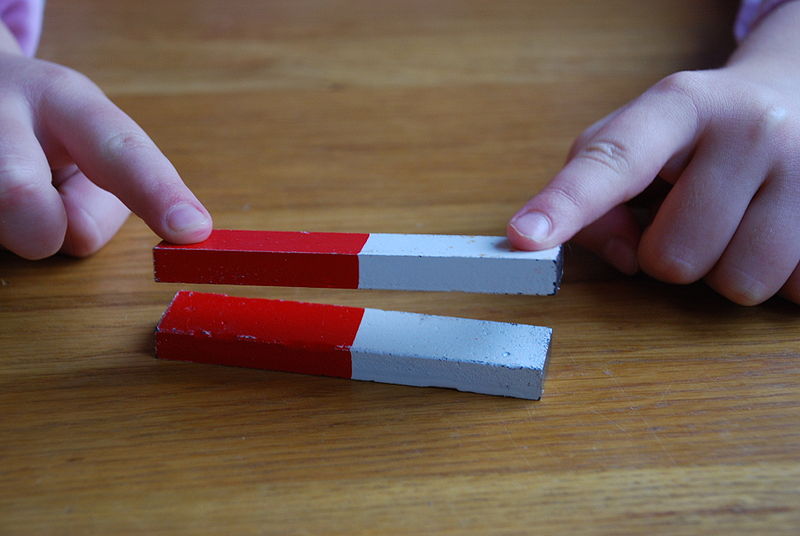
Adding magnets to football helmets could reduce the risk of concussions, new research suggests. When two players collide, the magnets in their helmets would repel each other, reducing the force of the collision.

“All helmet design companies and manufacturers have the same approach, which is to try to disperse the impact energy after the impact’s already occurred,” neuroscientist Raymond Colello said November 15 at the annual meeting of the Society for Neuroscience.

The magnets, he says, would put a brake on the impact before it happens.

The idea hasn’t been tested yet in helmets with real players, said Judy Cameron, a neuroscientist at the University of Pittsburgh. “But a lot of thought has gone into it, and the data that was shown about the ability of the magnets to actually repel each other looked extremely promising.” 

On the field, football players can run at nearly 20 miles per hour and can experience up to 150 g’s of force upon impact. Concussions readily occur at impacts greater than 100 g’s. Every year there are 100,000 concussions at all levels of play among the nearly 1.2 million people who play football in the United States.

Colello, of Virginia Commonwealth University in Richmond, is testing magnets made in China from the rare-earth element neodymium. They are the most powerful commercially available magnets and weigh about one-third of a pound each (football helmets weigh from 3.5 to 5.5 pounds). When placed one-fourth of an inch away from each other, two magnets with their same poles face-to-face exert nearly 100 pounds of repulsive force.

Colello tested his magnets with the same procedure that the National Operating Committee on Standards for Athletic Equipment uses to evaluate football helmets. He placed magnets on the front of a weight and let it drop from various heights onto another magnet. The heights Colello tested (between 6 inches and 4 feet) represent the impact forces athletes normally experience on the playing field.

“At 48 inches, if you dropped a standard helmet and it hit a stationary object, it would create 120 g’s of force,” says Colello. “With the magnets we drop that below 100 g’s.”

The magnets would complement existing helmet safety features. Colello speculates that adding magnets to a helmet would raise the price by $50 to $100. (Professional helmets today can cost several hundred dollars.) Amateur players, who will not experience impacts as crushing as pros do, could use helmets with cheaper, less powerful magnets.

Though the magnets do attract metallic objects, the National Football League prohibits athletes from wearing jewelry during games. Another safety concern is whether the magnets are dangerous to have near human heads. Colello says that a 30 minute- to one-hour MRI procedure produces magnetic fields 10 to 30 times as strong as those in helmet magnets.

Colello is now awaiting customized arc-shaped magnets that can be fitted inside helmets so he can begin field-testing them. First he will run crash-test dummy heads donning the helmets on a zip line; when the heads collide, accelerometers will measure the linear and rotational forces caused by the impact.

If the magnets make it through field tests, they could theoretically reduce the relative risk of concussions by up to 80 percent without changing the appearance or intensity of the game, Colello says.

Read more here

Thursday, February 13, 2014

Study shows higher altitudes reduce risk of concussion

According to a recent study, playing football at higher altitudes reduces a player's risk of concussion.

A new study on concussions for NFL players during the 2012 and 2013 season reveals that players are 30 percent less likely to sustain concussions when playing at higher altitudes. The data also suggests that helmet designs and rule changes, such as penal
A new study on concussions for NFL players during the 2012 and 2013 season reveals that players are 30 percent less likely to sustain concussions when playing at higher altitudes. The data also suggests that helmet designs and rule changes, such as penalizing helmet-to-helmet contact, have not shown a measurable reduction of concussions

The study identified “brain slosh” as the suspected common cause of concussions, not direct impact to the head. Because the brain doesn’t fit tightly inside the skull, rapid acceleration and deceleration of the head puts the brain at risk for a slosh-induced injury. This is why higher altitudes may help protect a player. Cerebral blood flow rises at higher altitudes, causing the brain to fit tighter inside the skull, thus reducing the risk of concussion.  It’s like bubble wrapping the brain.

The study concludes that the risk of sustaining a concussion is significantly less at games played in the nine NFL cities with the highest altitudes, cities that range from 644 to 5,192 feet above sea level. These cities include:

The combined odds of concussion during a game in one of these cities was 30 percent less than in the 23 other cities with NFL teams.

“If we’re going to solve this problem, we have to figure out a way to protect the brain from the inside out.  That’s why we think we might be on the front edge of something that could influence a paradigm shift in concussion prevention-strategies,” said Greg Myer, PhD, director of sports medicine research at Cincinnati Children’s Hospital Medical Center. Myer was the lead author of the study.

Read more here

Thursday, January 30, 2014

The difference between concussions in high school and in professional sports

This article explains the difference between concussions in high school sports and concussions in professional sports.

No sports enthusiast will ever forget the goal line collision between Pittsburgh Steelers' Le'Veon Bell and Baltimore Ravens' Jimmy Smith or when Detroit Tigers Catcher Alex Avila was drilled by David Ross of the Boston Red Sox.
Both of these plays caused two serious concussions and both of these athletes returned to play about a week later.
But that's professional sports.
When a high school athlete suffers a severe concussion, it could take weeks before they are back on the field. That's for multiple reasons.
"They too have to go through certain criteria, just like our high school athletes do. However, they are being monitored 24/7. Seven days a week, 365 days a year by the medical staff. They have somebody with them pretty much at all times," said Mike Casselman, HealthWorks.
In high school, it's a different story.
"Though we have athletic trainers there on a daily basis, there might be a day or two gap where the communication isn't there," Casselman added.
The issue of 'chronic encephalipathy' in many NFL players has been receiving a great deal of media attention. In the cases of retired players, it appears most had long careers in the NFL after playing in both high school and college.
In most cases, they played football for more than 20 years and suffered multiple concussions in addition to hundreds of other blows to the head.
But its not just football players that can receive a concussion and its not just from helmet to helmet impact.
"It can be by whip lash. It could be from a quick fall," said Frank Moore, Marion County Athletic Director. "Football would be one you would think. But soccer has a lot of concussions, along with basketball."
Casselman agreed.
"I'm telling you. A big one is cheerleading. People might not think that. It's very competitive in this area. You have the bases that are catching the flyers. They take an elbow, they take a knee," Casselman said.
While many professional athletes blame concussions for their memory loss and depression, little is known about the long term effects concussions can have on high school athletes.
"No concussion is the same and you need to take a very serious approach if they have any of the signs and symptoms," Moore said.
Read more here

Saturday, January 04, 2014

Why no helmet can prevent concussions

This comprehensive article gives an overview of the research that has been done on helmets and concussions, and the article discusses what this research means for football players.

It's a glorious time to be a football fan.
The NFL playoffs are underway, the Super Bowl is just weeks away. The national rite of football gives so many people so many exciting moments. Maybe that's why it can be hard to wrap one's mind around one of the game's huge downsides: what it may do to the brains of the young men who play it.
The spotlight on head injuries in sports, particularly football, has grown more intense in recent years. Last fall, the NFL settled for $765 million dollars in a class action lawsuit by former players over concussions, a case heard in Philadelphia.
Last week, a Mississippi father filed a federal class action suit on behalf of all student athletes asking the bodies governing college and high school sports to provide better and more uniform information on concussion risks.
Many of the sports Americans and young adults in particular love to play – not just football, but hockey, soccer and the rest – risk collisions and jolts to the head that can lead to concussions. Sometimes the signs are obvious, as was the case with Emily Panchak and Patrick Crowley, high school athletes in the Wilmington area.
"I didn't get knocked out, but I was crying, and it hurt really bad," says Panchak, who right after a head collision last spring, couldn't remember the bus ride over to the soccer game that day.
"The way I landed, the way I hit the back of my head on the ground, it just riled me pretty bad," recalls Patrick Crowley, Concord Raiders' football captain, of a concussion that put him out of play for several weeks a few years ago.
Injuries can also be more subtle, cautions Rosemarie Scolaro Moser, a neuropsychologist who runs the Sports Concussion Center of New Jersey.
"The problem with a concussion is true symptoms often don't show till hours or days later," Moser recently told The Pulse. "And with youth, they're more vulnerable to a second hit. So for example, if they haven't fully recovered and they get hit again, that second hit, even if it might not have caused a concussion to begin with on its own, can cause serious damage."
Searching for the magic bullet
Trying to change how games are played to avoid collisions has proven difficult and controversial. It has led to a search for the magic bullet, in hopes of sharply reducing the risk of concussion: better equipment. In football, this often means the helmet.
Some companies have marketed claims to young athletes their headgear could be the better mousetrap.
At Schuylkill Valley Sports in Easton, Pa., Mike Morris estimates two to three high school football players per team have come in to buy their own, more expensive, helmet this past season.
"They're looking to get something better," says Morris. "They're just looking for something that will minimize the risk of concussion."
But do any football helmets really cut down the risk of concussion? And are certain models worth the extra money?
What role do helmets play? 
Halfway across the country, Alison Brooks had a similar experience to Mike Morris at Schuylkill Valley Sports. Brooks specializes in sports medicine at the University of Wisconsin. Parents and young athletes kept asking her which helmets they should get. Many were feeling pressure at school to buy newer ones.
So she designed a prospective study, observing over 1,000 high school football players last year who wore the three most common helmets, including some of the newest models. She parsed out the number of reported concussions based on helmet brand, model and age, to see if there was any big variation.
There wasn't.
"You know as best we can tell they all adequately do what they were designed to do, which is prevent skull fractures, prevent intracranial bleeds, prevent superficial scalp and face injuries," Brooks recently told The Pulse. "But there's not any evidence that any one of them is particularly going to reduce your concussion risk."
Brooks' findings are preliminary, and may not account for other possible external factors. But the results don't surprise Robb Rehberg, a concussion specialist and professor of athletic training at William Patterson University in New Jersey. Rehberg thinks some helmets are doing a better job at protecting the head and "attenuating the forces that typically cause concussion," but while helmet design has improved a lot compared to ten years ago none can, nor should, claim to prevent a concussion.
Other research points to similar takeaways.
Evidence limited
In general, scientists don't know how effective helmets are when it comes to concussions in kids ages 5 to 21.
Kristy Arbogast and Susan Margulies reviewed all the evidence to date for a recent Institute of Medicine Report: Sports-Related Concussions in Youth – Improving the Science, Changing the Culture. Margulies, a bioengineer at the University of Pennsylvania, says part of the challenge is the science behind concussions isn't there yet. There's no standard, objective way for actually identifying and reporting them.
"Evidence that a concussion has occurred is really entirely based on the athlete saying that I think I've had a head injury," says Margulies.
So imagine trying to diagnose an ACL tear and come up with a rehab plan solely on the athlete's description of knee pain rather than an MRI, where the actual injury can be objectively visualized. The IOM report points to another major challenge when it comes to identifying concussions: the culture of sports and pressure to hide injuries.
"Probably one of the most important things we stress to the kids is you have to be honest," George Kasonovich recently told The Pulse.
Kasonovich, head football coach at Concord High School in Delaware, says schools have much better protocols nowadays,thanks to improved education, regulations and awarenessregarding concussions. If one is even suspected on the field, a player's out and can't return without a physician's note.
But Kasonovich's mindset isn't universal. And, athletes also face a lot of pressure to hide injuries. Seniors Patrick Crowley and Keyon Powell are Concord's co-captains. Both have suffered from concussions in the past, and had to sit out for several weeks.
"Some of the worst people to talk to about that are your teammates and your friends because they're always going to want you go out there no matter what you're feeling," says Crowley.
"It's basically the pride of it, you don't want to sit on the sideline, you always want to be out there helping your teammates," says Powell.
It makes the job of the school's athletic trainer, Scott Klabunde even trickier. He doesn't joke around.
"I'm not going to lie, I've threatened them," says Klabunde. "It was 'hey, if you really screw this up, you could die.'"
Technology outpacing science
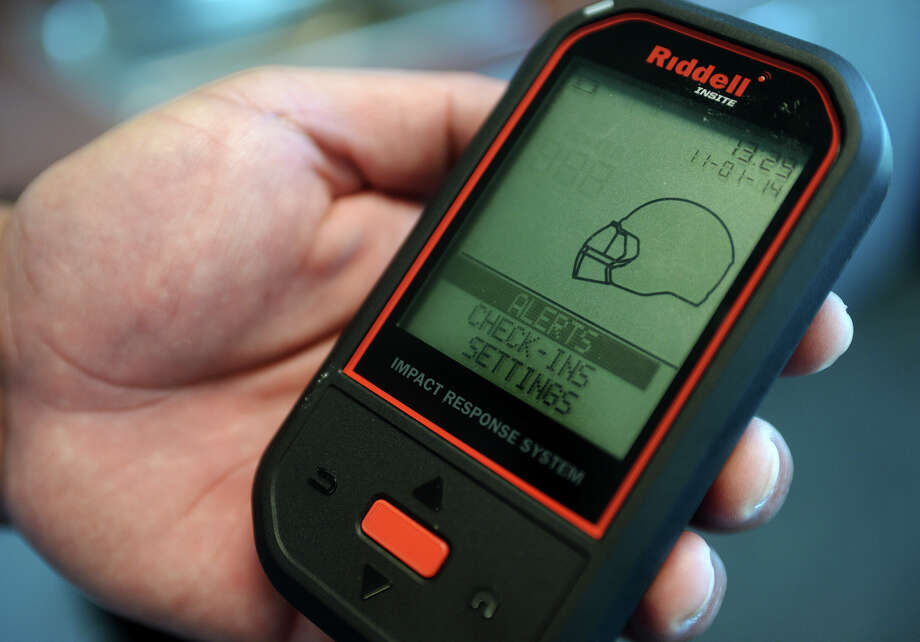
While helmets do protect against head injuries like skull fractures, relying on them to prevent concussions is problematic for another reason: the limitations in how helmets are assessed.
Arbogast, with the Children's Hospital of Philadelphia, says helmet standards and effectiveness have historically been based on a drop test.
"They take a helmet, they put a humanoid head form - a plastic rubber head form in the helmet - and they drop it a given height and measure its acceleration," says Arbogast. "And there are thresholds below which every helmet must meet."
But in the real world you don't always hit your head in a straight line that way. Arbogast and Margulies both say the manor and direction your head moves are big factors in developing a concussion.
"We know it's a combination of linear movements along a straight line and rotational movements," says Arbogast. "But we don't know the specific level, the magnitude of those movements."
"Nodding your head yes verses 'I don't know' are two rotational motions," says Margulies. "They could have very different risks associated with concussion.
Those concussion risks could also vary based on a kids' age and individual experience. No one hit and reaction is alike. The science, they say, just hasn't caught up with the product development.
"And so without that fundamental data we can't really answer a question about whether a given helmet protects against concussion or not," says Arbogast.
"Current helmets may mitigate rotational accelerations, but we're not measuring it now," Margulies adds.
For the recent IOM youth concussion report, Margulies and Arbogast also examined other kinds of protective equipment, like facial masks and mouth guards. They found no evidence those devices reduce concussion risk, though they are important when it comes to protecting against other kinds of injuries.
Their chapter notes that solely relying on helmets as a way to reduce concussions might have another unintended effect, a phenomenon called "risk compensation" which has been studied a lot in safety literature: "the athlete may be emboldened by the increased protection to take additional risks, thus mitigating any benefits of the protective device."
More to preventing concussions
Despite helmet limitations, concussion specialists caution against relying only on that bit of equipment to prevent or lessen the risk of getting a concussion, anyway.
"The helmet isn't all of the story here," says Arbogast. "We need to understand how particular practice methods or aspects of the game might be able to be modified to protect the head."
Arbogast says that includes teaching different tackling techniques, and developing strategies that go well beyond the playing field, in terms of education and following up for when a concussion occurs, to ensure a full a recovery.
Read more here

Monday, December 30, 2013

NIH and NFL will research long-term effects of concussions

This article outlines research that will be done on the long-term effects and consequences of concussions. This research will be done as a partnership between the National Institutes of Health (NIH) and the National Football League (NFL).

The U.S. National Institutes of Health is teaming up with the National Football League on research into the long-term effects of repeated head injuries and improving concussion diagnosis.
The projects will be supported largely through a $30 million donation made last year to the Foundation for the National Institutes of Health by the NFL, which is wrestling with the issue of concussions and their impact on current and former players.
There's growing concern about the potential long-term effects of repeated concussions, particularly among those most at risk, including football players and other athletes and members of the military.
Current tests can't reliably diagnosis concussion. And there's no way to predict which patients will recover quickly, suffer long-term symptoms or develop a progressive brain disease called chronic traumatic encephalopathy (CTE), according to an NIH press statement released Monday.
"We need to be able to predict which patterns of injury are rapidly reversible and which are not. This program will help researchers get closer to answering some of the important questions about concussion for our youth who play sports and their parents," Story Landis, director of the National Institute of Neurological Disorders and Stroke (NINDS), said in the news release.
Two of the projects will receive $6 million each and will focus on determining the extent of long-term changes that occur in the brain years after a head injury or after numerous concussions. They will involve researchers from NINDS, the National Institute of Child Health and Human Development and academic medical centers.
One of the projects will attempt to define a clear set of criteria for various stages of CTE. It will also seek to distinguish it from Alzheimer's disease, amyotrophic lateral sclerosis (Lou Gehrig's disease) and other degenerative brain diseases that as of now can only be determined in brain tissue samples collected after death. The objective is to find medical signs of CTE that might eventually be used to diagnose the illness in living people.
The other project will seek to identify the long-term effects of mild, moderate and severe traumatic brain injury (TBI) and compare them with features of CTE. The goal is to identify signs that could be used to diagnose brain degeneration linked to traumatic brain injury in patients.
While the two projects focus on different aspects of traumatic brain injury, "their combined results promise to answer critical questions about the chronic effects of single versus repetitive injuries on the brain, how repetitive TBI (traumatic brain injury) might lead to CTE, how commonly these changes occur in an adult population, and how CTE relates to neurodegenerative disorders like Alzheimer's disease," Landis said.
Six other pilot projects will receive a total of just over $2 million and last up to two years. They will concentrate on improving the diagnosis of concussions and identifying potential medical signs that can be used to assess a patient's recovery. If the early results are promising, these projects may form the basis of more extensive research, the news release said.

Tuesday, October 22, 2013

Retired American football players have unusual brain scans

A study of brain scans of retired American football players with no known neurological conditions shows their brain activity is very different than expected.

A new study has discovered profound abnormalities in brain activity in a group of retired American football players.
Although the former players in the study were not diagnosed with any neurological condition, brain imaging tests revealed unusual activity that correlated with how many times they had left the field with a head injury during their careers.
Previous research has found that former American football players experience higher rates of neurodegenerative diseases such as Alzheimer's and Parkinson's disease. The new findings, published in Scientific Reports, suggest that players also face a risk of subtle neurological deficits that don't show up on normal clinical tests.
The study involved 13 former National Football League (NFL) professionals who believed they were suffering from neurological problems affecting their everyday lives as a consequence of their careers.
The former players and 60 healthy volunteers were given a test that involved rearranging coloured balls in a series of tubes in as few steps as possible. Their brain activity was measured using functional magnetic resonance imaging (fMRI) while they did the test.
The NFL group performed worse on the test than the healthy volunteers, but the difference was modest. More strikingly, the scans showed unusual patterns of brain activity in the frontal lobe. The difference between the two groups was so marked that a computer programme learned to distinguish NFL alumni and controls at close to 90 per cent accuracy based just on their frontal lobe activation patterns.
"The NFL alumni showed some of the most pronounced abnormalities in brain activity that I have ever seen, and I have processed a lot of patient data sets in the past," said Dr Adam Hampshire, lead author of the study, from the Department of Medicine at Imperial College London.
The frontal lobe is responsible for executive functions: higher-order brain activity that regulates other cognitive processes. The researchers think the differences seen in this study reflect deficits in executive function that might affect the person's ability to plan and organise their everyday lives.
"The critical fact is that the level of brain abnormality correlates strongly with the measure of head impacts of great enough severity to warrant being taken out of play. This means that it is highly likely that damage caused by blows to the head accumulate towards an executive impairment in later life."
Dr Hampshire and his colleagues at the University of Western Ontario, Canada suggest that fMRI could be used to reveal potential neurological problems in American football players that aren't picked up by standard clinical tests. Brain imaging results could be useful to retired players who are negotiating compensation for neurological problems that may be related to their careers. Players could also be scanned each season to detect problems early.
The findings also highlight the inadequacy of standard cognitive tests for detecting certain types of behavioural deficit.
"Researchers have put a lot of time into developing tests to pick up on executive dysfunction, but none of them work at all well. It's not unusual for an individual who has had a blow to the head to perform relatively well on a neuropsychological testing battery, and then go on to struggle in everyday life.
"The results tell us something very interesting about the human brain, which is that after damage, it can work harder and bring extra areas on line in order to cope with cognitive tasks. It is likely that in more complicated real world scenarios, this plasticity is insufficient and consequently, the executive impairment is no longer masked. In this respect, the results are also of relevance to other patients who suffer from multiple head injuries.
"Of course, this is a relatively preliminary study. We really need to test more players and to track players across seasons using brain imaging."
Read more here

Tuesday, October 08, 2013

Reasons why the NFL's new concussion rules aren't working

This article details issues with the NFL's new concussion rules and determines that the issues in football safety lie inherently within the sport.

In January, the NFL announced that, starting with the 2013 season, all games would be played with an independent neurologist on the sidelines to assist with the evaluation and treatment of head injuries. It looked like the league had done a good thing. It was establishing a new, unbiased procedure to promote player safety—an effort made all the better by the fact that it didn't involve placing the burden on the players themselves.

But the fundamental problem with football safety is football, and the league's new program is proving it.

Let's start with some background on the new rule. The players union had long demanded that the league require the presence of independent neurotrauma specialists who could evaluate players without interference or influence from any teams. To wit: On the same day the NFL made its announcement, the NFLPA cited a poll indicating that 78 percent of players didn't trust their own teams' medical staffs.

The league's decision to require these unaffiliated consultants was announced at a news conference held just before the NFLPA's annual Super Bowl week news conference. Also on that same day, NFLPA executive director DeMaurice Smith said the union had not been notified of the league's plan to make the change. And all this was at a time when the NFL was still preparing for a court battle against the concussion-related lawsuits involving thousands of former players who accused it of distorting information about the long-term effects of head trauma. Those suits have since been settled.

The two sides eventually smoothed over their differences, and soon the NFLPA was on board with the plan to have independent neurologists on the sidelines. An NFLPA spokesman told me the league and the union have since worked out an agreement by which they both have input in selecting those independent sideline consultants. Those consultants are picked from a list of experts in all 31 NFL cities. The consultants must not be affiliated with any NFL teams. TheNFL's concussion protocol also spells out that the each consultant must be "board certified or board eligible in neurology, neurological surgery, emergency medicine, physical medicine and rehabilitation or any primary care CAQ sports medicine certified physician and [have] documented competence and experience in the treatment of acute head injuries." Since last year, the protocol also mandates that an athletic trainer must be present up in the booth serve as a "spotter" for both teams by reviewing video and replay technology.

So what could go wrong? Why would there be any problems with diagnosing and handling concussions? Let's look at three situations involving three players in three games. Each one illustrates what the NFLPA spokesman told me was an "area of concern" for the players association after the first month of the new season.

The scenario: In Week 1, Jeremy Kerley of the Jets was concussed when he caught a pass over the middle toward the end of the first half against the Bucs. Kerley was hit by three different players, and Tampa's Mark Barron was flagged for unnecessary roughness:

Kerley was taken to the locker room and given the concussion tests, but he later returned to the game. The following day, he was held out of practice when he was evaluated again and diagnosed with concussion symptoms. The Jets had a short week heading into their next game, and Kerley missed their Week 2 game against the Patriots before returning to play in Week 3 against the Bills. 

The problem: Players don't always show concussion symptoms immediately.

The scenario: In Week 3, the Raiders' Terrelle Pryor took a helmet-to-helmet hit from the Broncos' Wesley Woodyard. Pryor had tucked the ball and made himself a runner, and the hit occurred inside the tackle box, so Woodyard was not penalized:Pryor lay on the turf momentarily but played two more snaps. After the Raiders turned the ball over on downs, he started showing symptoms during a sideline evaluation and was removed from the game. The next day, Pryor tweeted, "I don't remember much!" He returned to practice in a limited role later in the week and was ultimately held out of Sunday's game against the Redskins. The league's concussion protocol says that "if the occurrence of a concussion is unclear, or a player sustains a mechanism of injury ('big hit') that is reasonably expected to give rise to a concussion... the player shall be removed immediately from the field by Club medical personnel." The hit Pryor took certainly seems to fit that definition, and the NFLPA isinvestigating the Raiders' handling of Pryor to determine why he remained in the game. Per Mike Florio, the NFLPA does not want the typical sideline chaos to be used as an excuse for any failure to be properly vigilant in following the mandated protocols. The union spokesman told me that, depending on the outcome of its investigation, the NFLPA could consider filing a grievance.

The problem: A possible breakdown in protocol.

The scenario: In Week 2, Steelers running back Isaac Redman was injured on the opening kickoff after taking a helmet-to-helmet hit from the Bengals' Jayson DiManche. Redman was blocking on the play, and the collision happened away from the ball. Here, you can see Redman go down around the 30-yard line just as the action stops:

The problem: The tendency of players to not want to come out of the game.

These aren't rare, exotic scenarios. They're all things that come up normally in the course of play, like two-point conversions and onside kicks, and that's the issue. The new program is designed to keep concussed players from playing, yet that's not what's happening. These are problems that can't be solved via fiat and bureaucracy, and there's a simple inference to be drawn from that fact: you can't really fix football without turning it into another sport.

Read more, and see the videos referenced here

Thursday, September 05, 2013

Bonding agent makes helmet hits safer

A polymer, used as a steel bonding agent, could reduce impacts from helmet-to-helmet hits when applied to the inside of helmets by the polymer absorbing the impact from the hit.

One of the most feared football-related injuries is concussion. With the new NFL and NCAA college seasons just about to kick off, fans will be praying that none of their team suffers any serious impact collisions that could end their season or result in memory loss or depression later in life. University of California, Los Angeles (UCLA) biomechanical engineering professor, Vijay Gupta, is testing a special polymer material that when applied to the inside of helmets, can reduce G-force impact by 25 percent.

The special polymer in question started out as a steel bonding agent designed by the professor for US Navy ships eight years ago. It soon became apparent that the joints forged with this material could withstand the impact forces from explosions. Realizing its potential, Gupta and his team at UCLA have started testing 2 mm-thick wafer size strips of the polymer on the inside of football helmets to reinforce the foam padding.
Professor Gupta describes the human head, a three pound brain encased in the hard shell of a skull surrounded by cerebral spinal fluid, as “the best shock-absorbing system you could ever design.” What it was not designed to do, however, is absorb the forces of a helmet-to-helmet collision with a 350 lb defensive tackle capable of covering 40 yards in under five seconds.
The laws of physics tell us that the force of a hit is affected by three factors: body weight, momentum and how quickly the players stop moving. Footballers seem to be getting bigger and faster these days, which is only going to increase the potential for serious injuries during a game.
In response, the UCLA team are experimenting with different formulations of the polymer, altering its rigidity and viscoelasticity, varying its thickness and the placement of the polymer strips inside the helmet. The data from tests utilizing lasers and hammering machines, shows a 25 percent reduction in the force a person would feel from a helmet to helmet clash with the polymer applied. This translates into a similar decrease in the chance of a player suffering a concussion.
“This is a remarkable reduction given that we are adding such a small amount of material that essentially leaves the current helmet unaltered," Gupta said. “If the helmet is altered too much, the concern is that it might affect how players are forced to play and they might not want to wear it.”
Surprisingly, the reduction of G-forces only happens when the polymer is placed inside the helmet on the foam padding. When they applied the special material on the exterior of the helmet the impact forces were increased not reduced.
Sports shoe tests are also being carried out with 1.5 mm-thick inner soles (thinner than existing impact gel soles) made from the polymer. Results show significant advantages in reducing the knee cartilage stresses experienced by regular runners.
Aside from the sporting world, professor Gupta’s polymer could also find lifesaving applications on the battlefield in protecting combatants from the lethal forces of explosions.
Read more here

Sunday, August 04, 2013

Updates to concussion guidelines

The American Academy of Neurology recently updated the 1997 concussion guidelines in effort to make football and other contact sports safer.

UPI reported on evidence-based guidelines for managing concussions that were published Monday in the journal Neurology that it said affect more than 1 million Americans each year.
Co-lead guidelines author Dr. Christopher C. Giza of the David Geffen School of Medicine and Mattel Children's Hospital at University of California, Los Angeles, said the new guidelines replaced the 1997 American Academy of Neurology guidelines on concussions.

"Among the most important recommendations the academy is making is that any athlete suspected of experiencing a concussion immediately be removed from play," Giza said in a statement.

"We've moved away from the concussion grading systems we first established in 1997 and are now recommending concussion and return to play be assessed in each athlete individually. There is no set timeline for safe return to play."

Athletes of high school age and younger with a concussion should be managed more conservatively in regard to return to play, because they take longer to recover than college athletes.

PRNewswire published the full guidelines.
According to the guidelines:

* Among the sports in the studies evaluated, risk of concussion is greatest in football and rugby, followed by hockey and soccer. The risk of concussion for young women and girls is greatest in soccer and basketball.

* An athlete who has a history of one or more concussions is at greater risk for being diagnosed with another concussion.

* The first 10 days after a concussion appears to be the period of greatest risk for being diagnosed with another concussion.

* There is no clear evidence that one type of football helmet can better protect against concussion over another kind of helmet. Helmets should fit properly and be well maintained.

* Licensed health professionals trained in treating concussion should look for ongoing symptoms (especially headache and fogginess), history of concussions and younger age in the athlete. Each of these factors has been linked to a longer recovery after a concussion.

* Risk factors linked to chronic neurobehavioral impairment in professional athletes include prior concussion, longer exposure to the sport and having the ApoE4 gene.

* Concussion is a clinical diagnosis. Symptom checklists, the Standardized Assessment of Concussion (SAC), neuropsychological testing (paper-and-pencil and computerized) and the Balance Error Scoring System may be helpful tools in diagnosing and managing concussions but should not be used alone for making a diagnosis.

Signs and symptoms of a concussion include:

* Headache and sensitivity to light and sound
* Changes to reaction time, balance and coordination
* Changes in memory, judgment, speech and sleep
* Loss of consciousness or a "blackout" (happens in less than 10 percent of cases).

Read more here