Showing posts with label football helmet. Show all posts

Wednesday, March 11, 2015

Concussion risk not lowered by helmet add-ons

A study on helmet add-ons indicated that the add-ons may not reduce the risk of having a concussion. 


While the sporting industry continues to cash in on equipment that promises to reduce the risk of player injury, a new study on helmet add-ons suggests that the buyer should beware.
The study conducted by Florida’s BRAINS Inc. and presented at the American Academy of Neurology, tested four different sporting technologies targeting football helmets that are sold on the premise of reducing head injuries.
A concussion, a type of traumatic brain injury (TBI), can be caused by a bump, blow or jolt to the head, or by a blow to the body that causes the head and brain to move rapidly back and forth, according to the Centers for Disease Control and Prevention (CDC). The sudden movement can cause the brain to bounce around or twist in the skull, stretching and damaging brain cells which may create chemical changes in the brain.
Researchers used a crash test dummy head and neck to simulate head impact by modifying the standard drop test system approved by the National Operating Committee on Standards for Athletic Equipment. Sensors were placed in the dummy’s head to measure linear and angular rotational responses to helmet impacts at 10, 12 and 14 miles per hour.
They then evaluated four football helmet add-ons currently on the market: Guardian Cap, UnEqual Technologies’ Concussion Reduction Technology, Shockstrips and Helmet Glide. Each technology was placed on the Riddell Revolution Speed and Xenith X1 football helmet and impacted five times from drop heights of 1.0, 1.5 and 2.0 meters.
Researchers found that while the helmet add-ons reduced linear acceleration impact by about 11 percent, they only reduced angular acceleration impact by 2 percent. The Helmet Glide was even shown to have no effect on either.
“Currently helmets and helmet add-ons are only designed to reduce the linear acceleration, not the angular acceleration. The linear acceleration is responsible for the contusion injuries on the brain, skull fractures and bruising on the head. Angular accelerations are the forces associated with concussions,” study author Dr. John Llyod, the research director at BRAINS Inc. and board certified ergonomist and brain injury specialist in Florida, told FoxNews.com. 
The researchers noted that manufactures do not test the angular metric of injury prevention-based sporting equipment, but also that the add-ons do not have any negative affect on a player.
“The main issue with the add-ons is if you as a parent or even as an individual walk into Sports Authority or Dick’s Sporting, you ask ‘What are these for?’ and [salesmen] are going to say ‘They’re for preventing concussions,’” study co-author Dr. Francis Conidi, assistant professor of neurology at Florida State University College of Medicine and concussion specialist told FoxNews.com.
“First and most importantly, their intent is to market them to prevent concussions and they’re not training the individuals selling the devices. The parents are getting a false sense of safety, while the results show they offer little to no protection of concussion,” Conidi said.
Conidi explained that a concussion is more-so a whiplash-type injury than a straight-on impact, which is what the linear testing measures.
“If I hit you straight on with a baseball bat, I would not induce concussion,” he said. “I would probably fracture your skull, but I would not concuss it.”
“It’s really the angular and rotational mechanism of the skull that causes the tearing of brain cells, which causes the ion cells to leak out,” Conidi said.
The researchers conclude that because there is no device on the market right now that adequately protects an athlete against a concussion, athletes must be taught proper tackling techniques from an early age.
Conidi, who has treated numerous athletes of all levels for concussions, suggested working with the athlete to strengthen the cervical muscles so the head doesn’t bend to the side or rotate as easily.
“Most importantly, be educated on the signs and symptoms, especially the athletes themselves, and the parents and coaches. When in doubt, sit them out,” he said.
Currently, an estimated 173,285 sports and recreation-related TBIs are treated among children and adolescents in the U.S. each year. According to the CDC, for males aged 10-19 years, sports-and recreation-related TBIs occurred most often while playing football or bicycling.
The study’s authors hope their findings will lead to more rigorous testing of helmets and add-ons.
Read more here

Thursday, January 08, 2015

Players may be protected from concussions by 3D printed materials in helmets

3D printed materials may be able to replace foam inside helmets to help protect players from concussions.

A team of researchers from UCLA and Architected Materials that is developing breakthrough technology to reduce the number and severity of head injuries to football players today was named a winner of the Head Health Challenge II.

The Head Health Challenge is part of the four-year, $60 million Head Health Initiative, which is sponsored by the National Football League, General Electric and Under Armour. It is focused on improving the prevention, diagnosis and treatment of concussions and traumatic brain injury. Seven winning research teams were selected from among more than 450 Head Health Challenge II entrants from 19 countries.

The award comes with a grant of $500,000 for research, testing and development of the technology in the first year, with the potential for another $1 million in the second year.

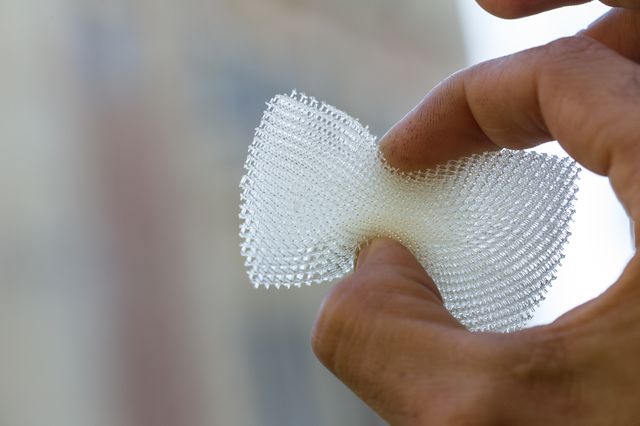
The UCLA–Architected Materials group is developing a novel, energy-absorbing microlattice material, Architected Lattice, to improve the performance of football helmets. The material, designed to replace the foam used inside of today’s football helmets, will help prevent concussion and traumatic brain injury by absorbing energy upon impact while limiting peak loads.

Architected Lattice is light and breathable, and can be enhanced with a strain-sensing “smart lattice” to detect and transmit data about the impact of a collision. This data could help engineers and product designers make further improvements in helmet design and performance.

“We are honored to have been selected by the NFL, Under Armour and General Electric, and excited about the potential impact of developing the next generation of helmet pads with the Architected Lattice,” said Larry Carlson, director of advanced materials at the Institute for Technology Advancement at the UCLA Henry Samueli School of Engineering and Applied Science. “We believe that in addition to preventing or reducing injuries from high-impact collisions on the football field, this material can be used in a variety of sports and recreational applications.”

The research team includes material designers from Ventura, California-based Architected Materials, mechanical impact experts from UCLA Engineering, and brain science specialists at the David Geffen School of Medicine at UCLA. Along with Carlson, the research’s principal investigators are Alan Jacobsen, co-founder of Architected Materials, and Dr. Christopher Giza, director of the UCLA Steve Tisch BrainSPORT Program and a professor of pediatrics and neurosurgery.

“One of the key innovations with our Architected Lattice technology is that it can be manufactured quickly and cost-effectively, which differentiates our technology from traditional 3-D printing techniques,” Jacobsen said.
In preliminary tests, the material has outperformed commonly used vinyl nitrile for reducing transmitted peak force, a key metric for helmet pads.

“In addition to offering the potential to reduce sports concussions, the helmet’s unique material functions as a sensor that monitors impact to the brain,” Giza said. “Collaborative efforts like these powerfully showcase UCLA research teams’ role in developing innovative new ways to benefit public health.” 

With more than 500 neuroscientists throughout campus, UCLA is a leader in research to understand the human brain, including efforts to treat, cure and prevent traumatic brain injury and brain disorders such as Alzheimer’s disease and epilepsy. The BrainSPORT Program was founded by Giza in 2012 and supported by a $10 million gift in May 2014 from philanthropist Steve Tisch.

In this video produced by General Electric, Under Armour and the NFL, researchers display a new helmet liner that absorbs significantly more energy than current materials, better protecting athletes from brain injury.

Read more here

Thursday, December 04, 2014

Magnets in helmets may help reduce concussions

This article explains how adding magnets to football helmets could help reduce concussions by using a magnet's the repulsive forces.

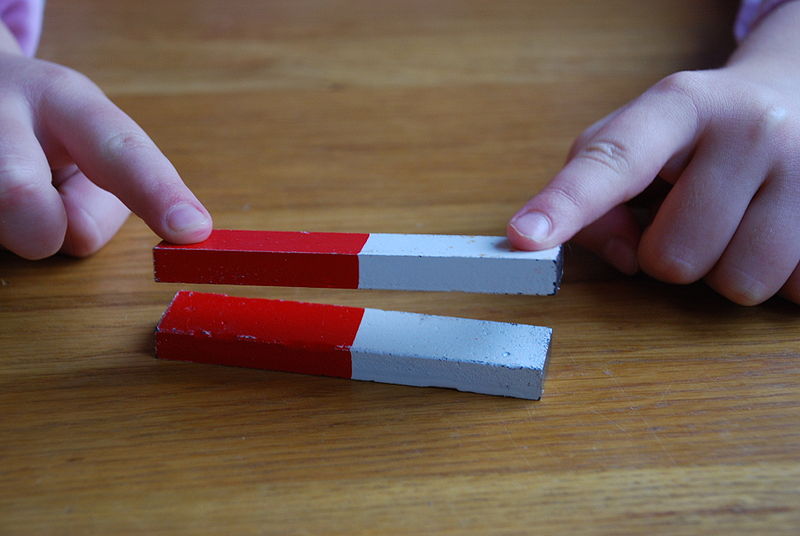
Adding magnets to football helmets could reduce the risk of concussions, new research suggests. When two players collide, the magnets in their helmets would repel each other, reducing the force of the collision.

“All helmet design companies and manufacturers have the same approach, which is to try to disperse the impact energy after the impact’s already occurred,” neuroscientist Raymond Colello said November 15 at the annual meeting of the Society for Neuroscience.

The magnets, he says, would put a brake on the impact before it happens.

The idea hasn’t been tested yet in helmets with real players, said Judy Cameron, a neuroscientist at the University of Pittsburgh. “But a lot of thought has gone into it, and the data that was shown about the ability of the magnets to actually repel each other looked extremely promising.” 

On the field, football players can run at nearly 20 miles per hour and can experience up to 150 g’s of force upon impact. Concussions readily occur at impacts greater than 100 g’s. Every year there are 100,000 concussions at all levels of play among the nearly 1.2 million people who play football in the United States.

Colello, of Virginia Commonwealth University in Richmond, is testing magnets made in China from the rare-earth element neodymium. They are the most powerful commercially available magnets and weigh about one-third of a pound each (football helmets weigh from 3.5 to 5.5 pounds). When placed one-fourth of an inch away from each other, two magnets with their same poles face-to-face exert nearly 100 pounds of repulsive force.

Colello tested his magnets with the same procedure that the National Operating Committee on Standards for Athletic Equipment uses to evaluate football helmets. He placed magnets on the front of a weight and let it drop from various heights onto another magnet. The heights Colello tested (between 6 inches and 4 feet) represent the impact forces athletes normally experience on the playing field.

“At 48 inches, if you dropped a standard helmet and it hit a stationary object, it would create 120 g’s of force,” says Colello. “With the magnets we drop that below 100 g’s.”

The magnets would complement existing helmet safety features. Colello speculates that adding magnets to a helmet would raise the price by $50 to $100. (Professional helmets today can cost several hundred dollars.) Amateur players, who will not experience impacts as crushing as pros do, could use helmets with cheaper, less powerful magnets.

Though the magnets do attract metallic objects, the National Football League prohibits athletes from wearing jewelry during games. Another safety concern is whether the magnets are dangerous to have near human heads. Colello says that a 30 minute- to one-hour MRI procedure produces magnetic fields 10 to 30 times as strong as those in helmet magnets.

Colello is now awaiting customized arc-shaped magnets that can be fitted inside helmets so he can begin field-testing them. First he will run crash-test dummy heads donning the helmets on a zip line; when the heads collide, accelerometers will measure the linear and rotational forces caused by the impact.

If the magnets make it through field tests, they could theoretically reduce the relative risk of concussions by up to 80 percent without changing the appearance or intensity of the game, Colello says.

Read more here

Thursday, August 28, 2014

Age and brand of football helmet do not influence concussion risk

A recent study shows that both the brand and age of a football helmet do not change the risk of concussion for high school students.

A University of Wisconsin study suggests there is no difference in concussion risk for high school football players based on different brands or ages of helmets, according to a release.
The study involved 2,081 football players at 34 high schools in Wisconsin during the 2012 and 2013 football seasons, according to the release. Players completed a pre-season demographic and injury questionnaire, and sport-related concussions were recorded throughout the year.
A total of 206 players, about 9 percent, sustained a total of 211 SRCs during the study, officials said. During the study, players wore Riddell, Schutt and Xenith helmets.
The study also found that custom-fitted mouth guards increased SRC risk by 60 percent compared to generic guards; the rate of SRC was nearly seven times higher during competition than practice and four times higher during full-contact practice than no-contact practice; and age, BMI, grade in school or competition level was not associated with an increased risk of SRC.
Another important finding was that players who sustained an SRC during the previous 12 months were almost twice as likely to sustain another one compared to players with a history of SRC, according to the release.
“This was surprising because we found that the increased risk exists even when controlling for the players’ use of protective equipment, years of football experience and player characteristics, such as their grade in school and competition level,” said Tim McGuine, UW sports medicine researcher and co-author of the study. “These results highlight the need for medical providers to document a history of SRC in young football players and for more education among parents, coaches and the players about the increased concussion risk in these individuals.”
The researchers said other than learning appropriate tackling and other on-field techniques, properly maintained and fitted helmets remain one of the most important ways to prevent skull fractures and scalp lacerations in football players.
Read more here

Tuesday, July 22, 2014

Sensors to immediately detect concussion

A project from Western Michigan University aims to create sensors that go inside helmets that can immediately detect a concussion.

A new piece of technology that's developed in west Michigan could soon be keeping athletes safe.

At Western Michigan University, a professor and team of students are working on sensors that can fit in any kind of helmet. 

The goal is to use them to detect concussions right after a big impact.

It may not look like much at first glance, but the first test helmet could soon bring the latest in sports safety. 

"It can be used for football and hockey helmets, as well as any other protective head gear," said WMU Professor Masood Atashbar.  

Lightweight and flexible sensors are placed in the lining of a helmet. 

They send a wireless signal to an application on a smartphone or tablet. 

"It measures and reports to the coaches any dangerous impact that athletes experience on their skull," Atashbar said.  

The program is so sharp, its creators say it can pinpoint how severe the hit was and where it happened. 

Professor Masood Atashbar said this is vital information considering athletes don't always report injuries and may not even know they have a concussion. 

"Coaches and parents can know that their kids have experienced a dangerous impact and they can act on it," Atashbar said. 

The professor and several students have been working on the cutting edge design. 

So far they've only done tests in the lab, like hitting the helmet with a hammer. 

Students are excited they have access to this right here in Kalamazoo. 

"The university has given us a lot of help in developing this technology. I'm very happy," said PHD student Binu Narakathu.  

The group has even started a company to promote the technology. 

Right now they're pricing it at $100 each; that would include the sensors and app. 

"Thinking about, okay, you can help protect these players on the field, that's pretty interesting because you're saving people's lives," said PHD student Ali Eshkeiti. 

The next step is getting funding so they can do tests outside the lab with actual athletes. 

Then they hope to get it out on the market.

Read more here

Monday, July 21, 2014

No difference in helmet brands

A study shows that there is no difference in how many concussions player get based on helmet brand.

The University of Wisconsin reports that its new study showed no difference in the rate of concussions based on what helmet brand is used.

The university recently completed the first large-scale, prospective study in a field-based sports setting to examine if the rate of concussion is affected by the protective equipment that is worn by high school football players.

Not only did the brand not make a difference in the rate of concussions, there also was no difference in the severity of those concussions, either.

The research concluded that well-maintained and fitted football helmets remain important to reduce the risk of skull fracture and intracranial hemorrhage, but there is serious doubt to whether a helmet can ever be designed to prevent concussions.

In addition, the research found a similar concussion risk regardless of the age of the helmet.

Dr. Alison Brooks, assistant professor at University of Wisconsin-Madison, spearheaded the study with Dr. Tim McGuine. Brooks called out the increased risk among previously injured athletes.

“Players in this study who had a history of previous concussion were at higher risk of sustaining another concussion, regardless of the helmet brand worn,” said Brooks. “Rather than focus on the belief that a specific helmet can ‘prevent’ concussions, which is not supported by the current scientific literature, our efforts may be better spent educating players, parents and coaches about the increased risk of concussion in these previously concussed young athletes.”

A concussion in football is a very complex event involving different and changing forces, linear (straight motion or direct hit) and rotational (circular motion of head or torque) accelerations, helmet fit, player position, impact duration, player concussion history and overall health.

Schutt Sports has the two highest 5 STAR helmets in 2014, yet the company admits that the ratings do not support a conclusion that the helmets will limit or prevent concussions.

“Schutt Sports would never represent to somebody that they’re not going to get a concussion if they wear one of our helmets,” said Robert Erb, CEO of Schutt Sports. “As a manufacturer of a helmet considered by this rating system to be the best available, I believe telling people that an athlete is less likely to get a concussion if they use a 5 STAR helmet is irresponsible. The best helmet is the one that carries NOCSAE certification, fits the player, fits the position, is configured with the proper mask and the player is comfortable in it.”

Consumers should also know that the rating given to helmets applies only to size large adult.

According to the Virginia Tech website, “It is possible that the same helmet models of different size may produce different results; however, we do not have any data on this, and we only tested large helmets as a first step.”

Read more here

Wednesday, June 25, 2014

Will sensors be in all helmets by 2015?

A research study is looking into adding sensors into helmets. The results may be strong enough to put sensors into all helmets by 2015.

A pilot program designed to provide more information for concussion research could become more widespread, and put sensors in every helmet by 2015.
According to Tom Pelissero of USA Today, two teams participated in the program for part of last year, and researchers are trying to fine-tune the technology to measure head impact in games.
The work is being done by University of North Carolina researcher Kevin Guskiewicz, who is a member of both league and union safety committees.
“We need a sample of these players across all positions and studying every play type possible,” Guskiewicz said. “So, that’s the next step. Then I hope from there that, if we find (the devices) have utility that could actually help an individual player … my hope would be that we would go league-wide.”
Guskiewicz said the project still needs to be approved by the league and union, and getting that kind of agreement has been an issue in the past.
But he said he was “thrilled” that teams are buying into the idea of collecting data, though hurdles remain.
“I personally believe that there is valuable information to be gained for a player to learn how to perhaps modify his behavior, to track the way in which he’s leading with his head possibly or positioning his body on a certain play type that could help protect him,” Guskiewicz said.
“So, we just sort of have to go through this in a methodical approach to work on the feasibility. This year, I hope that we’re able to move forward with answering some of the questions that we have around potential rules changes, and then the following year, who knows?”
As with most issues, getting players and management to agree to anything is difficult, but if the technology can present a step forward in the accurate diagnosis of concussions and head injuries, then players and the league need to find a way to implement.
Read more here

Friday, June 20, 2014

NOCSAE statement on concussions and helmets

The following article discusses a comment made by the NOCSAE on helmets and concussions.

The National Operating Committee on Standards for Athletic Equipment (NOCSAE) applauds and encourages the growing research in the area of concussion protection for athletes, including the work released this month by Virginia Tech. Coaches, consumers and parents should be aware that while the STAR rating system suggests the purchase of specific football helmets, scientific evidence does not support the claim that a particular helmet brand or model is more effective in reducing the occurrence of concussive events.
“Helmets which meet the NOCSAE standard are extremely effective at doing what they are designed to do, limiting linear accelerations that result from impacts to the head and helmet,” said Mike Oliver, NOCSAE executive director. “The STAR ratings are not standards. They are a theoretical method of comparing one helmet against another. Unfortunately many have misunderstood the purpose and limitations of the STAR ratings. A 5 STAR rating does not mean that the helmet is great at preventing concussions. It simply means that it might be better than another helmet with a lower rating. Because of this misunderstanding, the effectiveness of helmets in protecting against concussions has become exaggerated, taking focus away from steps known to have a more immediate and much greater effect on concussion reduction.”
For concussion protection to be truly effective, actions must be taken on and off the field by student athletes, parents and coaches. According to the CDC Foundation’s Heads Up to Parents program, making sure equipment fits properly, ensuring young athletes are taught proper blocking and tackling techniques and demanding enforcement of rules that prohibit players from leading with their helmets to hit other players are important ways to reduce concussion risk.
The University of Wisconsin recently completed the first large scale, prospective study in a field-based sports setting to examine if the rate of sport-related concussion is affected by the protective equipment that is worn by high school football players. The results show no difference in the rate of concussions or severity of concussions by helmet brand. The research concluded that well maintained and fitted football helmets remain important to reduce the risk of skull fracture and intracranial hemorrhage, but there is serious doubt to whether a helmet can ever be designed to prevent concussions. In addition, the research found a similar concussion risk regardless of the age of the helmet.
Dr. Alison Brooks, assistant professor at University of Wisconsin-Madison, spearheaded the study with Dr. Tim McGuine. Dr. Brooks would prefer to see emphasis on rule enforcement and coaching education on tackling technique to limit or avoid contact to the head. She also called out the increased risk among previously injured athletes.
“Players in this study who had a history of previous concussion were at higher risk of sustaining another concussion, regardless of the helmet brand worn,” said Dr. Brooks. “Rather than focus on the belief that a specific helmet can ‘prevent’ concussions, which is not supported by the current scientific literature, our efforts may be better spent educating players, parents and coaches about the increased risk of concussion in these previously concussed young athletes.”
A concussion in football is a very complex event involving different and changing forces, linear (straight motion or direct hit) and rotational (circular motion of head or torque) accelerations, helmet fit, player position, impact duration, player concussion history and overall health.
Schutt Sports has the two highest 5 STAR helmets in 2014, yet they admit that the ratings do not support a conclusion that the helmets will limit or prevent concussions. “Schutt Sports would never represent to somebody that they’re not going to get a concussion if they wear one of our helmets,” said Robert Erb, CEO of Schutt Sports. “As a manufacturer of a helmet considered by this rating system to be the best available, I believe telling people that an athlete is less likely to get a concussion if they use a 5 STAR helmet is irresponsible. The best helmet is the one that carries NOCSAE certification, fits the player, fits the position, is configured with the proper mask and the player is comfortable in it.”
Consumers should also know that the rating applies only to size large adult helmets. According to the Virginia Tech website, “It is possible that the same helmet models of different size may produce different results; however, we do not have any data on this, and we only tested large helmets as a first step.” No adult X-Large, Medium, Small, X-Small or any youth-size helmets were tested as part of this rating. Until other sizes are tested, the only helmet that can claim any STAR rating are adult large. The rating is based on a theoretical calculation from collegiate level data. When helmets receive a higher rating, it does not mean the helmet has met a safe level of concussion protection; instead it is an attempt to compare one helmet to another based on the results. According to an independent statistical review of the Virginia Tech test data there is no significant statistical difference between 5 STAR, 4 STAR and 3 STAR helmets.
“The Virginia Tech Helmet Ratings™ system approaches the very broad and complex issue of concussion protection from a narrow vantage point of linear accelerations only and does not address other biomechanical variables such as rotational accelerations,” said Oliver. “Scientific experts agree that rotational accelerations are involved in most concussive events, but there is still no agreement on what level of rotational force can be considered safe or dangerous for athletes.”
Read more here

Sunday, March 02, 2014

Helmets do not protect the side of your head

This article reports that helmets do not adequately protect the side of an athlete's head from injury.

Players using current football helmets aren't adequately protected against hits to the side of the head, which can lead to sometimes-lethal concussions and brain swelling, researchers said.

Ten helmets tested by researchers reduced the likelihood of traumatic brain injury by an average of 20 percent compared with no helmet in a simulation using crash test dummies. The most effective helmet reduced the risk by only 30 percent, according to data released Monday.

Concussion risks in sports are under increasing scrutiny as some deaths among young football players may have been prevented if those with head injuries had been kept off the field, according to a 2011 study in the journal Pediatrics. Research published in January 2013 found abnormalities in the brains of former National Football League players compared with those who didn't play the game. Current tests of helmets focus on impacts that lead to broken skulls, and don't adequately assess the chances of traumatic brain injury, researchers said.

"None of them are fantastic, sadly, and maybe that's the take-home message," John Lloyd, the study author and the research director at San Antonio, Florida-based Brains Inc., said in a telephone interview. "Maybe if football players realized that their helmet only reduced their concussion risk by 20 to 30 percent, they'd lead with the head less often."

Professional sports leagues, including the NFL and Major League Baseball, have changed their medical protocols for treating players with head injuries in response to concussion data. Football is the deadliest sport among youths, and 12 percent of football deaths are caused by head or neck injuries involving students who returned to the game after a concussion. Helmets may provide another target to make sports safer, Lloyd said.

The researchers used a crash-test dummy head and neck to see how well they'd respond with and without helmets to 12 mile- per-hour impacts. They conducted 300 tests, and also tried to measure how much the brain twists in the head. The tests allowed the neck to flex on impact, to better simulate rotational forces.

"When the head comes to a sudden stop, if it's rotating, the brain material is twisting inside the head," Lloyd said. "That can cause concussion and brain injury, including life- threatening subdural hematomas."

The best helmet reduced the likelihood of concussion by 30 percent, Lloyd said. That may be because it was lighter than the other helmets, causing the head and neck to rotate less. It wasn't as good at providing protection against direct impacts that might shatter the skull, and didn't perform as well on standard tests, he said.

The study also found that football helmets fared better against linear impacts, which lead to bruising and skull fracture. Compared with dummies with no helmets, the football helmets reduced the risk of skull fracture by 60 to 70 percent and reduced the risk of brain bruising by 70 to 80 percent.

The research was released in advance of a presentation at the American Academy of Neurology's annual meeting starting April 26 in Philadelphia.

Lloyd suggested that taking the facemask off the helmet and switching to a soft helmet may help diffuse the impact, leading to fewer brain injuries. This is how the scalp works to protect the brain, moving to allow force to be spread and absorbed, he said. Helmets made of softer materials and without facemasks were used in football more than 50 years ago.

"If we got away from hard helmets, we could use advanced materials to provide protection for the head and brain," he said. "The only downside is you wouldn't have anything to attach a faceguard to."

Brains Inc., a company focused on the biomechanics of traumatic brain injury, supported the study.

Read more here

Thursday, February 13, 2014

Study claims there is a difference in concussion risk between helmets

A study shows that different types of football helmets have differing levels of risk for concussion.

Football helmets can be designed to reduce the risk of concussions, according to a new study by some of the nation's leading concussion researchers published today in the Journal of Neurosurgery.
The study analyzed head impact data compiled from eight collegiate football teams that included Virginia Tech, University of North Carolina, University of Oklahoma, Dartmouth College, Brown University, University of Minnesota, Indiana University, and University of Illinois. Six years of data were collected between 2005 and 2010. During this time a total of 1833 players wore helmets that were equipped with sensors to measure the biomechanics of over one million head impacts. All players either wore a Riddell VSR4 or Riddell Revolution helmet. The researchers compared the rates of concussion between the two helmet types.
The manuscript reports a 54 percent reduction in concussion risk for players in the Riddell Revolution compared to players in the VSR4 helmet. "This is the first study to control for the number of times players hit their heads when comparing helmet types," said Steve Rowson, lead author and an assistant professor in the Virginia Tech -- Wake Forest School of Biomedical Engineering and Scienceshttp://www.sbes.vt.edu/ . "No previous study has been able to account for this variable. Controlling for head impacts allows you to compare apples to apples. For example, you're not comparing a player in one helmet who rarely gets hit to a player in another helmet type who frequently gets hit."
The sensors in the helmets measured head acceleration for each impact players experienced. Players in the VSR4 helmets experienced higher head accelerations resulting from impact than players in Revolution helmets. The authors attribute this to the Revolution helmets better modulating the energy transfer from the impact to the head, which results in lower head accelerations. "Helmets that better lower head acceleration reduce concussion risk," Rowson said.
The authors stress that no helmet will ever be able to prevent all concussions. "While some helmets will reduce risk more than others, no helmet can eliminate risk," said Stefan Duma, http://www.sbes.vt.edu/duma.php professor and head of the Virginia Tech -- Wake Forest School of Biomedical Engineering and Sciences. Better helmet design is just one of many strategies that play a role in reducing concussions in football. "The most effective strategies are altering league rules and teaching players better techniques. These strategies focus on reducing the number of head impacts that players experience," Duma added. "However, head impacts in football will always occur, even with the best rules and technique. This is where improving helmet design to best reduce concussion risk becomes critical. Our data clearly demonstrate that this is possible."
Read more here

Friday, January 17, 2014

New helmets may be able to reduce concussions

New helmets with fluid-filled patches to protect the head may be effective in reducing concussions in football players.

Researchers in Florida believe they have come up with a low-cost way to improve football helmets and better protect players against the glancing blows that experts say contribute to most concussions.
Protective sports helmets on the market today are largely designed to absorb shock from direct linear hits, like head butts, which force the head straight back, says University of Florida (UF) engineering professor Ghatu Subhash.
But Subhash's new strategy makes use of fluid-filled pouches that, his tests show, also protect the brain from the rotational or shearing force of off-center hits on helmets.
"The fluid-filled cells within the helmet respond, so no matter the angle of impact, the helmet automatically protects any part of the head," said Subhash, who came up with the idea while working on improving helmets and body armor for the military.
Subhash, along with his collaborators - UF neurosurgeon Ian Heger and UF radiologist Keith Peters - is set to unveil the safer helmet on Thursday. He will demonstrate its effectiveness on January 20 for venture capitalists, who could fund wider scale testing and manufacturing.
Subhash said he hopes to have low-cost pouches suitable for retrofitting existing helmets available in stores within two years.
The pouches also can be used in helmets for the military, firefighters and constructions workers, he said.
A growing body of academic research shows the repeated hits to the head to which football players are subjected can lead to chronic traumatic encephalopathy, a condition linked to the loss of decision-making control, aggression and dementia.
The National Football League agreed last year to pay more than $760 million to settle a lawsuit brought by more than 4,500 former players.
Subhash said cushions and water- or air-filled pouches typically have been used to help protect against linear blows.
But to blunt shearing or rotational forces, he adds pouches filled with non-Newtonian fluids, which he says increase resistance when stressed.
Think kids' Flubber or Silly Putty, which can flow or break depending on stress, or chilled caramel ice cream topping which is easily spoonable yet stays put in an overturned jar. Non-Newtonian fluids also are used in some modern automobile shock absorbers, Subhash said.
Subhash said when one of his fluid-filled cells is struck, the fluid squeezes through a tube into a second cell, thus neutralizing the force. The fluid then returns to its original cell, making the pouches reusable.
Concern over the long-term impact of blows to the head has created a market for expensive helmets that claim to protect players from concussions.
"There are no helmets that will protect against concussions," said Frederick Mueller, research director for the standard-setting body, National Operating Committee on Standards for Athletic Equipment.
"Helmet manufactures may say that, but none at the present time protect against concussion injuries," he said.
Mueller's organization has warned about the limitations of the testing used in a popular 5-Star helmet rating system created by Virginia Tech, including the lack of consideration of rotational forces.

"Many people believe that the rotational forces are more important than linear when you talk about concussions," Mueller said.
Read more here

Saturday, January 04, 2014

Why no helmet can prevent concussions

This comprehensive article gives an overview of the research that has been done on helmets and concussions, and the article discusses what this research means for football players.

It's a glorious time to be a football fan.
The NFL playoffs are underway, the Super Bowl is just weeks away. The national rite of football gives so many people so many exciting moments. Maybe that's why it can be hard to wrap one's mind around one of the game's huge downsides: what it may do to the brains of the young men who play it.
The spotlight on head injuries in sports, particularly football, has grown more intense in recent years. Last fall, the NFL settled for $765 million dollars in a class action lawsuit by former players over concussions, a case heard in Philadelphia.
Last week, a Mississippi father filed a federal class action suit on behalf of all student athletes asking the bodies governing college and high school sports to provide better and more uniform information on concussion risks.
Many of the sports Americans and young adults in particular love to play – not just football, but hockey, soccer and the rest – risk collisions and jolts to the head that can lead to concussions. Sometimes the signs are obvious, as was the case with Emily Panchak and Patrick Crowley, high school athletes in the Wilmington area.
"I didn't get knocked out, but I was crying, and it hurt really bad," says Panchak, who right after a head collision last spring, couldn't remember the bus ride over to the soccer game that day.
"The way I landed, the way I hit the back of my head on the ground, it just riled me pretty bad," recalls Patrick Crowley, Concord Raiders' football captain, of a concussion that put him out of play for several weeks a few years ago.
Injuries can also be more subtle, cautions Rosemarie Scolaro Moser, a neuropsychologist who runs the Sports Concussion Center of New Jersey.
"The problem with a concussion is true symptoms often don't show till hours or days later," Moser recently told The Pulse. "And with youth, they're more vulnerable to a second hit. So for example, if they haven't fully recovered and they get hit again, that second hit, even if it might not have caused a concussion to begin with on its own, can cause serious damage."
Searching for the magic bullet
Trying to change how games are played to avoid collisions has proven difficult and controversial. It has led to a search for the magic bullet, in hopes of sharply reducing the risk of concussion: better equipment. In football, this often means the helmet.
Some companies have marketed claims to young athletes their headgear could be the better mousetrap.
At Schuylkill Valley Sports in Easton, Pa., Mike Morris estimates two to three high school football players per team have come in to buy their own, more expensive, helmet this past season.
"They're looking to get something better," says Morris. "They're just looking for something that will minimize the risk of concussion."
But do any football helmets really cut down the risk of concussion? And are certain models worth the extra money?
What role do helmets play? 
Halfway across the country, Alison Brooks had a similar experience to Mike Morris at Schuylkill Valley Sports. Brooks specializes in sports medicine at the University of Wisconsin. Parents and young athletes kept asking her which helmets they should get. Many were feeling pressure at school to buy newer ones.
So she designed a prospective study, observing over 1,000 high school football players last year who wore the three most common helmets, including some of the newest models. She parsed out the number of reported concussions based on helmet brand, model and age, to see if there was any big variation.
There wasn't.
"You know as best we can tell they all adequately do what they were designed to do, which is prevent skull fractures, prevent intracranial bleeds, prevent superficial scalp and face injuries," Brooks recently told The Pulse. "But there's not any evidence that any one of them is particularly going to reduce your concussion risk."
Brooks' findings are preliminary, and may not account for other possible external factors. But the results don't surprise Robb Rehberg, a concussion specialist and professor of athletic training at William Patterson University in New Jersey. Rehberg thinks some helmets are doing a better job at protecting the head and "attenuating the forces that typically cause concussion," but while helmet design has improved a lot compared to ten years ago none can, nor should, claim to prevent a concussion.
Other research points to similar takeaways.
Evidence limited
In general, scientists don't know how effective helmets are when it comes to concussions in kids ages 5 to 21.
Kristy Arbogast and Susan Margulies reviewed all the evidence to date for a recent Institute of Medicine Report: Sports-Related Concussions in Youth – Improving the Science, Changing the Culture. Margulies, a bioengineer at the University of Pennsylvania, says part of the challenge is the science behind concussions isn't there yet. There's no standard, objective way for actually identifying and reporting them.
"Evidence that a concussion has occurred is really entirely based on the athlete saying that I think I've had a head injury," says Margulies.
So imagine trying to diagnose an ACL tear and come up with a rehab plan solely on the athlete's description of knee pain rather than an MRI, where the actual injury can be objectively visualized. The IOM report points to another major challenge when it comes to identifying concussions: the culture of sports and pressure to hide injuries.
"Probably one of the most important things we stress to the kids is you have to be honest," George Kasonovich recently told The Pulse.
Kasonovich, head football coach at Concord High School in Delaware, says schools have much better protocols nowadays,thanks to improved education, regulations and awarenessregarding concussions. If one is even suspected on the field, a player's out and can't return without a physician's note.
But Kasonovich's mindset isn't universal. And, athletes also face a lot of pressure to hide injuries. Seniors Patrick Crowley and Keyon Powell are Concord's co-captains. Both have suffered from concussions in the past, and had to sit out for several weeks.
"Some of the worst people to talk to about that are your teammates and your friends because they're always going to want you go out there no matter what you're feeling," says Crowley.
"It's basically the pride of it, you don't want to sit on the sideline, you always want to be out there helping your teammates," says Powell.
It makes the job of the school's athletic trainer, Scott Klabunde even trickier. He doesn't joke around.
"I'm not going to lie, I've threatened them," says Klabunde. "It was 'hey, if you really screw this up, you could die.'"
Technology outpacing science
While helmets do protect against head injuries like skull fractures, relying on them to prevent concussions is problematic for another reason: the limitations in how helmets are assessed.
Arbogast, with the Children's Hospital of Philadelphia, says helmet standards and effectiveness have historically been based on a drop test.
"They take a helmet, they put a humanoid head form - a plastic rubber head form in the helmet - and they drop it a given height and measure its acceleration," says Arbogast. "And there are thresholds below which every helmet must meet."
But in the real world you don't always hit your head in a straight line that way. Arbogast and Margulies both say the manor and direction your head moves are big factors in developing a concussion.
"We know it's a combination of linear movements along a straight line and rotational movements," says Arbogast. "But we don't know the specific level, the magnitude of those movements."
"Nodding your head yes verses 'I don't know' are two rotational motions," says Margulies. "They could have very different risks associated with concussion.
Those concussion risks could also vary based on a kids' age and individual experience. No one hit and reaction is alike. The science, they say, just hasn't caught up with the product development.
"And so without that fundamental data we can't really answer a question about whether a given helmet protects against concussion or not," says Arbogast.
"Current helmets may mitigate rotational accelerations, but we're not measuring it now," Margulies adds.
For the recent IOM youth concussion report, Margulies and Arbogast also examined other kinds of protective equipment, like facial masks and mouth guards. They found no evidence those devices reduce concussion risk, though they are important when it comes to protecting against other kinds of injuries.
Their chapter notes that solely relying on helmets as a way to reduce concussions might have another unintended effect, a phenomenon called "risk compensation" which has been studied a lot in safety literature: "the athlete may be emboldened by the increased protection to take additional risks, thus mitigating any benefits of the protective device."
More to preventing concussions
Despite helmet limitations, concussion specialists caution against relying only on that bit of equipment to prevent or lessen the risk of getting a concussion, anyway.
"The helmet isn't all of the story here," says Arbogast. "We need to understand how particular practice methods or aspects of the game might be able to be modified to protect the head."
Arbogast says that includes teaching different tackling techniques, and developing strategies that go well beyond the playing field, in terms of education and following up for when a concussion occurs, to ensure a full a recovery.
Read more here