Showing posts with label concussion. Show all posts

Wednesday, January 27, 2016

Concussions in youth hockey

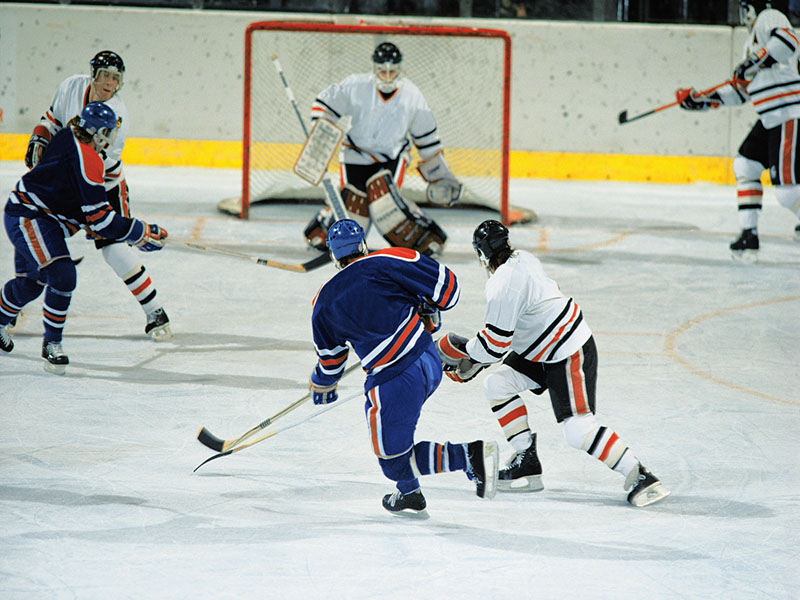
Concussions in youth hockey are more likely to occur during illegal hits.

Concussions in youth ice hockey are as common as in youth football and soccer, and often occur when players break the rules of the game, a new study finds.
While the concussion rates in youth ice hockey are no greater than in other contact sports, more than 40 percent are caused by illegal hits, especially from behind, researchers said.
And younger players were at higher risk, according to the report.
"These findings highlight the importance of providing medical assistance, not only during ice hockey games, but also during practices, where more concussions occurred than expected," said Anthony Kontos, the study's lead author. Kontos is research director of the University of Pittsburgh Medical Center's Sports Medicine Concussion Program.
According to the USA Hockey Coaching Education Program, illegal moves include hitting from behind, crossing arms to hit a player in the neck and jumping on a player to push him into the wall.
Kontos suggested that training kids to obey the rules and enforcing penalties may reduce the number of concussions.
"Better enforcement of existing penalties for illegal hits -- especially those from behind when players are less able to protect themselves -- may help to limit concussions in youth ice hockey," he said.
The report was published online Jan. 8 in the journal Pediatrics.
For the study, the researchers followed nearly 400 ice hockey players aged 12 to 18 who took part in more than 23,000 games and practices during the 2012-13 and 2013-14 seasons.
There were 37 diagnosed concussions, all of which involved player-to-player contact, such as checking or collision. Illegal plays resulting in penalties accounted for 43 percent of the concussions, Kontos and colleagues found.
Concussions were three times more likely to happen during games than practices. However, ice hockey players were more likely to get a concussion during practice than kids in other sports practices, including football, the investigators found.
Most youth ice hockey concussions were suffered by players aged 12 to 14, rather than older players, the findings showed. This is in contrast to other youth sports, such as football, where concussion rates increase as players get older.
"Younger players may be at higher risk for concussion than older players, possibly due to unfamiliarity with checking and disparities in body size and strength, which highlights the need for concussion awareness and clinical care in this at-risk age group," Kontos said.
Symptoms of a concussion include severe headache, dizziness, blurred vision, sensitivity to light and, in severe cases, recurrent vomiting, the researchers said.
When a concussion occurs, the player should be taken out of the game and not be allowed to play again until all the symptoms are gone and a doctor has been consulted, Kontos added.
But if the symptoms are serious, such as a severe headache or recurrent vomiting or dizziness to the point of having trouble walking, then the player should go to the emergency room, he advised.
Dr. John Kuluz, director of traumatic brain injury and neurorehabilitation at Nicklaus Children's Hospital in Miami, said kids should play sports for all the positive things the games can do for children.
"But follow the rules," he added.
"A lot of improvement is needed in terms of the players and how they play the game within the rules," Kuluz said. "Make sure your kid plays for a coach and a team that appreciates the seriousness of concussion."
Read more here

Saturday, October 31, 2015

Concerns about concussions in high school football

Concussion awareness is raising concerns about the safety of football for high schoolers.- JR

Awareness of the seriousness of concussions has been at the forefront of recent discussions involving the dangers of playing football.

Earlier this year, the NFL settled a class-action lawsuit with more than 5,000 ex-players who asserted that the league willfully hid information about the dangers of concussions.

While many hailed that as progress, high school coaches wonder if the risks involved with concussions will affect the numbers of participants in the future.

“As a high school coach, my big worry is that parents start moving kids away from the game,” Steele coach Scott Lehnhoff said. “We’re going to do everything we can to make sure protocols are followed and kids aren’t going back until it’s completely safe for them.”

The University Interscholastic League, which governs most high school sports in Texas, has a “return-to-play” protocol in which an athlete who has been diagnosed with a concussion must get a doctor’s approval before returning to play.

“If something looks like a possible concussion, then we get him out of there and make sure there are no coaches jumping in and saying, ‘Get him back in there,’” Highlands coach Juan Morales said.
But what more can be done?

Some things are already in place. Players are penalized for leading with their helmets. Helmet-to-helmet contact is also flagged as a penalty. Therefore, players are being taught not to lead with the heads.

“We need to try to take the head out of the game as much as possible,” Lehnhoff said. “As a coach in the past, maybe if a kid tackled with his head, you didn’t say anything, but now you are going to say something.”

Read more here

Tuesday, August 25, 2015

Concussions affect men and women differently

According to a study, concussions affect men and women differently.

New research suggests concussion may not significantly impair symptoms or cognitive skills for one gender over another, however, women may still experience greater symptoms and poorer cognitive performance at preseason testing. The study released today will be presented at the Sports Concussion Conference in Denver, July 24 to 26, hosted by the American Academy of Neurology, the world's leading authority on diagnosing and managing sports concussion. The conference will feature the latest scientific advances in diagnosing and treating sports concussion from leading experts in the field.
The study involved 148 college athletes from 11 sports at the University of Michigan in Ann Arbor. All had taken tests of learning and processing along with other measures of the brain's abilities, such as attention and working memory speed. Of the participants, 45 percent were female, 51 percent played a contact sport and 24 percent had experienced a concussion.
They had an average of 0.3 concussions, ranging from zero to four. Men and women were equally likely to have a history of concussion, even after researchers adjusted for the percentage who played contact sports.
Women who have had a history of at least one concussion do not score lower on computerized cognitive baseline testing. However, all women, regardless of concussion history, had greater symptoms, symptom severity and poorer cognitive performance than men at baseline. Women reported on average 1.5 more symptoms and scored three points higher on symptom severity than men. On a clinical reaction time task, women were 19 milliseconds slower to react than men. On cognitive tasks assessing processing speed, attention and working memory speed women scored on average seven percent below men with the greatest difference on processing speed (8.5 percent).
"More research is needed to confirm these results and to understand why women may have lower performance at preseason baseline. The difference in performance between genders should be of great interest to athletes, coaches, athletic trainers, and doctors who utilize baseline assessments to aide recovery protocols," said study author Kathryn L. O'Connor of the University of Michigan in Ann Arbor and a member of the American Academy of Neurology.
"This finding that cognitive skills were not significantly affected by having a concussion for either gender should be reassuring to athletes who have experienced a concussion and wonder about its later effects," O'Connor said.
Read more here

Banning headers in soccer won't prevent concussions

A study shows that banning headers in soccer won't solve the concussion problem.
While many experts have called for a ban on "heading" the ball in youth soccer because they believe it is a leading cause of concussions, a new study suggests the body contact that often occurs during such play is to blame for most brain injuries.
So banning headers among high school players would not reduce concussion rates as much as enforcing existing rules on rough play would, the researchers added.
Heading the ball "is very much at the heart of soccer culture," explained study author R. Dawn Comstock, a faculty member in the department of epidemiology with the Colorado School of Public Health at the University of Colorado in Aurora. "And, yes, we found that heading is the activity in soccer during which most concussions occur among both boys and girls," she added.
"But if you look closely, it's not generally the impact of the ball to the head that leads to concussion. The vast majority of the time it's the athlete-to-athlete contact that happens during [heading] that causes the concussion. One player's head hitting another player's head, or a shoulder-to-head [collision]. That's the problem. Not the ball," Comstock explained.
"So, yes, if you eliminate heading in soccer you would definitely reduce concussions," Comstock acknowledged. "But soccer is not actually a full-contact sport. And there are rules of the game that already exist that penalize the kind of dangerous out-of-position contested heading that results in athlete-to-athlete contact."
So, she suggested, "if you just enforce these rules you would dramatically reduce aggressive body contact, and dramatically lower the concussion rate, without having to change the culture of the sport by eliminating heading itself."
The findings are published in the July 13 online edition of the journal JAMA Pediatrics.
Soccer's popularity among U.S. high school students has grown enormously in recent years. Today, almost 800,000 teens play the sport in the United States, compared with the mere 50,000 (exclusively male) students who played back in 1970, according to the report.
An analysis of data collected between 2005 and 2014 showed that today, girls actually face a higher risk for soccer concussions than boys: 4.5 concussions for every 10,000 practice or game exposures, compared with just 2.8 concussions per 10,000 exposures among boys.
Heading is the most concussion-prone activity, accounting for more than 30 percent of all concussions among boys, and more than 25 percent among girls, the investigators reported.
However, 78 percent and 62 percent of heading-related concussions among boys and girls, respectively, were attributed to body-on-body contact between players, rather than head contact with the ball, the study said.
"Based on this evidence, I would say that if soccer officials are going to allow the sport to become increasingly aggressive then, yes, please ban heading," said Comstock. "But be clear that what's causing concussions is not the ball. It's athlete contact."
But Robert Stern, a professor of neurology, and neurosurgery and anatomy and neurobiology at Boston University School of Medicine, argued that the current study "really misses the point."
"I'm a soccer fan and a major supporter of youth athletics of all different types," he said. "And we must keep in mind the incredible benefits of youth sports, including sports that result in a lot of injuries. But I do completely support those who want to eliminate heading in soccer at a young age, because the intense focus we've been having on the so-called 'concussion crisis' in recent years misses the much bigger issue: What happens to brains when they are exposed to repetitive hits to the head?" Stern said.
"I don't expect there to be a lot of concussions caused directly by heading a ball," stressed Stern, who also serves as the clinical core director of the university's Alzheimer's disease and CTE Center.
"But I'm talking about all the long-term consequences that come from 'sub-concussive' hits, absent any concussive symptoms. The repetitive brain trauma that comes with hitting the ball frequently with the head, causing changes to the white matter integrity of the brain, cognitive [mental] changes, and other alterations to brain functioning," he explained.
"And I would say that parents who struggle with trying to understand this issue need to ask one very important question: Does it make sense for us to allow for our young kids to participate in an activity that results in repetitive brain trauma?" he said. "Personally, I think children deserve to have adults protect their developing brains."
Read more here

Wednesday, July 01, 2015

Concussions occur during youth football practice

Many concussions happen during youth football practice, a recent study claims.

Most concussions among high school and college football players occur during practice, a new study finds.
Data on more than 20,000 young football players across the United States revealed that more than 57 percent of concussed high school and college players were injured at practice, not games.
Among youth football players, almost half of concussions were sustained during practice, according to the study published online May 4 in the journal JAMA Pediatrics.
Evaluating and modifying techniques used during practice may offer opportunities for prevention, experts say.
"While it is harder to change concussion incidence during games without major rule changes, a substantial number of concussions occur during practice across all levels," said lead researcher Thomas Dompier, president of Datalys Center for Sports Injury Research and Prevention Inc., in Indianapolis.
Policy makers and coaches could reduce the odds of serious head injury by limiting player-to-player, or full body, contact during practices, Dompier said.
Dr. John Kuluz, concussion director at Nicklaus Children's Hospital in Miami, said he isn't surprised so many concussions occur during football practice.
"There are a lot of concussions occurring in practices, but of course there are a lot more practices than games," he said. Kuluz pointed out that, according to the study, younger players had about three practices for each game; high school players had about four practices for each game; and college players had nearly 10 practices for a game.
Despite the greater number of practices, games are still more dangerous in terms of head trauma, Kuluz said.
Kuluz agreed that modifying physical contact -- the main cause of concussions -- would help reduce the odds of injury.
"You can't eliminate all player-to-player contact in practice," he said. "But there are alternatives -- like hitting dummies or using sleds -- rather than hitting each other," he said.
As awareness of long-term brain trauma increases, sports-related concussions are a growing public health concern, the researchers pointed out.
Schools are more aware than ever of the risk of concussions, Kuluz said. "All the schools I talk to are aware that there is a big risk of concussion when you play football," he said.
The study results are based on an analysis of data from three sources: the Youth Football Surveillance System; the National Athletic Treatment, Injury and Outcomes Network; and the National Collegiate Athletic Association Injury Surveillance Program.
The researchers found that during the 2012 and 2013 seasons 1,198 concussions occurred -- almost 12 percent of them among youth athletes, 66 percent among high school players, and 22 percent on the college field.
In all, concussions accounted for 9.6 percent of reported youth injuries, 4 percent of high school injuries and 8 percent of college injuries, the researchers found.
During practice, concussion rates were lower among college players than among high school players, the study found.
In 2012 and 2013, youth football players had the lowest concussion risk -- less than 4 percent both seasons. The one-season concussion risk was highest in high school at nearly 10 percent, and college players at 5.5 percent, the researchers said.
Among kids ages 5 to 7 there were no football-related concussions during that study period, researchers say.
Each year, approximately 3 million youth athletes, 1.1 million high school athletes and 100,000 college athletes play football, the researchers noted.
"Across all levels of football, policy makers, coaches, researchers and sports medicine officials should continue to seek ways to reduce concussion incidence," Dompier said.
Read more here

Monday, June 01, 2015

Study shows younger children recover quicker from concussions than adolescents

A study shows that younger children recover quicker from concussions than adolescents do.

Children aged 10 years and younger appear to recover faster from concussion than those older than 10, study findings indicate.

The difference may be related to symptom severity, mechanism of injury, or a lower incidence of premorbid conditions, according to Rejean M. Guerriero, DO, of Boston Children's Hospital and Harvard Medical School, who reported the findings during a session at the American Academy of Neurology 2015 Annual Meeting.

It's well understood that young adults have slower neurocognitive recovery compared to adults, however there's little data on children in the 5- to 10-year range. Using a Standardized Clinical Assessment and Management Plan, Guerriero and colleagues collected data on 466 patients who presented at a pediatric neurology clinic with concussion, including 93 patients 10 years or younger and 373 patients aged 10 to 21. Data included demographics, clinical presentation, premorbid conditions, diagnostic testing, and treatments.

Overall, premorbid conditions were more common among older patients than younger patients, especially headache (14.37 versus 12.77 years, P<0.001) and psychiatric comorbidities (22.9% anxiety, 8.9% depression, 15.6% attention problems vs. 9.8%, 0%, 7.3%, respectively), while learning disabilities and ADHD/ADD were equally as common among both older and younger populations, particularly in a pediatric neurology practice.

Children 10 years and under had significantly lower scores on the post-concussion symptom scale across all domains — headache, vestibular, cognitive, and sleep — than older children, except for emotional symptoms. Younger children also recovered more quickly from concussion (mean 61 days for ≤10 vs. 74 days for >10, P=0.01). Guerriero noted that while the data from the study can be applied to all children, the younger children in this unique population (neurology practice vs. primary care/clinic/ED) took longer than typical to recover from concussion: 14 – 30 days for standard recovery vs. 60 days in the study.

“It's hard to know whether (comorbidities) affect susceptibility,” Guerriero said, referencing the younger population's seeming ability to recover from concussion faster. “It's certainly well known that learning disabilities, migraine headaches, and behavioral issues are all risk factors for prolonged neurocognitive symptoms, but at this point it seems less likely that those characteristics put patients at greater risk for concussion.”

The researchers also suggested that the similar emotional symptom scores in both younger and older children may reflect the post-concussion symptom scale's inability to detect subtle emotional symptoms in younger children.

“Younger kids may be more resilient or they may not know better, so they  bounce back (from injury) and think, ‘What do I have to be anxious about? It's fine and I feel better,'  where as older kids, who may watch the news or have other exposures, think ‘Jeez, am I going to have chronic brain problems now?'”

While children 10 and under may be more resilient in terms of knowledge of injury and brain health baseline, Guerriero stressed that physicians need to be more conscious of subtle changes in behavior that may not be self-reported by younger children or their parents.

“There are other scales specifically geared toward identifying emotional issues in younger children that highlight trouble with transitions and irritability, which physicians can use in younger patients that may be more sensitive than aspects of the post-concussive symptom score.”

Read more here

Wednesday, April 15, 2015

Study: Most NHL and Youth Hockey Helmets are Unsafe

A study shows that most helmets used in the NHL and by youth hockey players are not safe.

A new independent study has found that hockey players, ranging across the National Hockey League, or NHL to the youth leagues, are at the risk of concussion from hits during matches due to a lack of protection thanks to poor quality helmets.
The study, conducted by Virginia Polytechnic Institute and State University, tested 32 helmets available in the market on their ability to protect the players from concussion. The study aimed to rank the helmets on a scale of five stars. It was not funded by the NHL, cost $500,000 and took three years to complete.
According to the study, published publicly last Monday, none of the helmets got a 4-star or 5-star rating. Only one helmet, made by Warrior Sports, got a 3-star rating. Nine helmets failed to get even a single star, and the rest got a 1-star or 2-star rating.
"We don't think anybody should be playing in these helmets," Stefan Duma, the head of Virgina Tech’s biomedical engineering department said, as reported by ESPN.
Players wearing the poorly rated could be at risk of anywhere between six to eight concussions per season, the report claimed. The two most expensive helmets available in the market, made by Bauer and CCM, received just one star.
The report raises questions over the testing methods used to certify hockey helmets, as it claims all 32 helmets were approved by the Hockey Equipment Certification Council. The report raises questions as to whether more can be done to improve the safety standards of a sport played by millions in the United States.  
Steps are, however, being taken to reduce the risk of concussions. These include coaching players to avoid head-on clashes, safer techniques to tackle, avoiding fights, among others. 
"There will never be a perfect helmet that will prevent all concussions. It's about risk reduction. The reality is when you look at the bottom and the top helmets, you're talking about massive reductions in acceleration, over half. I think almost all biomechanical engineers would agree that that's a significant difference," Duma said.
Read more here

Saturday, April 04, 2015

A 24 year-old NFL player retired due to concussion risks

This article explains why Chris Borland, a linebacker for the 49ers, retired from the NFL at age 24 due to the high risks of concussions.

One of the NFL's most promising young players has announced that he is quitting professional football today, blaming the risk of concussion and serious brain injury on his decision to walk away from the sport. Chris Borland, linebacker for the San Francisco 49ers, told ESPN that he was retiring because he wanted to do what was best for his health, and didn't think football was "worth the risk." By leaving the league at only 24 years old, after a stellar rookie season, Borland rapidly becomes one of the most damning examples of the NFL's ongoing concussion crisis.
Borland says his decision to quit came from him wanting to "be proactive," leaving the sport while his brain is still healthy. The linebacker began to have doubts about his long-term career as a professional football player in his very first NFL training camp, during which he received a suspected concussion on a running play but decided to play through it in a bid to make the team. He told ESPN "I just thought to myself, 'What am I doing? Is this how I'm going to live my adult life, banging my head, especially with what I've learned and knew about the dangers?'" After the fourth game of his rookie season, Borland told his parents his time as a pro player would be short.
The linebacker told ESPN that he currently feels as sharp as he's ever been, but that he had researched the issue heavily, speaking with concussion researchers and former players, more than 4,500 of whom have sued the NFL for failing to adequately protect them from head injuries during their time in the league.
In his statement, Borland thanked the 49ers, saying the team "truly looked out for players' best interests," but his departure from the league is made even more notable by coinciding with the exit of several prominent young players. Borland was scheduled to be one of the stars of the San Francisco 49ers defense, playing the last season as the heir apparent to Patrick Willis, another top-tier defensive player who chose this year to retire from the sport after developing chronic pain in his feet. He was joined by by Steelers linebacker Jason Worilds, who announced this month that he was retiring from pro football to pursue other interests.
The NFL has had a long-running problem with concussions and head injuries, and its lackluster methods of protecting players, as detailed in the PBS documentary League of Denial. Many who have played the sport have gone on to suffer debilitating brain diseases. A number of players, including standout San Diego Chargers and New England Patriots linebacker Junior Seau, have committed suicide in the years after their retirement. Seau shot himself in the chest so his brain could be studied after his death — after autopsy, it was determined that he had been from chronic traumatic encephalopathy (CTE), a type of degenerative brain damage found in other players.
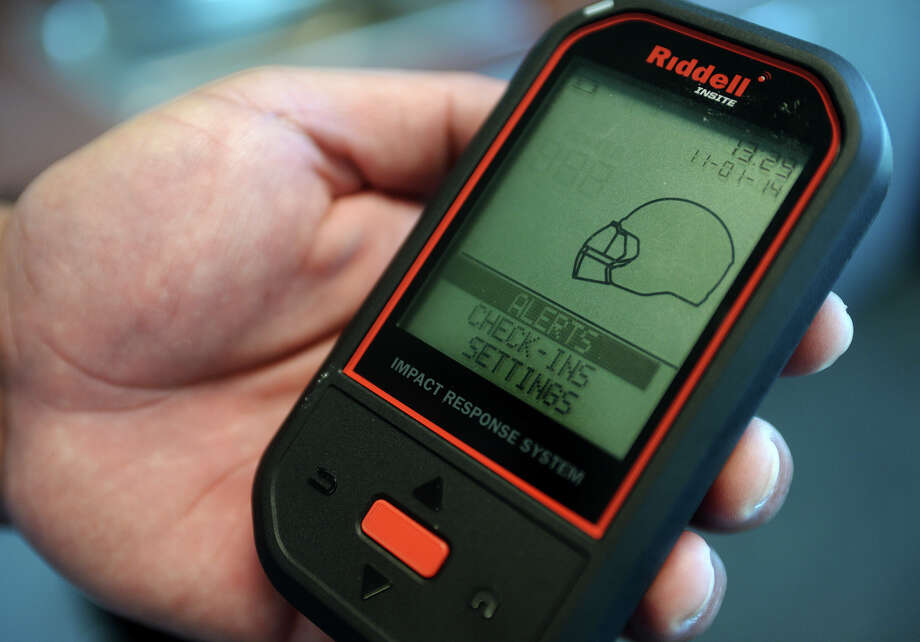
The NFL has made advances in technology designed to help reduce head injuries, but players such as Jahvid Best, a former first-round draft pick who sued both the NFL and helmet maker Riddell after receiving three concussions in two years, are still receiving knockout blows on the field of play that could disable them in later life. The league has also come under fire for a too-weak concussion protocol that allows clearly woozy players back onto the field. In October last year, Chargers defensive back Jahleel Addae played an entire game after being knocked out on the first play. In the fourth quarter, several hours after taking the blow to the head, Addae seemed to lose control of his body after making another hit, jerking his limbs and stepping awkwardly as he attempted to stay upright.
By stepping away from the sport at 24, Borland will avoid the kind of head injuries that could leave him crippled, with diminished mental faculties, or prone to fly into uncontrollable rages. Meanwhile, instead of pouring its efforts into keeping its players safe, the NFL still appears to be in favor of extending the regular season to a gruelling 18 games, despite arguments from the people who actually play the sport.
Read more here

Wednesday, March 11, 2015

Concussions detectable on the sidelines in children as young as 5

A vision test that can be done on sidelines to detect concussions was shown effective in children as young as 5 years old.

New research from the NYU Langone Concussion Center finds that a simple eye test, which can be administered in less than two minutes, can effectively diagnose a concussion and help determine whether a student athlete as young as 5 years old should return to a game.
The new study, published online in the Journal of Neuro-Ophthalmology, was conducted on 89 NCAA athletes and a younger subset of 243 youth athletes under age 17, and shows how the eye test, known as the King-Devick test, could help mitigate the problems that face concussion diagnosis in youth sports.
Study author Steven Galetta, MD, the Philip K. Moskowitz, MD Professor and Chair of Neurology at NYU Langone Medical Center, says the test can easily be administered on the sidelines by parents and non-health care professionals when athletic trainers and doctors are not available to monitor sidelines at youth sports games.
"Our findings in children and collegiate athletes show how a simple vision test can aid in diagnosis of concussion at all levels of sport," says Dr. Galetta, who is also a professor of ophthalmology at NYU Langone. "Adding the King-Devick test to the sideline assessment of student athletes following a head injury can eliminate the guesswork for coaches and parents when deciding whether or not a student should return to play."
As part of the King-Devick test, athletes read numbers off of three pieces of paper while being timed with a stopwatch. A worsened performance from a baseline reading suggests a concussion has occurred.
"Given that concussions may cause devastating short- and long-term cognitive effects, tools like vision testing that can objectively diagnose a concussion are critical," says Laura Balcer, MD, co-director of the NYU Langone Concussion Center, and a professor of neurology, ophthalmology and population health at NYU Langone.
Some sideline tests only measure cognition and balance, but visual testing is rarely performed, despite longstanding evidence that vision is commonly affected by concussion, according to a review article published by Dr. Galetta and Dr. Balcer in the March 3 print issue of Journal of Neuro-Ophthalmology. Previous research suggests about 50 percent of the brain's pathways are tied to vision.
The King-Devick test was developed in 1976 by optometrists Dr. Alan King and Steven Devick. Previous studies have looked at the test for neurological conditions that can affect vision like multiple sclerosis, before the researchers began testing it on athletes.
While earlier studies by the NYU Langone researchers looked at the King-Devick test on college athletes, this is the first to administer the test in children.
For the new study, researchers recruited 243 male and female athletes between the ages of 5 and 17 years old participating in a local youth hockey and lacrosse leagues, and 89 athletes who played these sports at the collegiate level. All of them underwent a baseline King-Devick test before the start of the sports season.
As part of the test, participants read numerical on cards from left to right as quickly as possible. Times for all three reading cards are added together, and then that number is compared with the baseline score: higher testing times suggest a worsening of performance consistent with a concussion.
All the student athletes were also given a brief cognitive test called the Standardized Assessment of Concussion (SAC) which measures memory, concentration and recall, and a Timed Tandem Gait Test, which is a timed walking trial.
Researchers determined 12 athletes sustained a concussion during the season. After matching them to control subjects of the same age and sport who did not experience a head injury, the study showed the King-Devick test outperformed the other two tests in distinguishing a concussed athlete versus an uninjured control subject with 92 percent accuracy (compared to 87 percent for Tandem Gait and 68 percent for SAC test).
Among concussed athletes, K-D scores worsened by an average of 5.2 seconds compared to baseline scores, while non-concussed athletes improved their times by 6.4 seconds compared with baseline.
Up to 3.9 million sports-related mild traumatic brain injuries, or concussions, occur annually in the United States, according to the Centers for Disease Control and Prevention, but researchers say that number is likely higher since the CDC only tracks emergency room visits.
Experiencing a concussion in a game increases an athlete's risk for sustaining a second condition in the same season by three times. Other complications include the dangerous second impact syndrome, or other short- and long-term side effects.
The group next plans to study the underlying mechanisms of the fast eye movements required for rapid number naming using electronic quantitative eye movement recordings in collaboration with Janet Rucker, MD, the Bernard A. and Charlotte Marden Associate Professor of Neurology and J.R. Rizzo, MD, director of the Visuomotor Integration Lab at Rusk Rehabilitation. According to Dr Balcer, these observations may permit more precise anatomical correlations of performance data and concussive symptoms.
Read more here

Experts claim better concussion prevention is needed in youth sports

This article discusses an expert's claim that better preventative measures for concussions are needed in youth sports.

Dina Morrissey, M.D., M.P.H., research associate for The Injury Prevention Center at Hasbro Children's Hospital, recently led a study that found that while compliance with mandated provisions in youth sports concussion laws was high among Rhode Island Interscholastic League (RIIL) high schools, compliance with recommended concussion protocols was very limited. The study, recently published in the Journal of Trauma and Acute Care Surgery, suggests that more concussion related standards and protocols need to be written into law in order to raise compliance rates among youth sports groups.
"An estimated 7.7 million children and adolescents participate in organized sports each year and the Centers for Disease Control and Prevention estimates that they sustain between 1.6 and 3.8 million sports-related concussions annually," said Morrissey. "In response to this, the state of Rhode Island passed the School and Youth Programs Concussion Act (SYPCA) in July 2010. The law outlines both mandatory and recommended provisions in regard to managing student athletes with a suspected concussion. Our study assessed compliance with this law among Rhode Island high schools and community league organizations."
In a 2013 statewide assessment of Rhode Island concussion law compliance among RIIL member high schools, non-member high schools and selected community league sports organizations, the study team found nearly universal compliance with mandated elements of SYPCA.
All athletic directors surveyed reported that they require concussion information sheets to be signed by both student athletes and parents prior to the start of each sports season. The research team also found that all coaches and 93 percent of volunteers have completed annual concussion training.
One hundred percent of surveyed groups also reported that any student athlete with a suspected concussion is immediately removed from play, and 93 percent reported that those students cannot return to play until they receive written clearance from a licensed physician, all per the SYPCA mandates.
"These SYPCA laws only apply to schools that are RIIL members," said Michael Mello, M.D., M.P.H., director of the Injury Prevention Center and co-author of the study. "When we explored other non-RIIL schools and sports organizations where SYPCA is recommended but not required, and also any of the recommendations that are not legally required of RIIL members, we found a very different compliance rate."
Only a handful of schools require student athletes to complete any type of pre-season neurocognitive testing, and nearly 20 percent don't offer it to student athletes at all. Half of the surveyed groups reported developing a written return to play protocol.
"These compliance statistics show us that in order to best protect youth athletes in Rhode Island, all recommendations outlined in the SYPCA law should be made mandatory," said Mello. "Additionally, non-RIIL schools, as well as community sports organizations, should also be required to comply with the law."
Neha Raukar, M.D., director of the Center for Sports Medicine and a co-author of the study, sees many youth athletes in her clinic for concussion treatment. "If a concussion is not treated properly and student athletes return to play too soon, they are at high risk for prolonging their symptoms, meaning more time out of the classroom and on the bench. They are also at risk for experiencing a devastating post-concussion event, such as second impact syndrome, which can be fatal," said Raukar.
"We are only just beginning to understand the long-term consequences of sustaining repeated head trauma and concussions," said Raukar. "Physicians, coaches and school staff alike all need to know the importance of properly diagnosing concussions, as well as the criteria for when a student athlete can both return to school and return to sports."
But, Morrissey also urges that the public needs to play a role and ensure that their school or community sports organization follows all the recommendations in the concussion law. "One example of our community pushing for better concussion protection for our students can be seen in school nurse annual training," said Morrissey. "At the time of our survey, only one quarter of surveyed groups required school nurses to complete annual concussion training. But now there is a new law in place to try to correct this, and Rhode Island is one of only a handful of states to reach out to school nurses for training. This is a clear step in the right direction."
Read more here

Concussion risk not lowered by helmet add-ons

A study on helmet add-ons indicated that the add-ons may not reduce the risk of having a concussion. 


While the sporting industry continues to cash in on equipment that promises to reduce the risk of player injury, a new study on helmet add-ons suggests that the buyer should beware.
The study conducted by Florida’s BRAINS Inc. and presented at the American Academy of Neurology, tested four different sporting technologies targeting football helmets that are sold on the premise of reducing head injuries.
A concussion, a type of traumatic brain injury (TBI), can be caused by a bump, blow or jolt to the head, or by a blow to the body that causes the head and brain to move rapidly back and forth, according to the Centers for Disease Control and Prevention (CDC). The sudden movement can cause the brain to bounce around or twist in the skull, stretching and damaging brain cells which may create chemical changes in the brain.
Researchers used a crash test dummy head and neck to simulate head impact by modifying the standard drop test system approved by the National Operating Committee on Standards for Athletic Equipment. Sensors were placed in the dummy’s head to measure linear and angular rotational responses to helmet impacts at 10, 12 and 14 miles per hour.
They then evaluated four football helmet add-ons currently on the market: Guardian Cap, UnEqual Technologies’ Concussion Reduction Technology, Shockstrips and Helmet Glide. Each technology was placed on the Riddell Revolution Speed and Xenith X1 football helmet and impacted five times from drop heights of 1.0, 1.5 and 2.0 meters.
Researchers found that while the helmet add-ons reduced linear acceleration impact by about 11 percent, they only reduced angular acceleration impact by 2 percent. The Helmet Glide was even shown to have no effect on either.
“Currently helmets and helmet add-ons are only designed to reduce the linear acceleration, not the angular acceleration. The linear acceleration is responsible for the contusion injuries on the brain, skull fractures and bruising on the head. Angular accelerations are the forces associated with concussions,” study author Dr. John Llyod, the research director at BRAINS Inc. and board certified ergonomist and brain injury specialist in Florida, told FoxNews.com. 
The researchers noted that manufactures do not test the angular metric of injury prevention-based sporting equipment, but also that the add-ons do not have any negative affect on a player.
“The main issue with the add-ons is if you as a parent or even as an individual walk into Sports Authority or Dick’s Sporting, you ask ‘What are these for?’ and [salesmen] are going to say ‘They’re for preventing concussions,’” study co-author Dr. Francis Conidi, assistant professor of neurology at Florida State University College of Medicine and concussion specialist told FoxNews.com.
“First and most importantly, their intent is to market them to prevent concussions and they’re not training the individuals selling the devices. The parents are getting a false sense of safety, while the results show they offer little to no protection of concussion,” Conidi said.
Conidi explained that a concussion is more-so a whiplash-type injury than a straight-on impact, which is what the linear testing measures.
“If I hit you straight on with a baseball bat, I would not induce concussion,” he said. “I would probably fracture your skull, but I would not concuss it.”
“It’s really the angular and rotational mechanism of the skull that causes the tearing of brain cells, which causes the ion cells to leak out,” Conidi said.
The researchers conclude that because there is no device on the market right now that adequately protects an athlete against a concussion, athletes must be taught proper tackling techniques from an early age.
Conidi, who has treated numerous athletes of all levels for concussions, suggested working with the athlete to strengthen the cervical muscles so the head doesn’t bend to the side or rotate as easily.
“Most importantly, be educated on the signs and symptoms, especially the athletes themselves, and the parents and coaches. When in doubt, sit them out,” he said.
Currently, an estimated 173,285 sports and recreation-related TBIs are treated among children and adolescents in the U.S. each year. According to the CDC, for males aged 10-19 years, sports-and recreation-related TBIs occurred most often while playing football or bicycling.
The study’s authors hope their findings will lead to more rigorous testing of helmets and add-ons.
Read more here

Saturday, February 28, 2015

Brain imaging study of youth hockey players shows early markers for concussion damage.

A brain imaging study of youth hockey players shows early markers for concussion damage.

James Hudziak, M.D., has two children who love ice hockey. His son skates for his college team and one of his daughters plays in high school.
As a pediatric neuropsychiatrist and director of the Vermont Center for Children, Youth and Families at the University of Vermont (UVM) College of Medicine, Hudziak believes in the benefits of ice hockey and other sports for kids. Athletic activities help a young person build organizational skills, improve motor and emotional control, reduce anxiety and boost confidence.
Now, though, Hudziak is looking into the potential dangers of ice hockey for young athletes. He and UVM colleagues Matthew Albaugh, Ph.D., Catherine Orr, Ph.D., and Richard Watts, Ph.D., have published a groundbreaking study in the February issue of TheJournal of Pediatrics that shows a relationship between concussions sustained by young ice hockey players and subtle changes in the cortex, the outer layer of the brain that controls higher-level reasoning and behavior.
Each year, more than 300,000 sports-related concussions (SRC) occur across all sports and all levels in the United States, according to a 2013 "Ice Hockey Summit II" report to which Hudziak and Boston University (BU) School of Medicine's Ann McKee, M.D., contributed. The report's authors advised the elimination of head hits from all levels of hockey, a change in body-checking policies and the elimination of fighting in all amateur and professional hockey. "Ice hockey SRC prevalence is high," the report states. "Hockey players compete at high speeds as they mature, risking injury from intentional and accidental collisions, body checks, illegal on-ice activity and fighting."
The UVM team used advanced imaging technology and cognitive testing to assess 29 Vermont ice hockey players between ages 14 and 23, some diagnosed with a sports-related concussion. As the severity of the athletes' concussion symptoms increased, the researchers found, the cortex got thinner in areas where it should be dense at those players' ages -- areas that relate to attention control, memory, and emotion regulation.
"We believe that injury to a developing brain may be more severe than injury to an adult brain," Hudziak says.
What the study indicates for the future health and function of an ice hockey player is unclear. The researchers hope to do further studies, ideally following the brains of these athletes over a couple of decades and factoring for their involvement and time in the sport as well as other influences, such as smoking and alcohol use.
"The concern is that what we are finding may be an early marker of brain damage," Albaugh says. "Years of playing contact sports and repeatedly getting your head knocked around probably isn't good for the brain, especially in young children whose brains are still maturing" he adds.
Their findings contribute to research into the consequences of brain injury in other sports, including the brain damage discovered in older professional football players by McKee, a neurology and pathology professor at BU and director of the "brain banks" in various centers of study for the university and the Veterans Administration. Her work was a cornerstone of "League of Denial: The NFL's Concussion Crisis," an investigative report by the public television program "Frontline" on the National Football League's response to players' brain trauma.
"It just adds to our information base about young athletes playing contact sports," McKee says of Hudziak's study. "It's a first step. It needs to be looked at longitudinally. We need to know if these athletes recover."
McKee says she wouldn't necessarily expect the brain changes in young hockey players to lead to chronic traumatic encephalopathy (CTE), a serious but uncommon disease that she found prevalent in retired NFL players. Instead, she expects that further study in the ice hockey arena will show that young players' brains can recover from early blows. Brains have a chance for rehabilitation after injury, she says.
"We're hopeful that these changes can be reversed," she says of the cortex thinning observed in Hudziak's study. "I would look at this as an opportunity to make a difference, and not a cause of irrevocable damage in these players."
Hudziak and his UVM colleagues would like to help the organizations running professional, collegiate, junior and youth hockey leagues make better decisions about how best to treat players' head injuries; how and when to return players to the ice after an injury; when to pull them from the sport entirely; and how to prevent injuries from occurring. Players and coaches at the national, college and youth levels of hockey have talked to Hudziak about his findings, he says.
In Hudziak's study, he and his colleagues cite research indicating "that cerebral concussion accounts for 15 to 22.2 percent of all reported injuries" in hockey.
The key challenges for them, says Hudziak, are that the definition of "concussion" is so slippery and reports of the incidence of concussions are inconsistent. Some people think a concussion happens when someone is hit in the head or gets dizzy; others think a person has to be "knocked out" to have a concussion.
His study focuses on the symptoms recorded after a diagnosed concussion. But Hudziak wonders whether lesser head injuries, what he calls sub-concussive events, could have as many or more consequences for the brain over time as a single major blow.
On the computer in his office, Hudziak shows a video of a professional hockey game during which a player gets body checked. It doesn't look like a very serious hit, though he's carried off the ice.
Then, the video reverses to just a few minutes earlier in the game, when that same player collides with another and flips violently backwards, throwing off his helmet before his head hits the ice. That suggests the potential harm inside a person's skull that can occur from cumulative assault.
As Hudziak puts it, "The sum is greater than the individual parts."
That player flew into Burlington, Vt. to meet with Hudziak and his team, so they can learn more from his brain.
Ideally, Hudziak says, they want to apply their current study to female and male ice hockey players ages 8 to 14, then to college-age skaters of both genders and finally to retired professional hockey players. They'd like to compare their findings at each age group to nonathletes and to the same groups in soccer -- a sport typically involving less-severe head injuries.
"We don't have any sense that hockey's going to be worse than soccer," Hudziak points out.
Already, in a follow-up study, Hudziak's team has found more evidence of increased problems in the brains of athletes, compared with nonathletes. This work focuses on "hyperintensities," which look like little bright white spots on a brain image. His research suggests a higher volume of these bright spots may correlate with decreased thickness in the cortex.
"As a general rule of thumb, you're allowed one of these bright spots every 10 years of your life," Albaugh says.
So a 50-year-old should have about five of these bright spots. One of the college-age athletes in the study has 18 spots, Albaugh says. Hudziak now has to call some parents to tell them of the "clinically concerning findings" in their children's brain images.
Hudziak doesn't want to warn parents to keep their kids out of hockey or other team play. As the founder of the unique Vermont Family-Based Approach, which incorporates all aspects of a child's life to address emotional and behavioral problems, he prescribes hockey, soccer and other sports to help eliminate behavior, attention and psychological disorders. It is his hope that through brain training and health promotion the brain may recover.
"My goal is not to rid the world of these sports," Hudziak says. "My goal is to make these sports safer, so that more people can play them."
Read more here