Showing posts with label israel. Show all posts

Monday, April 27, 2015

App offers non-medication treatment for ADD/ADHD

An app created in Israel offers a medication-free alternative treatment for children with ADD and ADHD.

Aziz Kaddan, one of the co-founders of Myndlift, didn’t flinch when asked in front of an audience at the recent BrainTech conference in Tel Aviv how he plans to go up against the better-funded American companies with his alternative non-drug treatment for attention deficit disorder (ADD) and attention deficit hyperactivity disorder (ADHD).
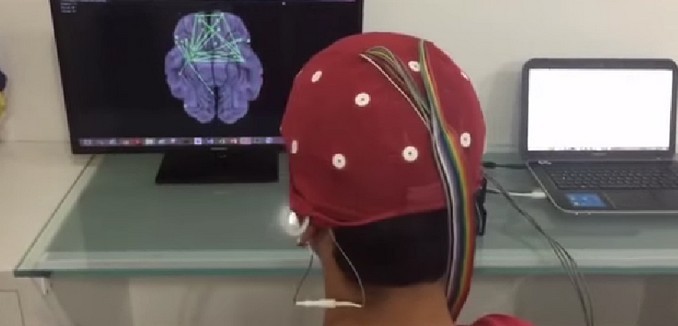
Myndlift uses neurofeedback, also known as electroencephalographic (EEG) biofeedback, to train the brain to focus. It’s a computer-based technique developed and tested by NASA to improve attention, focus, and learning. Kaddan, the 22-year-old phenom taking Israel’s brain-tech world by storm, knows the path to changing hyperactivity treatment is a tough one, but he’s positive his app-based, wearable neurofeedback solution, coupled with specially tailored mobile games that only work through concentration, can increase attention levels with just 10 minutes of play time a day.
“I know that I have a product that has a value to a lot of people,” he said, from his co-working space for high-tech entrepreneurship and innovation at Tel Aviv’s public library. Myndlift’s idea is to get sufferers of ADD and ADHD off medications like Ritalin, which suppresses appetite and has other negative side effects, and help them focus their minds using a mobile app, neurofeedback, and a brain-sensing wearable technology.
“Myndlift brings personalized neurofeedback training to mobile, making it easier for people with hyperactivity, professionals in demanding careers, students, athletes and anyone concerned about brain fitness to improve concentration abilities effectively without prescription drugs, inconvenience to visit specialized clinics and huge bills, thus saving thousands of dollars and tens of commuting hours,” according to the company’s elevator pitch.
Read more here

Sunday, November 30, 2014

Brain damage from mild concussions

This article explains how football players can have brain damage from milder concussions.

A new, enhanced MRI diagnostic approach was, for the first time, able to identify significant damage to the blood-brain barrier (BBB) of professional football players following "unreported" trauma or mild concussions. Published in the current issue of JAMA Neurology, this study could improve decision making on when an athlete should "return to play."
According to Prof. Alon Friedman, from the Ben-Gurion University Brain Imaging Research Center and discoverer of the new diagnostic, "until now, there wasn't a diagnostic capability to identify mild brain injury early after the trauma. In the NFL, other professional sports and especially school sports, concern has grown about the long-term neuropsychiatric consequences of repeated mild Traumatic Brain Injury (mTBI) and specifically sports-related concussive and sub-concussive head impacts."
The paper, published by researchers at Ben-Gurion University of the Negev (BGU) and Soroka University Medical Center, describes a new diagnostic approach using Magnetic Resonance Imaging (MRI) for detection and localization of vascular pathology and blood-brain barrier breakdown in football players.
The images from the Ben-Gurion University of the Negev JAMA Neurology study represent Blood-Brain Barrier (BBB) Permeability in Football Players (A) vs. a control group (B). The players in the pathological-BBB group (B) presented focal BBB lesions in different cortical regions including the temporal (player 4), frontal (player 5), and parietal (player 6) lobes. Both gray and white matter were involved.
"The goal of our study was to use our new method to visualize the extent and location of BBB dysfunction in football players using Dynamic Contrast-Enhanced Magnetic Resonance Imaging (DCE-MRI) on a Phillips 3-T Ingenia. Specifically, it generates more detailed brain maps showing brain regions with abnormal vasculature, or a 'leaky BBB.' "
Study participants included 16 football players from Israel's professional football team, Black Swarm, as well as 13 track and field athletes from Ben-Gurion University who served as controls. All underwent the newly developed MRI-based diagnostic.
The DCE-MRIs were given between games during the season and revealed significant damage.
Forty percent of the examined football players with unreported concussions had evidence of "leaky BBB" compared to 8.3 percent of the control athletes.
"The group of 29 volunteers was clearly differentiated into an intact-BBB group and a pathological-BBB group," Friedman explains. "This showed a clear association between football and increased risk for BBB pathology that we couldn't see before. In addition, high-BBB permeability was found in six players and in only one athlete from the control group."
Friedman also explains that not all the players showed pathology. This indicates that repeated, mild concussive events might impact some players differently than others. This level of diagnosis of individual players can provide the basis of more rational decision making on "return to play" for professionals as well amateurs of any age.
"Generally, players return to the game long before the brain's physical healing is complete, which could exacerbate the possibility of brain damage later in life," says Friedman.
A decade of research in the BGU Laboratory for Experimental Neurosurgery has shown that vascular pathology, and specifically dysfunction of the blood-brain barrier (BBB), plays a key role in brain dysfunction and degeneration, and may be an underlying cause of neurodegenerative complications after brain injuries.
The BBB is a highly selective permeable membrane that separates circulating blood from extracellular fluid. It protects the brain by preventing many dangerous substances from penetrating, and therefore is not meant to be damaged.
Medical researchers, including Friedman's group at BGU, are working to find ways to find drugs that will target the BBB and facilitate its repair, allowing for the prevention of Alzheimer's disease and other brain-related disease.
"Prof. Friedman has been able to conduct this breakthrough brain research using the state-of-the-art MRI machine donated as a result of contributions from American Associates, Ben-Gurion University of the Negev (AABGU)," explains Doron Krakow, AABGU executive vice president. "We believe that with continued support, Prof. Friedman and the DCE-MRI can help render more accurate and informed decisions by athletes and others exposed to mild concussions about when to resume activities."
Read more here

Tuesday, December 03, 2013

Children are more likely to develop PTSD if mother has PTSD

An Israeli study finds that a child is more likely to develop PTSD if his or her mother has PTSD.

A Ben-Gurion University of the Negev (BGU) study indicates that children are more likely to develop Post Traumatic Stress Disorder (PTSD) if their mother is already afflicted.
In the study published in the Journal of Depression & Anxiety, while fewer than 10 percent (8.4 percent) of the mothers were suffering from PTSD, more than a fifth (21 percent) of their children presented PTSD symptoms. Children who developed PTSD symptoms also had more psychosomatic complaints such as constipation, diarrhea and headaches.
"This study reinforces the existing body of knowledge regarding the importance of evaluating and treating parental responses in time of stress," the researchers explain.
"Parents are often the key to understanding children's responses generally and specifically in times of stress. The study also highlights the close interrelations between 'body and soul' among children and adults."
In the study, some 160 mothers of preschool children were interviewed about symptoms exhibited by their children and their own responses during Operation Cast Lead. More than 750 rockets were fired into Southern Israel from Gaza from December 2008 to January 2009.
Working with the Preschool Psychiatric Unit at Soroka University Medical Center, the BGU researchers examined the relationship between PTSD symptoms and socio-demographic, family attributes and psychosomatic symptoms among children exposed to Grad missile attacks in Beer-Sheva, Israel.
Read more here

Wednesday, July 24, 2013

Study: Breastfed children less likely to develop ADHD

A study from Tel Aviv University shows that breastfeeding may be protective against a child developing ADHD later in life.

We know that breastfeeding has a positive impact on child development and health -- including protection against illness. Now researchers from Tel Aviv University have shown that breastfeeding may also help protect against Attention Deficit/Hyperactivity Disorder (ADHD), the most commonly diagnosed neurobehavioral disorder in children and adolescents.
Seeking to determine if the development of ADHD was associated with lower rates of breastfeeding, Dr. Aviva Mimouni-Bloch, of Tel Aviv University's Sackler Faculty of Medicine and Head of the Child Neurodevelopmental Center in Loewenstein Hospital, and her fellow researchers completed a retrospective study on the breastfeeding habits of parents of three groups of children: a group that had been diagnosed with ADHD; siblings of those diagnosed with ADHD; and a control group of children without ADHD and lacking any genetic ties to the disorder.
The researchers found a clear link between rates of breastfeeding and the likelihood of developing ADHD, even when typical risk factors were taken into consideration. Children who were bottle-fed at three months of age were found to be three times more likely to have ADHD than those who were breastfed during the same period. These results have been published in Breastfeeding Medicine.
Understanding genetics and environment
In their study, the researchers compared breastfeeding histories of children from six to 12 years of age at Schneider's Children Medical Center in Israel. The ADHD group was composed of children that had been diagnosed at the hospital, the second group included the siblings of the ADHD patients, and the control group included children without neurobehavioral issues who had been treated at the clinics for unrelated complaints.
In addition to describing their breastfeeding habits during the first year of their child's life, parents answered a detailed questionnaire on medical and demographic data that might also have an impact on the development of ADHD, including marital status and education of the parents, problems during pregnancy such as hypertension or diabetes, birth weight of the child, and genetic links to ADHD.
Taking all risk factors into account, researchers found that children with ADHD were far less likely to be breastfed in their first year of life than the children in the other groups. At three months, only 43 percent of children in the ADHD group were breastfed compared to 69 percent of the sibling group and 73 percent of the control group. At six months, 29 percent of the ADHD group was breastfed, compared to 50 percent of the sibling group and 57 percent of the control group.
One of the unique elements of the study was the inclusion of the sibling group, says Dr. Mimouni-Bloch. Although a mother will often make the same breastfeeding choices for all her children, this is not always the case. Some children's temperaments might be more difficult than their siblings', making it hard for the mother to breastfeed, she suggests.
Added protection
While researchers do not yet know why breastfeeding has an impact on the future development of ADHD -- it could be due to the breast milk itself, or the special bond formed between mother and baby during breastfeeding, for example -- they believe this research shows that breastfeeding can have a protective effect against the development of the disorder, and can be counted as an additional biological advantage for breastfeeding.
Dr. Mimouni-Bloch hopes to conduct a further study on breastfeeding and ADHD, examining children who are at high risk for ADHD from birth and following up in six-month intervals until six years of age, to obtain more data on the phenomenon.
Read more here

Wednesday, September 05, 2012

New Research Claims Sleep Learning is Possible


A new study from Israel shows that it is possible to learn while you're sleeping.
A new study that looks at subconscious learning found that it is possible to learn while sleeping.
Researchers at the Weizmann Institute in Israel measured heart rates, breathing rates and sleep states combined with smells and tones to make the finding.
Red Orbit reported that the study used volunteers for the sleep study and paired good and bad odors with tones simultaneously over the course of a night.
The next night the researchers found that the tone associated with the bad smell affected the breathing of the subject.
The good tone caused the volunteers to inhale deeply.
Even while awake, reported the Jerusalem Post, the subjects' breathing was affected by the tones.
The New York Times said the study authors found that the experiment worked better when the associations were made during the REM phase of sleeping.
“The common knowledge is that you cannot learn new information while you’re asleep, even though your brain is able to do so many other things while you are asleep,” said lead author Anat Arzi, of the Weizmann Institute, reported the New York Times.
“We need to understand where the border lies between what we can and what we cannot learn in sleep."
The study was published in the journal Nature Neuroscience.
Read more here

Sunday, December 11, 2011

Pollution plays a role in autism and dyslexia, say Israeli and foreign scientists


Conclusions emerge from presentations by Israeli and foreign scientists at a conference on the relationship between pollution and children's health problems.

Growing evidence suggests pollution plays a significant role in developmental problems among children, including autism, attention deficit disorder and even dyslexia, it was revealed at a conference on the subject in Israel Wednesday.

These conclusions emerged from presentations by Israeli and foreign scientists at a conference on the relationship between pollution and children's health problems. The conference, sponsored by the Environment and Health Fund, was part of the annual convention of the Israel Ambulatory Pediatric Association.

One of the principal speakers at the conference was Prof. Philip Landrigan, a pediatrician at Mount Sinai Hospital in New York, who noted that many countries worldwide have reported a sharp rise in recent years in the prevalence of development disorders such as autism and ADD. This rise cannot be attributed solely to genetic factors or to higher rates of diagnosis, he said, and today, even researchers who once thought environmental factors could explain only a small fraction of the increased incidence of autism, for instance, have been convinced that it accounts for at least 25 percent of the rise.

Exposure to substances such as lead, mercury and pesticides is particularly dangerous for children, because they are more sensitive to these materials - in part because their brains are still developing, Landrigan said. A child's body also breaks down poisonous materials less efficiently than the adult body does, and any given quantity of chemical has more of an impact on a child because it constitutes a larger proportion of his body mass. Additionally, most children will spend more years being exposed to poisonous substances than adults will, he said.

Today, blood tests find hundreds of types of chemicals in children's blood, Landrigan noted. But little is known about the effects of most of these substances because they have never been studied. And while hundreds of other substances have been identified as harmful to human health, their impact on children in particular has generally not been investigated. Nor has research been done on the cumulative effect of exposure to multiple poisonous substances - though modern humanity makes use of some 80,000 different chemicals, he said.

Some Western countries have tried to contend with the problem by requiring chemical manufacturers to do more testing of and reporting on their products' health impact, but so far success has been partial.

Dr. Orna Metzner of the Environmental Protection Ministry said that Israel, too, is now working on creating a database for chemical safety data, as one of the commitments it undertook when it joined the OECD.

One of the successes of recent years has been in reducing children's exposure to lead. Dr. Tamar Berman, the Health Ministry's toxicologist, said the level of lead found in drinking water now exceeds the permitted maximum in only two percent of samples - though she stressed that, given the risks of lead exposure, this is still too much.

Read more: http://www.haaretz.com/print-edition/news/pollution-plays-a-role-in-autism-and-dyslexia-say-israeli-and-foreign-scientists-1.398829

Thursday, December 08, 2011

Israeli researchers develop substance that attacks antibiotic-resistant germs


If used on a large scale, their method could change the nature of hospital-acquired infections 'toward being more susceptible to antibiotics rather than more resistant,' say researchers.

Israeli researchers are laying the groundwork for a spray which they say will make it easier to get rid of the antibiotic-resistant germs that plague hospitals, here and around the world.

If used on a large scale, their method could change the nature of hospital-acquired infections "toward being more susceptible to antibiotics rather than more resistant," the researchers say in an article in this month's issue of Applied and Environment Microbiology, a journal published by the American Society for Microbiology.

Lead researcher Dr. Udi Qimron, a microbiologist at Tel Aviv University's Sackler School of Medicine, said their system works by changing the genetic makeup of antibiotic-resistant bacteria - which he said is vital because these germs have proven impossible to eradicate by other means.

"You can kill the bacteria by cleaning with bleach, but you can't kill them 100 percent, and you can't control the secretion of of resistant bacteria, like when a patient sneezes in the [hospital] ward," said Qimron, who worked on the project with the researchers Rotem Edgar, Nir Friedman and Shahar Molshanski-Mor. "Using a substance that moves the bacteria toward susceptibility to antibiotics will prevent resistant bacteria from multiplying on the hospital surfaces."

Some 1,500 people died of antibiotic-resistant infections in Israeli hospitals last year alone - a 7-percent rise since 2009, according to a Health Ministry report released earlier this year. The data do not show whether the infections were actually acquired in the hospital, but previous research indicates that more than two-thirds of infections are transmitted in medical centers, Yehuda Carmeli of the epidemiology unit at Tel Aviv's Ichilov Hospital said after the report came out.

Qimron and the other researchers say their method paves the way for development of a spray that contains the bacteriophages, or bacteria-infecting viruses, they successfully used to render the bacteria sensitive to antibiotics. The spray could be used wherever there are large concentrations of resistant germs, like beds, handrails, door handles, faucets - and, in Israel, the mezuzahs that many Jews touch before entering a room.

Tuesday, November 15, 2011

New Cancer Vaccine in Phase III Clinical Trials in Jerusalem


A new cancer vaccine developed by Israeli researchers has just startedPhase III clinical trials at Hadassah University Medical Center in Jerusalem.

ImMucin is a 21mer synthetic vaccine composed of the entire signal peptide domain of the MUC1 protein.

The vaccine, produced by the Vaxil BioTherapeutics firm, is being tested against a type of blood cancer known as multiple myeloma. But if the vaccine works – and so far all the signs are positive – the VaxHit basic technology that supports the vaccine might also be used to fight other forms of the disease, according to the announcement on the company's website.

If the clinical trials are successful and the vaccine is approved, ImMucin may become available to the public in about six years, not only to treat cancer, but also to prevent its recurrence.

Vaxil was founded in 2006 by Dr. Lior Carmon, a biotechnology entrepreneur with a PhD in immunology from the Weizmann Institute of Science in Rehovot. The company, based in Ness Ziona, merged in June with Sheldonco.

The new vaccine works by activating the immune system by “training” T-cells to search and destroy cells with the MUC1 molecule, typically found only on cancer cells. More than 90 percent of common solid tumor cancers bear the MUC1 molecule, as well as many non-solid tumors, including lymphoma, leukemia and multiple myeloma.

Advanced-stage cancer will still require chemotherapy or surgery to remove a large tumor, Vaxil CEO Julian Levy noted, but if the cancer is brought down to size, the body will then be able to fight it, with ImMucin seen as a long-term approach to prevent recurrence.

Read more: http://www.israelnationalnews.com/News/News.aspx/149680#.TsKS4oA9a7g

http://unitedwithisrael.org/israel-develops-cancer-vaccine/

Thursday, October 27, 2011

How Motherhood Behavior Is Influenced by Alterations in Brain Function ..or is Brain Function Altered by Motherhood?


Instinctive mothering behavior towards care of newborns has long been recognized as a phenomenon in humans and animals, but now research at the Hebrew University of Jerusalem has shown that motherhood is associated with the acquisition of a host of new behaviors that are driven, at least in part, by alterations in brain function.


The research, by Dr. Adi Mizrahi of the and Edmond and Lily Safra Center for Brain Sciences and the Silberman Institute of Life Sciences at the Hebrew University, has just been published in the journal Neuron.It provides insight into how neural changes integrating odors and sounds lie behind a mouse mother's ability to recognize and respond to distress calls from her pups.
"We know that distinct brain changes are linked with motherhood, but the impact of these changes on sensory processing and the emergence of maternal behaviors are largely unknown," explains Mizrahi. "In mice, olfactory and auditory cues play a major role in the communication between a mother and her pups. Therefore, we hypothesized that there may be some interaction between olfactory and auditory processing so that pup odors might modulate the way pup calls are processed in the mother's brain."
Dr. Mizrahi and his post-doctoral colleague Dr. Lior Cohen examined whether the primary auditory cortex, a brain region that is involved in the recognition of sounds, might serve as an early processing region for integration of pup odors and pup calls. The primary auditory cortex is known as a site that undergoes functional changes in response to sensory input from the environment.
In their study, the researchers exposed regular mice, mice that had experienced interaction with their pups, and lactating mother mice to pup odors, and then monitored both spontaneous and sound-evoked activity of neurons in the auditory cortex. The odors triggered dramatic changes in auditory processing only in the females that had interacted with pups, while the lactating mothers were the most sensitive to pup sounds. The olfactory-auditory integration appeared in lactating mothers shortly after they had given birth and had a particularly strong effect on the detection of pup distress calls.
Taken together, the findings suggest that motherhood is associated with a previously un-described form of multisensory processing in the auditory cortex.

Monday, October 10, 2011

Israeli and NY researchers find evidence autism genetic


For the first time, scientists provide functional evidence that inheriting fewer copies of genes on chromosome #16 leads to autism-like features.

The neuro-cognitive, developmental disease of autism, whose symptoms appear during the first three years of a child’s life, have for years been thought to involve a number of genes, but there was no concrete proof.

Now a team at Cold Spring Harbor Laboratory (CSHL) in New York, led by an Israeli doing postdoctoral fellowship work on mice, has for the first time provided functional evidence that inheriting fewer copies of genes on chromosome #16 leads to autism-like features.

Dr. Guy Horev, of the Weizmann Institute of Science in Rehovot, worked at CSHL with Prof. Alea Mills and colleagues on mouse models of autism that they created using chromosome engineering. The study, of which Horev was the first author, has just appeared in Proceedings of the National Academy of Sciences (PNAS).

After engineering mice that had a chromosome defect corresponding to the human 16p11.2 deletion found in autism, the researchers analyzed these models for a variety of behaviors, as the clinical features of autism often vary widely from patient to patient, even within the same family. Rodents that had been engineered to carry an extra copy, or duplication, of the 16p11.2 region did not have these characteristics, but instead, had the reciprocal behaviors.

For each behavior, the deletion had a more dire consequence than the duplication, indicating that gene loss was more severe. This might explain why 16p11.2 duplications are detected much more frequently than deletions within the human population, and why patients with 16p11.2 deletions tend to be diagnosed earlier than those with duplications, the team suggested.

The mouse models also revealed a potential link between 16p11.2 deletion and survival, as about half the mice died following birth.

Monday, August 15, 2011

Health Scan: Biological marker found for autism

Keep in mind that this is promising pre-clinical research.....


Neurologists and child development specialists have learned quite a lot about autism and its possible causes in recent years, but much remains poorly understood. It is usually diagnosed “late” – around the age of three or four, and the tests are still subjective.

Now Weizmann Institute of Science researchers, along with colleagues at Carnegie Mellon University and the University of California, San Diego, have found a method that can identify a biological sign of autism in young toddlers that could lead to early diagnosis. The research recently appeared in Neuron.

By scanning the brain activity of sleeping children, the scientists discovered that autistic brains exhibited significantly weaker synchronization between areas tied to language and communication, compared to that of non-autistic children.

“Identifying biological signs of autism has been a major goal for many scientists around the world, both because these may allow early diagnosis, and because they can provide important clues about the causes and development of the disorder,” says post-doctoral fellow Dr. Ilan Dinstein, working with Prof. Rafael Malach, who headed this study at the Rehovot institute’s neurobiology department. While many scientists believe that faulty lines of communication between different parts of the brain are involved in autism disorders, there was no way to observe this in very young children, who are unable to lie still inside a functional MRI scanner while they are awake.

Read more: http://www.jpost.com/Health/Article.aspx?id=233686

Sunday, May 01, 2011

Holocaust Memorial Day: NAZI PERSECUTION OF THE DISABLED: MURDER OF “THE UNFIT”


The Nazi persecution of persons with disabilities in Germany was one component of radical public health policies aimed at excluding hereditarily “unfit” Germans from the national community. These strategies began with forced sterilization and escalated toward mass murder. The most extreme measure, the Euthanasia Program, was in itself a rehearsal for Nazi Germany’s broader genocidal policies.

The ideological justification conceived by medical perpetrators for the destruction of the “unfit” was also applied to other categories of “biological enemies,” most notably to Jews and Roma (Gypsies). Compulsory sterilization and “euthanasia,” like the “Final Solution,” were components of a biomedical vision which imagined a racially and genetically pure and productive society, and embraced unthinkable strategies to eliminate those who did not fit within that vision.....

AN OPEN SECRET

On July 14, 1933, the German government instituted the “Law for the Prevention of Progeny with Hereditary Diseases.” This law called for the sterilization of all persons who suffered from diseases considered hereditary, including mental illness, learning disabilities, physical deformity, epilepsy, blindness, deafness, and severe alcoholism. With the law’s passage the Third Reich also stepped up its propaganda against the disabled, regularly labeling them “life unworthy of life” or “useless eaters” and highlighting their burden upon society.

The term “euthanasia” (literally, “good death”) usually refers to the inducement of a painless death for a chronically or terminally ill individual. In Nazi usage, however, “euthanasia” referred to the systematic killing of the institutionalized mentally and physically disabled. The secret operation was code-named T4, in reference to the street address (Tiergartenstrasse 4) of the program's coordinating office in Berlin.

Ashes from cremated victims were taken from a common pile and placed in urns without regard for accurate labeling. One urn was sent to each victim's family, along with a death certificate listing a fictive cause and date of death. The sudden death of thousands of institutionalized people, whose death certificates listed strangely similar causes and places of death, raised suspicions. Eventually, the Euthanasia Program became an open secret.

On August 18, 1939, the Reich Ministry of the Interior circulated a decree compelling all physicians, nurses, and midwives to report newborn infants and children under the age of three who showed signs of severe mental or physical disability. At first only infants and toddlers were incorporated in the effort, but eventually juveniles up to 17 years of age were also killed. Conservative estimates suggest that at least 5,000 physically and mentally disabled children were murdered through starvation or lethal overdose of medication.


http://www.ushmm.org/museum/exhibit/focus/disabilities/