Showing posts with label emergency room. Show all posts

Wednesday, January 27, 2016

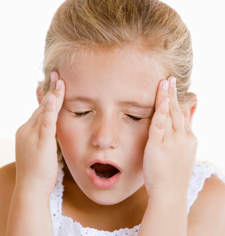
Study: Migraines in children are under-treated

A study indicates that migraines in children are under-treated and usually do not received evidence-based treatment.

While evidence-based guidelines are fine-tuning a safe, effective approach to acute migraine care, it appears many younger patients are not receiving the care they need for their migraine attacks.
Nearly half of pediatric patients did not receive any treatment for their migraines, and a vast majority of children did not receive evidence-based prescriptions or recommendations, according to the results of a multi-state retrospective study.
The trend appears especially apparent in urban health care centers and emergency department (ED) facilities, where patients seem less likely to receive proper evidence-based treatments or receive any treatment at all.
“This is not just a pediatric problem, we actually know from a number studies over the last 20 years that headache is an underdiagnosed condition,” Robert A. Nicholson, PhD, LCP, FAHS, from the Mercy Clinic Headache Center & Mercy Health Research in St. Louis, Missouri, told Practical Pain Management.
When a patient presents with migraine, evidence-based guidelines typically recommend some form of abortive treatment, such as triptans or nonsteroidal anti-inflammatory drugs (NSAID). However, many patients do not receive any of these treatments, and this appears to be the case for younger patients as well.
“This study does point out that, for adults and children, migraine and headache tends to be undertreated. The fact that many patients, young and older, are sent home with no specific migraine treatment is discouraging, but not surprising,” said Lawrence Robbins, MD,  a headache specialist practicing in Riverbrooks, Illinois.
Read more here

Monday, December 15, 2014

Increase in concussions seen in Ontario's children

A study showed that concussions in Ontario's children significantly increased between 2003 and 2010.

The number of children and youth treated for concussions in both emergency departments and physician's offices in Ontario increased significantly between 2003 and 2010, with falls, hockey and skating injuries identified as the leading causes of pediatric concussion, according to a new joint study out of York University and the Institute for Clinical Evaluative Sciences (ICES).
The study," A population-based study of pediatric emergency department and office visits for concussions from 2003 to 2010," published in the journal Paediatrics & Child Health, analyzed all visits related to a concussion by school-aged youth (three to 18 years) in Ontario from 2003 to 2010.
"This study is the first to examine pediatric concussions evaluated in both emergency departments and physicians' offices," says York University Professor Alison Macpherson, the study's lead author. "By examining all of the pediatric concussions evaluated in multiple facilities, we were able to minimize the issue of under-reporting and obtain a more accurate number of concussions treated in Ontario."
Between 2003 and 2010, researchers found a total of 88,688 pediatric concussions were treated in either an emergency department or a physician's office, and there was a significant trend in both locations. The total rate of concussions per 100,000 increased from 466.7 to 754.3 (for boys), and from 208.6 to 440.7 (for girls) during the study period. The numbers also showed that over time more children were being evaluated in physician's offices than emergency departments.
When the sources of concussion were broadly examined, falls were found to be the most common cause of concussion in an emergency department, representing 34 per cent of all emergency department visits, followed closely by exposure to force (25.5 per cent) and motor vehicle collisions (12.3 per cent). When specific causes were examined in more detail, hockey and skating -- common sports in North America -- were the most common causes of concussions that were treated in an emergency department.
"Our findings reinforced that falls in general are the most common cause of pediatric concussions, and that evidence-based prevention initiatives to help reduce the incidence of concussion are warranted -- particularly in sports and recreation programs," says senior scientist and chief science officer at ICES, Dr. Astrid Guttmann, the study's senior author. "Sports-related concussions can be minimized by taking preventive action, such as reducing body checking in hockey or wearing a helmet while cycling."
Macpherson says that future studies can attempt to differentiate between the true incidence of concussions and an increase in those seeking a health evaluation due to increased awareness of concussion and subsequent health consequences.
Read more here

Sunday, October 19, 2014

When to go to the hospital for a migraine

This article explains when it is appropriate to go to the hospital for a migraine headache.

Headache is one of the most common reasons for an emergency room visit. Some people go due chronic headache or Migraine problems that do not go away with treatment, and in other cases, headache is a symptom of another medical problem.
The best reason for an ER visit is for unusual symptoms that are new to you. You may seek attention to make sure there is no chance of another problem such as aneurysm or meningitis. A severe headache that starts very suddenly (within a second or two) can mean another disorder such as stroke. New symptoms such as a fever, weakness, vision loss or double vision, or confusion are some of most concerning symptoms. If you have a new symptom and serious, life-threatening medical problems such as liver, heart or kidney disease, are pregnant, or have a disorder which affects your immune system such as HIV infection, an ER visit may be more essential.
For many patients, an ER visit for headache or Migraine happens after a long period of severe headache lasting days or weeks. After long time of experiencing severe headache, you may reach the "last straw" and no longer be able to deal with the problem. ER doctors are not specialists in headache and Migraine, and their goals are to make sure there is no serious life-threatening problem and help reduce suffering. Different ER doctors have different ways to treat acute headache and Migraine: there is no universal protocol for emergency treatment of headache disorders.
When going to the ER, be sure to mention:
  • your symptoms, including any that are new or unusual for you;
  • any medications you have taken, especially in the last few days; and
  • if you have had good results from a particular medication regimen, that can be helpful to the ER.
Often ER doctors will want to order tests such as a CT scan of the head or spinal tap to make sure there is no bleeding in the brain, large stroke or meningitis. If you are having your typical severe headache or Migraine, and no new symptoms, the chance these tests will be helpful are extremely low and you have the right to refuse them. (See 5 Things Migraine and Headache Patients and Doctors Should Question.)
The majority of persons coming to an ER for severe headache or Migraine do not get lasting results from the medications given in the ER, so having a good long-term plan and relationship with an outpatient doctor who treats your headache disorder is very important. If you have even occasional long-lasting headaches or Migraines, a good preventive plan is very important, and you should have at least one rescue medication to prevent future ER visits.
Read more here

Thursday, December 26, 2013

Pediatric emergency department visits due to headaches depend on the month

A study that looked at monthly changes in emergency department visits for children caused by headaches shows that children are more likely to go to the emergency department after they return to school from winter or summer breaks. The authors believe this is due to a change in daily lifestyle.

The objective of this article is to determine the monthly variation of emergency department (ED) visits for pediatric headache. The authors hypothesized youth have increased headache–related ED visits in the months associated with school attendance. In adolescents they found higher ED utilization in January and September, the same months associated with school return from vacation for a majority of children nationally. No significant reduction in the summer suggests that school itself is not the issue, but rather changes in daily lifestyle and transitions.
Methods
  • Using a United States representative sample of ED visits in the National Hospital Ambulatory Medical Care Survey from 1997 to 2009, the authors estimated number of visits associated with ICD-9 codes related to headache, migraine, status migrainosus, or tension-type headache in 5- to 18-year-olds.
  • Age-stratified multivariate models are presented for month of visit (July as reference).
Results
  • There was a national estimate of 250,000 ED visits annually related to headache (2.1% of total visits) in 5- to 18-year-olds.
  • In 5- to 11-year-olds, the adjusted rate of headache-related visits was lower in April (OR 0.42, 95% CI 0.20, 0.88).
  • In 12- to 18-year-olds, there were higher rates in January (OR 1.92, 95% CI 1.16, 3.14) and September (OR 1.64, 95% CI 1.06, 2.55).
Read more here

Monday, August 05, 2013

Causes of headaches in children

This article discusses the many possible causes of headaches in children ranging from normal to serious causes.

Children’s headaches can be related to ailments, from allergies to ear infections to sinus problems, and most of the time they don’t indicate a dangerous illness.
But for many parents, the shadow of a terrible diagnosis lurks in the corner of the darkened room where a headachy child is lying with a cool cloth on her brow.
Sometimes, children with headaches need neuroimaging — brain CTs or MRIs. But recently several large studies have raised concerns about CT scans done on children because the radiation from these scans can increase the risk of eventually developing cancer, though that overall risk is still very small.
Doctors are being asked to follow guidelines for judicious use of these scans, but many parents remain unaware of the risks and guidelines. A study in the journal Pediatrics looked at a huge group of children who each saw a doctor at least twice with headaches but had no injury or trauma. More than 25 percent of those children got CT scans, the researchers found.
Children who brought their aching heads into emergency rooms were more likely to get scans than children visiting their regular doctors or neurology clinics.
“However, even outside the emergency room, the use of CT scans was quite high,” said Andrea DeVries, a director of research at HealthCore, a subsidiary of the insurer WellPoint, and the lead author of the study. About two-thirds of the children who received CT scans did not visit an emergency room, she noted.
Who does need neuroimaging? Doctors worry about a severe headache that gets worse, and about any abnormalities on the physical exam or changes that suggest a pathology in the brain. These changes can range from disturbances in gait or eye movements to confusion and lethargy.
Though nausea and vomiting commonly go along with migraines, vomiting can also indicate increased pressure in the brain. It can be a danger sign in a child who has recently had a concussion.
Symptoms like these quickly push a headache into the realm of a neurological emergency. Headaches that wake children from sleep or occur on just one side also may be cause for concern.
For children whose headaches don’t fit a clear migraine pattern, an eye exam is an important diagnostic step, said Dr. Andrew Lee, a neuro-ophthalmologist at the Methodist Hospital in Houston. An exam is also critical if parents have noticed any crossing of the eyes.
In serious situations, the eye exam may reveal signs of increased pressure in the brain. On a more mundane level, an exam may find that a child’s headache is caused by eye strain.
“The mother and father might not notice till reading age, third grade or fourth grade,” Lee said. Headaches that come on at that age, and are made worse by homework or reading, can be treated with glasses to correct poor vision and exercises to strengthen the eye movements.
And then there’s concussion. A 2012 study that looked at children who had head trauma found that three months after their injuries, many reported headaches. Most of the time, these children improve, but some will have headaches for months, and a very small percentage may have them for more than a year.
Heidi Blume, a pediatric neurologist at Seattle Children’s Hospital and lead author of the study, invoked a “SMART” mnemonic for helping children deal with their recurrent headaches. S is for sleep, she said, and getting enough of it. M is for not skipping meals and drinking enough to be properly hydrated. A is for physical activity, because too much or too little can lead to headaches, and R is for relaxation. T is for triggers to avoid, like cigarette smoke or particular foods.
Children can take painkillers (acetaminophen, ibuprofen and others; children should not take aspirin). Those with migraines may also benefit from preventive medicines. Counseling and biofeedback are important: Headaches can be triggered by stress, and living with chronic pain can cause depression. One goal in headache clinics is getting children back to school and helping them navigate regular activities while still avoiding their triggers.
“Many, many kids will outgrow their bad headaches,” said Dr. Daniel Bonthius, professor of pediatrics and neurology at the University of Iowa. “Exactly why they got the headaches and exactly why they go away, modern medicine doesn’t really understand.”
Read more here

Saturday, February 02, 2013

ER visits increase for adults with ADHD


This article discusses the possible link between ADHD medication and the increase in emergency room visits for people with ADHD.
U.S. emergency department visits involving attention-deficit/hyperactivity disorder (ADHD) drugs more than doubled from 2005 to 2010, with the largest hike occurring among adults, says a new government report.
In that period, such ER visits rose from about 13,400 to 31,200, according to the U.S. Substance Abuse and Mental Health Services Administration (SAMHSA).
"ADHD medications, when properly prescribed and used, can be of enormous benefit to those suffering from ADHD, but like any other medication they can pose serious risks -- particularly when they are misused," SAMHSA administrator Pamela Hyde said in an agency news release.
In adults, cases rose from about 2,100 to 8,100 among those aged 18 to 25, from about 1,750 to 6,100 among those aged 26 to 34 and from roughly 2,500 to nearly 8,000 among those over 35, during the time period.
Rates among children and teens remained largely unchanged from 2005 to 2010, according to the findings published Jan. 24 in SAMHSA's DAWN Report.
The investigators also found that the number of ER visits involving the nonmedical use of ADHD medications nearly tripled during this time, from about 5,200 to nearly 15,600. In 2010, nonmedical use of ADHD drugs made up half of all ER visits involving ADHD medications.
The gap between males and females in the number of ER visits related to nonmedical use of the drugs narrowed during the study period. In 2005, the numbers were about 3,800 for males and about 1,400 for females. In 2011, numbers reached 8,650 for males and about 6,900 for females.
According to Hyde, "this study indicates that a better job has to be done alerting all segments of society -- not just the young -- that misuse of these medications is extremely dangerous."
There were 2.3 million U.S. emergency department visits related to the misuse of all drugs in 2010, according to background information in the news release.
Read more here

Tuesday, December 11, 2012

Children With Autism go to Emergency Room Nine Times More Than Peers


We work very hard to keep children with autism and neuropsychiatric / neurobehavioral problems out of emergency rooms.  Early recognition and treatment often avoids emergencies. JR


A study showed that children with autism are nine times more likely to show up at the emergency room with a psychiatric condition than other children.

In the first study to compare mental health-related emergency department (ED) visits between children with and without autism spectrum disorders (ASD), researchers found that ED visits are nine times more likely to be for psychiatric reasons if a child has an ASD diagnosis. Published in the journalPediatric Emergency Care (Epub ahead of print), the study found externalizing symptoms, such as severe behaviors tied to aggression, were the leading cause of ED visits among children with ASD. Importantly, the likelihood of a psychiatric ED visit was higher if a child carried private health insurance rather than medical assistance.

"This finding of higher rates of emergency room visits among children with autism demonstrates that many children with autism aren't receiving sufficient outpatient mental health care to prevent and manage the type of crises that are driving these families to seek urgent help," said Dr. Roma Vasa, senior study author and a child psychiatrist in Kennedy Krieger Institute's Center for Autism & Related Disorders. "These findings should highlight the urgent need for better comprehensive outpatient mental health care and insurance coverage for children with autism, along with greater education and training for emergency medical staff."
Using the 2008 National Emergency Department Sample, the largest all-payer ED database in the US, researchers examined data from a total of 3,974,332 ED visits for patients ages 3 to 17, of which 13,191 visits were from children with ASD. Mental health-related ED visits were based on International Classification of Disease (ICD) billing diagnoses that included mood, anxiety and psychotic disorders, suicide and self-injury, and externalizing behaviors such as aggression.
Researchers also studied the influence of different types of insurance coverage on the likelihood of an ED visit for psychiatric reasons. They found that children with ASD whose families had private medical insurance were 58 percent more likely to visit the ED for mental health-related reasons than those whose health insurance was provided through state medical assistance programs.
"We think this is because private insurance plans often exclude autism from behavioral health coverage, have few in-network providers or place restrictive limits on the amount of mental health expenses that they will reimburse," said Luther Kalb, MHS, first study author and a research scientist in Kennedy Krieger Institute's Center for Autism & Related Disorders.
With 1 in 88 children in the U.S. diagnosed with ASD, the use of the ED to treat psychiatric behaviors is likely to increase unless changes occur. Dr. Vasa suggests that this trend is especially troublesome because the ED is not an optimal setting for children with ASD since chaotic environments can exacerbate autism-related or comorbid psychiatric symptoms.
"Children with autism, especially those with co-occurring psychotic disorders or severe behaviors, need to have an emergency crisis plan in place," said Kalb. "Everyone involved in the life of a child with autism, from parents to medical professionals to school educators, needs to have routine discussions about what to do in the case of an escalating situation."
This study also suggests that emergency departments should consider adopting new measures to accommodate children with ASD. This includes greater education and training for ED professionals about how to properly assess and interact with children on the autism spectrum. Additionally, researchers suggest that the large numbers of children with autism accessing the ED may necessitate a separate area for children with ASD that is less chaotic and contains less stimulation than found in the otherwise busiest part of any hospital.
Further research on adults with ASD using the ED for psychiatric reasons and general trends associated with mental health care is needed. With more information, medical professionals and insurance providers can have a greater understanding of the gaps in care and work to improve services.
Read more here

Sunday, March 18, 2012

Concussion patients are more likely to re-visit ERs


From hockey to horseback riding, a helmet could go a long way towards curbing the number of head injuries in Edmonton.
That’s according to research conducted at the University of Alberta.
It shows city folks who’ve suffered concussions from sports or recreational activities are likely to make return visits to the emergency room.
Dr. Donald Voaklander — a university professor and Director of the Alberta Centre for Injury Control and Research who funded the study — spent the better part of two years researching head injuries in Edmonton.
“Over an 11 year period, we had about 9,500 head injuries from sport and recreation activities,” Voaklander said.
The research shows that activities like hockey, rugby, driving ATVs and horseback riding are the top concussion causing activities in the city.
The study also showed that men under the age of 18 sustain a majority of the head trauma treated in Edmonton’s emergency rooms.
Voaklander worked with graduate student Andrew Harris to pore over several million emergency room records provided by Alberta Health Services for hospitals in the Edmonton region dating back to 1997.
“This study is unique because the data is gathered from the immediate community,” Harris said, noting that typically, this type of research focuses on professional sports and recreation concussions.
“These data are indicative of what is happening to the average Edmontonian,” Harris said.
The pair found that an Edmontonian who sustains a head injury is three times more likely to report back to the emergency department with another head injury. Those individuals are then six times more likely to return for a third visit.
“It confirmed our hypothesis that people with head injuries get more head injuries,” said Voaklander, noting that sometimes concussion symptoms don’t surface until hours after the time of the injury.
After sustaining a bump to the head, some people think that if they aren’t dizzy or don’t black out, they can get right back to it, Voaklander said, but that’s not the case.
“Even innocuous hits to the head still result in mild concussions,” said Voaklander, “While it might not prevent you from skating or whatever, it’s still a significant injury that needs to be managed like any other sprain, strain or broken bone.”
Edmontonians need to be more aware of the proper protective equipment when playing sports, said Voaklander, and refrain from behaving in ways that could make recreational activities more dangerous.
“You have to take head injuries seriously and if you’re doing high-risk activities, wear the gear, wear your protective equipment,” he said.
The research was recently published in the Clinical Journal of Sports Medicine.
Read more here