Showing posts with label stress in children. Show all posts

Friday, June 26, 2015

Children with autism have higher cortisol levels

According to a recent study, children with autism were found to have elevated cortisol levels.

Researchers at the Institute for Autism Research at Canisius College have found that functional level appears to play a critical role in the stress levels of children with autism spectrum disorder (ASD). Specifically, lower-functioning children with ASD (LFASD) exhibited significantly higher levels of cortisol, the primary stress hormone in humans, than both high-functioning children with ASD (HFASD) and typical children.
Prior research has suggested that individuals with ASD experience elevated stress and related problems such as anxiety, however, many of the studies relied on informant rating scales and behavioral observations which have significant limitations for children with ASD. Attempts to more directly measure stress in this population using physiological measures such as cortisol have yielded mixed results. According to Susan K. Putnam PhD, chair and professor of psychology, the study's lead author, some of the inconsistent results may have been due to the prior studies not taking into account the significant differences in functional levels of individuals with ASD. "The inclusion of functionally-different individuals with ASD in studies has led to a need for studies of more precisely-defined subgroups with ASD, including subgroups based on functional level," said Putnam. This was the first study to assess cortisol (stress) levels in groups that were clearly differentiated based on functional level, specifically cognitive level.
Given the limitations in existing studies, the research team attempted to examine stress levels in ASD by examining the pattern of salivary cortisol across the day (morning, midday, and evening) and potential differences between lower-functioning children with ASD (LFASD IQ below 70), high-functioning children with ASD (HFASD IQ 85 or higher), and typical children. "It was important to determine whether the ASD groups exhibited the typical diurnal pattern of high cortisol in the morning, followed by a decrease at midday, and a further decline in the evening to determine if this typical pattern was present, and then examine the effect of functional level on stress level," said IAR co-director, Marcus Thomeer PhD, one of the study authors. Saliva samples were collected three times per day over four days on weekends from 13 children with LFASD, 16 children with HFASD, and 14 typical children. Results indicated that all three groups showed the typical pattern in which cortisol levels were highest at waking, followed by midday, and were lowest at bedtime. These findings are consistent with several prior studies of individuals with ASD.
The most significant finding, however, was that cortisol levels differed between the groups across the day. "Children with LFASD had significantly higher cortisol, the stress indicator, across the day than both the HFASD and typical children and, interestingly, children with HFASD did not significantly differ from the typical children across the day," said Putnam.
These findings have significant implications as they suggest that differences in cortisol levels and stress may be linked to the functional level, specifically IQ, of children with ASD. According to Putnam, this is an area in need of further study as it is unknown whether the elevated cortisol in the children with LFASD (compared to HFASD) is indicative of more significant neurological impairment and/or greater sensitivity to environmental stressors (associated with ASD symptoms), or whether a bi-directional relationship exists. IAR co-director Christopher Lopata PsyD, one of the study authors, noted that "identifying stress-level differences between functionally-differentiated groups with ASD has critical implications for how we assess and treat stress and stress-related reactions and conditions in children with ASD."
Findings from the study were recently published online first in the Journal of Developmental and Physical Disabilities.
Read more here

Monday, December 15, 2014

Getting to bed early helps mental health

Going to sleep early can help a person's mental health.

There are many benefits of going to bed early- and now, a team of researchers have found how this teeny tiny habit could have a positive impact on not just your physical health, but mental health as well.

Researchers from Binghamton University have found a possible connection between sleeping disorders and anxiety. It has been found that depression, anxiety, stress and obsessive compulsive disorders may cause heavy psychological traffic that could have an individual clinging too much to the past.

This new study, which took into consideration one hundred young adults, asked them to fill out questionnaires and carry out certain computerized tasks while the researchers assessed the extent of their obsessive behavior and thinking and worrying with respect to it. The study subject included individuals having different sleeping habits- some of them were night owls, while others had regular sleeping hours.

They found that individuals who slept less or went to bed late had signs of negative thinking as compared to those who slept early. While repetitive negative thinking isn’t a disorder as such, it does increase the risk of several anxiety disorders including depression and stress.

While the reason behind this phenomenon is unclear, scientists are making assumptions to decode it all. They have noted that sleeping late at night tends to disrupt the biological clock of the body, which also plays a negative impact on the levels of certain chemicals in our body.

These kinds of irregular sleeping patterns tend to upset the chemical production in the brain as well as other organs, even if you manage to get your much needed 8 hours of sleep a day.

Read more here

Thursday, August 28, 2014

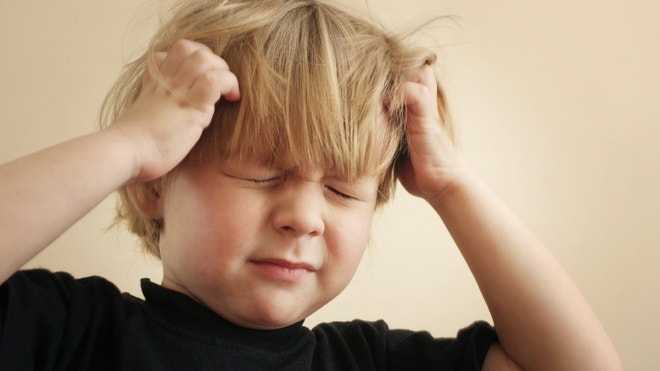
Headaches in children

This article discusses headaches in children, which is becoming more prevalent as the school year begins.

As the school year approaches and begins, many parents may start to hear their children complain about headaches.

According to Nick DeBlasio, MD, a pediatrician in Cincinnati Children's Hospital Medical Center's Pediatric Primary Care Clinic, about 10% of school-aged children and 15-27% of teens experience them from time to time.
Headaches can be triggered by a number of different things. Here are the most common causes of occasional headaches in children:
Inadequate hydration. Not drinking enough fluids is one of the biggest causes of headaches. This is especially true when the weather gets warmer and kids become more active outside and lose fluid through sweating. If this is the case, the cure might be as simple as having your child drink more water.
Diet. Does your child eat regular meals? Skipping one meal, like breakfast, can trigger a headache. It's also important to make sure that your child is eating a well-balanced diet with lots of fruits and vegetables. Too much caffeine and certain foods can cause a headache as well.
Sleep. Kids in middle and high school typically need at least 10-12 hours of sleep a night. Not sleeping enough at night can cause a headache. And getting less than 10 hours isn't enough to feel well-rested.
Stress. We all experience stress from time to time, and children and teens are no exception. If your child is under a lot of pressure from school, or experiencing big changes at home like a divorce or a big move, a headache can result.
Vision problems. If your child is unable to see what's happening at the front of the classroom, he might be straining his eyes to see far away, which can result in a headache. A vision test can give you a better understanding of whether or not your child's headaches are being caused by vision problems.
Family history. Your child is more likely to have headaches if a parent gets them as well.
If your child has a headache, try giving her water and over-the-counter ibuprofen. Follow the instructions on the package for the appropriate dosage and do not give it to your child more than three times in a week. If it persists for a few days or worsens, call your child's pediatrician.
Fortunately the majority of headaches in children are not a cause for alarm. However, there are a few instances which require a little more investigation. If your child's headaches have become more frequent or severe, if he wakes up in the morning of the middle of the night from it, or if the headache causes vomiting, it's best to have your child evaluated by your pediatrician.
He or she will perform a physical exam and decide if any tests need to be done. Brain MRIs and CT scans are rarely needed. If your pediatrician suspects a migraine, she might refer your child to a neurologist who is familiar with medications to help prevent and treat them.
And if your child or teen is suffering from chronic headaches and migraines, recent research by Cincinnati Children's found that adding cognitive behavioral therapy to treatment of pediatric migraines improves relief.
Read more here

Monday, July 07, 2014

Lifelong changes in brain caused by early life stress

A study shows that stress during early life can cause lifelong effects on the brain.

For children, stress can go a long way. A little bit provides a platform for learning, adapting and coping. But a lot of it — chronic, toxic stress like poverty, neglect and physical abuse — can have lasting negative impacts.
A team of University of Wisconsin-Madison researchers recently showed these kinds of stressors, experienced in early life, might be changing the parts of developing children’s brains responsible for learning, memory and the processing of stress and emotion. These changes may be tied to negative impacts on behavior, health, employment and even the choice of romantic partners later in life.
The study, published in the journal Biological Psychiatry, could be important for public policy leaders, economists and epidemiologists, among others, says study lead author and recent UW Ph.D. graduate Jamie Hanson.
“We haven’t really understood why things that happen when you’re 2, 3, 4 years old stay with you and have a lasting impact,” says Seth Pollak, co-leader of the study and UW-Madison professor of psychology.
Yet, early life stress has been tied before to depression, anxiety, heart disease, cancer, and a lack of educational and employment success, says Pollak, who is also director of the UW Waisman Center’s Child Emotion Research Laboratory.
“Given how costly these early stressful experiences are for society … unless we understand what part of the brain is affected, we won’t be able to tailor something to do about it,” he says.
For the study, the team recruited 128 children around age 12 who had experienced either physical abuse, neglect early in life or came from low socioeconomic status households.
Researchers conducted extensive interviews with the children and their caregivers, documenting behavioral problems and their cumulative life stress. They also took images of the children’s brains, focusing on the hippocampus and amygdala, which are involved in emotion and stress processing. They were compared to similar children from middle-class households who had not been maltreated.
Hanson and the team outlined by hand each child’s hippocampus and amygdala and calculated their volumes. Both structures are very small, especially in children (the word amygdala is Greek for almond, reflecting its size and shape in adults), and Hanson and Pollak say the automated software measurements from other studies may be prone to error.
Indeed, their hand measurements found that children who experienced any of the three types of early life stress had smaller amygdalas than children who had not. Children from low socioeconomic status households and children who had been physically abused also had smaller hippocampal volumes. Putting the same images through automated software showed no effects.
Behavioral problems and increased cumulative life stress were also linked to smaller hippocampus and amygdala volumes.
Why early life stress may lead to smaller brain structures is unknown, says Hanson, now a postdoctoral researcher at Duke University’s Laboratory for NeuroGenetics, but a smaller hippocampus is a demonstrated risk factor for negative outcomes. The amygdala is much less understood and future work will focus on the significance of these volume changes.
“For me, it’s an important reminder that as a society we need to attend to the types of experiences children are having,” Pollak says. “We are shaping the people these individuals will become.”
But the findings, Hanson and Pollak say, are just markers for neurobiological change; a display of the robustness of the human brain, the flexibility of human biology. They aren’t a crystal ball to be used to see the future.
“Just because it’s in the brain doesn’t mean it’s destiny,” says Hanson.
Read more here

Sunday, March 23, 2014

Headaches in children

This article gives a lot of information on headaches in children.

Why do children get headaches?

Headaches in children are common and usually not serious.  Causes include migraines, stress and tension headaches, trauma, sinus disease and eye problems.  Certain foods with nitrate preservatives and MSG (monosodium glutamate) can trigger headaches.  Brain tumors in children as a cause for headaches are extremely rare, and are usually associated with additional neurologic symptoms such as dizziness and lack of coordination.

How are children with headaches evaluated?

Children should have a thorough physical examination with a pediatrician.  He/she may order additional tests or refer to a neurologist.  It is helpful to keep a headache diary so that possible triggers (certain foods or activities) can be discovered.
If no obvious medical cause for the headaches is found by the pediatrician, a referral to an ophthalmologist is required to perform a complete eye exam.  The entire visual system should be examined.  This includes refractive error (the need for glasses), eye alignment, and binocularity (the ability to use both eyes together).  During this examination the pupils should be dilated.

 How do eye problems cause headaches in children?

Hyperopia (farsightedness) requires extra effort to focus clearly while reading.  This can sometimes lead to fatigue and headache.  Glasses can reduce the effort required to see clearly at near and improve the headache.
The decreased ability to pull the eyes toward each other when viewing near objects (convergence), particularly while reading, may cause headaches.  This is called convergence insufficiency, and symptoms include the doubling of images or words, blurred vision, fatigue, and headaches which worsen with prolonged reading.  Glasses are sometimes prescribed.  At home eye exercises, sometimes with the help of computer software, can help treat convergence insufficiency.  Expensive in office eye exercises are rarely indicated.
 Acute infections and inflammatory diseases of the eyes can cause headaches.  These problems are often accompanied by redness of the eye and/or eyelid and light sensitivity (photophobia).  Acute glaucoma can cause headaches, but rarely affects children.  A complete exam by an ophthalmologist can rule out these conditions.
Read more here

Thursday, March 13, 2014

Study shows that more stress means more headaches

A study shows that having more stress in your life means you get more headaches.
A new study provides evidence for what many people who experience headache have long suspected—having more stress in your life leads to more headaches. The study released today will be presented at the American Academy of Neurology's 66th Annual Meeting in Philadelphia, April 26 to May 3, 2014.
For the study, 5,159 people age 21 to 71 in the general population were surveyed about their stress levels and headaches four times a year for two years. Participants stated how many headaches they had per month and rated their stress level on a scale of zero to 100.
A total of 31 percent of the participants had tension-type headache, 14 percent had migraine, 11 percent had migraine combined with tension-type headache and for 17 percent the headache type was not classified. Those with tension-type headache rated their stress at an average of 52 out of 100. For migraine, it was 62 out of 100 and 59 for those with migraine and tension-type headache.
For each type of headache, an increase in stress was associated with an increase in the number of headaches per month. For those with tension headache, an increase of 10 points on the stress scale was associated with a 6.3-percent increase in the number of headache days per month. For migraine, the number of headache days per month went up by 4.3 percent, and 4 percent for those with migraine and tension headache. The results were adjusted to account for factors that could affect the number of headaches, such as drinking, smoking and frequent use of headache drugs.
"These results show that this is a problem for everyone who suffers from headaches and emphasize the importance of stress management approaches for people with migraine and those who treat them," said study author Sara H. Schramm, MD, of University Hospital of University Duisburg-Essen in Germany. "The results add weight to the concept that stress can be a factor contributing to the onset of headache disorders, that it accelerates the progression to chronic headache, exacerbates headache episodes, and that the headache experience itself can serve as a stressor."
Read more here

Tuesday, December 03, 2013

Children are more likely to develop PTSD if mother has PTSD

An Israeli study finds that a child is more likely to develop PTSD if his or her mother has PTSD.

A Ben-Gurion University of the Negev (BGU) study indicates that children are more likely to develop Post Traumatic Stress Disorder (PTSD) if their mother is already afflicted.
In the study published in the Journal of Depression & Anxiety, while fewer than 10 percent (8.4 percent) of the mothers were suffering from PTSD, more than a fifth (21 percent) of their children presented PTSD symptoms. Children who developed PTSD symptoms also had more psychosomatic complaints such as constipation, diarrhea and headaches.
"This study reinforces the existing body of knowledge regarding the importance of evaluating and treating parental responses in time of stress," the researchers explain.
"Parents are often the key to understanding children's responses generally and specifically in times of stress. The study also highlights the close interrelations between 'body and soul' among children and adults."
In the study, some 160 mothers of preschool children were interviewed about symptoms exhibited by their children and their own responses during Operation Cast Lead. More than 750 rockets were fired into Southern Israel from Gaza from December 2008 to January 2009.
Working with the Preschool Psychiatric Unit at Soroka University Medical Center, the BGU researchers examined the relationship between PTSD symptoms and socio-demographic, family attributes and psychosomatic symptoms among children exposed to Grad missile attacks in Beer-Sheva, Israel.
Read more here

Saturday, March 16, 2013

Exercise helps ward off stress in children

Research shows that exercise plays an important role in helping children shield off stress.

Exercise may play a key role in helping children cope with stressful situations, according to a recent study accepted for publication in The Endocrine Society's Journal of Clinical Endocrinology & Metabolism (JCEM).

When they are exposed to everyday stressors, the study found sedentary children had surges of cortisol -- a hormone linked to stress. The most active children had little or no increase in their cortisol levels in similar situations.
"The findings suggest physical activity plays a role in mental health by buffering children from the effects of daily stressors, such as public speaking," said the study's lead author, Silja Martikainen, MA, of the University of Helsinki, Finland.
The cross-sectional study monitored physical activity and cortisol levels in a birth cohort of eight-year-old children. The 252 participants wore accelerometer devices on their wrists to measure physical activity. Saliva samples were taken to measure cortisol levels. To measure reactions to stress, children were assigned arithmetic and story-telling tasks. The study is the first to find a link between physical activity and stress hormone responses in children.
The children were divided into three groups -- most active, intermediate and least active. The most active children's cortisol levels were the least reactive to stressful situations. The most active children exercised more vigorously and for longer periods of time than their counterparts.
"Clearly, there is a link between mental and physical well-being, but the nature of the connection is not well understood," Martikainen said. "These results suggest exercise promotes mental health by regulating the stress hormone response to stressors."
Read more here

Tuesday, February 19, 2013

Study: Poor Stress Responses May Lead to Obesity in Children

Children who overreact have higher levels of cortisol which may result in obesity later in life.

Children who overreact to stressors may be at risk of becoming overweight or obese, according to researchers at Penn State and Johns Hopkins University.

"Our results suggest that some children who are at risk of becoming obese can be identified by their biological response to a stressor," said Lori Francis, associate professor of biobehavioral health. "Ultimately, the goal is to help children manage stress in ways that promote health and reduce the risks associated with an over- or under-reactive stress response."
Francis and her colleagues -- Douglas Granger, director of the Center for Interdisciplinary Salivary Bioscience Research at Johns Hopkins University, and Elizabeth Susman, Jean Phillips Shibley Professor of Biobehavioral Health at Penn State -- recruited 43 children ages 5- to 9-years-old and their parents to participate in the study.
To examine the children's reactions to a stressor, the team used the Trier Social Stress Test for Children, which consists of a five-minute anticipation period followed by a 10-minute stress period. During the stress period, the children were asked to deliver a speech and perform a mathematics task. The team measured the children's responses to these stressors by comparing the cortisol content of their saliva before and after the procedure.
The researchers also measured the extent to which the children ate after saying they were not hungry using a protocol known as the Free Access Procedure. The team provided the children with lunch, asked them to indicate their hunger level and then gave them free access to generous portions of 10 snack foods, along with a variety of toys and activities. The children were told they could play or eat while the researchers were out of the room.
The results appeared online in the December 2012 issue of the journal Appetite.
The team found that, on average, the children consumed 250 kilocalories of the snack foods during the Free Access Procedure, with some consuming small amounts (20 kilocalories) and others consuming large amounts (700 kilocalories).
"We found that older kids, ages 8 to 11, who exhibited greater cortisol release over the course of the procedure had significantly higher body-mass indices [BMI] and consumed significantly more calories in the absence of hunger than kids whose cortisol levels rose only slightly in response to the stressor," Francis said. "We also found that kids whose cortisol levels stayed high -- in other words, they had low recovery -- had the highest BMIs and consumed the greatest number of calories in the absence of hunger."
According to Francis, the study suggests that children who have poor responses to stressors already are or are at risk of becoming overweight or obese. In her future work, she plans to examine whether children who live in chronically stressful environments are more susceptible to eating in the absence of hunger and, thus, becoming overweight or obese.
"It is possible that such factors as living in poverty, in violent environments, or in homes where food is not always available may increase eating in the absence of hunger and, therefore, increase children's risk of becoming obese," she said.
Read more here