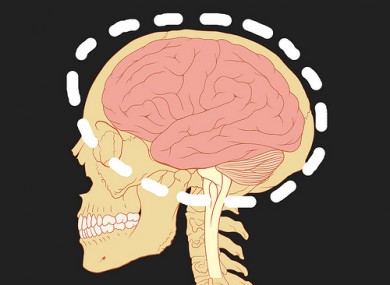
- NEW: Fellow rapper Drake and other friends set up vigil outside his room
- "I'm good everybody," Lil Wayne writes on Twitter
- Lil Wayne suffers a seizure and "is recovering," his record label's publicist says
- Lil Wayne is a Grammy-winning and multiplatinum selling artist
Information, News & Discussion about Infant Pediatric & Adolescent Neurology & Sleep Disorders. Science Diagnostics Symptoms Treatment. Topics include: Seizures Epilepsy Spasticity Developmental Disorders Cerebral Palsy Headaches Tics Concussion Brain Injury Neurobehavioral Disorders ADHD Autism Serving Texas Children's Neurology, Epilepsy, Developmental & Sleep Problems in The Houston Area and The San Antonio / Central & South Texas Areas
Saturday, March 16, 2013
Rapper Lil Wayne suffers seizure
Tuesday, September 04, 2012
Detecting Epilepsy in Newborns
This article discusses signs that may detect epilepsy in newborns other than seizures.
Thursday, August 30, 2012
Kleefstra Syndrome - Meetup In October in 2012
What is Kleefstra Syndrome
- Last Updated on Thursday, 31 May 2012 12:44
- 9q34.3 deletion
- 9qSTDS
- CHOMS
- 9q34.3 microdeletion
- 9q34.3 terminal deletion syndrome
Diagnosis
Diagnosis
- Last Updated on Tuesday, 01 May 2012 12:56
Wednesday, August 29, 2012
New Scan May Cause A ‘Paradigm Shift’ in Epilepsy Research
A new non-invasive scan taken directly after a seizure may change the way epilepsy is researched.
An innovative new study merges engineering and clinical expertise to develop a revolutionary method to diagnose and treat epilepsy patients.
Researchers from the University of Minnesota and the Mayo Clinic believe a new type of non-invasive brain scan — taken immediately after a seizure — will provide advanced insight into possible causes and treatments for epilepsy patients.
The new findings could benefit millions of people who are unable to control their epilepsy with medication.
The research is published online in the journal Brain.
Researchers say the study resulted in several significant findings:
- Important data about brain function can be gathered through non-invasive methods, not only during a seizure, but immediately after a seizure;
- The frontal lobe of the brain is most involved in severe seizures;
- Seizures in the temporal lobe are most common among adults. The new technique used in the study will help determine the side of the brain where the seizures originate.
“This is the first-ever study where new non-invasive methods were used to study patients after a seizure instead of during a seizure,” said Dr. Bin He, a biomedical engineering professor in the University of Minnesota’s College of Science and Engineering and senior author of the study. “It’s really a paradigm shift for research in epilepsy.”
Epilepsy affects nearly 3 million Americans and 50 million people worldwide. Although medications and other treatments help many people of all ages who live with epilepsy, about 1 million people in the U.S. and 17 million people worldwide continue to have seizures that can severely limit their lives.
Medical researchers have always faced the challenge of determining the part of the brain responsible for the seizures. Learning the specific site of the seizure helps physicians determine the best possible treatment.
In the past, most research has focused on studying patients while they were having a seizure, or what is technically known as the “ictal” phase of a seizure. Some of these studies involved invasive methods such as surgery to collect data.
In the new study, researchers used a novel approach by studying the brains of 28 patients immediately after seizures, or what is technically know as the “postictal” phase of a seizure.
They used a specialized type of non-invasive EEG with 76 electrodes attached to the scalp for gathering data in contrast to most previous research that used 32 electrodes. The researchers used specialized imaging technology to gather data about the patient.
The findings may lead to innovative means of locating the brain regions responsible for seizures in individual patients using non-invasive strategies.
Read more here
Tuesday, August 28, 2012
The Best Ways To Integrate Special Needs Students
I found this report on NPR. I hear parents talk about special education issues every day. Accommodations and modifications are a difficult process for all. Children with seizures, autism, cerebral palsy, ADHD and other neurodevelopmental problems are entitled to education. Parents expect a full range of services. In general, schools have motivated and highly professional personnel and accurate services. At the same time, schools have limited budgets for personnel, occupational, physical and speech therapy. Its a difficult situation. A physician can help. JR
The Best Ways To Integrate Special Needs Students
Saturday, August 25, 2012
Benefits of hypothermia for infants continue through early childhood
NIH study shows increased survival from treatment for oxygen deficiency at birth. I have set up these protocols. The data is clear that The treatment works and and I have seen remarkable outcomes. The protocols need to involve neurology because of the high risk of subtle seizures and the need for cervical examinations by expert. One needs to ask if this is a standard of care in 2012. JR
Benefits of hypothermia for infants continue through early childhood
Thursday, August 23, 2012
How to get kids' sleep schedules back on track for school
This article offers great tips for getting kids back on a regular sleep schedule for school. There is also a great slideshow on the site itself.
- Get your child or teen up at his regular school time this weekend. Keep them up all day and do not allow napping until the regular bedtime.
- Get them outside early in the day to expose them to natural bright light.
- Do not allow any gizmos that make light after sundown.
- Do not allow caffeine.
- Consistency is key. Don't change schedules on the weekend.
- Please understand that sometimes this is a difficult problem to treat and medical intervention may be required. A pediatric sleep specialist can help.
Thursday, August 16, 2012
New Brain Pacemaker that can Detect Epilepsy and Treat Seizures in Rats
A brain pacemaker has been invented that can detect epilepsy in rats and even help treat their seizures.
Read more here
Sunday, July 29, 2012
New Classification of Genes May Help Prevent Seizures
IRISH RESEARCHERS HAVE identified a new gene class which they say could potentially provide new treatment that would prevent epileptic seizures.
Researchers at the Royal College of Surgeons in Ireland, clinicians at Beaumount Hospital, and experts from Madrid’s Cajal Institute say that the new class of gene, called MicroRNA, is instrumental in the control of protein production inside cells. They found much higher levels of one particular type of this gene (microRNA-13) in the part of the brain that causes epileptic seizures.
The journal Nature Medicine has published the team’s paper, which outlines how scientists used a new type of drug-like molecule called antagomir which seems to lock onto the microRNA-13 gene and remove it from the brain cell – and, by doing so, prevent epileptic seizures.
“We have been looking to find what goes wrong inside brain cells to trigger epilepsy. Our research has discovered a completely new gene linked to epilepsy and it shows how we can target this gene using drug-like molecules to reduce the brain’s susceptibility to seizures and the frequency in which they occur,” said the senior author of the paper Prof DavidC Henshall,of the Department of Physiology and Medical Physics at the RCSI.
Approximately 37,000 people in Ireland are affected by epilepsy and, of those, one in three continue to experience seizures despite being prescribed medication.
Read more here
Animals can also have sleep disorders
Sometimes people ask if animals dream or have sleep disorders like them. The answer is yes! Just watch a sleeping dog for a few minutes and you will see their eyes moving from side to side, just as human's do during REM sleep.
Dogs and cats have many of the same sleep disorders as humans including sleep terrors, nocturnal seizures, narcolepsy, cataplexy and limb movements.1
Narcolepsy is known to occur more frequently in certain breeds of dogs, including Doberman pinschers, poodles, Labrador retrievers, beagles and dachshunds. Horses can also be affected. This disorder is usually inherited from the parents. Animals with narcolepsy also tend to have cataplexy when they are excited, for example when the feeding bowl arrives. It is treated much as it is in humans, with stimulants and anti-depressants.
It appears that most mammals and birds have REM sleep. It is questionable as to whether reptiles have REM sleep based on one study with turtles.2 Brain structures are different than in mammals and birds, so it is difficult to say absolutely.
You may be wondering, which mammal has the most REM sleep per day. The platypus ranks number first, getting about eight hours of REM sleep.3 The ferret, armadillo and possum also have high amounts of REM sleep daily. The giraffe and horse have the least at about 0.5 hours.
I hope you've found this information fun and interesting. The next time a patient complains of sleep difficulties, tell them they are not alone. They have only to look around their home to see how sleep affects their pets.
Sharon M. O'Brien, MPAS, PA-C, works at Presbyterian Sleep Health in Charlotte, N.C. Her main interest is helping patients understand the importance of sleep hygiene and the impact of sleep on health.
- Schenck, Carlos. Sleep: A Groundbreaking Guide to the Mysteries, the Problems, and the Solutions. New York: Penguin Group. 2007. pp. 258-263.
- Zepelin, Harold. Siegel, Jerome. Tobler, Irene. Chapter 8. "Mammalian Sleep". Principles and Practice of Sleep Medicine Fourth Edition Philadelphia: Elsevier Saunders, 2005. pp. 91-100.
- Siegel, Jerome. Chapter 10. "REM Sleep". Principles and Practice of Sleep Medicine Fourth EditionPhiladelphia: Elsevier Saunders, 2005. pp. 120-135.
References
New Technology: Tiny Microchip that can Detect an Epileptic Seizure
A new microchip is being developed that could result in epileptic patients staying in the hospital less. It would be especially useful for children.
A hi-tech medical patch being developed in Abu Dhabi should soon help epileptics avoid long stays in hospital.
The 50fil adhesive microchip, the work of a researcher at the Masdar Institute, monitors epileptic seizures.
It will allow doctors to keep a close eye on patients for up to two weeks without the need for them to stay in hospital attached to a cumbersome and uncomfortable electroencephalograph (EEG) machine.
It would be applied to the forehead and is expected to be smaller in size than three grains of rice.
Currently, doctors often have to rely on patients' own descriptions of their seizures. But their recollections of events under such circumstances are notoriously unreliable.
The chip, which detects rapid eye movements - the early sign of an epileptic seizure - will give doctors a far more accurate picture of what happened, from the length of an attack to its severity.
The patch is the work of Dr Jerald Yoo, a circuit designer at the Masdar Institute, jointly funded by the Massachusetts Institute of Technology in the United States.
About 50 million people worldwide suffer from epilepsy. While no exact figure exists for the UAE, it is believed to be about 2 to 3 per cent of the population - more than 100,000 people.
Dr Yoo said the patch would be especially useful for children or babies, who cannot express what they have suffered.
The chip can also record seizures while asleep, of which patients might not even be aware.
"Doctors need to see raw information and data with their own eyes so they can make the right decisions, diagnoses and treatments.
"You need to learn the patient's seizure traits as they usually have one or two, which allows a more thorough diagnosis and treatment."
The Taiwan Semiconductor Manufacturing Company and the Abu Dhabi-owned Mubadala - which owns most of the chipmaker, Global Foundries - are looking to start making the chip by the end of this year.
Dr Sarmad Al Shamma, a neurologist at the Neuro Spinal Hospital in Dubai, said home monitoring would be good for doctors and patients alike.
"In addition to the discomfort of being in a hospital for more than 24 hours, there is a reduced possibility of an attack in the hospital because patients are lying in bed the entire time," he said.
"This often means they have to stay in the hospital for an even longer time. By monitoring them outside the hospital, we can learn what is triggering the attacks."
Epileptic seizures can be triggered in different patients by lack of sleep, stress, low blood sugar and flashing lights.
Dr Taoufik Al Sadi, the head of neurology at Sheikh Khalifa Medical City, said the chip could help fill "gaps in knowledge" about the condition.
"If this proves to be scientifically solid it would be an excellent addition to better understand the frequency and severity of the seizures, their duration," he said.
"It will allow better options for treatment based on solid, objective data, rather than relying on a patient's history and recollection."
He added that the chip could help reduce the stigma associated with epilepsy.
"Many sufferers feel deprived from basic privileges, such as driving a car and in some cases, going to school," said Dr Al Sadi.
"They find it difficult to be in social situations because they never know when they're going to have the next attack.
"But what they need to know is that after six months of treatment they can drive and resume their normal life."
Read more here
Tuesday, July 24, 2012
Pen-like tool might effectively stop seizures
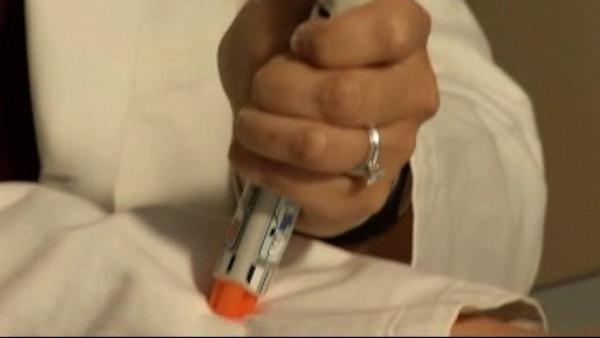
New pen, similar to an epi-pen, is being developed to help stop seizures. This could be a huge advancement for emergency medical services when responding to calls about seizures.
Read more here