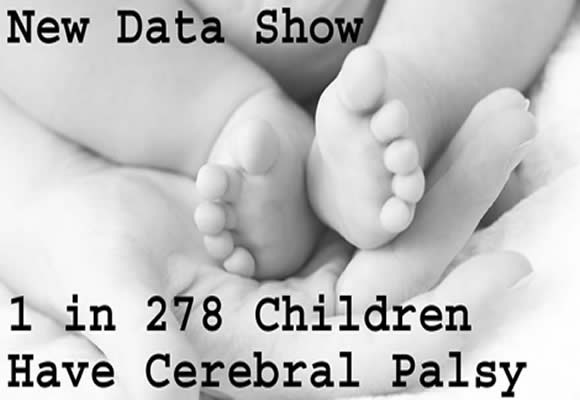
Showing posts with label cerebral palsy specialist. Show all posts

Sunday, November 10, 2013

ESSENTIAL article for anyone with Cerebral Palsy - A Systematic Review of Treatments

Developmental Medicine & Child Neurology


 As a longtime member American Academy of Cerebral Palsy and  Developmental  Medicine with 13 years devoted to functional treatment of children and adults with CP,  I am very excited to see this systematic review of cerebral palsy treatments.   Of the recorded treatments, only 16% met the criteria  for the green light recommendations.  Only 24% of the listed interventions are proven to be effective.   - JR


A systematic review of interventions 

for children with cerebral palsy - 

state of the evidence.


Green Light - GO-  interventions for Cerebral Palsy

In the papers retrieved, the following CP interventions were shown to be effective: 
(1) botulinum toxin (BoNT), diazepam, and selective dorsal rhizotomy for reducing muscle spasticity; 
(2) casting for improving and maintaining ankle range of motion; 
(3) hip surveillance for maintaining hip joint integrity; 
(4) constraint-induced movement therapy, bimanual training, context-focused therapy, goal-directed/functional training, occupational therapy following BoNT, and home programmes for improving motor activity performance and/or self-care; 
(5) fitness training for improving fitness; 
(6) bisphosphonates for improving bone density; 
(7) pressure care for reducing the risk of pressure ulcers; and 
(8) anticonvulsants for managing seizures (despite no CP-specific anticonvulsant evidence existing, the panel rated the strength of the recommendation as strong plus (do it) because good-quality evidence supports anticonvulsants in non-CP populations,and serious harm, even death, can arise from no treatment).


Friday, November 01, 2013

Static Encephalopathy or Refractory Epilepsy? High rates of secondary mitochondrial dysfunction

What a great poster! Children with chronic static encephalopathy and refractory epilepsy have secondary mitochondrial dysfunction.

I think this may have implications for illness management.

JR


Friday, December 28, 2012

Outcomes for Children with CP - Early Identification and Comprehensive Management are Important!


This important article starts with great observations that a) early diagnosis is beneficial and b) prognostic information is importance. My problem with the article is that all types of CP are blended together.  
See the bottom for prognostic information. JR


"Parents believe professionals withhold prognostic information in an attempt to protect them from bad news. Research, however, suggests that the absence of prognostic information makes it more difficult, not easier, for parents to cope.

Dissatisfaction with delayed receipt of diagnostic information has been linked to higher rates of parental depression. In qualitative studies, parents advise professionals that they want and need prognostic information to assist them with planning services.

In addition, parents recommend that medical information be presented in “parent-friendly” language to facilitate their understanding and acceptance of information."


Clinical prognostic messages from a systematic review on cerebral palsy.

Source

MSc (Hons), BAppSc (OT), Head of Research, Cerebral Palsy Alliance Research Institute, PO Box 184, Brookvale NSW 2100, Australia. inovak@cerebralpalsy.org.au.

Abstract

OBJECTIVE:

To summarize evidence on the rates of co-occurring impairments, diseases, and functional limitations with cerebral palsy into succinct clinical messages.

METHODS:

A search was conducted of the databases PubMed, Medline, CINAHL, and PsycINFO, and the results were supplemented with hand searches. Two independent reviewers determined whether retrieved abstracts met the following inclusion criteria: human subjects; >90% were children or adults with cerebral palsy; published after 1999; and population-based data. Articles were appraised, analyzing design, participants, level of evidence, rates of impairments, and functional implications. Methodologic quality was rated by using a standardized checklist.

RESULTS:

A total of 1366 papers were identified in the search; 82 were appraised and 30 were included in the meta-analyses. High-level evidence existed, as rated on the Oxford 2011 Levels of Evidence: 97% of prevalence studies were level 1. The data were of a moderate to high quality grade (with the exception of sleep disorders), allowing plain English clinical messages to be developed.

CONCLUSIONS:

Among children with cerebral palsy, 3 in 4 were in pain; 1 in 2 had an intellectual disability; 1 in 3 could not walk; 1 in 3 had a hip displacement; 1 in 4 could not talk; 1 in 4 had epilepsy; 1 in 4 had a behavior disorder; 1 in 4 had bladder control problems; 1 in 5 had a sleep disorder; 1 in 5 dribbled; 1 in 10 were blind; 1 in 15 were tube-fed; and 1 in 25 were deaf.
PMID:
 
23045562
 
[PubMed - in process]
 2012 Nov;130(5):e1285-312. doi: 10.1542/peds.2012-0924. Epub 2012 Oct 8.

Clinical Prognostic Messages 

From a Systematic Review on 

Cerebral Palsy


TABLE 3
Clinical Messages

ProblemHow Common Is This Problem?Who Is at Risk?Long-term Implications?Clinical Recommendations
Behavior1 in 4 children with cerebral palsy have a behavior disorder (moderate-quality GRADE)Children with cerebral palsy and an ID are more likely to have behavioral problems (high-quality GRADE)UnknownThorough assessment of behavior is recommended. Also a pain assessment is essential in the presence of behavioral problems, even for children with mild physical impairments.
The rate of abnormal behavior in children with cerebral palsy is 2 to 4 times higher than the population (moderate-quality GRADE)Children with cerebral palsy and epilepsy are more likely to have behavioral problems; these children are also more likely to have an intellectual impairment (moderate-quality GRADE)Pain control may remediate or minimize the behavioral problem.
Children with cerebral palsy and severe pain are more likely to have behavioral problems (high-quality GRADE)Standard psychometric IQ assessment is also recommended in the presence of behavioral problems to enable the family to understand the prognosis of the behavioral problem.
Children with cerebral palsy and milder physical disability are more likely to have behavioral problems than children with severe physical disability (high-quality GRADE)
Bladder and bowel control1 in 4 children with cerebral palsy do not have bladder control (moderate-quality GRADE)The risk of bladder and bowel control problems increases with severity of physical disability (moderate-quality GRADE)UnknownMedical investigations are warranted as abnormal anatomic findings are common
The rate of bladder control problems in children with cerebral palsy <4 2="2" 3="3" grade="grade" higher="higher" is="is" low-quality="low-quality" old="old" population="population" td="td" than="than" the="the" times="times" to="to" years="years">Children with cerebral palsy who are unable to walk or have an ID are most at risk for bladder and bowel control problems (moderate-quality GRADE)Children with cerebral palsy should be offered standard toilet training but over a longer period of time
1 in 3 to 4 children with cerebral palsy have constipation (low-quality GRADE)Prescription of incontinence aides will be required for 1 in 3-4 and this will be for longer periods of time that children without physical disabilities
Dribbling1 in 5 children with cerebral palsy dribble (moderate-quality GRADE)Children with severe physical disability are more likely to dribble (moderate-quality GRADE)UnknownSocial stigma is a major problem arising from dribbling and effective treatments such as Botulinum toxin A or surgical interventions should be explored.
Eating1 in 15 children with cerebral palsy are tube-fed (moderate-quality GRADE)Children with a history of poor sucking during infancy are more likely to have feeding problems (moderate-quality GRADE)Eating skills remain stable in adulthood (high-quality GRADE)Infants with cerebral palsy and poor sucking should have their eating comprehensively monitored.
Children with cerebral palsy are 3 times more likely to have feeding problems at 6 months of age (moderate-quality GRADE)Children with severe physical disability are more likely to need someone to feed them (moderate-quality GRADE) and are more likely to need tube feeding (moderate-quality GRADE).Swallowing safety should be comprehensively assessed if concerns are reported.
Children who are nonverbal are more likely to have difficulty feeding (high-quality GRADE)Weight should also be measured regularly as those with more severe physical disability have higher risk for malnutrition.
Epilepsy1 in 4 children with cerebral palsy have active epilepsy (high-quality GRADE)The risk of epilepsy with cerebral palsy increases with severity of physical disability (high-quality GRADE)Adults with cerebral palsy and epilepsy are less likely to work (high-quality GRADE)Anti-epileptic medications are usually effective for managing seizures and are considered standard practice for managing epilepsy in children with cerebral palsy
1 in 3 children with cerebral palsy have had epilepsy at some time (high-quality GRADE)Children with both sides of the body affected are more likely to have epilepsy (high-quality GRADE)Children with cerebral palsy are less likely to become seizure-free (low-quality GRADE)
Children with cerebral palsy and an ID are more likely to have epilepsy (high-quality GRADE)
Hearing1 in 25 children with cerebral palsy have severe hearing impairment or are deaf (high-quality GRADE)Children with more severe physical disability are more likely to have a hearing impairment (moderate-quality GRADE)UnknownEarly screening, assessment, and accommodation for hearing impairment is recommended
Hips and spine1 in 3 children with cerebral palsy have hip displacement (high-quality GRADE)Children with both sides of the body affected and who cannot walk are at the greatest risk of hip problems (high-quality GRADE) and scoliosis (low-quality GRADE)Long-term active hip surveillance reduces the likelihood of progression from hip displacement to hip dislocation (moderate-quality GRADE)6- to 12-month hip surveillance is recommended and is effective for ensuring access to early treatment. Radiograph and clinical assessment should commence very early. For those who receive hip surveillance the rate of salvage orthopedic surgery is lower
1 in 10 children with cerebral palsy have hip dislocation without hip surveillance (high- quality GRADE)The risk of hip abnormalities with cerebral palsy increases with severity of physical disability (high-quality GRADE)
The risk of associated spinal deformity increases with severity of physical disability (low-quality GRADE)
Intellect1 in 2 children with cerebral palsy have an ID (moderate-quality GRADE)Children with more severe physical disability are more likely to have an intellectual impairment (moderate-quality GRADE)UnknownFormal assessment and diagnosis of an ID is an important prognostic indicator for walking, bladder control, school performance, and likelihood of independent living
1 in 4 children with cerebral palsy have a severe ID (moderate-quality GRADE)Children with dyskinetic cerebral palsy who have an ID are more likely to have a severe ID than those with spastic cerebral palsy (moderate-quality GRADE)If multiple impairments exist, psychometric screening of intelligence is highly recommended for intervention and school planning
Pain3 in 4 children with cerebral palsy are in pain (moderate-quality GRADE)Children and adults with cerebral palsy regardless of level of disability are at risk for pain (high-quality GRADE)Pain is linked to higher rates of behavioral problems and lower participation (high-quality GRADE)Parents and children report levels of pain differently and therefore the child’s perceptions should always be sought
For those who can walk, neck, back, and feet are high-risk pain sites (low-quality GRADE)Pain increases with age (moderate-quality GRADE)Investigate a wide range of pain origins (eg, dental, gastrointestinal, muscular, neuropathic, rheumatology, skeletal, tonal)
Children and adults with contracture are at higher risk of developing pain (moderate-quality GRADE)Comprehensive pain management should be instigated to minimize the likelihood of secondary behavioral problems from developing
Sleeping1 in 5 children with cerebral palsy have a sleep disorder (low-quality GRADE)Children with cerebral palsy and active epilepsy are most at risk for sleep disorders (low-quality GRADE)UnknownThrough and specialist assessment of sleep problems are recommended
The rate of sleep disorders in children with cerebral palsy is 5 times higher than the population (low-quality GRADE)Children with spastic quadriplegia or dyskinesia or a severe visual impairment are more likely to have difficulty initiating and maintaining sleep (low-quality GRADE)Early treatment of sleep problems (both medical and behavioral) is advisable before secondary academic and behavioral problems emerge or are established
Talking1 in 4 children with cerebral palsy cannot talk (high-quality GRADE)Children with more severe physical disability/nonambulatory are more likely to have a speech impairment (high-quality GRADE)UnknownEarly assessment and recommendations of augmentative and alternative communication options for speech impairment is recommended
1 in 3 children with cerebral palsy have some speech impairment (high-quality GRADE)Children with dyskinesia are more likely to have speech problems (high-quality GRADE)
Walking1 in 3 children with cerebral palsy cannot walk (high-quality GRADE)Children with cerebral palsy who have 4 limbs affected and/or ID and/or epilepsy and/or a vision impairment have a higher risk of being unable to walk (high-quality GRADE)Children who walk using aids or cannot walk lose walking function during adolescence (moderate-quality GRADE)Children who walk using aides and their families should be emotionally prepared for potential loss of motor function in adolescence
1 in 6 children with cerebral palsy walk using aides (high-quality GRADE)At age 2 years, children with cerebral palsy who are unable to roll, sit, or pull to stand have a very high risk of being unable to walk (high-quality GRADE)Ability to walk further declines during later adulthood. (high-quality GRADE)Children who walk using aides require mobility assessments at the commencement of adolescence to enable prescription of appropriate mobility devices to accommodate declining motor function
1 in 2 children with cerebral palsy walk independently (high-quality GRADE)A child’s walking ability at age 12 years is predictive of their walking ability as an adult. (high-quality GRADE)
Vision1 in 10 children with cerebral palsy have a severe visual impairment or are blind (moderate-quality GRADE)Children with severe physical disability are more likely to have a visual impairment (high-quality GRADE). Among those with severe physical disability, severe visual impairment occurs more frequently with spasticity than dyskinesia (high-quality GRADE)UnknownEarly screening, assessment, and treatment of vision impairment is recommended
1 in 4 children with cerebral palsy have a vision impairment (moderate-quality GRADE)Children born prematurely with cerebral palsy are more likely than children without cerebral palsy to have visual impairments (high-quality GRADE)
  • GRADE system (Guyatt et al [2008])21 was as follows: high-quality: further research is very unlikely to change our confidence in the estimate of effect; moderate-quality: further research is likely to have an important impact on our confidence in the estimate of effect and may change the estimate; low-quality: further research is very likely to have an important impact on our confidence in the estimate of effect and is likely to change the estimate; and very-low-quality: any estimate of effect is very uncertain.

Wednesday, November 07, 2012

Botox Used to Help Cerebral Palsy Patients

This article discusses how botox is used to help relax muscles in cerebral palsy patients.


Many people associate Botox with wrinkle treatment, but the medicine is also used to treat migraines and neck pain.
Doctors at East Tennessee Children's Hospital Rehabilitation Center have used it to help children with cerebral palsy.
Dr. Nadine Trainer has been giving Brad Gandy injections in his legs. The Madisonville teen has cerebral palsy and started getting Botox injections when he was only three years old.
"It's extremely helpful," Brad said. "When I was younger I used to cry a lot more because I wasn't ready for it, I guess. But now as you get older, you start to think of what this really does for you."

Botox makes Brad more comfortable in his wheelchair.
"It has been the very best thing for us," Brad's mother, Sandra, said. "His legs would be extremely tight and then after he would have the shot, after about two or three weeks, then they were much more relaxed."

Unlike cosmetic use which typically lasts a few months, Botox therapy in patients with spastic muscles can last much longer between injections.

"If I change a muscle that's preventing the arm to move, for example, and now that muscle is loose, I don't necessarily have to re-inject them in three months, or four months, or a year later," Dr. Trainer said. "You have to know what you're injecting, why you're injecting it, and what your goals are."

Not everyone with stiff or spastic muscles is a candidate for Botox therapy. But the treatment has worked well for David Nuyen, another cerebral palsy patient who receives injections in his arms.
Dr. Trainer has been using Botox on patients for about 15 years. She likes the results and said there are no serious side effects.
Read more here

Saturday, October 27, 2012

Study: Preemies from Low-Income Families at High Risk for Dangerous Brain Bleeds

A study from Johns Hopkins shows that premies who are born to a low socioeconomic family are more likely to have dangerous hemorrhages.

While interesting, I never know how to apply this data in the office, the NICU or my cerebral palsy clinics.... JR

Babies born prematurely to low-income parents have a disproportionately high risk for developing dangerous brain bleeds that require multiple surgeries and extensive follow-up, according to a small Johns Hopkins Children's Center study.

The findings -- published online Sept. 28 in the journal Pediatric Neurosurgery and based on an analysis of 38 patients referred to Johns Hopkins for treatment of brain hemorrhages related to premature birth -- offer a sobering reminder of the role socio-economic factors can play in health outcomes, the researchers say.
The link between poverty and premature birth has been well-documented, the investigators say, but the new findings go a step further and focus on the consequences of one particularly dire and fairly common complication of prematurity -- brain hemorrhages.
"Our study shows just how detrimental and far-reaching the effects of prematurity can be, medically and otherwise, highlighting the critical need to better identify high-risk pregnancies and reduce the number of premature births," says Edward Ahn, M.D., pediatric neurosurgeon and senior author on the research.
"Brain hemorrhages can have a lifelong impact on a child's neurological and cognitive development, but also create a financial burden on the families, many of whom in our study were already economically challenged," Ahn adds.
The premature brain's blood vessels are highly vulnerable to rapid changes in blood and brain pressure that occur around birth. While some brain bleeds are small and contained within the blood vessel, others can spread further and significantly damage the brain, particularly if not diagnosed and treated promptly. Serious hemorrhages require surgery, intensive follow-up and, often, long-term care to deal with the neurological and developmental after-effects of the condition.
The study tracked 38 babies treated at Hopkins Children's between 2007 and 2010 for complications of brain hemorrhages they had suffered during preterm birth. Most infants in the study (65 percent) were from low-income families and received public health insurance(63 percent). Household income is not part of a standard medical record, but the researchers used zip code and Medicaid status as proxies for income. Medicaid is the public health insurance program for low-income children.
In addition to the higher risk for brain bleeds, the study showed babies from lower-income homes and those with public health insurance had fewer scheduled follow-up appointments and more emergency room visits, compared with babies with private health insurance and with those from higher income homes. The researchers note the differences were clear, even though they didn't reach statistical significance due to the small number of patients in the study.
"If a family foregoes a scheduled follow-up and instead ends up in the ER with a serious, yet likely preventable complication, the medical and financial consequences can be far worse not only for the family but for the health care system as a whole because ER care is more expensive than routine check-ups," Ahn says.
The investigators said their findings need to be replicated on a wider scale in order to further tease out the reasons behind the disproportionate risk.
Read more here

Sunday, September 30, 2012

The value of a disabled child


What is the life of a physically disabled child worth? It’s a cruel, but important question for the devoted people who work in pediatric rehabilitation as well as Treasury officials who want to cut costs and medical ethicists who think about what is morally right.
The annual financial cost of taking care of an Israeli child with cerebral palsy, muscular dystrophy or other disabilities is around $50,000. The US Environmental Protection Agency calculated that the “statistical value” of a coal miner, calculated by how much the government would invest in preventing him from dying in a work accident, is $6.1 million. Governments are willing to spend $129,000 a year to keep a kidney-failure patient alive using dialysis to clean their blood.
According to Dr. Eliezer Be’eri, deputy director-general of Jerusalem’s Alyn Hospital, “taking care of a child in our pediatric rehabilitation hospital is worthwhile for society. But I can’t look at people as numbers. It’s easy to lose our humanity. Money is not the only thing to be considered. Our humanity is at risk. What are all our resources worth if we are not humane?”
“A brain-damaged child will not contribute to society, but I must take care of him because he’s a human being. I have to do it not because society might one day benefit from him. Even though economic benefits are important, expenses mustn’t determine if it’s ‘worthwhile’ to treat such a child. We look at their humanity, not their usefulness. It strengthens our own humanity.”
Be’eri was one of the speakers at Alyn’s First Conference on Pediatric Rehabilitation, which was held recently at Jerusalem’s Crowne Plaza Hotel and special workshop sessions at the hospital in the capital’s Kiryat Hayovel neighborhood.
The multidisciplinary medical institution, the only one of its kind in Israel and one of the few in the world, is directed by Dr. Maurit Beeri (no relation to Eliezer) and treats hundreds of children and teenagers as inpatients and outpatients. It has both regular rehabilitation and respiratory rehabilitation departments and a medical-educational rehab department for children as young as six months old. A rehabilitative day care center is available for infants and toddlers up to the age of three years, while kindergartens and a school serve children up to age...