Showing posts with label phone. Show all posts

Wednesday, January 27, 2016

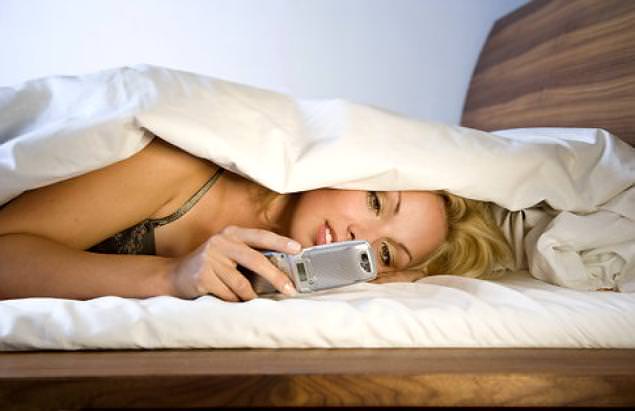
Study: Texting negatively affects teen's sleep and academic performance

A study shows that teenagers who text at night hurts their sleep and academic performance.

Can't stop texting? If you're a teenager, it may be to blame for falling grades and increased yawning in school, according to a new Rutgers study.
The study, published in the Journal of Child Neurology, is the first of its kind to link nighttime instant messaging habits of American teenagers to sleep health and school performance.
"We need to be aware that teenagers are using electronic devices excessively and have a unique physiology," says study author Xue Ming, professor of neuroscience and neurology at Rutgers New Jersey Medical School. "They tend to go to sleep late and get up late. When we go against that natural rhythm, students become less efficient."
The American Academy of Pediatrics reports that media use among children of all ages is increasing exponentially; studies have found that children ages 8 to 18 use electronic devices approximately seven-and-a-half hours daily.
Ming's research is part of a small but growing body of evidence on the negative effects of electronics on sleep and school performance. But few studies, Ming says, have focused specifically on instant messaging.
"During the last few years I have noticed an increased use of smartphones by my patients with sleep problems," Ming says. "I wanted to isolate how messaging alone - especially after the lights are out - contributes to sleep-related problems and academic performance."
To conduct her study, Ming distributed surveys to three New Jersey high schools - a suburban and an urban public school and a private school - and evaluated the 1,537 responses contrasting grades, sexes, messaging duration and whether the texting occurred before or after lights out.
She found that students who turned off their devices or who messaged for less than 30 minutes after lights out performed significantly better in school than those who messaged for more than 30 minutes after lights out.
Students who texted longer in the dark also slept fewer hours and were sleepier during the day than those who stopped messaging when they went to bed. Texting before lights out did not affect academic performance, the study found.
Although females reported more messaging overall and more daytime sleepiness, they had better academic performance than males. "I attribute this to the fact that the girls texted primarily before turning off the light," Ming says.
The effects of "blue light" emitted from smartphones and tablets are intensified when viewed in a dark room, Ming says. This short wavelength light can have a strong impact on daytime sleepiness symptoms since it can delay melatonin release, making it more difficult to fall asleep - even when seen through closed eyelids.
"When we turn the lights off, it should be to make a gradual transition from wakefulness to sleep," Ming says. "If a person keeps getting text messages with alerts and light emission, that also can disrupt his circadian rhythm. Rapid Eye Movement sleep is the period during sleep most important to learning, memory consolidation and social adjustment in adolescents. When falling asleep is delayed but rising time is not, REM sleep will be cut short, which can affect learning and memory."
Ming notes some benefits to early-evening media use, such as facilitating collaboration for school projects, providing resources for tutoring, increasing school readiness and possibly offering emotional support systems.
She suggests that educators recognize the sleep needs of teenagers and incorporate sleep education in their curriculum. "Sleep is not a luxury; it's a biological necessity. Adolescents are not receiving the optimal amount of sleep; they should be getting 8-and-a-half hours a night," says Ming. "Sleep deprivation is a strong argument in favor of later start times for high schools - like 9 a.m."
Read more here

Wednesday, November 04, 2015

Health consequences of texting in bed

A study indicates that texting in bed can lead to losing sleep in addition to poor school performance in teens.

Many American teens text in bed, leading to lost sleep, daytime drowsiness and poorer school performance, a new study says.
Researchers from New Jersey looked at nearly 3,200 middle and high school students in the state. They found that nearly 62 percent of the kids used their smartphones in some capacity after bedtime; nearly 57 percent texted, tweeted or messaged in bed; and nearly 21 percent awoke to texts.
"Our study confirms that many teenagers are texting late at night when they should be sleeping. This behavior is more common among older teenagers, especially those in high school, and among girls," said study co-author Vincent DeBari. He is director of research at the Seton Hall University School of Health and Medical Sciences, in South Orange.
"One of the most worrisome aspects of our findings is that in addition to affecting the quality and amount of sleep teenagers are getting, bedtime smartphone use seems to be having a negative impact on their level of alertness during the day and on their grades in school," DeBari said in a university news release.
His study co-author, Dr. Peter Polos, added that teens whose sleep is disrupted by incoming texts may feel compelled to respond to those texts immediately. These exchanges can go on for hours.
"This leads to excessive stimulation at night. Light from electronic devices can suppress the secretion of melatonin, a hormone that promotes sleep. All of these factors combine to make sleep difficult in the face of excessive smartphone use at night," said Polos, a member of the sleep medicine division of the JFK Neuroscience Institute in Edison, N.J.
The researchers also found that smartphone use just before or after bedtime may worsen teens' tendency to go to bed much later and sleep until late morning. This behavior has been linked with depression, anxiety and attention-deficit hyperactivity disorder, the study authors said.
"Repeatedly, studies have shown that today's adolescent students are seriously sleep-deprived, and that it affects their health, their mood and their safety behind the wheel. Our study shows that the unrestricted use of smartphones at night may be a major contributing factor," Dr. Sushanth Bhat, an assistant professor of neuroscience at Seton Hall, said in the news release.
"Since getting the proper amount of sleep is very important for brain development and learning in the teenage years, our study should prompt parents and guardians to consider placing reasonable limitations on adolescent smartphone usage at night," Bhat concluded.
The study findings appear in the October issue of the Journal of Adolescence.
Read more here

Monday, July 07, 2014

Cell phones cause sleep problems for people

This article discusses how checking your phone before bed can affect your sleep.


Checking your phone before bed and keeping it close by as you sleep is now believed to cause serious sleep problems, which could lead to poor health.
Wayne Conn, a sleep coordinator at Texoma Medical Center, said using your phone right before bed is unhealthy.
"It wakes the brain up. It gets you overstimulated and you're not going to be able to fall asleep," he said. "It's almost like a two year old that's really excited for a birthday party."
Conn said you should stop using your phone two hours before going to sleep. If you really need to make a phone call, use a land line phone.
He equated using your cell before bed to exercising. You don't exercise before sleep, so you shouldn't stimulate your brain, either.
And when falling asleep, another cell phone related problem could occur.
"Radio frequency with cell phones is thought to possibly sleep latency, which means when you got to sleep it might take you ten minutes as opposed to fifteen minutes to fall asleep," he said.
But the problem with cell phones and sleep doesn't stop there.
Even once you're asleep, it can still create a problem, even if you're unaware of it.
A phone that lights up during the night could cause a change in melatonin production.
"Any blue lights or yellow lights may cause some problems where you might not be able to go to sleep," he explained. "Any red lights are okay. You're going to have good production and sleep regularly."
The solution to the light problem is simple -- turn your phone over.
As for the radio frequency, however, Conn recommends placing your phone at least six feet away from you at night.
He challenged those people who sleep near their cell phones by saying, "Try it for two weeks. Put your phone six feet away. Turn it off, limit your usage before bed and throughout the night and see what happens."
The long term effect of the issue is sleep disruption, which can eventually cause high blood pressure, anxiety disorder and type 2 diabetes. 
Read more here