Information, News & Discussion about Infant Pediatric & Adolescent Neurology & Sleep Disorders. Science Diagnostics Symptoms Treatment. Topics include: Seizures Epilepsy Spasticity Developmental Disorders Cerebral Palsy Headaches Tics Concussion Brain Injury Neurobehavioral Disorders ADHD Autism Serving Texas Children's Neurology, Epilepsy, Developmental & Sleep Problems in The Houston Area and The San Antonio / Central & South Texas Areas
Friday, August 01, 2014
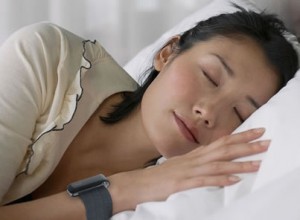
Usefulness of sleep tracking devices
Tuesday, January 14, 2014
Narcolepsy college scholarship announcement!
Wednesday, April 24, 2013
Sleep disorders and their clinical significance in children with Down syndrome
- GREGORY STORES1,
- REBECCA STORES2
- OSA
- Obstructive sleep apnoea, obstructive sleep apnea
What this paper adds
- •This paper draws attention to the multifactorial nature of sleep disorders in children with Down syndrome.
- •Sleep disorders are linked with their origins, including comorbid conditions and medication effects.
- •Routine repeated clinical screening for sleep disorders and their possible causes is encouraged."Compared with the rate in typically developing children, overall rates reported for children with Down syndrome have varied from 31% to 54%. This increased rate was generally similar to that reported in other learning disability† syndromes (although particularly high rates are given for some neurodevelopmental disorders such as Smith–Magenis syndrome and, to a lesser extent, Angelman syndrome).""However, screening for sleep symptoms simply highlights the possibility of a sleep disorder and does not constitute a diagnosis.Adequate identification of a sleep disorder requires comprehensive clinical enquiry consisting of detailed histories especially about the sleep problem, the child’s 24-hour sleep–wake pattern including parenting practices, developmental details, family history, and family circumstances.54Both physical and behavioural examination may well be appropriate, and possibly further assessment in the form of sleep diary records and objective sleep studies such as actigraphy or polysomnography. Referral for assessment at a specialist paediatric service or sleep disorders clinic may be needed.The Royal College of Paediatrics and Child Health report37 recommended regular screening for overnight hypoxia in infants with Down syndrome until the age of 5 years."
Saturday, January 26, 2013
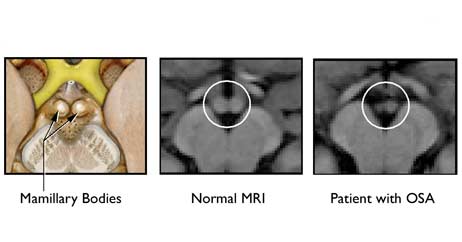
Sleep Apnea May Damage Brain Cells Associated With Memory
"How do I motivate my spouse to see a doctor?" I was asked this question yesterday and I could offer some facts. But, a picture really goes a long way. JR
Sleep Apnea May Damage Brain Cells Associated With Memory
Memories are formed in the mammillary bodies, structures on the underside of the brain that resemble small breasts. When UCLA neuroscientists scanned the brains of 43 sleep apnea patients and 66 healthy volunteers using magnetic resonance imaging (MRI), they discovered that the sleep apnea patients’ mammillary bodies were nearly 20% smaller than those of the untroubled sleepers.
Monday, September 24, 2012
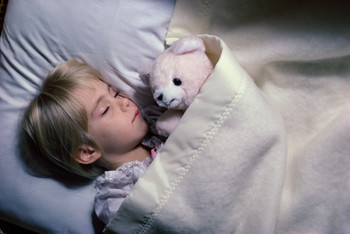
Sleep apnea can also impact children
- Frequent snoring
- Problems breathing during the night
- Sleepiness during the day
- Difficulty paying attention
- Behavior problems
In order to make a diagnosis of sleep apnea, usually an overnight sleep study called a polysomnogram will be performed. Sensors are attached to the sleeping child to monitor breathing, oxygen levels and brain waves. This information can help the doctors determine whether sleep apnea is present.
Saturday, September 15, 2012
Study: Smokers may have more sleep problems
Read more here
Tuesday, August 28, 2012
Sleepless Nights May Put The Aging Brain At Risk Of Dementia
Thursday, August 23, 2012
How to get kids' sleep schedules back on track for school
This article offers great tips for getting kids back on a regular sleep schedule for school. There is also a great slideshow on the site itself.
- Get your child or teen up at his regular school time this weekend. Keep them up all day and do not allow napping until the regular bedtime.
- Get them outside early in the day to expose them to natural bright light.
- Do not allow any gizmos that make light after sundown.
- Do not allow caffeine.
- Consistency is key. Don't change schedules on the weekend.
- Please understand that sometimes this is a difficult problem to treat and medical intervention may be required. A pediatric sleep specialist can help.
Wednesday, May 09, 2012
Doctors claim sleeplessness eroding public health
Emergency room doctors helped implement seatbelt use, lung specialists led the charge to reduce cigarette smoking. Now, a group of sleep specialists meeting in Montreal is agitating for a sleep policy.
That's right. A good night sleep is so important for physical and mental well-being that its lack poses a grave risk to public health, experts say.
If science has yet to unravel the mystery of why we need to sleep, the toll of inadequate slumber is well-documented in studies linking bad sleep to obesity, cancer, cardiovascular diseases and metabolic disorders. Lack of sleep weakens the immune system.
Look at the numbers: 25 per cent of adults don't get enough sleep or have chronic insomnia, said psychologist Reut Gruber, director of the attention, behaviour and sleep lab at the Douglas Mental Health University Institute in Montreal.
But the worst group for sleeplessness is adolescents: up to 80 per cent of Canadian students come to school extremely sleep-deprived, while the portrait of school age children "isn't pretty . . . 43 per cent are going to bed at a very, very late time."
Robust evidence on sleep deprivation and health consequences led most medical schools in North America, including Montreal's McGill University, to abolish 24-hour shifts for medical residents. Not only do sleepless nights impede students' ability to learn, they can lead to medical errors that put patients at risk.
Fatigue is cumulative, and crashing on weekends to play catch-up doesn't work, said Gruber, who is bringing together about 40 sleep scientists from across Canada and the United States to discuss how to translate sleep medicine research, specifically pediatric sleep, into educational and public policies and lifestyle changes.
Some people suffer from sleep apnea or other medical problems that interfere with slumber, but for many, the chief culprit is the mistaken belief that sleep is a waste of time.
"Sleep feels like it's something we can give up when we have other competing priorities," said Gruber, who is chair of the pediatric interest group, Canadian Sleep Society. "Our choices are going to affect many things that are important to us."
In fact, sleep should be a high health priority, along with eating well and exercising, she said.
Children, for example, need at least nine hours of sleep, Gruber said. Among other functions, sleep allows the brain to do its "executive actions", consolidating learning and memory, something that is imperative for academic performance, she said.
Working guidelines on good sleep hygiene would mean, for example, that sports and cultural activities would not be scheduled late on school nights.
"I'm very excited to hear presentations from the (Quebec) institute of public health on this topic. It's a great step forward," Gruber said. "My request to each presenter was to identify barriers to integrating pediatric sleep into public health and the education systems.
"We have the knowledge. We have the evidence. Why can't we integrate it and overcome the barriers?"
Five common myths about sleep.
- Sleep is a time when your body and brain shut down for rest and relaxation.
False. Our bodies and brains actually do a lot of work while we sleep, which helps us to refuel and to stay healthy and happy. Sleep also plays an important role in memory and learning; as we sleep, we consolidate all the information we learned during the day.
- Sleep is less important than some of our other important basic needs, such as eating.
False. Even cutting our sleep by one hour one night has a serious impact on our health, mood, and behaviour the following day. Furthermore, a single night of partial sleep deprivation is enough to impair our immune functioning, which heightens our risk for acquiring a virus or illness.
- Adolescents need less sleep than younger children.
False. While it is true that adolescents tend to get less sleep than younger children and may have a harder time falling asleep, getting an adequate amount of sleep is still just as important for their development and well-being as it is for younger people.
- Sleeping in on weekends compensates for lack of sleep throughout the week.
False. Having a consistent bedtime and wake time throughout the week is important to ensure we maintain healthy sleep habits. Waking up early throughout the week and then sleeping in on the weekends creates an irregular sleeping schedule and confuses our bodies. If we do not get enough sleep one night, a better way to compensate for this is a short nap in the afternoon.
- Alcohol and other sedatives help us to sleep.
False. While alcohol may help us to fall asleep easily and quickly, it actually disrupts our sleep and prevents us from achieving a deep, restful sleep. Sleeping pills can be problematic. If we use them regularly and then stop, it becomes difficult to fall asleep without their use, thus starting a vicious cycle of dependence.
Read more: http://www.montrealgazette.com/health/Sleeplessness+eroding+public+health+docs/6562402/story.html#ixzz1uOMCgZWb
Thursday, April 05, 2012
Tips for a Better Night's Sleep if You're Sleepy on the Job
There's no denying that sleep deprivation, and the health issues that result, are becoming more prevalent in our go-go, techno society. But a recent sleep study by the National Sleep Foundation (NSF) grabbed my attention as particular cause for concern.
Every year, the NSF releases a Sleep in America® poll. For its 2012 survey, the NSF examined the specific sleep habits and work performances of transportation workers -- pilots, train operators, and truck, bus, taxi and limousine drivers. The transportation workers were asked about the duration and quality of their sleep, specifically on work nights, and how it affects their work performance.
Some of the results of the survey were:
• About one-fourth of the train operators and pilots polled said that sleepiness has affected their job performance at least once a week.
• One in five pilots polled -- about 20 percent -- said they have made a "serious error" as a result of on-the-job sleepiness.
• One in five pilots and one in six train operators admit to a "near miss" due to on-the-job sleepiness.
• Pilots and train operators are more likely than non-transportation workers to have been involved in a sleep-related car accident while commuting.
• Among all workers surveyed, train operators and pilots report the most work day sleep dissatisfaction.
• Almost two-thirds of train operators and one-half of pilots say they rarely or never get a good night's sleep on work nights.
• About one-third of bus, taxi, and limo drivers said they rarely or never get a good night's sleep on work nights.
The results of the poll are some cause for alarm and reinforce the growing problem of sleep disorders and the potential risks they pose, such as commuter car accidents and errors by public transportation drivers responsible for many people.
Persistent sleep problems left untreated can also lead to myriad health problems, including memory and concentration problems, increased risk of high blood pressure, hypertension, stroke and heart attacks, depression, diabetes and sexual dysfunction. Severe cases of sleep apnea can even be fatal.
Besides these sobering health risks, an untreated sleep disorder can also be the root cause of poor performance at work or school, car accidents and other activities that require focus and concentration.
Common Symptoms of Sleep Disorders
Many people experience some occasional difficulty sleeping and/or daytime fatigue. But how does a person know if he or she has a temporary sleep problem that can be remedied with some simple behavioral changes or if it is a legitimate disorder, such as snoring, sleep apnea, sinusitis or nasal obstruction that should be diagnosed and treated properly?
The first step is to be aware of some common symptoms of sleep disorders. Keep in mind that symptoms vary between disorders, such as snoring, sleep apnea, insomnia, restless leg syndrome, nasal obstruction, and narcolepsy, so it pays to do some research based on what you are personally experiencing.
Some common symptoms of sleep disorders include:
• Trouble falling asleep at night
• Waking throughout the night
• Chronic snoring
• Morning headaches
• Poor memory
• Daytime sleepiness/falling asleep during the day/low energy
• Bad moods/ irritability
• Increased depression
• Trouble concentrating/driving/making decisions
The Link Between Lifestyle and Sleep Problems
If you or someone you know is experiencing some of the above common symptoms of sleep disorders, the next step is to examine if lifestyle habits are contributing to the difficulty sleeping, fatigue and irritability during the day and other symptoms.
Some behavioral and lifestyle questions to ask include:
• Am I watching TV or using the computer late at night and too close to bedtime?
• Am I consuming too much caffeine during the day?
• Am I taking a medication that may be affecting my sleep quality and duration?
• Is there something particularly stressful going on in my life that is causing me worry and anxiety?
• Am I exercising enough to help alleviate some of that stress and tension?
See a Specialist -- And Be Specific
Many sleep problems can be remedied by making some common-sense behavioral changes. However, if you or someone you know is experiencing one or more of the above symptoms on a regular basis, see a qualified ear, nose and throat doctor or otolaryngologist to get diagnosed and treated properly. There are multiple options and minimally-invasive techniques available today to treat your sleep disorder.
When you see a specialist, be specific about the symptoms you are experiencing. Many times, sleep apnea and other sleep disorders can be misdiagnosed as chronic fatigue, insomnia, depression, or some other non-specific condition. Some doctors, for example, still associate sleep apnea more with men than women, and are too quick to prescribe a medication, rather than do a full sleep disorder work up.
It may help to keep a sleep log (or, more accurately, lack-of-sleep log) next to your bed to write down what you are experiencing, when you wake and some symptoms you experience. Again, to try and avoid misdiagnosis, go to a qualified sleep specialist and be specific about your symptoms. Don't wait -- it could save your life.
Read more here