Showing posts with label pediatric. Show all posts

Monday, January 21, 2013

Study: Alternative Medicine Use High Among Children With Chronic Conditions

This study discusses how the use of alterative medicine is very high (71%) among children with chronic health conditions. This may pose an issue if the alternative medications and therapies are not discussed with a doctor.

Children who regularly see specialists for chronic medical conditions are also using complementary medicine at a high rate, demonstrates recently published research from the University of Alberta and the University of Ottawa.

About 71 per cent of pediatric patients attending various specialty clinics at the Stollery Children's Hospital in Edmonton used alternative medicine, while the rate of use at the Children's Hospital of Eastern Ontario in Ottawa was 42 per cent. Nearly 20 per cent of the families who took part in the study said they never told their physician or pharmacist about concurrently using prescription and alternative medicine.
Sunita Vohra, a researcher with the Faculty of Medicine & Dentistry at the U of A, was the lead investigator on the study, which was recently published in the peer-reviewed journal Pediatrics. Her co-investigator was W. James King from the University of Ottawa.
"The children in this study are often given prescription medicines," says Vohra, a pediatrician who works in the Department of Pediatrics and the School of Public Health at the U of A.
"And many of these children used complementary therapies at the same time or instead of taking prescription medicine. We asked families if they would like to talk about the use of alternative medicine, more than 80 per cent of them said, 'yes, please.'
"Right now, these families are getting information about alternative medicine from friends, family and the Internet, but a key place they should be getting this information from is their doctor or another member of their health-care team, who would know about possible drug interactions with prescription medicines." Vohra said the study "identified a gap in communications" in dealing with pediatric patients and their families.
"It's important to get these conversations going with every patient, especially when you consider it's not widely recognized how common it is for children with chronic illnesses to use alternative medicine," says the Alberta Innovates-Health Solutions scholar.
"We need to make sure these families are comfortable telling their specialists they are taking other therapies," she said. Right now, Vohra and her colleagues at the U of A have developed curricula for undergraduate medical students about the use of alternative medicine by pediatric patients, which is considered innovative and novel. Ensuring medical students receive information about alternative medicine is key because it arms them with more knowledge about potential interactions with prescription medicine, says Vohra.
"Considering parents are saying they want this information, we have an obligation to ensure future physicians have the education and resources they need for these conversations," Vohra says.
Read more here

Sunday, January 13, 2013

Study: Bullying Causes Significant Emotional and Physical Consequences for Children With Autism

This study discusses the short term physical and emotional stresses of bullying on children with autism.

Nearly 70 percent of children with autism spectrum disorders (ASD) experience emotional trauma as a result of being bullied, according to findings published today in the Journal of Developmental & Behavioral Pediatrics, while a significant portion were concerned for their own safety at school. The study also found that children with ASD who presented with pre-existing psychiatric diagnoses were at increased risk for involvement in bullying, with children diagnosed with ASD and attention deficit hyperactivity disorder (ADHD) or depression at highest risk of being victimized over a one month period.
This study was led by researchers from the Interactive Autism Network, a project of the Kennedy Krieger Institute that is the nation's first online autism registry with participants from 47 states, making it the largest collection of autism data in the world.
"Recent research indicates that children receiving special education services are at risk of being victimized at higher rates than regular education students," says Dr. Paul Law, senior study author and director of the Interactive Autism Network at Kennedy Krieger. "Our findings show that not only are these children being bullied more, but they are also experiencing significant short-term, and likely long-term, effects of being bullied."
Participants in the study included parents of 1,221 children with ASD recruited through an online questionnaire. Researchers utilized the Bullying and School Experiences of Children with ASD Survey, a 63-item questionnaire, to collect key data from parents regarding their child's school environment, involvement in bullying, and the child's educational and psychological functioning. Additionally, researchers used the Parent Observation of Child Adaptation (POCA) to reflect parents' ratings of their child's behaviors and level of psychological distress after a bullying incident. The study's findings on the characteristics and psychiatric comorbidities most associated with bullying are below.
Characteristics of Children with ASD Involved in Bullying
  • Over a one month period, 38 percent of children with ASD were bullied, with 28 percent frequently bullied.
  • Immediate consequences of being bullied included emotional trauma (69 percent) and physical injuries (8 percent).
  • Nearly 14 percent of children who were bullied reported being scared for their own safety.
  • Eighteen percent of children were reported to have been triggered into fighting back, with 40 percent having an emotional meltdown or outburst that resulted in disciplinary action from school staff.
  • Nine percent of children with ASD acted as bullies, with five percent identified as frequent perpetrators of bullying.
Psychiatric Comorbidity and Bullying Behaviors
  • Children with ASD who also presented with ADHD and depression were more likely to be bullied.
  • Children with ASD who also presented with conduct disorder or oppositional defiant disorder were more likely to be bullies.
  • Children with ASD who also presented with ADHD, conduct disorder or oppositional defiant disorder were most likely to be bully-victims, characterized as being both victims of bullying and behaving as bullies.
According to Dr. Law, it is well documented that short-term consequences of bullying include poor mental and physical health outcomes. The long-term consequences can also have a serious effect on the well-being of an individual with ASD. In many cases, the effects of bullying can extend into adulthood with an increased risk for later psychiatric illness.
"Our results provide insights that will help teachers and school staff identify children with autism who may be at the greatest risk for bullying involvement, either as victims or perpetrators," says Dr. Law. "Outside of school, parents should be encouraged to talk to their child about bullying, particularly if they are concerned their child may be a victim. Parents should also set up appointments to talk to the staff or teachers at their child's school to learn more about how they can work to prevent bullying and help children involved in bullying cope with the consequences."
Future research is needed to clinically validate the correlation between a child's psychiatric diagnosis and bullying behavior. Longitudinal study designs will also help to provide insight into the sequence of events related to bullying behaviors and psychological and physical issues. Researchers hope that with greater information on the bullying behaviors and the consequences of bullying on children with ASD, parents, school staff, teachers and health care providers can better protect this particularly vulnerable population.
Read more here

Monday, September 24, 2012

Sleep apnea can also impact children


This article discusses how sleep apnea can impact children and when a child should be evaluated by a professional for sleep apnea.

When we think of a sleeping child, the picture that often comes to mind is of a cherubic face relaxed into a smile, with an air of complete peace about her. This, unfortunately, is not the case for many children (and their parents) whose nights are interrupted by a sleep disorder.
It is generally accepted that from time to time in a child’s life there will be periods when a restful night’s sleep is not a given. For a child with a sleep disorder, those nights can become the norm rather than an occasional occurrence. One type of sleep disorder, obstructive sleep apnea syndrome, is more common in children than one might think and can lead to a whole host of issues during the day for a child who is affected by this condition.
There has been plenty of information made available about obstructive sleep apnea in adults over the last 20 years or so, but rarely have we heard about children being affected with the disorder. About 2 percent of children have sleep apnea, which may not seem like a lot, but to put it into context, of the approximately 16,000 children (birth to age 18) in Livingston County, 320 could possibly have this disorder.
Children who are most at risk for this disorder are those with Down syndrome, cerebral palsy, skull and face abnormalities or those who are overweight.
In a report published in the August 2012 issue of Pediatrics, the American Academy of Pediatricians (AAP) recommends that any child who snores on a regular basis be evaluated for sleep apnea. Symptoms of this sleep disorder can include:
  • Frequent snoring
  • Problems breathing during the night
  • Sleepiness during the day
  • Difficulty paying attention
  • Behavior problems

In order to make a diagnosis of sleep apnea, usually an overnight sleep study called a polysomnogram will be performed. Sensors are attached to the sleeping child to monitor breathing, oxygen levels and brain waves. This information can help the doctors determine whether sleep apnea is present.
If left untreated, complications that can arise from sleep apnea include cardiovascular problems, poor growth and developmental delays. Treatment often begins with the removal of the child’s tonsils and adenoids, as they are commonly enlarged in these children. This is an effective treatment and will often be all that is required for the child to be symptom free.
A second line of treatment is for the child to use a CPAP machine at night. This is a mask that delivers steady air pressure through the nose, keeping the airways open and allowing for more regular breathing. For children who are overweight, weight loss can improve the symptoms but a CPAP may be necessary until the excess weight is lost.
Getting proper sleep is imperative for a child to grow and develop as best they can. Any sleep disorder that interrupts or decreases the quality of their sleep is a problem worth tackling right away. Quiet nights and happy, thriving kids are things every parent hopes for as they navigate the joys and worries of raising children.
Read more here

Sunday, September 23, 2012

Study Shows Children With Autism Experience Interrelated Health Issues

Children who have autism are more likely to also have anxiety, gastrointestinal issues, and sensory problems, all of which can effect their daily lives.

One in 88 children has been diagnosed with an autism spectrum disorder (ASD) in the United States, according to the Centers for Disease Control and Prevention. A new study by a University of Missouri researcher found that many children with ASD also experience anxiety, chronic gastrointestinal (GI) problems and atypical sensory responses, which are heightened reactions to light, sound or particular textures. These problems appear to be highly related and can have significant effects on children's daily lives, including their functioning at home and in school.

Micah Mazurek, an assistant professor of health psychology and a clinical child psychologist, found in her study of 2,973 children and adolescents with ASD that nearly one-fourth also had chronic GI problems, such as constipation, abdominal pain, bloating, diarrhea or nausea. The results also showed that children with chronic GI problems were more likely to experience anxiety and sensory problems.
"These problems can have a very real impact on daily life. Children with anxiety may be distressed or reluctant to engage in new activities, and those with sensory problems may have trouble paying attention or participating in over-stimulating enviornments," Mazurek said. "These children may also suffer uncomfortable GI problems that they may not be able to communicate about to adults."
Clinicians should be aware that anxiety, GI problems and sensory sensitivity often co-occur in individuals with ASD. Effectively managing these concurrent issues may improve children's quality of life and their responses to treatment, Mazurek said.
"Parents need to be aware that these problems may underlie some of their children's difficulties, so if they notice any symptoms, they should talk to their doctors or therapists about treatment options," Mazurek said. "Practitioners who work with children with ASD need to be mindful that there is a pretty high rate of these problems, so if children are treated for one issue, it may helpful to screen for these additional symptoms."
This is the first study to examine the relationships among anxiety, GI problems and sensory over-responsivity in a large, nationally representative sample of children and adolescents with ASD. Participants in the study were enrolled in the Autism Treatment Network, a network of 17 autism centers throughout North America that are focused on best practices for medical treatment of children with ASD.
Read more here

Friday, August 10, 2012

Study: Kids who watch age-appropriate TV, movies sleep better

Interesting study that looks into the type of TV kids watch and how well they sleep at night.

Changing the type of DVDs, videos and TV shows that preschoolers watch during the day may help them sleep better at night.

A program that encouraged parents of kids ages 3 to 5 to replace age-inappropriate media content with more suitable programming found "long-lasting, significant reductions in sleep problems," says Michelle Garrison of Seattle Children's Research Institute, lead author of the study in Monday's Pediatrics.

Researchers made no attempt to change the amount of TV viewed or the time of day it was watched. "We know that media is already playing a large role in the lives of many families," says Garrison. "We felt that just by changing the content, we could have an impact on the health and development of these kids," she says. "That was borne out in results."

Preschoolers with sleep problems improved in both sleep and daytime tiredness over the course of the 12-month study, she says, and children who didn't initially have sleep problems were less likely to develop them.

Insufficient and disrupted sleep has been associated with obesity, behavior problems and poor school performance, researchers say.

"There are so many immediate and long-term effects from sleep loss at this age that it's really worth taking those extra steps to try and get sleep on a good track," says Garrison, who is also an acting assistant professor at the University of Washington in the department of health services.

Nearly 600 families of preschool-age children in the Seattle area participated in the study. They kept sleep diaries and received home visits, follow-up telephone calls, and monthly mailings from case managers. Half of the families received an intervention focused on healthy media use. The other half served as a comparison group and received an intervention focused on healthy eating.

Researchers assessed the sleep habits of all of the children, including how long it took them to fall asleep, night wakings, nightmares, difficulty waking and daytime tiredness.

Families receiving the media intervention were encouraged not only to replace TV and video programming, but also to view TV with their children as much as possible and discuss the content with their kids to help them "process what they're seeing and learn more from what they're seeing," says Garrison.

Monthly mailings included a program guide tailored to the families' available channels with recommended TV shows and schedules and a newsletter with tips and reinforcement.

For preschoolers, inappropriate content has less to do with violent or R-rated movies and more to do with cartoons "aimed at slightly older children," such as SpongeBob SquarePants and Scooby-Doo, says Garrison. "These are fun shows I would totally sit down and watch with an 8- or 9-year-old, but for a 3- or 4-year-old, it's too much and too overwhelming."

"The fact that Bugs Bunny can be too violent for a 3-year-old is not something that always clicks with some families," she adds. "Yes, they may know that (a preschooler) shouldn't watch the latest Transformers movie, but they may not necessarily make that same association with cartoons that have the more funny violence or the superhero violence, because some of the content is marketed toward preschool-age children."

Age-appropriate fare cited includes Sesame Street, Dora the Explorer and Curious George.

Previous studies have found an association between increased media use and sleep disturbances in young kids.

Findings "reinforce the notion that we need to be vigilant with the content we're exposing our children to," says Dennis Rosen, associate medical director of the Center for Pediatric Sleep Disorders at Boston Children's Hospital. "At this age, they are affected by what they watch."

Read more here

Wednesday, August 08, 2012

Teen Sleep Issues - Back to School Considerations


The big game is coming - that is, the first day of school! I recommend that parents start shifting bedtimes now so there are no surprises as we get back to school. JR


This article discusses effects of sleep deprivation on teens and adolescents. This is very important to address with school starting back up.

Is your adolescent yawning during the day and struggling to fall asleep at night? 

Is your child persistently late for school or falling asleep in class? 

The problem could easily be not enough sleep. 

Is your adolescent impulsive, hyperactive, irritable, unfocused and performing poorly in school? Again, not enough sleep?


At least nine hours of “quality” sleep or more is optimal for children ages 13-18, according to Sarah Morsbach Honaker, Ph.D., a pediatric behavior sleep medicine specialist at the University of Louisville School of Medicine who spoke Thursday at the American Psychological Association Convention in Orlando. 

That number goes up the younger the child.
Sleep deprivation is a common adolescent diagnosis because teens stay up late then oversleep, which exacerbates the problem because they literally have less time in the light. “They delay the Circadian Sleep Rhythm because they don’t get light exposure until they wake up,” Dr. Honaker explained.
Pediatric sleep apnea is also problematic where poor quality of sleep interrupts the REM phase and disrupts how the child functions when awake, often mimicking ADHD characteristics, she adds.

Interventions like going to bed early enough on weeknights to get nine hours of sleep are challenging, when biologically teens aren’t tired until 10 or 11 p.m. and high school schedules have them up and out sometimes before the sun comes up.

 Or, convincing your child to shut down electronics an hour before bedtime and creating a calming environment with music, reading, or puzzles. Even a little before bed conversation with family members has been shown to help.
 Imagine that. “The blue light from electronic screens sends strong signals to the brain suppressing melatonin and inhibiting sleep,” she says. “Instead of TV, games or Internet surfing, experiment with other before bed activities to promote readiness for a good night’s sleep.”

If you notice your child operates well with a summer schedule and falls apart during the school year then seeing a sleep professional in advance could be helpful to realign the Circadian rhythm. “The first line of treatment is behavioral intervention,” Dr. Honaker says. “Light therapy, sleep scheduling, and melatonin pills are others. 

Sleep medications are not approved by the FDA for use by children and adolescents.”


Read more here

Monday, August 06, 2012

Sleep affects how well vaccines work

Interesting study that shows how less sleep can make vaccines less effective in children.


As moms have always known, a good night's sleep is crucial to good health -- and now a new study led by a UCSF researcher shows that poor sleep can reduce the effectiveness of vaccines.

The study is the first performed outside a sleep laboratory to show that sleep duration is directly tied to vaccine immune response, the authors said.

The study, conducted while the UCSF researcher was a doctoral student at the University of Pittsburgh, will appear in the August issue of the journal SLEEP.

"With the emergence of our 24-hour lifestyle, longer working hours, and the rise in the use of technology, chronic sleep deprivation has become a way of life for many Americans," said lead author Aric Prather, PhD, a clinical health psychologist and Robert Wood Johnson Foundation Health & Society Scholar at UCSF and UC Berkeley.

"These findings should help raise awareness in the public health community about the clear connection between sleep and health," Prather said.

Research has shown that poor sleep can make one susceptible to illnesses such as upper respiratory infections. To explore whether sleep duration, sleep efficiency, and sleep quality -- assessed at home and not in a controlled sleep lab -- would impact immune processes important in the protection against infection, the researchers investigated the antibody response to hepatitis B vaccinations on adults in good health. Antibodies are manufactured by the immune system to identify and neutralize foreign objects such as viruses.

The study involved 125 people (70 women, 55 men) between the ages of 40 and 60. All were nonsmokers in relatively good health, and all lived in Pennsylvania -- the study was conducted at the University of Pittsburgh. Each participant was administered the standard three-dose hepatitis B vaccine; the first and second dose were administered a month apart, followed by a booster dose at six months.

Antibody levels were measured prior to the second and third vaccine injection and six months after the final vaccination to determine whether participants had mounted a "clinically protective response."

All the participants completed sleep diaries detailing their bedtime, wake time and sleep quality, while 88 subjects also wore electronic sleep monitors known as actigraphs.

The researchers found that people who slept fewer than six hours on average per night were far less likely to mount antibody responses to the vaccine and thus were far more likely (11.5 times) to be unprotected by the vaccine than people who slept more than seven hours on average. Sleep quality did not affect response to vaccinations.

Of the 125 participants, 18 did not receive adequate protection from the vaccine. "Sleeping fewer than six hours conferred a significant risk of being unprotected as compared with sleeping more than seven hours per night," the scientists wrote.

The researchers stressed that sleep plays an important role in the regulation of the immune system. A lack of sleep, they said, may have detrimental effects on the immune system that are integral to vaccine response.

The National Sleep Foundation recommends seven to nine hours sleep a night. (For tips on a better night's sleep, see:http://www.ucsfhealth.org/education/tips_for_a_better_nights_sleep/index.html)

"Based on our findings and existing laboratory evidence, sleep may belong on the list of behavioral risk factors that influence vaccination efficacy," said Prather who in September will join the UCSF faculty as an assistant professor in the Department of Psychiatry. "While there is more work to be done in this area, in time physicians and other health care professionals who administer vaccines may want to consider asking their patients about their sleep patterns, since lack of sleep may significantly affect the potency of the vaccination."

Read more here

Tuesday, July 24, 2012

Cause of Common Childhood Tumors Identified


New mutation identified that could help focus treatments for common pediatric brain tumors.

Researchers at the Stanford University School of Medicine and Lucile Packard Children's Hospital have identified several gene mutations responsible for the most common childhood brain tumor, called medulloblastoma, adding evidence to the theory that the diagnosis is a group of genetically distinct cancers with different prognoses. These and accompanying findings are likely to lead to less-toxic, better-targeted treatment approaches over the next two years, the researchers said.

"We tend to treat all medulloblastomas as one disease without taking into account how heterogeneous the tumors are at the molecular level," said Yoon-Jae Cho, MD, an assistant professor of neurology and neurological sciences at Stanford, a pediatric neurologist at Packard Children's and the senior author of the new research. "This paper represents a finer-grained view of the genetic landscape of these tumors and provides us with some leads on how to develop new therapies."

The research, which appeared online in Nature July 22, is part of a large, ongoing effort to characterize genetic errors in medulloblastoma. Two companion studies on which Cho is a co-author will be published simultaneously with his paper. The three papers came from a consortium that involves scientists at Stanford, Packard Children's, the Broad Institute, Children's Hospital Boston, the Dana-Farber Cancer Institute, the German Cancer Research Center, Brandeis University and the Hospital for Sick Children in Toronto.

Current treatment for medulloblastoma, which originates in the cerebellum and affects about 250 U.S. children each year, begins with surgery to remove as much of the tumor as possible. Patients then receive a combination of radiation and chemotherapy, but the treatments are not tailored to the tumor's genetic characteristics.

Cho's team extracted DNA from 92 medulloblastoma tumors and compared it with DNA from matched blood samples from the same patients, uncovering 12 significant "point mutations" -- single-letter errors in the genetic code -- that occurred frequently in the brain cancer. A handful of the mutations had been previously identified in smaller studies of medulloblastoma, but several mutations were novel in both medulloblastoma and in cancer.

Among the newly identified mutations was one in an RNA helicase gene, DDX3X, which Cho said is the second-most common mutation in medulloblastoma tumors. "Mutations in this gene have now also been identified in other tumor types, such as chronic lymphocytic leukemia, and head and neck tumors," he said.

However, the researchers found that it was rare for the same gene mutated in several different patients' tumors. More commonly, mutations involving a set of genes regulating a single biological pathway were found in the tumors -- a pattern that is emerging across cancer genome sequencing efforts.

Though no single tumor in the study carried all 12 mutations, the researchers were able to categorize the tumors according to which mutations they possessed. "We now understand that there are certain tumors with particular genetic signatures that are really resistant to standard treatments," Cho said. Children with medulloblastoma do not routinely have their tumors' genetic signatures characterized, but Cho believes that such characterization coupled with targeted therapies could greatly enhance tumor treatment.

About two-thirds of medulloblastoma patients now survive five years past diagnosis, but many survivors suffer lasting physical or intellectual side effects from their cancer treatments. Drugs tailored to a tumor's genetic profile have the potential to save more patients while reducing side effects, Cho said.

Several of the mutations discovered affect cellular signals that switch large groups of genes on and off. "The dysregulation of these 'epigenetic programs' is becoming a common theme not only in medulloblastoma but across cancer," Cho said. Such pathways may be good targets for cancer drugs; indeed, drugs targeting one such pathway (histone methyltransferases) are currently in pre-clinical development, while agents against another pathway (Hedgehog signaling pathway) are entering phase-2 clinical trials for medulloblastoma.

Cho is the co-chair of a committee within the Pediatric Brain Tumor Consortium that guides which drugs should be moved into clinical trials next. "Our plan is that within the next one to two years we will be able to offer kids a new set of compounds that have a clear biological rationale based on our genomic studies." Cho said. "We want to make sure we're being careful of what we move forward with, but at the same time, for some of these kids we don't have many, if any, effective and durable treatment options."

Read more here

Friday, June 29, 2012

Children, like adults, are affected by sleep disorders


A good night's sleep is eluding an increasing number of people, and children are not immune.

The Centers for Disease Control has labeled "insufficient sleep" a public health epidemic. From bedwetting to loud snoring, a host of symptoms can indicate an underlying sleep problem in children. Many children suffer with disorders but are undiagnosed or misdiagnosed, says Dr. Larry Salberg, clinical associate professor of medicine at the Indiana University School of Medicine Northwest. "Approximately 2 percent of children have sleep apnea, and most of the kids are going undiagnosed," he says.

In some cases, children diagnosed with attention problems, such as ADD/ADHD, actually have a sleep disorder. Some of the symptoms are the same, such as changes in behavior and attention. "There are studies that show that up to 38 percent of our children who are on stimulant medication for ADD/ADHD do not have ADD/ADHD," Salberg says. "They have sleep deprivation or poor sleep, most of which is due to sleep apnea."

Any child that visits a doctor for possible ADD/ADHD should be screened for apnea or another disorder, says Salberg, founder of Neurological Institute and Specialty Centers in Merrillville.

People with sleep apnea have breathing that repeatedly stops and starts as they sleep, according to the Mayo Clinic. Common signs are loud snoring or feeling tired after a full night's sleep. Obese adults have an increased risk of sleep apnea, and the same rings true with children. "It's a common pathological problem," Salberg says. "It's easy to diagnose and it's easy to treat."

Left untreated, it can lead to serious health problems, such as high blood pressure. In adults, it can result in heart attacks, stroke, congestive heart failure and other maladies.

Good sleep helps reduce weight, but obesity causes poor sleep. "It's a vicious cycle," says Salberg, who has been practicing sleep medicine since 1978.

Dr. Muhammad Najjar, medical director for the Sleep Disorders Center of Franciscan Physicians Hospital in Munster, says sleep disorders in children are not new, but medical technology has improved. "Now we have the tools to treat them," he says.

The Munster center treats children, but the majority of its patients are adults. The facility just started accepting pediatric patients in February. "To the best of my knowledge, no one offers this in Northwest Indiana," Najjar says.

Aside from sleep apnea, children are susceptible to other sleep-related disorders, such as sleepwalking, insomnia, loud snoring and bedwetting. When a doctor recognizes symptoms of a sleep disorder in a child, the child may be recommended for a sleep study.

At Sleep Disorders Center, two rooms are designated for pediatrics. Designed to have a feel that's comfortable for children, it has toys, pictures on the wall and smaller beds. During a sleep study, a child spends the night in a sleep center, hooked to machines that monitor brain waves, eye movement, flow of air in the nose and mouth, heart and oxygen levels and more, Najjar says. The data are recorded and analyzed. It takes a few days to process the results and another appointment to discuss the best course of treatment.

In adults, prescribing a continuous positive airway pressure (CPAP) machine, which is a breathing mask worn at night, is a common treatment for sleep apnea.

For children with sleep apnea, a possible first step is to remove their tonsils and adenoids. If that does not correct the problem, then a doctor can explore nasal or orthodontic treatments or address a child's weight, if he is overweight, Najjar says. If fixing those issues does not work, then a CPAP machine is an option.

Salberg says children have to be re-studied in a sleep center after various treatments are tried, to ensure what appears to be working truly is working. "You have to prove that you've treated it. The only way you can document and make a diagnosis is by going through a sleep test."

If someone quits snoring, that does not mean the sleep apnea is gone. "One does not beget the other, necessarily," Salberg says.

Parents who think their child may have a sleep disorder should talk to the child's doctor. If the doctor ignores the concern or does not seem to know, parents should not be afraid to ask for a consultation with a board certified sleep specialist, Salberg says.

"We spend a third of our life sleeping," he says. "What we do during sleep has a lot to do with the day."

Read more here
Monday, February 27, 2012

Use of cooling blanket spurs new infant brain research into optimal care


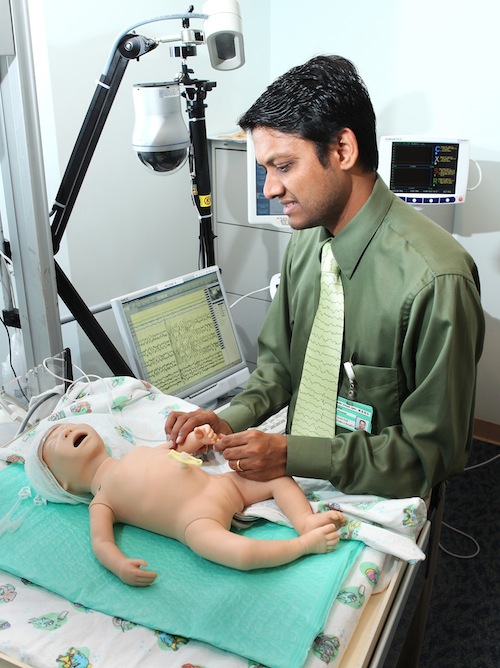
Pediatric neurologists and neonatologists in Vanderbilt’sNeonatal Intensive Care Unit(NICU) are conducting research that may better define what happens in the brains of newborns who have suffered from oxygen deprivation, and what brain cooling therapy can achieve.
Use of a “cooling cap” within six hours is now the standard of care when an otherwise healthy, full-term infant experiences a serious lack of oxygen, called anoxic brain injury. The therapy uses cool water to bring the temperature of the brain down about five degrees. Vanderbilt took part in the initial studies of the cooling cap, which was found to reduce serious long-term brain damage and death by about one-third.
Now a switch has been made to a cooling blanket instead of a cap. The blanket is as effective in its brain-protecting capacity, but it offers researchers an opportunity to better assess what is happening in the brain as it is cooled.

Easier to monitor babies’ brains

Pediatric neurology chief resident Siddharth Jain said by using a cooling blanket, the scalp is free for him to apply a full, nine-lead electro encephalogram (EEG) monitor along with a newer device called a near-infrared spectroscopy (NIRS) monitor to find out what is going on beneath a baby’s scalp.
The EEG can detect seizures, while NIRS measures how the brain uses oxygen. The information collected so far has been surprising.
“We already know the EEG detects seizures that cannot be seen in these babies. Up to 80 percent of seizures in babies with anoxic brain injury have no overt clinical signs. Other studies have shown that these babies can have between 100 and 120 seizures during the first 72 hours of life,” Jain said.
“These seizures are different than those in epilepsy. They are very aggressive in the first 48 hours and difficult to control. We don’t know for sure, but the consensus is the seizures themselves cause further damage.”
Jain is working with Barbara Engelhardt, associate professor of neonatology, to closely examine what is happening in the first 72 hours after an anoxic injury — the critical window of opportunity in which the cooling seems to have its maximum brain-preserving effect.
For this observational study, William Walsh, neonatologist and director of nurseries, switched the NICU to the cooling blanket to allow the researchers to enroll the one or two babies brought to Vanderbilt every month with anoxic brain injury.

Speeding up evaluation and treatment

The first goal is to use EEG and NIRS to more quickly and accurately predict the severity of the anoxic injury. Currently, an MRI is used to give doctors a peek at structural damage in the brain, once the initial injury has stabilized, to assess long-term changes. But the predictive value of long term damage is not very great.
Engelhardt says EEG and NIRS provide information from day one about seizure activity as well how the brain is using oxygen.
These two pieces of information can describe changes after the initial injury, and may help provide a better measure of the effects on long-term outcomes.

Enables researchers to test new therapies

A second goal is to use the monitors to test new therapies. The hope is the monitors could more quickly assess the effectiveness of therapies is controlling seizures, or better balancing nutrient consumption after injury in the hope of further reducing the risk of permanent brain damage.
“When a brain cell is injured, it can go one of two ways: it can die or recover,” Walsh said. “The goal is to limit damage to as small an area as possible.
“The cooling cap was a general way to slow down the potential for further damage, but in the 15 years we have been using it, we have learned a lot about what is happening biochemically in anoxic injury and how we can further impact that damage.”

Monday, February 20, 2012

Brain Imaging Differences Evident at 6 Months in High-Risk Infants Who Later Develop Autism


A new study led by the University of North Carolina at Chapel Hill found significant differences in brain development starting at age 6 months in high-risk infants who later develop autism, compared to high-risk infants who did not develop autism.

"It's a promising finding," said Jason J. Wolff, PhD, lead author of the study and a postdoctoral fellow at UNC's Carolina Institute for Developmental Disabilities (CIDD). "At this point, it's a preliminary albeit great first step towards thinking about developing a biomarker for risk in advance of our current ability to diagnose autism."

The study also suggests, Wolff said, that autism does not appear suddenly in young children, but instead develops over time during infancy. This raises the possibility "that we may be able to interrupt that process with targeted intervention," he said.

Joseph Piven, MD, director of the CIDD, is senior author of the study.

The study was published online on Feb. 17 at AJP in Advance, a section of the website of the American Journal of Psychiatry. Its results are the latest from the ongoing Infant Brain Imaging Study (IBIS) Network, which is funded by the National Institutes of Health and headquartered at UNC. Piven received an NIH Autism Centers of Excellence (ACE) program network award for the IBIS Network in 2007. ACE networks consist of researchers at many facilities in locations throughout the country, all of whom work together on a single research question.

Participants in the study were 92 infants who all have older siblings with autism and thus are considered to be at high risk for autism themselves. All had diffusion tensor imaging -- which is a type of magnetic resonance imaging (MRI) -- at 6 months and behavioral assessments at 24 months. Most also had additional brain imaging scans at either or both 12 and 24 months.

At 24 months, 28 infants (30 percent) met criteria for autism spectrum disorders while 64 infants (70 percent) did not. The two groups differed in white matter fiber tract development -- pathways that connect brain regions -- as measured by fractional anisotropy (FA). FA measures white matter organization and development, based on the movement of water molecules through brain tissue.

This study examined 15 separate fiber tracts, and found significant differences in FA trajectories in 12 of the 15 tracts between infants who did develop autism versus infants who did not. Infants who later developed autism had elevated FA at six months but then experienced slower change over time. By 24 months of age, infants with autism had lower FA values than infants without autism.

"This evidence, which implicates multiple fiber pathways, suggests that autism is a whole-brain phenomenon not isolated to any particular brain region," Wolff said.

Eighteen researchers are listed as co-authors of the study. Study co-authors with UNC affiliations include Wolff, Piven, Hongbin Gu,PhD; Guido Gerig,PhD; Jed T. Elison, PhD; Martin Styner, PhD; Geraldine Dawson, PhD and Heather C. Hazlett, PhD. Other institutions and organizations that took part in the study include the University of Utah, Washington University in St. Louis, University of Washington, McGill University, Children's Hospital of Philadelphia and the University of Alberta.

In addition to funding from the NIH, the IBIS Network receives support from Autism Speaks and the Simons Foundation Autism Research Initiative.

Read more: http://www.sciencedaily.com/releases/2012/02/120217101052

Friday, September 16, 2011

Cognitive Impairment Seen in Preschool Children With Epilepsy, Study Finds


Cognitive Impairment Seen in Preschool Children With Epilepsy, Study Finds

ScienceDaily (June 3, 2011) — A recent study has shown that cognitive impairment is evident early on in preschool children with epilepsy, consistent with results of similar studies in older children. Age of onset of first seizure is a significant predictor of cognitive impairment according to this study -- the first to evaluate cognitive impairment in children age three to six. The report is available in Epilepsia, a journal published by Wiley-Blackwell on behalf of the International League Against Epilepsy (ILAE).
Epilepsy is characterized by recurrent seizures that range from mild staring spells to major convulsions, and frequently develops in early childhood. Studies have found that in the U.S. alone there are more than 325,000 children under the age of 15 who are diagnosed with epilepsy, with 45,000 new cases diagnosed each year. Medical evidence further suggests that early onset of seizures is a significant factor contributing to cognitive impairment in children.
For the present study, researchers reviewed medical data and psychological evaluations for 64 preschool children (3 to 6.11 years old) with active epilepsy in order to determine the frequency of cognitive impairment and the epilepsy-related factors contributing to the impairment. Children in the study group had a mean age of five, with seizure onset between 0 and 75 months. "Our study is the first to examine cognitive performance in preschool children with epilepsy," said lead researcher Kati Rantanen, a PhD candidate at the University of Tampere in Finland.
The study showed that the prevalence of epilepsy was roughly 3 per 1,000 children, which is consistent with prior studies in Finland and other developed countries. The team identified 27 children with focal seizures, 31 with generalized seizures, and 6 with unclassified seizure types. More than half of the children (64%) were receiving monotherapy of an anti-epileptic drug for seizure control. The seizures were well-controlled in 37% of children, partially controlled in 16%, and poorly controlled in the remaining 47% of participants.
Researchers determined cognitive function based on psychological evaluation, parental reports, and observations from daycare. The intelligence quotient (IQ) was used to measure cognitive function; children were classified as having normal IQ (IQ over 70) or with mild (50-69), moderate (35-49), or profound (less than 34) intellectual disability. In the preschool cohort, 50% of the children displayed normal cognitive function, 22% had mild cognitive impairment, and 28% showed moderate to severe intellectual disability.


http://www.sciencedaily.com/releases/2011/06/110602095420.htm