Showing posts with label development. Show all posts

Tuesday, August 25, 2015

Babies use expectations about what they perceive to shape their brains

A study show that infants can use what they perceive and their expectations about what they perceive to develop their brains.

Infants can use their expectations about the world to rapidly shape their developing brains, researchers have found.
A series of experiments with infants ages 5 to 7 months has shown that portions of babies' brains responsible for visual processing respond not just to the presence of visual stimuli, but also to the mere expectation of visual stimuli, according to the researchers from Princeton University, the University of Rochester and the University of South Carolina.
That type of sophisticated neural processing was once thought to happen only in adults and not infants, whose brains are still developing important neural connections.
"We show that in situations of learning and situations of expectations, babies are in fact able to really quickly use their experience to shift the ways different areas of their brain respond to the environment," said Lauren Emberson, one of the researchers, who will join the Princeton faculty Sept. 1 as an assistant professor of psychology. She comes to Princeton from the University of Rochester, where she is a postdoctoral associate.
The research is described in the article, "Top-down modulation in the infant brain: Learning-induced expectations rapidly affect the sensory cortex at 6 months," published online June 20 in the Proceedings of the National Academy of Sciences. The other authors are John Richards of the University of South Carolina and Richard Aslin of the University of Rochester.
The researchers exposed one group of infants to a pattern that included a sound -- like a honk from a clown horn or a rattle -- followed by an image of a red cartoon smiley face. Another group saw and heard the same things, but without any pattern.
The researchers used functional near-infrared spectroscopy, a technology that measures oxygenation in regions of the brain using light, to assess brain activity as the infants were exposed to the sounds and images.
After exposing the infants to the sounds and images for a little over a minute, the researchers began omitting the image. For the infants who had been exposed to the pattern, brain activity was detected in the visual areas of the brain even when the image didn't appear as expected.
"We find that the visual areas of the infant brain respond both when they see things, which we knew, but also when they expect to see things but don't," Emberson said.
The finding could help shed light on the mysteries of neural development, the researchers said.
"Part of the reason I wanted to establish this type of phenomenon in infants is because I think it's a really good candidate mechanism for how infants are using their experiences to develop their brains," Emberson said. "There's a lot of work that shows babies do use their experiences to develop. That's sort of intuitive, especially if you're a parent, but we have no idea how the brain is actually using the experiences."
The findings offer insights that can shape future research in the area, said Janet Werker, a professor and Canada research chair in the Department of Psychology at the University of British Columbia who studies the roots of language acquisition.
"Most exciting to me is the evidence this work provides that from very early in infancy, the cortex is able to set up expectations about incoming events," said Werker, who was not involved in the research. "This shows that infants not only learn about their external worlds, but are ready -- from very early in life -- to make predictions about the co-occurrence of events on the basis of very brief previous experience. This work thus has the potential to transform future research on infant learning to focus not on just what infants can learn, but to look at learning as a more active process, focusing more on how learning begets subsequent learning."
Emberson is continuing to explore the topic by examining the phenomenon in infants who are at risk for poor developmental outcomes, specifically those who were born prematurely. She also is examining whether infants' visual expectations boost their visual abilities.
The research was primarily funded by the National Institutes of Child Health and Development.
Read more here


Sunday, March 16, 2014

Younger siblings of children with autism show abnormal development

Research shows that younger siblings of children with autism show abnormal development and behavior early.

Younger siblings of children with autism may show signs of abnormal development or behavior as early as 1 year of age, according to a new study.

The findings suggest that parents and doctors should keep close watch for such symptoms at an early age among younger siblings of children with autism so problems can be addressed sooner, the researchers said.

The new study included nearly 300 infant siblings of children with autism and 116 infant siblings of children without the disorder. The children's development was assessed at 6 months, 12 months, 18 months, 24 months and 36 months of age.

Researchers found problems in nearly half of the siblings of children with autism, with 17 percent developing autism and 28 percent having delays in other areas of development or behavior.

Among that 28 percent, abnormalities in social, communication, thinking or movement development were apparent by the time they were 1 year old. The most common types of problems were extreme shyness with strangers, lower levels of eye contact and delayed pointing, according to the study, which was published online recently in the Journal of the American Academy of Child and Adolescent Psychiatry.

"This research should give parents and clinicians hope that clinical symptoms of atypical development can be picked up earlier, so that we can, perhaps, reduce some of the difficulties that these families often face by intervening earlier," study author Sally Ozonoff, a professor of psychiatry and behavioral sciences at the MIND Institute at the University of California, Davis, said in a university news release.

"Good clinical practice suggests that when children are showing atypical development they and their families should be provided with information about the child's difficulties, clinical reports when practical and referrals to local service providers," Ozonoff said.

Treatment will vary depending on the child and family, she added.

"The intervention approaches need to be chosen based on each child's profile of strengths and weaknesses and each family's goals and priorities," Ozonoff said.

Read more here

Monday, August 19, 2013

Too much TV hurts children's chances at kindergarten success and social skills

This study claims that extra TV time beyond recommendations hurts children's chances for kindergarten readiness and certain social and developmental skills.

Every hourly increase in daily television watching at 29 months of age is associated with diminished vocabulary and math skills, classroom engagement (which is largely determined by attention skills), victimization by classmates, and physical prowess at kindergarten, according to Professor Linda Pagani of the University of Montreal and the CHU Sainte-Justine children's hospital.
"This is the first time ever that a stringently controlled associational birth cohort study has looked at and found a relationship between too much toddler screen time and kindergarten risks for poor motor skills and psychosocial difficulties, like victimization by classmates," Pagani said. "These findings suggest the need for better parental awareness and compliance with existing viewing recommendations put forth by the American Academy of Pediatrics. The AAP discourages watching television during infancy and recommends not more than two hours per day beyond age 2. It seems that every extra hour beyond that has a remarkably negative influence."
Pagani conducted the study to discover the effect of television viewing prior to kindergarten. He said, "Much of the research on school readiness has focused on how kindergarten characteristics predict later success. Kindergarten entry characteristics predict long-term psycho-social adjustment and economic characteristics like income and academic attainment. Being innovative, my focus has been to examine what predicts kindergarten entry characteristics. Adding further originality, I also wanted to focus on neglected yet crucial aspects of school readiness such as motor skills, which predict later physical activity and reading skills, likelihood of being "picked-on," which predict social difficulties, and skills at linked to doing what you are supposed to be doing when having been given instructions, which are in turn linked to attention systems that are regulated by the brain's frontal lobe development."
991 girls and 1006 boys in Quebec whose parents reported their television viewing behaviour as part of the Quebec Longitudinal Study of Child Development.
One extra hour of TV
Pagani noted that the standard deviation is a commonly used statistic tool that tells us what is within a normal range compared to the average. One standard deviation from the average daily amount of television viewed by the toddlers in this sample (105 minutes) is 72 minutes. Some of the children who participated in the study were two or even three standard deviations away from the average, and their kindergarten indicators were correspondingly worse than those who were one standard deviation away.
This study only looks at the most common form of screen time, which is in the home. However, it may be an underestimate because many child care settings use television as an activity during care giving.
Pagani said that "because of kindergarten's power to predict future productivity, the identification of modifiable factors that foretell not being ready for the transition to formal schooling represents an important goal for a productive society. By statistical standards, the results show highly controlled modest associations, yet these are net effects which suggest a developmental course which could ultimately compromise achievement, social relations, physical prowess, and preferences and habits toward a healthy lifestyle."
Read more here

Tuesday, July 16, 2013

Irregular bedtimes can limit a child's brain power

By looking at how children scored on tests, researchers show that children who go to sleep at irregular times score lower on exams than children with regular bedtimes.

Going to bed at different times every night appears to reduce children's brainpower, a new British study suggests.
The research included 11,000 children in the United Kingdom whose family routines, including bedtimes, were recorded when they were aged 3, 5 and 7. At age 7, the children were given tests to assess their math and reading skills and spatial awareness.
Irregular bedtimes were most common at age 3, when around one in five children went to bed at varying times. By the age of 7, more than half the children went to bed regularly between 7:30 p.m. and 8:30 p.m.
At age 7, girls who had irregular bedtimes had lower scores on all three tests than girls with regular bedtimes. This was not the case among 7-year-old boys, according to the study, which was published online in the Journal of Epidemiology and Community Health.
Irregular bedtimes at age 5 were not associated with poorer brainpower in girls or boys at age 7. But irregular bedtimes at age 3 were associated with lower scores in reading, math and spatial awareness in both genders, suggesting that around the age of 3 could be a sensitive period for the development of mental skills.
The impact of irregular bedtimes seemed to be cumulative. Girls who never had regular bedtimes at ages 3, 5 and 7 had significantly lower reading, math and spatial-awareness scores than girls who had consistent bedtimes. The impact was the same in boys, but at any two of the three ages.
Irregular bedtimes could disrupt natural body rhythms and cause sleep deprivation, harming children's ability to acquire and retain information, the researchers said.
"Early child development has profound influences on health and well-being across the life course," said study author Amanda Sacker, from the department of epidemiology and public health at University College London. "Therefore, reduced or disrupted sleep -- especially if it occurs at key times in development -- could have important impacts on health throughout life."
While the study found an apparent connection between irregular bedtimes and reduced mental acuity, it did not prove cause-and-effect.
Read more here

Wednesday, April 18, 2012

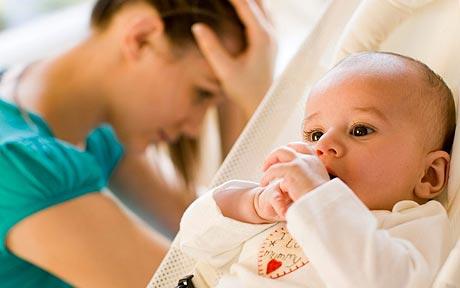
Study Claims Depressed Moms Disturb Their Babies' Sleep


A mother's depression may affect her baby's sleep, a new study suggests.

The results show depressed mothers are more likely to needlessly wake up their infants at night than mothers who are not depressed, the researchers said.

"When depressed mothers sought out their infants at night, their infants did not appear to be in need of parental help. They were either sound asleep or perhaps awake, but not distressed," said study researcher Douglas Teti, professor of human development, psychology, and pediatrics at the Pennsylvania State University.

Depressed mothers who worry excessively about their babies' well-being at night may respond to infant sounds that don't necessarily require response, or move their babies into their own beds to alleviate their own anxieties about whether their infants are hungry, thirsty and comfortable, the researchers said. Mothers who are feeling depressed also may seek out their infants at night for their own emotional comfort, they said.

"Sleep problems often endure beyond early childhood, and can have a negative effect on various aspects of development, including emotional, behavioral, and academic functioning," Teti said. "Understanding how maternal depression and sleep problems combine to affect children's development is important to developing interventions to help reduce these negative consequences."

Teti and colleagues collected data on 45 infants, ages 1 month to 2 years old, and their parents over seven consecutive days. The mothers kept a diary of their infants' sleeping habits, and they also completed a survey to assess their depressive symptoms and worries about their infants.

On the sixth day of the study, the researchers set up video cameras around each baby's bed, and other rooms in the house where mothers took their babies during the night. The cameras captured between 10 and 12 hours of video. What the researchers observed on the videos agreed with what the parents reported.

Mothers with higher levels of depression and more worries about their children's sleep had children whose sleep was more disrupted.

Previous studies had found a link between depression in moms and disturbed sleep in babies, and some researchers had suggested that infants' who slept poorly could affect their mothers' mental health. But the new study shows that it was most likely the mothers' behavior, and not the infants, that played the larger role in the link, the researchers said.

Moms with more symptoms of depression and worries behaved in ways that disrupted their infants' sleep — for example, picking up babies who were sleeping.

If parental depression or worry disrupts both a parent's and an infant's sleep, it could have negative consequences for the parent-child relationship over the long term. In situations like these, steps might be considered to help reduce parents' distress, the researchers wrote in the April 17 issue of the journal Child Development.

Read more here

Saturday, February 11, 2012

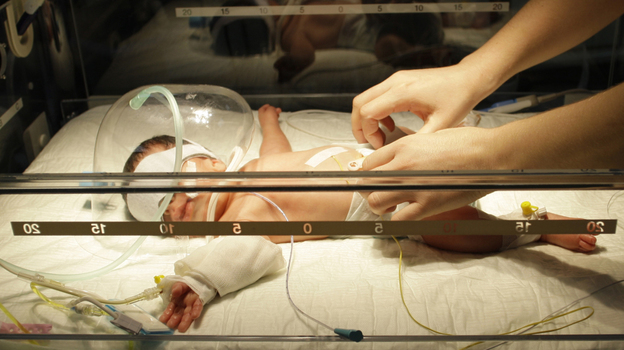
Why Brain Injuries Are More Common In Preemies


Why Brain Injuries Are More Common In Preemies


The most common cause of brain injury in premature infants is a lack of oxygen in the days and weeks after birth, researchers say.
Scientists say they are beginning to understand why brain injuries are so common in very premature infants — and they are coming up with strategies to prevent or repair these injuries.
The advances could eventually help reduce the number of premature babies who develop cerebral palsy, epilepsy or behavioral disorders such as ADHD, researchers told the Society for Neuroscience meeting in Washington, D.C., this week.
Each year more than 60,000 babies are born weighing less than 3.3 pounds. And because of advances in neonatal medicine over the past several decades, most of those babies will survive. But researchers have had less success finding ways to prevent brain damage in these infants.
"That means that overall rates of cerebral palsy and other neurodevelopmental disabilities are on the rise," says David Rowitch, chief of neonatology at the University of California, San Francisco.
The most common cause of brain injury in premature infants is a lack of oxygen in the days and weeks after birth, Rowitch says. The lack of oxygen damages white matter, which provides the "communication highways" that carry messages around the brain and to distant parts of the body, he says.
 
And the babies at greatest risk of this sort of brain damage are those born after as little as six months of gestation, Rowitch says.
"Such a baby would weigh about a pound and would fit into the palm of your hand," he says. "As you can imagine, they're very fragile and vulnerable to stresses."
Those stresses often include periods when an infant's immature lungs are not delivering enough oxygen to the brain, even with help from a mechanical breathing device.
This lack of oxygen appears to damage the most common type of white matter, myelin, which acts like an insulator around the nerve fibers that carry messages in the brain and nervous system. Without enough myelin, short circuits can prevent these messages from getting through, Rowitch says.
He initially found evidence of white matter damage by studying brains from premature infants who died. But since then, he's been able to assess premature infants using a special incubator designed to fit in an MRI scanner.
"We've been able to now take over 250 babies who are very preterm to the MRI scanner safely to show that this is a feasible way to detect white matter injury early on," he says.
Now the question is how to prevent or repair that sort of injury.
Some studies show that it's important to act right away, says Vittorio Gallo from Children's National Medical Center in Washington, D.C.
"There is a very critical developmental time window right after birth," Gallo says. "If development is disturbed during this critical time window then the brain doesn't catch up."
Gallo is part of a team of scientists who have shown that it is possible to intervene — at least in mice. One approach involves giving the mice a drug that speeds up production of myelin, he says.
"We do this intervention right after the injury," he says. "And we found that by targeting specific targets we can recover and regenerate at least part of these cells right after the injury, during that critical developmental time window."
Any drug for people is still years off, Gallo says
But other scientists at the meeting say there are promising treatments available now. These include everything from the magnetic stimulation of certain areas of the brain to temporarily lowering the body temperature of premature infants to protect brain tissue.


Full story here

Tuesday, November 15, 2011

Can Fetus Sense Mother's Psychological State? Study Suggests Yes


As a fetus grows, it's constantly getting messages from its mother. It's not just hearing her heartbeat and whatever music she might play to her belly; it also gets chemical signals through the placenta. A new study, which will be published in Psychological Science, a journal of the Association for Psychological Science, finds that this includes signals about the mother's mental state. If the mother is depressed, that affects how the baby develops after it's born.

In recent decades, researchers have found that the environment a fetus is growing up in -- the mother's womb -- is very important. Some effects are obvious. Smoking and drinking, for example, can be devastating. But others are subtler; studies have found that people who were born during the Dutch famine of 1944, most of whom had starving mothers, were likely to have health problems like obesity and diabetes later.

Curt A. Sandman, Elysia P. Davis, and Laura M. Glynn of the University of California-Irvine study how the mother's psychological state affects a developing fetus. For this study, they recruited pregnant women and checked them for depression before and after they gave birth. They also gave their babies tests after they were born to see how well they were developing.

They found something interesting: what mattered to the babies was if the environment was consistent before and after birth. That is, the babies who did best were those who either had mothers who were healthy both before and after birth, and those whose mothers were depressed before birth and stayed depressed afterward. What slowed the babies' development was changing conditions -- a mother who went from depressed before birth to healthy after or healthy before birth to depressed after. "We must admit, the strength of this finding surprised us," Sandman says.

Now, the cynical interpretation of our results would be that if a mother is depressed before birth, you should leave her that way for the well-being of the infant. "A more reasonable approach would be, to treat women who present with prenatal depression. Sandman says. "We know how to deal with depression." The problem is, women are rarely screened for depression before birth.

In the long term, having a depressed mother could lead to neurological problems and psychiatric disorders, Sandman says. In another study, his team found that older children whose mothers were anxious during pregnancy, which often is co morbid with depression, have differences in certain brain structures. It will take studies lasting decades to figure out exactly what having a depressed mother means to a child's long-term health.

"We believe that the human fetus is an active participant in its own development and is collecting information for life after birth," Sandman says. "It's preparing for life based on messages the mom is providing."

Read more: http://www.sciencedaily.com/releases/2011/11/111110142352

Friday, October 21, 2011

Pre-term babies' exposure to steroids associated with impaired brain growth

Premature infants exposed after birth to drugs known as glucocorticoids are at increased risk for having impaired growth of the cerebellum, according to findings from a new UCSF-led study. The cerebellum is a region of the brain associated with balance, motor learning, language and behavior.

The findings challenge the recent policy statement of The American Academy of Pediatrics, which suggests that low doses of glucocorticoids -- a class of steroid hormones used in premature babies to support lung maturation, the normalization of blood pressure and breathing -- can continue to be used in premies. In their 2010 statement, the Academy recommended that high-dose dexamethasone not be given to babies after birth, but stated that the evidence was insufficient to make a recommendation regarding other doses of glucocorticoids.

In the current study, published in the Oct. 19, 2011, issue of Science Translational Medicine, the researchers found that betamethasone given to mothers in premature labor was not associated with adverse affects on the baby's brain growth. However, they found that premature babies given hydrocortisone or dexamethasone in a low-dose range after birth had, on average, 10 percent smaller cerebellar volumes by the time they were full term.

"This study provides new evidence that these drugs, even at low doses, are associated with impaired cerebellar development when given to babies after birth," said Emily Tam, MD, a child neurologist in the Neurological Intensive Care Nursery at the UCSF Benioff Children's Hospital and lead author of the study.

The long-term impacts on cognitive and motor development will need to be assessed through neurological examinations and developmental testing when the children are at school age, she said. However, previous studies have shown that smaller cerebellar volumes in children born prematurely are associated with significant motor and cognitive impairments by teenage years.

Babies born prematurely may be treated with glucocorticoids for a number of reasons. Betamethasone is often given to mothers in preterm labor to accelerate the baby's lung maturation, and either hydrocortisone or dexamethasone may be given to premature newborns after birth to help with maintaining a normal blood pressure or to shorten the period of time they need help with breathing using a breathing tube.

Read more: http://www.eurekalert.org/pub_releases/2011-10/uoc--pbe101711.php

Friday, September 23, 2011

When is development complete? Some Brain Wiring Continues to Develop Well Into Our 20s


The human brain doesn't stop developing at adolescence, but continues well into our 20s, demonstrates recent research from the Faculty of Medicine & Dentistry at the University of Alberta.


It has been a long-held belief in medical communities that the human brain stopped developing in adolescence. But now there is evidence that this is in fact not the case, thanks to medical research conducted in the Department of Biomedical Engineering by researcher Christian Beaulieu, an Alberta Innovates -- Health Solutions scientist, and by his PhD student at the time, Catherine Lebel. Lebel recently moved to the United States to work at UCLA, where she is a post-doctoral fellow working with an expert in brain-imaging research.
"This is the first long-range study, using a type of imaging that looks at brain wiring, to show that in the white matter there are still structural changes happening during young adulthood," says Lebel. "The white matter is the wiring of the brain; it connects different regions to facilitate cognitive abilities. So the connections are strengthening as we age in young adulthood."

Read more: http://www.sciencedaily.com/releases/2011/09/110922134617.htm?utm_source=feedburner&utm_medium=email&utm_campaign=Feed%3A+sciencedaily%2Fmind_brain+%28ScienceDaily%3A+Mind+%26+Brain+News%29

Thursday, April 07, 2011

Millions Watch Twin Baby Boys Babble: Are They Truly Talking?

By Bonnie Rochman Thursday, April 7, 2


One of my favorite children's books, Before You Were Born, recounts the legend of the angel Lailah, whom rabbinic lore has accompanying babies in utero, sharing the history of their souls. When they're born, Lailah touches them gently above their lip, leaving an indentation and causing them to instantly forget all the wisdom she's imparted. Ostensibly the ability to speak goes out the window as well, leaving a babe to slowly piece together the nuances of language over many years. Apparently, the twin brothers who've become YouTube darlings didn't get the memo.

Millions of people have watched the baby boys, clothed only in diapers and socks, appear to have a full-fledged conversation in their kitchen relying on just one syllable repeated over and over. “Da” becomes a question, an exclamation, a statement. There is cadence and inflection and intuitive understanding of the need to take turns, with one listening while the other babbles. With the accompanying hand gestures — and even the occasional kung-fu-like kick — it feels hard to deny these guys are having a real convo in their own private language.

Babies should be babbling by 10 months and using identifiable words by 14 months, on their road to slapping full sentences together. The twins in the video are using what's known as “reduplicated babbling,” in which they repeat a sound, according to Hope Dickinson, coordinator of Speech-Language Pathology Services at Children's Hospital Boston at Waltham, who spoke with Thrive, the pediatric health blog of Children's Hospital Boston.

Read more at the link.

Monday, April 04, 2011

Being Bilingual May Boost Your Brain Power

In an interconnected world, speaking more than one language is becoming increasingly common. Approximately one-fifth of Americans speak a non-English language at home, and globally, as many as two-thirds of children are brought up bilingual. Research suggests that the growing numbers of bilingual speakers may have an advantage that goes beyond communication: It turns out that being bilingual is also good for your brain. Judy and Paul Szentkiralyi both grew up bilingual in the U.S., speaking Hungarian with their families and English with their peers. When they first started dating, they spoke English with each other. But they knew they wanted to raise their children speaking both languages, so when things turned serious they did something unusual — they decided to switch to Hungarian. Today, Hungarian is the primary language the Szentkiralyis use at home. Their two daughters — Hannah, 14, and Julia, 8 — speak both languages fluently, and without any accent. But they both heard only Hungarian from mom and dad until the age of 3 or 4, when they started school. Read the rest of the article here.

Monday, March 28, 2011

Developmental Problems May Accompany Epilepsy By Rick Nauert PhD Senior News Editor Reviewed by John M. Grohol, Psy.D. on March 28, 2011 New research suggests children with epilepsy are more likely to have psychiatric symptoms — with gender playing a role in the type of developmental issue. In a study of Norwegian children, scientists discovered girls had more emotional problems, while boys had more hyperactivity/inattention problems and issues regarding peer relationships. The study is available to view online in the journal Epilepsia. Previous studies have shown that children with epilepsy are at increased risk of developing behavioral problems and psychiatric disorders including anxiety, depression, and attention-deficit/hyperactivity disorder (ADHD). In a 2003 population-based study, psychiatric disorders were reported in 37 percent of children with epilepsy, while children with diabetes and those in the healthy control group were much lower at 11% and 9%, respectively. Medical evidence, however, has not clearly established when children or teens with epilepsy may be vulnerable to developing psychiatric issues, or how gender influences psychopathology in epilepsy.
Read the rest of the article here.

Friday, February 18, 2011

Understanding ‘Ba Ba Ba’ as a Key to Development
By PERRI KLASS, M.D.
October 11, 2010


As a pediatrician, I always ask about babble. “Is the baby making sounds?” I ask the parent of a 4-month-old, a 6-month-old, a 9-month-old. The answer is rarely no. But if it is, it’s important to try to find out what’s going on.
If a baby isn’t babbling normally, something may be interrupting what should be a critical chain: not enough words being said to the baby, a problem preventing the baby from hearing what’s said, or from processing those words. Something wrong in the home, in the hearing or perhaps in the brain.
Babble is increasingly being understood as an essential precursor to speech, and as a key predictor of both cognitive and social emotional development. And research is teasing apart the phonetic components of babble, along with the interplay of neurologic, cognitive and social factors.
Read the rest of the article here.