Showing posts with label poor sleep. Show all posts

Wednesday, January 27, 2016

Poor sleep could mean strokes for seniors

Poor sleep could raise stroke risk in seniors.

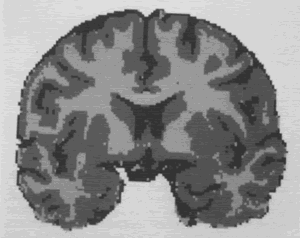
Poor sleep may raise seniors' risk of hardening of the brain arteries, and possibly contribute to the chances of a stroke, a new study suggests.
Researchers examined the autopsied brains of 315 people, average age 90, who had undergone at least one full week of sleep quality assessment before their death. Twenty-nine percent of them had suffered a stroke, and 61 percent had moderate-to-severe damage to blood vessels in the brain.
Those with the highest levels of sleep fragmentation -- repeated awakenings or arousals -- were 27 percent more likely to have hardening of the brain arteries. Among study participants, sleep was disrupted an average of nearly seven times an hour.
For each additional two arousals during one hour of sleep, there was a 30 percent greater likelihood of having visible signs of oxygen deprivation in the brain, the study authors said.
However, the study was not designed to prove a cause-and-effect link between poor sleep and stroke risk.
The findings were independent of other stroke and heart disease risk factors, such as weight, diabetes, smoking and high blood pressure, as well as other health conditions such as Alzheimer's disease, depression, heart failure and pain, according to the study published Jan. 14 in the journal Stroke.
"The forms of brain injury that we observed are important because they may not only contribute to the risk of stroke but also to chronic progressive cognitive and motor impairment," lead investigator Dr. Andrew Lim, an assistant professor of neurology at the University of Toronto, said in a journal news release.
"However, there are several ways to view these findings: sleep fragmentation may impair the circulation of blood to the brain, poor circulation of blood to the brain may cause sleep fragmentation, or both may be caused by another underlying risk factor," said Lim, who is also a neurologist and scientist at Sunnybrook Health Sciences Center in Toronto.
While the findings suggest that sleep monitoring could help identify seniors at risk for stroke, further research is needed to clarify a number of areas.
One expert praised the research, but added that it wasn't the last word on the topic.
"This is an excellent study, highly provocative, but not definitive because of the design, as mentioned by the authors themselves," said Dr. Richard Libman, vice chairman of neurology at Long Island Jewish Medical Center in New Hyde Park, N.Y.
"There appears to be a clear association between poor sleep [sleep fragmentation] and hardening of the arteries and risk of stroke," Libman said. "As noted, the direction of this association is uncertain.
"Sleep, to some degree, is within our control and we should all make attempts to improve the quality of our sleep," he added.
Read more here

Friday, July 10, 2015

How sleep can affect your heart

This article describes the negative effects of getting a poor night's sleep, especially on your heart.

You might think that those nights when you don’t get a wink of sleep can’t do you any harm apart from the frustration you feel knowing that you have to work the next day and you might be asleep at the wheel.

However, sleep disorders have been associated with many conditions that you might develop later on in life. There are studies proving that insomnia or very few hours of sleep per night are linked to memory loss or to strokes as you become older.
Thus, it was proved that people who have the tendency to sleep less than seven hours every day are more likely to suffer a stroke.
A new research now shows that fewer hours of sleep every night might also be a cause for heart attacks later on in life.
The study conducted by researchers at World Health Organization revealed that sleeping disorders are as bad for your heart as smoking or leading a sedentary life.
“Sleep is not a trivial issue. Sleeping disorders were associated with greatly increased incidences of both heart attack and stroke. Poor sleep should be considered a modifiable risk factor for cardiovascular disease along with smoking, lack of exercise and poor diet,” said Professor Valery Gafarov.
He also added that a normal person should sleep between 7 and 8 hours every night and, if they don’t manage to do that, they should seek specialized help from a sleep doctor.
The study, which began in 1994, involved 657 men whose ages varied from 25 to 64 years old, from Russia. They had never suffered any heart attack or stroke and they did not have diabetes, which is a disease that can lead to these conditions.
Their sleep quality was rated according to the Jenkins Sleep Scale and it was regarded as either very bad, bad or poor for those who had a sleeping disorder.
They were monitored for heart attacks and strokes over the next 14 years and it was revealed that 63 percent of those who suffered a heart attack also suffered from a sleeping disorder.
Therefore, it was shown that people who had sleeping problems were more than 2 times more likely to have a heart attack and 1.5 to 4 times more at risk of having a stroke that those who had a  normal sleep every night.
These findings are extremely worrying, given the fact that the mortality rate associated with heart attacks is extremely high. It was estimated that it represents half of the causes of death all over the world, making it the leading cause in many countries, including the U.S.
This is why preventive measures are extremely important. We need to sleep well, exercise regularly, avoid smoking and drinking alcohol, eat healthy food and maintain a normal body weight.
Read more here

Thursday, June 11, 2015

In autistic children, poor sleep linked to impaired intelligence

A study indicates that poor sleep is linked to impaired intelligence in autistic children.

For children with autism, there are differences in brain activity during sleep in comparison with typically developing children, say Canadian researchers, whose findings underline the relationship between sleep quality and cognitive performance in all children and adolescents.
The researchers found that stage 2 sleep spindles, which are important for taking sleep into deeper phases and have been linked to learning potential, are shorter and of lesser frequency among autistic children, even when these children do not have overt sleep problems.
The investigators believe that the results, which showed a differential effect on subsequent performance on IQ tests, could result from differences in cortical organization and information processing in children affected by the condition.
"This is an important discovery that confirms the major role of sleep in consolidating cognitive abilities," said Roger Godbout, PhD, director of the Sleep Research Laboratory at the Hôpital Rivière-des-Prairies, who is also a professor at Université de Montréal, Canada, in a release.
"This study establishes beyond a doubt that children and adolescents are particularly affected by a lack of sleep, especially because they are in an important developmental period. This is also an important finding given that 10% to 25% of Canadian children and adolescents — and 45% to 85% of autistic children — have sleep problems."
The research was published in the July issue of the International Journal of Psychophysiology.
New Insight
The researchers studied 13 typically developing and 13 high-functioning autistic children who did not complain of poor sleep. They slept two consecutive nights in a sleep laboratory. Non–rapid eye movement sleep, sleep spindles, and sigma activity were measured using electroencephalography (EEG).
Stage 2 sleep spindles were identified visually on C3, C4 (central), and Fp1, Fp2 (frontal) leads. They were defined as bursts of EEG activity at 12-16 Hz lasting 0.5-2.0 seconds. Sigma activity was also recorded on the C3, C4, Fp1, and Fp2 EEG leads during stage 2 sleep, with total sigma (12-15.75 Hz), slow sigma (12-13 Hz), and fast sigma (13.25-15.75 Hz) frequencies determined.
The children also completed the French–Canadian version of the Wechsler Intelligence Scale for Children–IV test on the morning after each of the sleep recording nights.
Although autistic and typically developing children spent the same length of time in stage 2 sleep, for the autistic children, sleep spindle density was significantly lower and sleep spindles were of shorter duration at the Fp1 electrode for both the total and second quarter of the night (P < .05 for all).
In the last 2 hours of the night, fast sigma EEG activity was significantly lower at the C3 and C4 electrode in autistic than in typically developing children (P < .05 for both).
There was a negative correlation between verbal IQ and sleep spindle density at the Fp2 electrode in typically developing children. In contrast, there was a negative correlation between verbal and full-scale IQ scores with C3 sleep spindle density in autistic children.
The duration of sleep spindles at C4 was positively correlated with verbal IQ, but only in typically developing children. There was a positive correlation between performance IQ and fast sigma activity at C4 during the latter part of the night, again only in typically developing children.
Lead author Sophie Tessier, a student in the Sleep Laboratory and Clinic, Hôpital Rivière-des-Prairies, in Montreal, said that it was important that they studied children without sleep difficulties.
She explained that differences in the density and duration of sleep spindles suggest that autistic children have differences in cortical functioning, even when their sleep appears to be unaffected.
The findings also raise questions about the nature of autism.
"Our aim is really to understand what autism is and what its consequences are," Tessier said. "We are still wondering about the etiology and what it affects, and so we're still understanding how the brain network is connected and how it works."
She said that it is clear that the learning and cognitive processing are different between autistic and unaffected children during the day, and now it is known that their sleep patterns are "completely different."
"We also see that sleep doesn't support cognition, and the resources for learning are not available in the same way, so we are trying to understand what is autism and where it has consequences...to find the target of intervention eventually," Tessier told Medscape Medical News.
A Good First Step
Commenting on the findings for Medscape Medical News, Shalini Paruthi, MD, fellow of the American Academy of Sleep Medicine and director of the Pediatric Sleep and Research Center at SSM Cardinal Glennon Children's Medical Center, in St. Louis, Missouri, said that the study was a "very interesting" descriptive study.
Although noting that the children included in the study were not typical of the autistic population, in whom sleep problems are extremely common, she added: "I think it's definitely a good first start at trying to understand their EEG sleep patterns and see if that correlates with their cognitive processing."
Dr Paruthi would like to see the study repeated in a larger group of children.
"Once you have a larger sample size, you can really see if those differences are becoming significant and something that can distinguish the typically developing normal children vs those children who have autism," she told Medscape Medical News.
She explained that it will also be important to look at different groups of children with autism, including those who are low functioning, and determine how EEG differences relate to daytime functioning.
If the impact of sleep is replicated in further studies, Dr Paruthi believes that it may help identify which specific types of services a child would benefit from to improve their functioning at a faster rate.
"The best outcome that we can hope for by doing any kind of research in kids who do have autism is how closely can we get them to learn how to communicate better, communicate more effectively, and communicate more frequently, and how we get them to really function in life.
"I think it's really important that we continue to do research on children who have autism. Everything takes time, so starting with small groups, starting with the kids who are more high functioning...I think that is totally an appropriate step, because we know that so many children are diagnosed with autism," she said.
Read more here

Tuesday, April 28, 2015

Poor sleep affects you over a lifetime

New research indicates that poor sleep not only affects you the next day, but over a lifetime.

A poor night's sleep can affect performance at work the next day, but over time, could disrupted sleep affect brain function in a permanent way? New evidence suggests it could.
A new study found that patients with issues like sleep apnea or heavy snoring developed problems with cognition around 10 years earlier than those without sleep-breathing troubles.
"Abnormal breathing patterns during sleep such as heavy snoring and sleep apnea are common in the elderly, affecting about 52 percent of men and 26 percent of women," explained the study's lead author, Ricardo S. Osorio, M.D., of the NYU School of Medicine in New York, in a press release.
In sleep apnea, breathing starts and stops repeatedly over the course of the night. Osorio and team wanted to see whether sleep apnea and other abnormal breathing patterns (called sleep-disordered breathing) were tied to cognitive issues.
To do so, these researchers looked at data from the Alzheimer’s Disease Neuroimaging Initiative, which involved over 2,000 adults between the ages of 55 and 90. Some patients had no cognitive problems, while some developed Alzheimer's disease or mild cognitive impairment (MCI). In MCI, cognitive issues have developed beyond what is expected in normal aging but not far enough to be considered dementia.
Osorio and team found that patients who had sleep-disordered breathing started showing signs of cognitive problems an average of 10 years earlier than those who did not have issues with abnormal breathing patterns during sleep.
When looking only at patients with cognitive issues, those with sleep-disordered breathing started showing signs of MCI at an average age of 77. The same was true for those without the breathing troubles at an average age of 90.
In this group of patients, Alzheimer's disease was also seen earlier -- at an average age of 83 among those with sleep-disordered breathing, compared to an average age of 88 among those without breathing issues.
Osorio and team also looked at the effects of treating abnormal breathing patterns with continuous positive airway pressure (CPAP). CPAP delivers air pressure through a mask during sleep, helping to keep the airways open.
Treatment with CPAP seemed to reduce the risk of developing cognitive issues earlier, Osorio and colleagues found. Patients who used CPAP developed MCI at an average age of 82, compared to an average age of 72 among those who did not receive treatment for their sleep-disordered breathing.
"These findings were made in an observational study and as such, do not indicate a cause-and-effect relationship,” Osorio noted. “However, we are now focusing our research on CPAP treatment and memory and thinking decline over decades, as well as looking specifically at markers of brain cell death and deterioration.”
This study was published online April 15 in the journal Neurology.
Several study authors received industry support within the past two years and held patents involving procedures related to the study. A number of groups funded this research, such as the Foundation for Research in Sleep Disorders and the Alzheimer’s Disease Neuroimaging Initiative.
Read more here

Thursday, January 08, 2015

Most US teens are sleep deprived

A recent study shows that most of the teens in the US are sleep deprived.

More than 90 percent of American high school students are chronically sleep-deprived, putting their health and academic performance in jeopardy, a new report finds.
The study, based on U.S. national data, finds that most teens don't get the minimum 9 to 10 hours of sleep per night that's recommended by standard guidelines.
Teenagers do face a number of challenges as they try to get adequate sleep, experts say.
"I don't believe there's one culprit," said the study's lead author, Charles Basch, a professor of health and education at the Teacher's College at Columbia University in New York City.
"For some children it's too much homework, for some it's health problems like asthma," he explained. "For others it may be anxiety or depression, or the prescription medications they are taking for such conditions. Recreational drugs can be a factor, as can having electronics in the bedroom."
Whatever the reason, government surveys show that poor sleep is an ongoing issue for most teenagers.
"This type of data has only been collected since 2007, so we can't say whether the situation has been getting worse historically," Basch said. "But what we can clearly say is that a very substantial portion of high school students throughout America is not getting enough sleep."
His team noted that teens, especially, need adequate sleep because it's crucial to memory, attention, emotional well-being and overall physical health.
In the study, the researchers tracked findings from four U.S. government surveys conducted in 2007, 2009, 2011 and 2013 as part of the Youth Risk Behavior Surveillance System.
Each year, between roughly 12,000 to 15,000 students in grades 9 through 12 were asked about how many average hours of sleep they got each school night.
Overall, less than 10 percent of teens said they were actually meeting current U.S. Centers for Disease Control and Prevention guidelines for sleep. Only about 7 percent of girls, and around 8 to 9 percent of boys said they got nine to 10 hours of sleep per night.
And, for the most part, sleep patterns for teenagers appeared to get worse with age -- surveys showed that by the time they reached 12th grade, a whopping 95 percent of high school seniors were not routinely meeting CDC sleep guidelines.
Girls tended to fare worse than boys, with girls being more prone to sleep five hours or fewer per night and less likely to get nine or more hours of sleep each night, the study found.
Race also appeared to figure into the equation: black teenagers were significantly more likely to get five or fewer hours of sleep per night than their white peers.
In each survey, 20 percent of black boys and girls were found to have daily sleep routines that included five or fewer hours of sleep. The same was true of 15 percent of Hispanic girls and about 12 percent of Hispanic boys.
According to Basch, early school start times are one major reason behind all those sleepless teens.
"More and more attention is being focused on the start times of schools, with the idea being that very early class schedules do not serve good sleep patterns," he said.
"That is certainly one of the problems," agreed Kelly Baron, an assistant professor of neurology and director of the Behavioral Sleep Medicine Program in the department of neurology with the Feinberg School of Medicine at Northwestern University in Chicago.
She called the data from the new report "alarming."
"While we're still trying to understand why this is happening, one of the reasons is clearly school start times," Baron said. "Having children wake up to start school at 6 or 7 a.m. is really at odds with their biology."
She explained that a person's sleep patterns "naturally change across our lifespan. And one of the most profound changes is that our natural 24-hour rhythm shifts as we enter puberty. Sure -- some of it's social, [and] kids just want to say up late and such. But the need to stay up later and sleep in later is also biological. So early school times set them up for a chronic sleep disadvantage."
So, can parents do anything to encourage more shut-eye for their kids?
"They can and should get involved," Baron said, "setting curfews, establishing sleep schedules, and limiting screen time in the bedroom. A healthy sleep environment at home is key."
The new study is published in the December issue of the CDC journal Preventing Chronic Disease.
Read more here

Monday, September 08, 2014

Not enough sleep can cause the brain to shrink

A study shows that not getting enough sleep can cause a brain's gray matter to shrink.

Not getting a good night's sleep might be linked to shrinkage of the brain's gray matter over time, new research suggests.
Faster deterioration of three parts of the brain was seen in mostly older adults who had poor sleep quality, though not necessarily too little sleep. Sleep difficulties included having trouble falling asleep, waking up during the night or waking up too early.
However, it isn't clear whether poor sleep causes the changes in the brain, whether a shrinking brain causes poor sleep, or whether a bit of both is occurring.
"We spend roughly a third of our lives asleep, and sleep has been proposed to be 'the brain's housekeeper,' serving to restore and repair the brain," said lead researcher Claire Sexton, a postdoctoral research assistant at the University of Oxford in England.
"It follows that if sleep is disrupted, then processes that help restore and repair the brain are interrupted and may be less effective, leading to greater rates of decline in brain volume," she explained.
But it's just as likely, she said, that the deterioration in the brain also contributes to difficulty sleeping.
"It may be that greater rates of decline in brain volumes make it more difficult for a person to get a good night's sleep," said Sexton, adding she suspects the problems run in both directions.
While a visiting research fellow at the University of Oslo, Norway, Sexton and her fellow researchers gave brain scans to 147 Norwegian adults, average age 54, at the study's start and an average of 3.5 years later.
At the time of the second scan, the adults also filled out questionnaires about their sleep quality, including how long and how well they slept, how long it took to fall asleep, how much time in bed was spent actually asleep, how often they woke up, how sleepy they were during the day and whether they used sleeping medications. Participants took an average of 20 minutes to fall asleep and slept an average of seven hours a night, the researchers found.
After making adjustments for differences in the participants' physical activity, weight and blood pressure -- which have been shown to affect sleep quality -- the researchers compared changes in participants' brain scans and reported their findings online Sept. 3 in Neurology.
In those with poor sleep quality, the researchers saw shrinkage in one part of their frontal cortex and some atrophy, or deterioration, throughout three other parts of the brain, including parts involved with reasoning, planning, memory and problem-solving.
The study didn't test participants' thinking skills, so it couldn't prove that poor sleep or brain shrinkage was linked to poor memory or difficulty thinking. However, past research has found links between declining memory and decreases in brain volume.
"We often correlate brain shrinkage with losing brain tissue, and assume that that isn't advantageous as you get older," said Anton Porsteinsson, director of Alzheimer's disease care, research and education at the University of Rochester School of Medicine and Dentistry in New York.
"Sleep disturbance is such a common symptom among the general population, and it often becomes worse as you age," he said. "There is growing data to suggest that sleep disturbance may be a risk factor for poor outcomes in terms of brain cells and other medical issues as well."
The correlation was only with poor quality of sleep, not shorter sleep. The reduced brain size in poor sleepers was seen across all ages, but the correlation was stronger among adults over 60, the study found.
"What this study signals to me is that [good bedtime habits] and good sleep matters," Porsteinsson said. "Whether that has to be natural sleep or whether we can use medications to enhance sleep has not been answered, but it's probably best to improve your natural sleep patterns."
Sexton made several suggestions for those hoping for better sleep. Besides talking to a doctor about sleep problems, she recommended having a bedtime routine and going to bed at the same time each night.
Other tips include removing gadgets such as smartphones and tablets from the bedroom, not checking emails right before sleep, being physically active during the day, avoiding caffeine late in the day and spending time outside in the sunlight each day.
Read more here

Monday, August 11, 2014

Link between diabetes and poor sleep

Recent research shows a link between diabetes and person having poor sleep.

In the June 6, 2014, online edition of The American Journal of Respiratory and Critical Care Medicine, researchers concluded there appears to be a confirmed link between sleep apnea and the risk of developing diabetes.

The study notes the risk of developing diabetes increases by over 30 percent with the occurrence of severe obstructive sleep apnea. The study analyzed 8,678 adults who were tested for obstructive sleep apnea (median age was 48 years, and 62 percent were male) over a period of seven years, from 1994 to 2011. Nearly 12 percent of the study group developed diabetes during the 67 months of follow-up.
“This study is significant because I believe it represents the first time any research has shown a direct correlation between sleep apnea and diabetes. Of course, it’s a well known fact that sleep apnea has been linked to heart disease, stroke, high blood pressure and even depression,” says Shad Morris, DMD, a member of the American Academy of Dental Sleep Medicine, a diplomat of the American Academy of Sleep and Breathing, and CEO of Premier Sleep Solutions LLC. [Morris was not involved in the study.] “Simply stated, the research findings indicate to me that if we can treat sleep apnea in its early stages, we may be able to help many people avoid diabetes,” he adds.
Morris states that the most common treatment for obstructive sleep apnea has traditionally been in the form of continuous positive airway pressure (CPAP) machines. “While CPAP machines have been used for years, recent research has shown that in many cases, custom-made oral appliances can be as effective as CPAP in treating sleep apnea. Plus, in my experience, a substantial percentage of patients find CPAP machines to be so cumbersome and uncomfortable that they eventually refuse to use them regularly, and as a result, their overall health suffers.”
According to Morris, dentists with experience in oral appliance therapy are most familiar with the various designs of appliances, and can help determine which is best suited for a patient’s specific needs. A board-certified sleep medicine physician must first provide a diagnosis and recommend the most effective treatment approach. Then, a dentist with experience in treating obstructive sleep apnea may provide treatment and follow-up. Follow-up care serves to assess the treatment of the patient’s sleep disorder, the condition of the patient’s appliance and the patient’s physical response to the appliance.
Most insurance companies now cover oral appliance therapy and the oral appliances. Morris notes that Medicare is leading the way relative to standards of care within the industry.
Read more here

Tuesday, July 22, 2014

PTSD and poor sleep

A study claims that poor sleep in people with PTSD could lead to a decrease in physical activity and an increase in obesity.

Poor sleep quality may lower physical activity in people with post-traumatic stress disorder, according to a recent study.
Researchers found that PTSD was independently associated with worse sleep quality at baseline, and participants with current PTSD at baseline had lower physical activity one year later.
Further analysis found that sleep quality completely mediated the relationship between baseline PTSD status and physical activity at the one-year follow-up, suggesting that the association of reduced sleep quality with reduced physical activity could comprise a behavioral link to negative health outcomes such as obesity.
"We found that sleep quality was more strongly associated with physical activity one year later than was having a diagnosis of PTSD," Lisa Talbot, lead author of the study and postdoctoral fellow at the San Francisco VA Medical Center and the University of California- San Francisco, said in a statement. "The longitudinal aspect of this study suggests that sleep may influence physical activity."
For the study, researchers collected and analyzed data from  the Mind Your Heart Study, a prospective cohort study of 736 outpatients recruited from two Department of Veterans Affairs (VA) medical centers. PTSD was assessed with the Clinician-Administered PTSD Scale (CAPS).  At baseline participants rated their sleep quality overall during the last month, and at baseline and again one year later they reported how physically active they have been during the last month. Of the 736 military veteran participants, 258 had current or subsyndromal PTSD.
Researchers said the results suggest that behavioral interventions to increase physical activity should include an assessment for sleep disturbance.
"The findings also tentatively raise the possibility that sleep problems could affect individuals' willingness or ability to implement physical activity behavioral interventions," Talbout said. "Sleep improvements might encourage exercise participation."
The findings were recently published in the  Journal of Clinical Sleep Medicine, which is published by the American Academy of Sleep Medicine.
Read more here

Tuesday, July 15, 2014

Common issues that hurt your sleep

This article discusses common issues that hurt people's sleep, and tells you what to do about them.

You might remember a time when you could drift off to sleep in an instant and remain in a state of blissful slumber well past lunchtime the next day. Now your sleep is more likely to be lighter and more fitful, and when you wake up in the morning you don't always feel refreshed.

A lack of good-quality sleep could be a natural consequence of changing sleep-wake patterns after menopause. It's also likely that the issue is physical--and fixable. Many conditions can disrupt your rest, and they can be treated. It's important to address these issues. Lack of sleep does more than make you drowsy. Chronic insomnia has been linked to a variety of health problems, including obesity, high blood pressure, heart disease, diabetes and depression.

Go through this list to see whether you might have one of these sleep-stealing conditions. Also check your medicine cabinet. Some medications, including corticosteroids, beta blockers, cold and flu remedies, and certain antidepressants also can interfere with sleep.
1. Sleep apnea
The conventional image of sleep apnea is of the overweight man who snores, but women of any size can also develop these repeated pauses in breathing while they sleep.
"A woman who has a narrow jaw or a change in muscle tone can get apnea," says Dr. Julia Schlam Edelman, clinical instructor in obstetrics and reproductive biology at Harvard Medical School and author of "Successful Sleep Strategies for Women and Menopause Matters: Your Guide to a Long and Healthy Life." Either of these anatomical issues can block oxygen from reaching your lungs (and subsequently the rest of your body) while you sleep. Snoring might not be your main symptom if you do have sleep apnea, but you will notice that you're especially sleepy during the day.
Solution: See a specialist for a sleep study. You may be able to relieve apnea with a few lifestyle adjustments, such as sleeping on your side or losing weight. Your doctor might also suggest an oral appliance or a CPAP machine that blows air into your airways to keep them open at night.
2. Diet
What you eat can affect your sleep. Spicy foods can contribute to painful heartburn. Big meals leave you uncomfortably full, and over time can contribute to obesity--a well-known risk factor for sleep apnea. Too much caffeine could keep you wide awake, even if you finish your coffee in the morning.
"It takes six hours to clear half of the caffeine from your body. If you have enough caffeine, it's still in your body at 4 in the morning," says Dr. Edelman. And though a glass of wine or two with dinner will make you feel relaxed or even sleepy, it won't help you sleep. "You can fall asleep, but once you're asleep you can't sleep deeply," she says.
Solution: Eat dinner at least a couple of hours before bedtime, and keep the meal light. Avoid spicy, fatty foods, as well as alcohol and caffeine. Also, don't drink too many fluids before bed. Having to constantly get up to go to the bathroom can disrupt your sleep, too.
3. Lack of exercise
Sleep and exercise complement each other. Working out regularly can help you sleep better, and conversely, you're more likely to exercise if you get a good night's rest.
Solution: Exercise every day if you can, ideally in the morning. Doing a high-energy aerobic routine too close to bedtime can have the opposite of the intended effect, making you too energized to sleep. A gentle yoga stretch before bed probably won't hurt, though. It might even help you relax.
4. Pain
Arthritis aches or any other kinds of pain don't make for restful slumber. Conversely, a lack of sleep can increase your pain. Researchers believe that a lack of sleep may activate inflammatory pathways that exacerbate arthritis pain. Poor sleep can also make you more sensitive to the feeling of pain.
Solution: In addition to the pain remedies your doctor recommends, try using a heating pad or taking a warm bath before bed to soothe achy joints or muscles. Lying against a body pillow can put you in a more comfortable position while you sleep.
5. Restless legs syndrome
Women are twice as likely as men to have restless legs syndrome (RLS)--a condition that causes a creepy, crawly feeling and uncontrollable movements in the legs at night. It's often linked to hormonal changes early in life and during pregnancy, but RLS can continue as you get older. RLS isn't just miserably uncomfortable--researchers at Harvard have linked this condition to an increased risk for heart disease and depression in women.
Solution: Try simple interventions first. Exercise every day, take a hot bath before bed, massage your legs, and cut back on things that can make you jittery--like caffeine and tobacco. If these measures don't work, your doctor may recommend one of several medicines that reduce RLS symptoms--including ropinirole (Requip), pramipexole (Mirapex), rotigotine (Neupro), or gabapentin enacarbil (Horizant).
6. Depression
"Depression is a common compromiser of sleep, and it's much more common in women than in men," Dr. Edelman says. Women who are depressed may sleep more than usual, but their sleep isn't restful. Some of the antidepressants meant to counteract depression, particularly SSRIs, can also interfere with sleep.
Solution: See your primary care doctor, psychologist, psychiatrist, or therapist for help, which may include medications, talk therapy, or both. If your antidepressant seems to be keeping you awake, ask your doctor to switch you to another drug.
7. Stress
It's impossible to sleep when the weight of the day is pressing on you. Finding a sense of calm before bed isn't easy, especially when you can't unplug from the demands of your day.
Solution: Establish wind-down time. Do a quiet, relaxing activity before bed that doesn't involve a screen. Talk to a friend or family member, sew, or read a real book--not one on a backlit tablet device.
"Just allow yourself to have quiet time," Dr. Edelman adds. And don't sleep with your smartphone on your bedside table.
8. Poor sleep habits
Sometimes insomnia stems from long-ingrained behaviors, like staying up too late or engaging in stimulating activities before bed.
Solution: Follow a few basic sleep hygiene strategies. Go to bed and wake up at the same times each day. Keep your bedroom cool, dark, and comfortable. Use your bed for sleep and sex only. If you can't fall asleep within 15 minutes, get up and leave the bedroom. Read or do another quiet activity for 15 to 20 minutes until you get sleepy.
Read more here

Wednesday, June 11, 2014

Binge drinking, marijuana use, and poor academic performance predicted by sleeping problems

A study shows that binge drinking, marijuana use, and poor academic performance are predicted by problems sleeping.

While the temptations to stay up late are many, a small new study suggests a very good reason for college students to hit the hay. Those who are poor sleepers are more likely to get worse grades and to withdraw from a course, according to a new study. In fact, the effects of poor sleep were about as strong as binge drinking and marijuana use on a student's academic performance.
The researchers analyzed data from over 43,000 students included in the spring 2009 American College Health Association's National College Health Assessment (NCHA). After controlling for potentially confounding factors that might predict how a college student fares academically, like clinical depression, feelings of isolation or chronic health problems, the researchers found that getting poor sleep was a strong predictor of problems at school.
While few students are likely to have a clinical sleep disorder, Roxanne Prichard, Ph.D., associate professor of psychology at the University of St. Thomas in St. Paul, Minnesota tells The Huffington Post, about 60 percent say they have some kind of problem sleeping. But for all the effort colleges put into anti-drinking and de-stressing campaigns, little time or money is spent to promote better sleep -- and doing so could help both students and the colleges themselves, she says.
"Sleep really isn't systematically approached in a way that could have major economic benefits to both the students and the universities in terms of increased retention," she says. Indeed, reducing the number of courses a student withdraws from by just one ups his or her probability of graduating by 14 percent, she says -- and it goes without saying that student retention is good for a university's bottom line.
Prichard hopes more schools decide to include a screening for sleep problems among students, which could ultimately limit costs of care of university health centers, she says. "I don't think sleep problems are showing up on the questionnaire intake forms for health services, and that could be explaining a lot of the other problems that you see showing up," she says. "Recurrent illness could be sleep problems."
Prichard and co-investigator Monica Hartmann, Ph.D., professor of economics at the University of St. Thomas, found that poor sleep was even more detrimental among freshmen, according to the study. "I think that's partially because freshmen have the worst sleep of any age group," she says. Not only are they hungry for independence from their parents, but they also are more likely to be "delayed phase" -- essentially, they are more biologically inclined to be night owls because of their age, she says. Focusing especially on first-year students is a smart idea for universities, she says, because freshmen-year success (or lack thereof) is a strong predictor of whether or not a student drops out his or her sophomore year.
The research, published in an online supplement of the journal SLEEP, will be presented Tuesday, June 3, at SLEEP 2014, the 28th annual meeting of the Associated Professional Sleep Societies.
Read more here

Friday, June 06, 2014

What causes poor sleep, and how do I get better sleep?

This article discusses health conditions that cause a person to get poor sleep, and discusses things everyone can do to get better sleep.

With any illness, injury or sniffle, you'll hear one common suggestion: Get plenty of rest. Whether we're nursing a broken bone or trying to recover from the flu, we are led to believe that adequate sleep will put us right on the path to recovery. But just how important is sleep, and what about those of us who can't seem to get quality sleep?
Lack of sleep is linked to several health concerns:
Colds, flu, viruses and infections. One of the first systems to be adversely affected by lack of quality sleep is immune function. When you're tired, you feel worn down -– and that's not just a feeling. Your body is using all energy reserves to fight off the viruses and exposure to germs that might not affect a person with a thriving immune system. Also, if you receive vaccines, the sleep-deprived are slow to respond to the immunity the vaccines are designed to build.
Heart disease. According to Donna Arand, clinical director of the Kettering Sleep Disorder Centers in Dayton, Ohio, lack of sleep causes an inflammatory response to the cardiovascular system. Rises in C-reactive protein due to impaired sleep are warning signs that the body is responding to a perceived injury, infection or disease. In this case, lack of sleep is that perceived threat that results in inflammation. Poor sleep also causes the body to produce more stress hormones, which may contribute to cardiovascular disease. Chronic stress coupled with lack of quality sleep causes double trouble for the heart, arteries and ventricles.
Diabetes. In the past decade, there has been growing evidence that too little sleep can affect hormones and metabolism in ways that promote diabetes. According to a study published in the Lancet in 1999, healthy men with a week of impaired sleep –- only four hours a night –- showed dramatic changes in glucose tolerance. They also had higher-than-normal glucose levels after just one week. This study involved healthy people with no previous record of insulin resistance or history of diabetes.
For those already diagnosed with diabetes, sleep deprivation leads to extremely poor blood sugar control. These studies do not include control factors of the snowball effect that often starts with losing a night's sleep. Sleepy people don't usually reach for healthy foods as snacks and meals. They don't usually choose to walk during their lunch break -– or head to the weight room after work. Tight glucose control involves nutrition and exercise parameters, and both of those are adversely affected by just one night of impaired sleep.
How Can We Improve Our Sleeping Patterns? 
1. Keep the bedroom for sleep and sex. Don't let the bedroom become the home office. Keep the clutter and distraction of that quickly approaching timeline out of the bedroom. Keep a cool temperature, and design the room for its purpose. Walking into your bedroom should be a clear change from the rest of the house.
2. Put down the screens. An hour or more before bedtime, put down the computer, smartphone and TV. Dim the lights throughout the house, and start getting your mind ready to wind down. Some people use blackout shades in the bedroom during the summer months. Before electricity, people stayed awake two or three hours past dusk with candlelight, and their natural circadian rhythms prompted them to sleep. There's a lot of research that links artificial light –- including blue-light from screens -– with interrupted sleep patterns. If we're staying up six or more hours past dusk with fluorescent light glowing, our bodies don't know when it’s time to sleep.
3. Pay attention to what you eat and drink before bedtime. Try not to go to bed ravenous or stuffed. Be aware that a glass of wine might help calm the nerves, but metabolizing alcohol keeps the body in an alert mode while the mind is trying to snooze. Have that glass of wine earlier in the evening. And yes, eating bad pizza right before bed can cause nightmares. So can stuffing yourself with any food minutes before trying to sleep. Your body is trying to do two things: metabolize food and sleep. The food is going to win, and that's a cause for dreams and other disruptions to quality sleep.
4. Move your body. There is substantial evidence that exercise helps you sleep. Even moderate exercise like a daily walk promotes better sleep -– in terms of quality and quantity. Be careful with your exercise timing, so you're not too energized with endorphins to sleep. There's also a direct link between exercise and stress, and stress is a big factor in sleep-deprived people. Move your body. Manage your stress. Get quality sleep.
Read more here

Monday, April 14, 2014

Study: Poor sleep doubles number of hospitalizations in heart failure patients

A study shows that heart failure patients have double the number of hospitalizations when they do not sleep well.

Poor sleep doubles hospitalizations in heart failure, according to new research in nearly 500 patients presented today at EuroHeartCare 2014.
EuroHeartCare is the official annual meeting of the Council on Cardiovascular Nursing and Allied Professions (CCNAP) of the European Society of Cardiology (ESC). This year's meeting is organized jointly with the Norwegian Society of Cardiovascular Nurses. It takes place 4-5 April in Stavanger, Norway.
Dr Peter Johansson, first author of the study and a heart failure nurse at the University Hospital of Linköping, Sweden, said: "Sleep is important for everyone and we all have to sleep to feel good. We know that sleep problems are common among patients with heart failure. But until now there was no data on whether poor sleep persists over time and how that relates to hospitalizations."
He added: "Our study shows that some patients with heart failure have chronic sleep problems and this more than doubles their risk of unplanned hospitalizations. We need to ask all our heart failure patients whether they sleep well and if not, find out why."
The current study included 499 patients hospitalized for heart failure who participated in the Co-ordinating study evaluating Outcomes of Advising and Counselling in Heart failure (COACH) study. During the initial hospitalization, information was collected on physical functioning, mental health and sleep. Sleep problems were assessed using the question "Was your sleep restless?" from the Centre for Epidemiologic Studies Depression Scale (CES-D). After 12 months the researchers recorded the number and cause of unplanned hospitalizations during the follow up period and assessed sleep again.
The researchers found that 215 patients (43%) had sleep problems at discharge from the initial hospitalization and nearly one-third (30%) had continued sleep problems at 12 months. Patients with continued sleep problems were two times more likely to be hospitalized during the follow up period than those without any sleep problems. Risk was double for all-cause hospitalizations and for cardiovascular hospitalizations. The results were adjusted for physical and mental health factors to ensure that the association was real.
Of the 284 patients without sleep problems at initial discharge, 14% developed a sleep problem during the follow up period. There was a trend for these patients to have more cardiovascular hospitalizations than patients without sleep problems but the finding was not significant.
Dr Johansson said: "Our finding that consistently poor sleep leads to twice as many hospitalizations in patients with heart failure underlines the impact that sleep can have on health. In Sweden we don't generally ask our heart failure patients about sleep and this study shows that we should. If patients say their sleep is poor that may be a warning signal to investigate the reasons."
He added: "Patients may have poor sleep hygiene, which means they do things that prevent them from getting a good night's sleep. These include drinking coffee or too much alcohol late at night, having a bedroom that is too hot or too cold, or having upsetting conversations before going to bed."
Dr Johansson continued: "Patients need to have realistic expectations. One night of poor sleep is unlikely to be a cause for concern, and sleep patterns naturally change with age. But patients who say they consistently have poor sleep should be taken seriously. To help the patients, health professionals for example can look at their medications or send them to a sleep lab for a sleep apnea investigation."
There are a number of possible explanations for the observed association between poor sleep and increased hospitalizations in patients with heart failure. Previous studies have shown that poor sleep can increase inflammatory activity and levels of stress hormones, both of which accelerate the progression of heart failure. It is also known that poor sleep is related to psychological distress, and it could be that these patients worry more about changes to their health and are more likely to visit the hospital.
Dr Johansson said: "Poor sleep may itself lead to worsening heart failure and increased hospitalizations. Alternatively it could be a signal that patients have other problems like sleep apnoea or psychological distress that are keeping them awake. All heart failure patients should be asked about sleep so that if there is a problem we can find out what it is and provide treatment."
Read more here