Showing posts with label heart failure. Show all posts

Monday, April 14, 2014

Study: Poor sleep doubles number of hospitalizations in heart failure patients

A study shows that heart failure patients have double the number of hospitalizations when they do not sleep well.

Poor sleep doubles hospitalizations in heart failure, according to new research in nearly 500 patients presented today at EuroHeartCare 2014.
EuroHeartCare is the official annual meeting of the Council on Cardiovascular Nursing and Allied Professions (CCNAP) of the European Society of Cardiology (ESC). This year's meeting is organized jointly with the Norwegian Society of Cardiovascular Nurses. It takes place 4-5 April in Stavanger, Norway.
Dr Peter Johansson, first author of the study and a heart failure nurse at the University Hospital of Linköping, Sweden, said: "Sleep is important for everyone and we all have to sleep to feel good. We know that sleep problems are common among patients with heart failure. But until now there was no data on whether poor sleep persists over time and how that relates to hospitalizations."
He added: "Our study shows that some patients with heart failure have chronic sleep problems and this more than doubles their risk of unplanned hospitalizations. We need to ask all our heart failure patients whether they sleep well and if not, find out why."
The current study included 499 patients hospitalized for heart failure who participated in the Co-ordinating study evaluating Outcomes of Advising and Counselling in Heart failure (COACH) study. During the initial hospitalization, information was collected on physical functioning, mental health and sleep. Sleep problems were assessed using the question "Was your sleep restless?" from the Centre for Epidemiologic Studies Depression Scale (CES-D). After 12 months the researchers recorded the number and cause of unplanned hospitalizations during the follow up period and assessed sleep again.
The researchers found that 215 patients (43%) had sleep problems at discharge from the initial hospitalization and nearly one-third (30%) had continued sleep problems at 12 months. Patients with continued sleep problems were two times more likely to be hospitalized during the follow up period than those without any sleep problems. Risk was double for all-cause hospitalizations and for cardiovascular hospitalizations. The results were adjusted for physical and mental health factors to ensure that the association was real.
Of the 284 patients without sleep problems at initial discharge, 14% developed a sleep problem during the follow up period. There was a trend for these patients to have more cardiovascular hospitalizations than patients without sleep problems but the finding was not significant.
Dr Johansson said: "Our finding that consistently poor sleep leads to twice as many hospitalizations in patients with heart failure underlines the impact that sleep can have on health. In Sweden we don't generally ask our heart failure patients about sleep and this study shows that we should. If patients say their sleep is poor that may be a warning signal to investigate the reasons."
He added: "Patients may have poor sleep hygiene, which means they do things that prevent them from getting a good night's sleep. These include drinking coffee or too much alcohol late at night, having a bedroom that is too hot or too cold, or having upsetting conversations before going to bed."
Dr Johansson continued: "Patients need to have realistic expectations. One night of poor sleep is unlikely to be a cause for concern, and sleep patterns naturally change with age. But patients who say they consistently have poor sleep should be taken seriously. To help the patients, health professionals for example can look at their medications or send them to a sleep lab for a sleep apnea investigation."
There are a number of possible explanations for the observed association between poor sleep and increased hospitalizations in patients with heart failure. Previous studies have shown that poor sleep can increase inflammatory activity and levels of stress hormones, both of which accelerate the progression of heart failure. It is also known that poor sleep is related to psychological distress, and it could be that these patients worry more about changes to their health and are more likely to visit the hospital.
Dr Johansson said: "Poor sleep may itself lead to worsening heart failure and increased hospitalizations. Alternatively it could be a signal that patients have other problems like sleep apnoea or psychological distress that are keeping them awake. All heart failure patients should be asked about sleep so that if there is a problem we can find out what it is and provide treatment."
Read more here

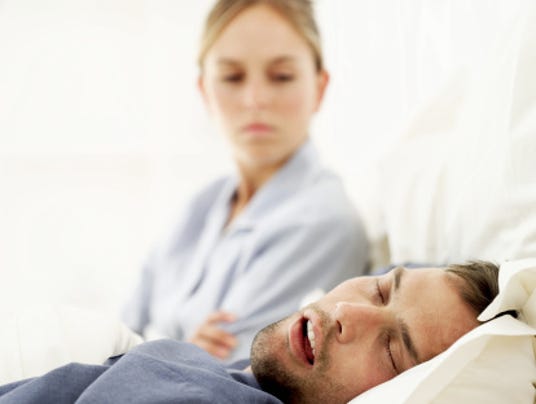
Sunday, April 06, 2014

Sleep issues can lead to heart conditions

This article discusses how snoring and other sleep issues can lead to heart conditions.

Adequate amount of quality sleep is very essential to maintain good health, replenish energy, and restore the mind. It plays a vital role in maintaining a healthy balance of hormones, strengthening the immune system, sustaining proper brain function, and supporting healthy growth and development. Sleep-related disorders are one of the most commonly encountered problems today and can immensely affect your physical and mental health, cognitive capacity, productivity, quality of life, and safety.

Research shows that sleep disorders and heart disease are closely linked and one condition can lead to the other. Your heart, being only a little larger than a fist, works hard to pump almost 2,000 gallons of blood each day. Sleep provides your heart a chance to slow down, and your breathing and blood pressure drop to levels lower than what occurs while you are awake. Lack of sleep can lead to several heart-related conditions which include:
  • High blood pressure
  • Chest pain
  • Hardening of arteries (atherosclerosis or cholesterol-clogged arteries)
  • Heart attack
  • Stroke
  • Coronary heart disease
  • Congestive heart failure
  • Congenital heart defects

  • Studies have shown that habitual loud snorers are at a considerably higher risk of developing heart disease and stroke as compared to people who never or rarely snore. As you sleep, the soft tissue at the back of your head and neck relaxes and gradually narrows the airways, causing you to snore. Certain factors such as obesity, smoking, consumption of alcohol, allergic reactions, and muscle relaxing antidepressants and sedatives are known to increase the risk of persistent snoring. If not treated, snoring usually gets worse over time, causing the muscles to get weaker and making it harder to keep the airways open.

    Patients with sleep disorders are often sleepy during the day and have reduced ability to concentrate, remember, or think, and are at a higher risk of falling asleep while driving or working. Studies have shown that proper treatment of sleep apnea greatly reduces your risk of developing heart-related conditions and, in addition, improves pre-existing cardiac disorders. Medical treatment for sleep disorders may involve the following:
    • Weight loss if you are overweight.
    • Avoiding drugs/habits that increase the risk of sleep apnea such as sleeping pills, sedatives, alcohol, and tobacco smoking.
    • Using Continuous Positive Airway Pressure (CPAP) -- a slightly pressurized mask is fit over the nose or over the nose and mouth to hold the airway open and allow the patient to sleep normally.
    • Surgery on the upper airway (if your doctor thinks you are a candidate for surgery) -- enlarging the air passage by removing the uvula and some of the surrounding tissue.
    • Wearing a dental device or mouth guard that is designed to move the lower jaw slightly down and outwards helps keep the airway open during sleep.
    • Getting a polysomnogram -- a sleep study that is usually done overnight in a sleep center. It electronically transmits and records your brain waves, heart rate, breathing patterns, oxygen levels in the blood, your eye and limb movements, and muscle tension as you sleep. A sleep specialist analyzes the quality of your sleep and determines whether or not you have a sleep order.
    Sleep disorders are very common and are often ignored by patients. You should talk to your doctor about your risk of having a sleep disorder and get regular medical check-ups. A timely diagnosis and early medical treatment can help you recover from your sleep disorder and reduce the risk of other serious health issues. It is important to remember that good quality sleep is more of a necessity than a luxury for better cardiovascular and overall health.

    Read more here

    Saturday, September 21, 2013

    Sleep apnea can worsen skin cancer outcomes

    A recent study showed that people with sleep apnea had significantly worse melanoma and skin cancer outcomes.

    A bad night’s sleep can be the result of stress, poor diet, or simply not getting enough hours of rest. If you begin to fall into a pattern of back-to-back sleepless nights and find yourself experiencing daytime sleepiness, slow reflexes, and poor concentration, you may be suffering from a common sleep disorder — sleep apnea. The common yet underrecognized condition affects the way that approximately 22 million Americans breathe when they sleep at night, according to the American Sleep Apnea Association. Eighty percent of moderate and severe cases of obstructive sleep apnea (OSA) are undiagnosed, putting patients at risk for high blood pressure, chronic heart failure, and other cardiovascular problems.
    The sleep disorder has also been linked to a higher prevalence of cancer mortality. In sleep apnea, there is a lack of adequate air flow traveling into the lungs through the mouth and nose, causing a reduction in oxygen levels in the blood. This common trait in sleep apnea is known to play an important role during the various stages of tumor formation and progression. In fact, the severity of the sleep disorder may predict the risk of malignant skin melanoma, according to a new study.
    Findings presented at the European Respiratory Society (ERS) Annual Congress in Barcelona unveiled the link between skin cancer and sleep apnea in humans. Previous studies have examined the link between the sleep disorder and both mortality and incidence rates from cancer. However, this is the first study to analyze the relationship between a specific cancer — skin melanoma — and sleep apnea in humans. The researchers measured the aggressiveness of melanoma, along with the presence and severity of sleep apnea, in 56 patients diagnosed with malignant skin melanomas.
    Sixty-one percent of patients with malignant skin melanomas had sleep apnea, while 14.3 percent had severe sleep apnea. The results of the study revealed that as the severity of sleep apnea increased, the progression of skin melanoma also increased. Extreme sleep apnea was also associated with a higher growth rate or depth of invasion of the tumor, reports Science Daily.
    "This is the first study in a human sample to show that sleep apnea can worsen the outcomes of melanoma." said lead author of the study, Dr. Francisco Campos-Rodriguez, from the Hospital de Valme in Seville, Spain.
    While most patients with sleep apnea suffer specifically from OSA, central sleep apnea is the second most common type of sleep apnea diagnosed. This type of sleep disorder happens when the brain doesn’t send the right signals to the muscles that are responsible for controlling breathing, according to the University of Maryland Medical Center. Some people even suffer from a combination of the two types of sleep apneas — known as complex sleep apnea.
    The research findings by Campos-Rodriguez and his colleagues could have important clinical implications, if applied to a larger sample size. "If the results are confirmed in larger studies, this would have important clinical implications, particularly as sleep apnea can be easily treated and this could open up new therapeutic possibilities for people with both conditions,” Campos-Rodriguez said. The researchers have begun a bigger trial that will further analyze the link between the sleep disorder and skin melanoma, involving 450 patients with cutaneous melanoma. This study could provide a breakthrough in the treatment of skin cancer patients with sleep apnea.
    According to the American Cancer Society, approximately 120,000 new cases of melanoma will be diagnosed in the United States in a year. The most preventable cause of skin melanoma is exposure to the sun.
    Read more here

    Tuesday, July 16, 2013

    Women's Sleep and Heart Health

    This article discusses how the amount and quality of sleep women get is extremely important to their heart health.

    Getting enough sleep on a regular basis is one important way to protect the health of your heart. Poor and insufficient sleep is associated with a range of cardiovascular problems, including high blood pressure,heart attack, and heart failure. Both men and women are at increased risk for these conditions. But we continue to learn that when it comes to health problems associated with sleep, the particular risks to men and women are not always the same. A new study suggests that for women who already have heart disease, poor sleep may be particularly dangerous to their heart health.
    Statistics from the American Heart Association reveal that heart disease is a bigger problem for women than most of us think:
    Heart disease is the No. 1 killer of women, and is more deadly than all forms of cancer combined.
    • Heart disease causes 1 in 3 women’s deaths each year, killing approximately one woman every minute.
    • An estimated 43 million women in the U.S. are affected by heart disease.
    • Since 1984, more women than men have died each year from heart disease.
    • Only 1 in 5 American women believe that heart disease is her greatest health threat.
    Research indicates that poor-quality sleep—and waking too early in particular—is associated with increased inflammation among women with heart disease. There was no similar association found for men, suggesting that women with heart disease and sleep problems may be at particular risk for inflammation that can be damaging to the heart.
    Researchers at the University of California San Francisco investigated the relationship between sleep quality and inflammation linked to coronary heart disease. They also sought information about how an association between sleep and inflammation might differ between men and women. Their investigation included 980 men and women at the outset, and 626 completed the 5-year study. All of those included were suffering from coronary heart disease. The average age of men in the study was 66. Women were slightly younger, with an average age of 64. Researchers measured sleep quality by asking participants to rate their sleep over the previous month. They also asked for reports of some of the most common sleep problems, including difficulty falling asleep, difficulty staying asleep, waking frequently throughout the night, and waking too early in the morning. Researchers assessed inflammation levels using 3 biomarkers: Interkeukin-6, C-reactive protein, and Fibrinogen.
    After 5 years, researchers repeated tests for inflammation and once again sought reports on sleep quality and sleep problems. When they analyzed data for both men and women together, researchers found no links between inflammation and sleep quality. However, when they analyzed data taking gender into account, researchers found a relationship between inflammation and sleep existed for women, but not for men:
    • Women who reported poor sleep quality experienced greater increases in levels of inflammation over the 5-year period than men.
    • Women who reported their sleep quality as “very poor” or “fairly poor.” experienced increases to their inflammation markers that were 2.5 times greater than men who reported the same levels of poor sleep.
    • The association between inflammation and sleep remained intact for women even after taking into account other factors that might influence inflammation, including age, cardiac function, body mass index, medication use, and lifestyle factors.
    • The link between inflammation and sleep for women with coronary heart disease was particularly strong among those women who had a tendency to wake too early in the morning.
    • Women were more likely than men to report waking too early. They were slightly more likely than men to report waking frequently during the night and having difficulty falling asleep.
    • Because the majority of women in the study were post-menopausal,researchers hypothesized that low estrogen levels might explain the link between poor sleep and inflammation. This question was not examined in the study itself.
    This is not the first study to suggest that lack of sleep may be particularly dangerous for women’s heart health. Researchers in the United Kingdom also found inflammation linked to lack of sleep in women. This large-scale study included 4,600 adult men and women. As in the current research, changes to women’s inflammation levels were linked to sleep problems, whereas no such association was found in men. In an Italian studythat included both men and women, women with resistant hypertension—a form of high blood pressure that is not responsive to medication—were 5 times as likely to have sleep problems. There was no similar link between resistant hypertension and poor sleep in men.
    This latest study provides some important information about one way that sleep may affect heart health. It’s also another reminder that when it comes to health in general and sleep in particular, gender matters.  In recent years there has been an increased focus on learning more about the differences in sleep between men and women, and how these differences may contribute to specific health risks. Evidence suggests that circadian rhythms in men and women are markedly different. Our circadian clocks are remarkably sensitive and precise, and even a small difference in circadian timing can have a significant impact on sleep. We need to continue to pay attention to gender differences in sleep, as a way to better understand, diagnose, and treat both sleep problems and the broad array of health concerns now associated with poor sleep.
    Read more here

    Saturday, March 09, 2013

    Link found between insomnia and heart failure

    A new study shows a link between insomnia and heart failure.

    People who suffer from insomnia appear to have an increased risk of developing heart failure, according to the largest study to investigate the link.

    The study, which is published online today in the European Heart Journal, followed 54,279 people between the ages of 20-89 for an average of more than 11 years, and found that those who suffered from three symptoms of insomnia had a more than three-fold increased risk of developing heart failure compared to those with no insomnia symptoms.
    Dr Lars Laugsand, a post-doctoral fellow in the Department of Public Health, Norwegian University of Science and Technology, Trondheim, Norway, said: "We related heart failure risk to three major insomnia symptoms including trouble falling asleep, problems staying asleep, and not waking up feeling refreshed in the morning. In our study, we found that persons suffering from insomnia have increased risk of having heart failure. Those reporting suffering from all three insomnia symptoms simultaneously were at considerably higher risk than those who had no symptoms or only one or two symptoms."
    However, he stressed that although the study shows that insomnia is linked to an increased risk of heart failure, it does not show that it causes it. "We do not know whether heart failure is really caused by insomnia, but if it is, insomnia is a potentially treatable condition using strategies such as following simple recommendations concerning sleeping habits (often referred to as sleep hygiene), and several psychological and pharmacological therapies. Evaluation of sleep problems might provide additional information that could be used in prevention of heart failure."
    He said further research would be required to establish whether or not insomnia caused the condition. "It is still unclear why insomnia is linked to higher heart failure risk. We have some indications that there might be a biological cause, and one possible explanation could be that insomnia activates stress responses in the body that might negatively affect heart function. However, further research is also needed to find the possible mechanisms for this association."
    Dr Laugsand and his colleagues collected data from men and women enrolled in the Nord-Trondelag Health study (HUNT) between 1995 and 1997 and who were free from heart failure when they joined. Heart failure is a condition in which the heart is unable to pump enough blood around the body at the right pressure. It usually occurs because the heart muscle has become too weak or stiff to work properly. The researchers followed the study participants until 2008, by which time there had been a total of 1412 cases of heart failure.
    When participants joined the study they were asked whether they had difficulty going to sleep and staying asleep, with the possible answers being "never," "occasionally," "often" and "almost every night." They were also asked how often they woke up in the morning not feeling refreshed (non-restorative sleep): "never, few times a year," "one to two times per month," "once a week," "more than once a week."
    After adjusting for factors that could affect the results, such as age, sex, marital status, education, shift work, blood pressure, cholesterol, diabetes, body mass index, physical activity, smoking, alcohol, any previous heart attack, depression and anxiety, the researchers found that having difficulties going to sleep and staying asleep almost every night, and having non-restorative sleep more than once a week were associated with an increased risk of heart failure when compared with people who never or rarely suffered from these symptoms. There was a trend showing a link between the frequency of the symptoms and the increased risk, although most of these findings did not reach statistical significance.
    When they looked at the number of symptoms, the researchers found a statistically significant three-fold (353%) increased risk of heart failure for people who had all three insomnia symptoms, compared to those with none, after adjusting for most confounding factors apart from depression and anxiety. When they adjusted their findings to include depression and anxiety, the risk was still significant, with a slightly more than four-fold risk (425%) of heart failure.
    The authors write in their paper: "We found a moderate risk increase related to the individual insomnia symptoms. However, the risk among those with all the three insomnia symptoms simultaneously was particularly high even after adjustment for established cardiovascular risk factors and psychological distress. This finding may be interpreted as suggesting that compromising some aspects of sleep may be somehow compensated for, and the net effect on cardiovascular disease may be limited. For example, having difficulty falling asleep might be compensated for by a satisfactory depth and a good continuity of sleep. However, if the initiation of sleep is poor and combined with repeated awakenings and superficial sleep, there may not be any compensatory mechanisms."
    Read more here