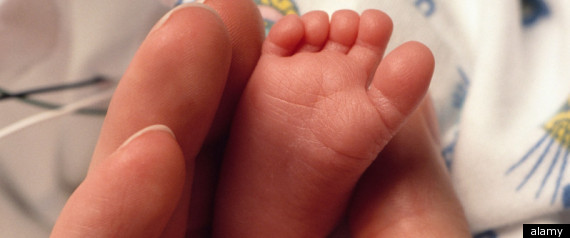
Attention-deficit/hyperactivity disorder, or ADHD, is the most common childhood psychiatric disorder. Scientists do not know what causes it, but genetics play a clear role. Other risk factors have also been identified, including premature birth, low birth weight, a mother's use of alcohol or tobacco during pregnancy, and environmental exposures to toxins like lead.
Information, News & Discussion about Infant Pediatric & Adolescent Neurology & Sleep Disorders. Science Diagnostics Symptoms Treatment. Topics include: Seizures Epilepsy Spasticity Developmental Disorders Cerebral Palsy Headaches Tics Concussion Brain Injury Neurobehavioral Disorders ADHD Autism Serving Texas Children's Neurology, Epilepsy, Developmental & Sleep Problems in The Houston Area and The San Antonio / Central & South Texas Areas
Tuesday, October 22, 2013
Study: Sunny climates may reduce ADHD
Attention-deficit/hyperactivity disorder, or ADHD, is the most common childhood psychiatric disorder. Scientists do not know what causes it, but genetics play a clear role. Other risk factors have also been identified, including premature birth, low birth weight, a mother's use of alcohol or tobacco during pregnancy, and environmental exposures to toxins like lead.
Saturday, August 24, 2013
Risk of autism linked to induced labor
A new study finds that pregnant women who have their labor started or sped up artificially are slightly more likely to have autistic children.
The increased autism risk likely stems from an underlying problem with the pregnancy, rather than any of the methods used to jump-start labor, says lead author Simon Gregory of the Duke Institute of Molecular Physiology.
It's possible that "infants destined to develop autism are less likely to send out the correct biochemical signals for normal progression of labor," says Tara Wenger, a pediatric genetics fellow at the Children's Hospital of Philadelphia, who wasn't involved in the new study, published in JAMA Pediatrics.
Pregnancy complications increase the risk of many developmental disorders, says Michael Rosanoff, associate director for public health research and scientific review at Autism Speaks, an advocacy group.
And a growing number of studies now link autism to a variety of things that can compromise the health of a pregnancy, says Rosanoff, who wasn't involved in the study, funded by the Environmental Protection Agency. Researchers are increasingly looking at prenatal risk factors for autism, because this period plays a key role in brain development. Science has ruled out vaccines as a cause of autism, he says.
But studies have found that children are at higher risk for autism if they are born early or very small; if they are in medical distress during delivery; if they have older mothers or fathers; or if they are born less than a year after an older sibling. Autism risk also goes up if a mother has diabetes or high blood pressure; is obese; is exposed to significant air pollution during pregnancy; had low levels of folic acid; takes medications such as an anti-seizure drug called valproic acid; or makes antibodies toxic to the fetal brain.
Gregory notes that his findings are still preliminary and that women shouldn't resist a doctor's recommendation about jump-starting labor out of fear of autism.
Inducing labor can often reduce the risk of stillbirth, such as when a pregnancy lasts more than a week or so beyond the usual 40 weeks, says co-author Chad Grotegut, a Duke maternal-fetal medicine specialist. Augmenting labor, which may be done when natural labor stalls, can reduce the risk of maternal or fetal infections or post-partum hemorrhage.
And while the link between autism and jump-starting labor is consistent with smaller, earlier studies, the research doesn't prove that labor induction or augmentation actually causes autism, Gregory says.
In the new study, researchers analyzed the records of 625,042 North Carolina births, which were linked to school records that noted any diagnosis of autism.
Those records didn't specify where children fell on the autism spectrum, the study says.
Doctors can induce or speed up labor in several ways, such as by applying a hormone gel to the cervix or giving women intravenous oxytocin, an artificial version of a natural hormone involved in labor, Gregory says.
Women whose labor was induced were 13% more likely to have an autistic child, compared to women whose labor wasn't induced. Women whose labor was sped up were 16% more likely to have a child later diagnosed with autism, the study found. Those whose labor was both induced and augmented were 27% more likely to have an autistic child.
In comparison, the risk of autism went up 23% when the mother had diabetes, and 25% when the fetus was in distress, the study says.
There was no increase in autism risk among women who had C-sections, Gregory says.
He says scientists should look more closely at labor induction with oxytocin. Oxytocin, sometimes called the "love hormone," plays a key role in social behavior and reasoning.
Gregory and other researchers are investigating oxytocin to treat some of the symptoms of autism.
About one in 88 American children have an autism diagnosis, according to the Centers for Disease Control and Prevention.
Rather than one disease, autism is now regarded as a collection of conditions with similar traits but different causes, Rosanoff says. People on the autism spectrum are extremely diverse. Some are non-verbal and profoundly disabled; others have successful careers, particularly in science and technology, describing themselves as different, rather than disabled.
"Autism is so heterogeneous," Rosanoff says. "We're never going to get to the one cause."
Read more here
Wednesday, July 24, 2013
Study claims poor sleep during pregnancy can cause birth complications
Poor sleep quality and quantity during pregnancy can disrupt normal immune processes and lead to lower birth weights and other complications, finds a University of Pittsburgh School of Medicine study published today in the journalPsychosomatic Medicine. Women with depression also are more likely than non-depressed women to suffer from disturbed sleep and to experience immune system disruption and adverse pregnancy outcomes.
- Women with depression and poor sleep are at greatest risk for adverse birth-related outcomes. Cytokine levels may be one biological pathway through which this is accomplished, particularly with regard to preterm birth.
- Any shift in immunity, such as poor sleep and/or depression, could set the stage for increased risk for adverse outcomes.
- At 20 weeks, depressed pregnant women have higher levels of inflammatory cytokines compared to non-depressed women.
- At 30 weeks of pregnancy, differences in cytokines among depressed and non-depressed women were negligible, likely because as pregnancy progresses, levels of cytokines normally increase.
Monday, July 15, 2013
Study: In-Vitro fertilization related to slight risk of mental deficit
Monday, May 06, 2013
Babies with high birth weight at greater risk for autism
The biggest study of fetal growth and autism to date has reported that babies whose growth is at either extreme in the womb, either very big or very small, are at greater risk of developing autism.
Monday, March 04, 2013
Study: Ultrasound shows risk of autism at birth
Low-birth-weight babies with a particular brain abnormality are at greater risk for autism, according to a new study that could provide doctors a signpost for early detection of the still poorly understood disorder.
Wednesday, February 20, 2013
Reduced Risk of Preterm Birth for Pregnant Women who Received Flu Vaccination
Pregnant women who received the H1N1 influenza vaccine during the 2009 pandemic were less likely to have premature babies, and their babies weighed more on average.
Saturday, February 04, 2012
Can Low Birth Weight Raise Autism Risk?
After studying data on more than 3,700 pairs of identical twins, researchers from Northwestern University found that low birth weight was associated with more than triple the risk for autism spectrum disorder among twins in which autism only affected one of the children.
"That only one twin is affected by ASD [autism spectrum disorder] in some identical twin pairs suggests that environmental factors may play a role either independently or in interaction with autism risk genes," study author Molly Losh, director of Northwestern's Neurodevelopmental Disabilities Laboratory, said in a university news release.
"Our study of discordant twins -- twin pairs in which only one twin was affected by ASD -- found birth weight to be a very strong predictor of autism spectrum disorder," she added.
The study, which was released online in advance of publication in an upcoming print issue of the journal Psychological Medicine, used data from the Swedish Twin Registry's Child and Adolescent Twin Study.
In analyzing twins in which one baby was more than 14 ounces, or at least 15 percent heavier at birth than the other, the researchers found the risk for autism rose 13 percent for every 3.5 ounce drop in birth weight.
The study results suggested that birth weight could play a role in the complex causes of autism by interacting with a child's underlying genetic predisposition, or likelihood, of developing the condition, the researchers said.
Losh added that because autism is a developmental disorder involving early brain development, prenatal and perinatal environmental factors, such as birth weight, may be especially important.
The researchers noted, however, their findings may not apply to children who are not part of a multiple-birth pregnancy.
While the study found an association between birth weight and autism risk, it did not prove a cause-and-effect relationship.
Read more: http://www.nlm.nih.gov/medlineplus/news/fullstory_121145.html
Sunday, January 22, 2012
Another Clue in the Mystery of Autism
Although the genetic basis of autism is now well established, a growing body of research also suggests that environmental factors may play a role in this serious developmental disorder affecting nearly one in 100 children. Using a unique study design, a new study suggests that low birth weight is an important environmental factor contributing to the risk of autism spectrum disorder (ASD).
"Our study of discordant twins -- twin pairs in which only one twin was affected by ASD -- found birth weight to be a very strong predictor of autism spectrum disorder," said Northwestern University researcher Molly Losh. Losh, who teaches and conducts research in Northwestern's School of Communication, is lead author of the study that will be published in the journalPsychological Medicine and is now available online.
Prior twin studies have shown that when one identical twin had ASD, the other twin was much more likely to have ASD than not. "Because identical twins share virtually 100 percent of their genes, this is strong evidence for the role of genetics in autism," said Losh. "Yet it is not 100 percent the case that ASD affects both identical twins in a twin pair."
"That only one twin is affected by ASD in some identical twin pairs suggests that environmental factors may play a role either independently or in interaction with autism risk genes," she added. "And because autism is a developmental disorder impacting brain development early on, it suggests that prenatal and perinatal environmental factors may be of particular importance."
The researchers found that lower birth weight more than tripled the risk for autism spectrum disorder in identical twin pairs in which one twin had ASD and the other did not.
To control for shared genetic and environmental factors, the researchers used a co-twin control study design in which the ASD-affected twin served as the case and the unaffected twin served as the control. They found the risk for autism spectrum disorder rose 13 percent for every 100 gram- (3.5 ounce-) decrease in birth weight.
"There's been a great deal of misinformation about the causes of autism -- from the 1950s misconception that the distant maternal behavior of what were dubbed "refrigerator mothers" was at fault to the ill-informed myth that vaccines can cause autism," said Losh.
Losh and her colleagues' findings add to a growing body of knowledge about the complex causes of autism and suggest that birth weight could be one of the environmental features that interacts with underlying genetic predisposition to autism.
Losh, who directs Northwestern's Neurodevelopmental Disabilities Laboratory, warned that the findings from twin studies might not extend to singletons, as the prenatal and perinatal conditions for twins and singletons differ in important ways.
The researchers studied a population-based sample of 3,725 same-sex twin pairs that were part of the Swedish Twin Registry's Child and Adolescent Twin Study that was directed by Paul Lichtenstein of Sweden's Karolinska Institute. The discordant twins they studied were pairs in which one twin was more than 400 grams (about 14 ounces) or at least 15 percent heavier at birth than the other.
Read more: http://www.sciencedaily.com/releases/2012/01/120119143334
Sunday, December 11, 2011
Low Birthweight May Take A Toll On Cognitive Abilities Later In Life
A new, Finland-based study published in the journal Neurology on Monday suggests that very low-birthweight babies -- those under 3.3 pounds -- scored lower than normal birthweight babies when researchers considered their general intelligence, attention, visual memory and executive functioning as adults. The latest report joins prior studies that have suggested that severely preterm babies do worse on neurocognitive tests.
To look at the potential impact of birthweight on the brain, the authors of the new study compared approximately 100 adults with very low birthweight and approximately 100 who had not had very low birthweight.
"The most significant finding is that the differences we found persist into young adulthood and characterize a wide range of cognitive abilities," said Katri Raikkonen of the Institute of Behavioral Sciences at the University of Helsinki and one of the study's authors.
The researchers paid particular attention to executive function, which the National Center for Learning Disabilities defines as a set of mental processes used to perform activities such as planning, organizing, strategizing and paying attention to details.
In doing so, they found that the low-birthweight adults scored worse on tests looking at things like psychomotor speed, attention and distractibility.
According to Raikkonen, one potential explanation is the potential for brain injuries among preterm babies, which can occur from inadequate oxygen. She told HuffPost that the brain's plasticity -- its capacity to change in the wake of adverse events -- may not fully compensate for those early injuries.
But not all of the very low-birthweight babies looked at in the study were born premature, indicating the findings should not be extrapolated broadly to all babies born preterm, cautioned Dr. Michael Katz, senior vice president of research and grants at the March of Dimes.
"In as much as there were a small number of those [very low birth weight] babies who were born preterm, there appears to be some connection," Katz said. "But it leaves the question: Is the influence on cognitive abilities because of weight or because of low gestational age?"
What Katz said is clear is the fact that severely premature infants may have significant intellectual impairment, but that is highly individualized. The brain, he explained, continues developing long after birth. Some very low-birthweight and preterm babies may grow up with neurocognitive impairments or issues, others may not.
And that, according to Discenza, is where parents of preterm and very low-birthweight babies, like herself, could use help.
"These parents are so overwhelmed and we need to work a lot harder with them," she said, allowing that she has seen some uptick in awareness of these issues since her daughter was born.
"Every one of these low-birthweight babies should be qualifying for early intervention automatically," Discenza argued. "The reality is, these babies are at risk."