Showing posts with label sleep loss. Show all posts

Wednesday, November 04, 2015

Health consequences of texting in bed

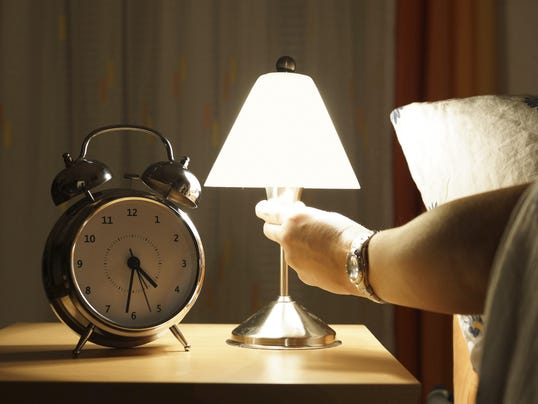
A study indicates that texting in bed can lead to losing sleep in addition to poor school performance in teens.

Many American teens text in bed, leading to lost sleep, daytime drowsiness and poorer school performance, a new study says.
Researchers from New Jersey looked at nearly 3,200 middle and high school students in the state. They found that nearly 62 percent of the kids used their smartphones in some capacity after bedtime; nearly 57 percent texted, tweeted or messaged in bed; and nearly 21 percent awoke to texts.
"Our study confirms that many teenagers are texting late at night when they should be sleeping. This behavior is more common among older teenagers, especially those in high school, and among girls," said study co-author Vincent DeBari. He is director of research at the Seton Hall University School of Health and Medical Sciences, in South Orange.
"One of the most worrisome aspects of our findings is that in addition to affecting the quality and amount of sleep teenagers are getting, bedtime smartphone use seems to be having a negative impact on their level of alertness during the day and on their grades in school," DeBari said in a university news release.
His study co-author, Dr. Peter Polos, added that teens whose sleep is disrupted by incoming texts may feel compelled to respond to those texts immediately. These exchanges can go on for hours.
"This leads to excessive stimulation at night. Light from electronic devices can suppress the secretion of melatonin, a hormone that promotes sleep. All of these factors combine to make sleep difficult in the face of excessive smartphone use at night," said Polos, a member of the sleep medicine division of the JFK Neuroscience Institute in Edison, N.J.
The researchers also found that smartphone use just before or after bedtime may worsen teens' tendency to go to bed much later and sleep until late morning. This behavior has been linked with depression, anxiety and attention-deficit hyperactivity disorder, the study authors said.
"Repeatedly, studies have shown that today's adolescent students are seriously sleep-deprived, and that it affects their health, their mood and their safety behind the wheel. Our study shows that the unrestricted use of smartphones at night may be a major contributing factor," Dr. Sushanth Bhat, an assistant professor of neuroscience at Seton Hall, said in the news release.
"Since getting the proper amount of sleep is very important for brain development and learning in the teenage years, our study should prompt parents and guardians to consider placing reasonable limitations on adolescent smartphone usage at night," Bhat concluded.
The study findings appear in the October issue of the Journal of Adolescence.
Read more here

Saturday, February 28, 2015

The link between not getting enough sleep and diabetes

Not getting enough sleep causes changes in the body which can mimic diabetes thus explaining the link between the two.

Lack of sleep can elevate levels of free fatty acids in the blood, accompanied by temporary pre-diabetic conditions in healthy young men, according to new research published online February 19, 2015, in Diabetologia, the journal of the European Association for the Study of Diabetes.
The study, the first to examine the impact of sleep loss on 24-hour fatty acid levels in the blood, adds to emerging evidence that insufficient sleep -- a highly prevalent condition in modern society -- may disrupt fat metabolism and reduce the ability of insulin to regulate blood sugars. It suggests that something as simple as getting enough sleep could help counteract the current epidemics of diabetes and obesity.
"At the population level, multiple studies have reported connections between restricted sleep, weight gain, and type 2 diabetes," said Esra Tasali, MD, assistant professor of medicine at the University of Chicago and senior author of the study. "Experimental laboratory studies, like ours, help us unravel the mechanisms that may be responsible."
The researchers found that after three nights of getting only four hours of sleep, blood levels of fatty acids, which usually peak and then recede overnight, remained elevated from about 4 a.m. to 9 a.m. As long as fatty acid levels remained high, the ability of insulin to regulate blood sugars was reduced.
The results provide new insights into the connections, first described by University of Chicago researchers 15 years ago, between sleep loss, insulin resistance and heightened risk of type 2 diabetes.
The researchers recruited 19 healthy male subjects between the ages of 18 and 30. These volunteers were monitored through two scenarios in randomized order. In one, they got a full night's rest -- 8.5 hours in bed (averaging 7.8 hours asleep) during four consecutive nights. In the other, they spent just 4.5 hours in bed (averaging 4.3 hours asleep) for four consecutive nights. The two studies were spaced at least four weeks apart.
Each subject's sleep was carefully monitored, diet was strictly controlled and blood samples were collected at 15 or 30 minute intervals for 24 hours, starting on the evening of the third night of each study. The researchers measured blood levels of free fatty acids and growth hormone, glucose and insulin, and the stress hormones noradrenaline and cortisol. After four nights in each sleep condition, an intravenous glucose-tolerance test was performed.
They found that sleep restriction resulted in a 15 to 30 percent increase in late night and early morning fatty acid levels. The nocturnal elevation of fatty acids (from about 4 a.m. to 6 a.m.) correlated with an increase in insulin resistance -- a hallmark of pre-diabetes -- that persisted for a nearly five hours.
Cutting back on sleep prolonged nighttime growth hormone secretion and led to an increase in noradrenaline in the blood, both of which contributed to the increase in fatty acid levels.
Although glucose levels were unchanged, the ability of available insulin to regulate blood glucose levels decreased by about 23 percent after a short sleep, "suggesting," the authors note, "an insulin-resistant state."
"It definitely looks like a packaged deal," said the study's lead author, Josiane Broussard, PhD, a former graduate student at the University of Chicago who is now a post-doctoral research scientist at Cedars-Sinai Medical Center's Diabetes and Obesity Research Institute in Los Angeles.
"Curtailed sleep produced marked changes in the secretion of growth hormone and levels of noradrenaline -- which can increase circulating fatty acids," Broussard said. "The result was a significant loss of the benefits of insulin. This crucial hormone was less able to do its job. Insulin action in these healthy young men resembled what we typically see in early stages of diabetes."
Plasma free or non-esterified fatty acids are an important energy source for most body tissues. The demand for fatty acids goes up during exercise, for example, where they are used by cardiac and skeletal muscle; this preserves glucose for use by the brain. But constantly elevated fatty-acid levels in the blood are usually seen only in obese individuals as well as those with type 2 diabetes or cardiovascular disease. A 2012 study by a related research team emphasized the connections between sleep loss and the disruption of human fat cell function in energy regulation.
"This study opens the door to several intriguing questions," according to a Commentary in the journal by sleep specialists Jonathan Jun, MD, and Vsevolod Polotsky, MD, PhD, of Johns Hopkins University School of Medicine. Could variations in individual responses to short sleep explain susceptibility to metabolic consequences? Could dysregulation of fatty acid metabolism represent a common pathway linking various sleep disorders to metabolic syndrome? And why don't clinicians routinely ask their patients about sleep?
The study provides evidence for "potential mechanisms by which sleep restriction may be associated with insulin resistance and increased type 2 diabetes risk," the authors conclude. It supports the growing sense that insufficient sleep may disrupt fat metabolism. And it suggests that an intervention as simple as getting enough sleep could counteract the current epidemics of diabetes and obesity.
Read more here

Tuesday, July 08, 2014

Less sleep may mean faster brain aging for older adults

When older adults get less sleep, it may mean their brains age faster according to a recent study.

Researchers at Duke-NUS Graduate Medical School Singapore (Duke-NUS) have found evidence that the less older adults sleep, the faster their brains age. These findings, relevant in the context of Singapore's rapidly ageing society, pave the way for future work on sleep loss and its contribution to cognitive decline, including dementia.
Past research has examined the impact of sleep duration on cognitive functions in older adults. Though faster brain ventricle enlargement is a marker for cognitive decline and the development of neurodegenerative diseases such as Alzheimer's, the effects of sleep on this marker have never been measured.
The Duke-NUS study examined the data of 66 older Chinese adults, from the Singapore-Longitudinal Aging Brain Study(1). Participants underwent structural MRI brain scans measuring brain volume and neuropsychological assessments testing cognitive function every two years. Additionally, their sleep duration was recorded through a questionnaire. Those who slept fewer hours showed evidence of faster ventricle enlargement and decline in cognitive performance.
"Our findings relate short sleep to a marker of brain aging," said Dr June Lo, the lead author and a Duke-NUS Research Fellow. "Work done elsewhere suggests that seven hours a day(2) for adults seems to be the sweet spot for optimal performance on computer based cognitive tests. In coming years we hope to determine what's good for cardio-metabolic and long term brain health too," added Professor Michael Chee, senior author and Director of the Centre for Cognitive Neuroscience at Duke-NUS.
Read more here

Friday, July 04, 2014

How important is sleep to a person's health?

This article discusses why sleep is so critical to having good health. It also provides recommended sleep times dependent on a person's age.

Most people know when they don't get enough sleep: They're grumpier, have trouble concentrating and may even eat more. But too little shut-eye does more than affect your mood. It can wreak havoc on your health, research shows.

Sleep deprivation is associated with an increased risk of many serious health problems, including obesity, high blood pressure, type 2 diabetes, depression, heart attacks and strokes, as well as premature death and reduced quality of life and productivity, according to the Centers for Disease Control and Prevention. Add to those an increased risk of automobile crashes, industrial disasters and medical and other occupational errors. A recent mouse study found that chronic sleep loss can lead to the irreversible damage and loss of brain cells.

CDC data show that 28% of U.S. adults report sleeping six hours or less each night, and that's just not enough for most people, experts say. It's no wonder that the CDC calls insufficient sleep "a public health epidemic."

Sleep is so critical to good health that it should be thought of "as one of the components of a three-legged stool of wellness: nutrition, exercise and sleep," says Safwan Badr, a past president of the American Academy of Sleep Medicine and a sleep expert with Detroit Medical Center and Wayne State University.

"The three are synergistic," he says. "It's hard to lose weight if you are sleep deprived. It's hard to eat healthy if you are sleep deprived. It is hard to exercise if you're tired."

Although people's sleep needs vary, the sleep medicine group recommends that adults get about seven to nine hours a night for optimal health, productivity and daytime alertness.

But that's difficult for many people to do. An estimated 70 million Americans suffer from sleep problems, such as insomnia, sleep apnea, restless leg syndrome, shift-work sleep disorder or narcolepsy, as well as sleep disturbances associated with many diseases, mental illnesses and addictions, according to the National Center on Sleep Disorders Research, part of the National Heart, Lung and Blood Institute.

"That's a conservative estimate when it comes to the number of people with sleep disorders or those who have difficulty sleeping," says Michael Twery, director of the center. "There are more than 70 sleep disorders."

Sleep-deprived people may have schedules that don't fit well with the body's natural sleep cycle, such as shift workers or high school students who have to get up early but whose bodies are wired to get up late, Badr says.

They may have insomnia and not be able to fall or stay asleep at night. They may have sleep apnea, which is characterized by frequent pauses in breathing and brief interruptions in sleep.

Or people getting insufficient shut-eye simply may not value sleep. This is a culture where not sleeping very much or pulling an all-nighter is considered a "badge of honor," he says.

Anne Wheaton, a CDC epidemiologist, agrees that people just don't make it a priority. Many people think taking the time to get sufficient sleep is being lazy and a waste of time, but they could be performing so much better if they were well-rested, she says.

There are a lot of physiological changes that occur with sleep, says Timothy Morgenthaler, a consultant at the Mayo Clinic Center for Sleep Medicine in Rochester, Minn. "One of the main hypotheses is that one primary function of sleep is to help eliminate metabolic waste products of the mental processes in your brain. Sleep clears those waste products out and replenishes the energy inside brain cells."

There is a recent study that showed that "when we don't get enough sleep, we actually injure brain cells. The research was done in mice, but I think there is very little doubt that our cognition suffers, and our brain does not function as well when we don't get enough sleep."

New research shows that "another significant function of sleep is to prune out less important things we learn every day and solidify those signals that are more important to remember. This occurs every night," Morgenthaler says.

"When you miss out on sleep, you take out a loan from the sleep bank," he says. "You can never completely repay the debt — and decreased health is the interest on your loan."

Adds Twery: "Sleep is not only important for brain health, it's part of the biology of virtually every tissue and organ in our body. A lifestyle that doesn't provide for sleeping long enough on a regular schedule each night with good-quality sleep doesn't support the body's natural biological rhythm. Then the chemistry of these tissues and organs works inefficiently.

"The amount of sleep needed to support human biological rhythm is typically seven to eight hours during the night. Like naps, shorter periods of sleep at other times of day may reduce the feeling of sleepiness but do not help the biological rhythms associated with long-term health," he says.

Twery encourages individuals who frequently feel excessively sleepy during the day to discuss their symptoms with a physician.

New treatments for sleep disorders have been developed based on these research advances, and more are in the development pipeline, he says.

Badr says there are some steps you can take to get a better night's sleep: Go to bed at about the same time every night, get up at the same time in the morning, don't drink caffeine at all or in the afternoon, limit alcohol consumption, and exercise regularly.

"Sleep well, live well," he says.

Daily sleep needs vary by ages and individuals but here are some general guidelines:

Newborns (up to 2 months), 12-18 hours
Infants (3-11 months), 14-15 hours
Toddlers (1-3 years), 12-14 hours
Preschoolers (3-5 years), 11-13 hours
School-age children (5-10 years), 10-11 hours
Teens (11-17 years) 8.5-9.5 hours
Adults (18 and older), 7-9 hours

Read more here

Friday, June 20, 2014

Susceptibility to toxic elements increased by insomnia, study claims

This study claims that insomnia and sleep loss causes people to be more susceptible to toxic elements.

In search of the answer to why do we sleep, research conducted at the Mexican Metropolitan Autonomous University (UAM) revealed that chronic sleep loss can cause certain neurotoxic molecules, which normally circulate in the blood, to be transported to the central nervous system and interfere with the function of neurons.
Beatriz Gómez González, professor and researcher at UAM and head of the scientific project, explained that this phenomenon arises due to an alteration in the central nervous system called blood-brain barrier, which is the component responsible for protecting the brain from potentially neurotoxic agents.
Through the induction of sleep loss on some animals, the specialist at UAM and his staff corroborated that the longer the period of insomnia, joints vessels in the blood-brain barrier began to degrade. "The blood vessels were found not so closely united, we observed that some elements could cross that barrier and reach the brain tissue itself," explained the researcher.
By entering the brain, some nerve agents could potentially affect neuronal function and even promote neuron death. For example, the specialist said, an agent called monosodium glutamate found in a wide range of processed foods may cause neuronal damage by overactivation of these cells (excitotoxicity), although the range of neurotoxic agents circulating in the blood is very extensive.
Furthermore, the research group at UAM studied the risks that could arise as a result of the administration of some drugs to the increased permeability of the blood-brain barrier induced by chronic sleep loss. Gómez González said that, based on some studies, it has been confirmed that some second-generation antihistamines permeate into the brain tissue when this phenomenon occurs.
"Although manufacturers of antibiotic drugs or second-generation antihistamines ensure that these do not affect brain function, there is evidence that these may impact on the central nervous system when there is an increase in the permeability of the blood-brain barrier," said the researcher. This phenomenon may cause some unwanted excitotoxicity effects in neurons, drowsiness, behavioral changes and even neuronal death.
Another phenomenon reported by researchers at UAM, with the induction of sleep loss in animals is the increased number of pinocytotic vesicles in cells. These relate to certain folds of a cell elements and capture materials found in the bloodstream; but this phenomenon may increase the risk of neurotoxic elements entering the brain tissue. "The animals that have been induced sleeplessness develop up to three times these vesicles compared to animals in natural state."
Read more here

Monday, April 14, 2014

Target enzyme for epilepsy drugs may also cause sleep loss

A study in fruit flies shows that an enzyme that is a target for epilepsy drugs also contributes for sleeplessness. This has many implications for treating both conditions.

A new study in a mutant fruitfly called sleepless (sss) confirmed that the enzyme GABA transaminase, which is the target of some epilepsy drugs, contributes to sleep loss. The findings, published online in Molecular Psychiatry, were led by Amita Sehgal, PhD, head of the Chronobiology Program at the University of Pennsylvania's Perelman School of Medicine. The findings shed light on mechanisms that may be shared between sleep disruption and some neurological disorders. A better understanding of this connection could enable treatments that target both types of symptoms and perhaps provide better therapeutic efficacy.
"Epilepsy is essentially an increase-in-firing disorder of the brain and maybe a decrease in activity of the neurotransmitter GABA, too," says Sehgal, who is also a professor of Neuroscience and an investigator with the Howard Hughes Medical Institute (HHMI). "This connects our work to drugs that inhibit GABA transaminase. Changes in GABA transaminase activity are implicated in epilepsy and some other psychiatric disorders, which may account for some of the associated sleep problems."
The team looked at the proteomics of the sss mutant brain -- a large-scale study of the structure and function of related proteins -- and found that GABA transaminase is increased in the sss brain compared to controls. This enzyme breaks down GABA, so GABA is decreased in the sss brain. Because GABA promotes sleep, there is a decrease in sleep in the sss mutant fly, as the name implies.
The relationship between the SSS protein and GABA is not fully understood. The SSS protein controls neural activity, and its absence results in increased neural firing, which likely uses up a lot of energy, says Sehgal. GABA transaminase works in the mitochondria, the energy-production organelle in the glial cells of the brain, which provide fuel for neurons. The large energy demand created by the increased neural firing in sss brains probably alters mitochondrial metabolism, including GABA transaminase function in glia.
In the sss mutant fly, there is a stream of connections that leads to its signature loss of sleep: The sss mutant has increased neuron firing caused by downregulation of a potassium channel protein called Shaker. Recently, the Sehgal lab showed that SSS also affects activity of acetylcholine receptors. Both of these actions may directly cause an inability to sleep. In addition, increased energy demands on glia, which increase GABA transaminase and decrease GABA, may further contribute to sleep loss. On the other hand, if GABA is increased, then sleep is increased, as in flies that lack GABA transaminase.
Read more here

Saturday, January 04, 2014

Autistic boys get less sleep with media in bedrooms

A study shows that media screens in the bedroom of autistic boys resulted in them getting significantly less sleep.

For boys with autism, having easy access to media in the bedroom is linked to significantly less sleep, according to researchers from the University of Missouri.

Previous research has shown that bedroom access to screen-based media is associated with less time spent sleeping in the general population,” said Christopher Engelhardt, Ph.D., a postdoctoral research fellow at the MU Thompson Center for Autism and Developmental Disorders and the MU School of Health Professions.

“We found that this relationship is stronger among boys with autism.

“Our current results were cross-sectional, meaning that we are not able to determine whether pre-bedtime media exposure causes some children with autism to sleep less,” he said.

“However, the relationship between bedroom media access and sleep was particularly large among boys with autism, suggesting that we should continue to carefully research this possibility.”

For the study, researchers looked at the relationship between media use and sleep among boys with autism compared to typically developing boys or boys with attention-deficit/hyperactivity disorder (ADHD).

Parents of the boys in each group were surveyed regarding the child’s hours of media use each day, bedroom access to media and the average hours of sleep they received per night. The findings revealed a link between bedroom access to a television or computer and reduced sleep among boys with autism.

Furthermore, average video-game exposure was connected to less time spent sleeping among the boys with ASD.

“Even though our findings are preliminary, parents should be aware that media use may have an effect on sleep, especially for children with autism,” Engelhardt said. “If children are having sleep problems, parents might consider monitoring and possibly limiting their children’s media use, especially around bedtime.”

Engelhardt says future research should investigate the processes by which bedroom access to media could contribute to sleep disturbances in children with autism spectrum disorder (ASD).

“It is also important to note that some media use may also be beneficial for children with autism,” Engelhardt said. “Future research is also needed to determine how video games and other technologies may be helpful in teaching and reinforcing skills and behaviors.”

It is estimated that about one in 88 children have ASD, which is characterized by social and communication difficulties as well as repetitive behaviors.

Sleep problems are very common in children with autism, and this may be due to a variety of underlying causes. Media use may worsen some of these underlying factors, and it appears to be an area for future research, Engelhardt said.

Read more here

How sleep can help protect your brain

A study shows that sleep deprivation can result in a loss of brain tissue due to certain molecules found in the brain after losing sleep.

A new study from Uppsala University, Sweden, shows that one night of sleep deprivation increases morning blood concentrations of NSE and S-100B in healthy young men. These molecules are typically found in the brain. Thus, their rise in blood after sleep loss may indicate that a lack of snoozing might be conducive to a loss of brain tissue. The findings are published in the journalSleep.
Fifteen normal-weight men participated in the study. In one condition they were sleep-deprived for one night, while in the other condition they slept for approximately 8 hours.
"We observed that a night of total sleep loss was followed by increased blood concentrations of NSE and S-100B. These brain molecules typically rise in blood under conditions of brain damage. Thus, our results indicate that a lack of sleep may promote neurodegenerative processes," says sleep researcher Christian Benedict at the Department of Neuroscience, Uppsala University, who lead the study.
"In conclusion, the findings of our trial indicate that a good night's sleep may be critical for maintaining brain health," says Christian Benedict.
Read more here

Thursday, December 26, 2013

Sleep loss can raise teenager's blood pressure

Sleep loss in teenagers has many negative health outcomes, such as daytime sleepiness and raising their blood pressure, which can lead to serious health conditions later in life.

Beyond making teens sleepy during the day, staying up late may be raising their blood pressure, setting them up for later heart troubles, say Chinese researchers.
"Sleep is an essential part of everyone's life. However, with continuous advancement of technology, the portion of sleep in each day is diminishing," the study's lead author Chun-Ting Au told Reuters Health in an email.
Au is a research associate in the Department of Pediatrics at the Faculty of Medicine of the Chinese University of Hong Kong.
He and his team wanted to examine the relationship between sleep and blood pressure in teens without other potential causes of high blood pressure, such as obesity or sleep apnea.
"Scientifically, as the association between sleep duration and blood pressure was still uncertain, we decided to conduct this study to examine the association in a more precise way," Au said.
The researchers invited adolescents who had participated in a previous study on obstructive sleep apnea. All participants in the new study were healthy and not overweight or obese for their ages, and none had sleep apnea or recent surgery involving the airways.
A total of 143 kids between the ages of 10 and 18 completed the study. The kids filled out sleep diaries for seven days before they entered a sleep lab for 24-hour sleep studies, where they were monitored for blood pressure, sleep duration and the quality of their sleep.
In general, the children who had less total sleep during the week had slightly higher blood pressure measurements. On average, each hour of nightly lost sleep was associated with an increase of 2 mm Hg in systolic blood pressure (the top number) and 1 mm Hg in diastolic blood pressure.
The study did not prove that short sleep duration would cause high blood pressure in adolescents. Some other cause could be behind both the higher blood pressure readings and reduced sleep times.
The researchers point out that previous studies have found that kids with short sleep times had higher levels of the stress hormone cortisol in the morning, and that sleep deprivation may blunt the ability of blood vessels to respond to changes in pressure.
In the current study, researchers also found that kids who got the least amount of sleep based on their sleep diaries generally had later bedtimes and woke up earlier every day. But during the 24-hour sleep study, those kids fell asleep sooner and had longer total sleep times than the rest of the kids.
This change in sleep patterns might signal a rebound from sleep deprivation in the preceding week and suggests that kids might be able to make up for some lost sleep, Au's team writes in the journal Pediatrics.
"Our results found that blood pressure was sensitive to changes in sleep pattern, implicating that having longer sleep may have beneficial effects on blood pressure and thus cardiovascular health," Au said.
"On the other hand, although blood pressure was more closely associated with the sleep time on the night before, the carryover effect of the ‘sleep debt' accumulated over the past few days remained significant," he said.
"This suggests that occasional adequate sleep, as what we commonly do during weekends, may improve the situation a little bit, but does not completely reverse the detrimental effects of long-term sleep deprivation on blood pressure," Au said.
Dr. Judith Owens, director of Sleep Medicine at the Children's National Medical Center in Washington, DC, said there's not much published research in this area.
"As the authors point out, a lot of what's been done previously was confounded by this issue of obesity and obstructive sleep apnea. I think this was a very important and innovative step to eliminate those confounding variables, and look at this issue in otherwise healthy adolescents," she told Reuters Health.
Owens, a professor of Pediatrics at George Washington University School of Medicine and Health Sciences, was not involved in the new study.
She said this is an issue that affects all teenagers, not just kids who have sleep problems.
"This is something that goes on for at least 9 months of the year, for years, for the average adolescent, so the implication that this may have measurable cardiovascular effects is so important," Owens said.
Owens also said she hopes reports like this lead to long-term studies following sleep-deprived teens into their adult years.
"If we can see these short term kinds of effects, maybe we'll see more funding to do these very expensive studies where we're measuring these same kinds of issues in adults who were adolescents undergoing this sleep deprivation," she said.
Owens also told Reuters Health that disruptions in circadian rhythms might also contribute to cardiovascular risk.
Adolescents are often sleep deprived during the school year because their circadian rhythms don't match up with school schedules and they often can't fall asleep early enough to meet their sleep needs.
Au says parents can help their kids get the sleep they need.

"Be consistent and perseverant," he wrote in an email. "There are several techniques (e.g. developing a nightly bedtime routine) that can help children establish a regular sleep pattern. You may easily obtain a list of them from the Internet. No matter what technique you use, consistency and perseverance is the key to success."
Read more here

Saturday, September 21, 2013

Sleepy teenagers are at greater risk of pedestrian accident

Pedestrian teenagers who are sleepy due to sleep deprivation are more likely to be hit by a car.

Sleep-deprived teens are at increased risk of getting hit by a vehicle while crossing the street, researchers warn.
The new study included 55 teens, aged 14 and 15, whose ability to cross a street safely was tested in a virtual-reality setting in the Youth Safety Lab at the University of Alabama at Birmingham.
Teens whose sleep was restricted to four hours the night before the test took more time to begin crossing a street, crossed with less time before contact with vehicles and had more close calls than those who slept for eight and a half hours. Four hours of sleep is half the amount considered adequate for 14- and 15-year-olds.
The sleep-deprived teens averaged 2.2 close calls or hits by vehicles on 25 of the simulated street crossings, compared with 1.42 close calls or hits for those who had an adequate amount of sleep, according to the study, which was published Sept. 3 in the Journal of Adolescent Health.
The findings suggest that teens' ability to cross the street safely can be compromised after only one night of too little sleep, said study author Aaron Davis, a psychology post-doctoral fellow in the Leadership Education in Adolescent Health program at the university.
"It is easy to discount the idea that this loss of sleep could have a significant impact if it occurs rarely, but this study demonstrates that adolescents' safety could be put at risk after just one night of inadequate sleep," Davis said in a university news release.
An estimated 8,000 teens aged 14 and 15 require medical attention for pedestrian-related injuries each year in the United States, according to background information in the news release.
Study co-author David Schwebel, director of the Youth Safety Lab, said the study "demonstrates the importance of sleep for human functioning. Our results show clearly that insufficient sleep influences adolescent safety; without sufficient sleep, they are inattentive, distractible and poor decision-makers."
Read more here

Sunday, September 01, 2013

Facial cues of sleep deprivation

A study shows that certain facial cues of sleep deprivation, such as distinctions with the eyes, mouth and skin, signal to others that a person is sleep deprived.

A new study finds that sleep deprivation affects facial features such as the eyes, mouth and skin, and these features function as cues of sleep loss to other people.
Results show that the faces of sleep-deprived individuals were perceived as having more hanging eyelids, redder eyes, more swollen eyes and darker circles under the eyes. Sleep deprivation also was associated with paler skin, more wrinkles or fine lines, and more droopy corners of the mouth. People also looked sadder when sleep-deprived than after normal sleep, and sadness was related to looking fatigued.
"Since faces contain a lot of information on which humans base their interactions with each other, how fatigued a person appears may affect how others behave toward them," said Tina Sundelin, MSc, lead author and doctoral student in the department of psychology at Stockholm University in Stockholm, Sweden. "This is relevant not only for private social interactions, but also official ones such as with health care professionals and in public safety."
The study, which appears in the September issue of the journal Sleep, was conducted at the Karolinska Institute in Stockholm, Sweden. Ten subjects were photographed on two separate occasions: after eight hours of normal sleep and after 31 hours of sleep deprivation. The photographs were taken in the laboratory at 2:30 p.m. on both occasions. Forty participants rated the 20 facial photographs with respect to 10 facial cues, fatigue and sadness.
According to the authors, face perception involves a specialized neuronal network and is one of the most developed visual perceptual skills in humans. Facial appearance can affect judgments of attributes such as trustworthiness, aggressiveness and competence.
Read more here