Showing posts with label febrile seizures. Show all posts

Friday, June 06, 2014

How a child's fever can turn into a seizure

This article discusses how a child's fever can turn into a seizure, and explains the different types of seizures.

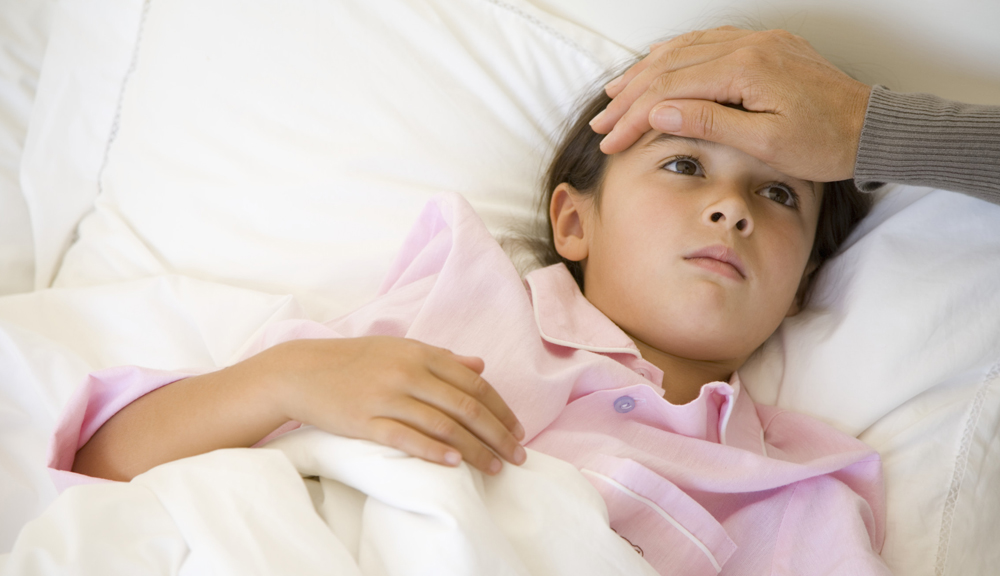
When a child has a fever, their body can ache. They are restless and they just don’t feel well. While a fever is a part of our natural response to infection, the fever itself can lead to complications. One rare complication is a febrile seizure. A febrile seizure is when your child (ages six months to six years of age) experiences convulsions that occur in the setting of a fever.
Parents can’t imagine too many things more distressing than seeing their already-ill child suffer through a seizure, but febrile seizures are usually not life threatening.
During a febrile seizure, a child:
  • Will lose consciousness
  • Experience body stiffness
  • Have full-body shaking
A seizure lasts only a minute or two, but can go on longer. Febrile seizures rarely require medication. The majority of the cases physicians see do not require hospital admission.
Facts about febrile seizures
  • Majority of seizures occur between 12 and 18 months of age.
  • The most common type of childhood seizure, affecting 2 to 5 percent of children.
  • The exact cause in which a fever can provoke a seizure in this age group is not fully understood, genetic predisposition is a factor.
  • Children who suffer a febrile seizure do not have epilepsy. That diagnosis requires the presence of two or more seizures that were not caused by a fever.
  • Seizures due to an infection of the brain and its protective lining (meninges) or seizures associated with metabolic problems are not febrile seizures.
Two categories of febrile seizures
Febrile seizures are divided into two categories: simple and complex febrile seizures.
1. Simple
These types of seizures are more common. They involve full-body shaking and last less than 15 minutes. Studies show that simple febrile seizures do not affect future school performance or intelligence.
2. Complex
A febrile seizure is considered complex if it affects only a part of the body, lasts longer than 15 minutes or recurs within 24 hours. Complex febrile seizures have a slightly higher rate of future complications.
Is there a connection between epilepsy and febrile seizures?
The chances of epilepsy developing in a healthy developmentally typical child who has had a simple febrile seizure are estimated to be 2 to 4 percent, while the rate in the general population is about 1 to 2 percent. Although febrile seizures are scary, they are usually not associated with significant health problems. Short febrile seizures do not cause brain damage.
Four Steps: What you can do if your child has a seizure
If your child has a seizure, febrile or otherwise, it is important to stay calm. While you’re remaining calm, follow these four steps:
  1. Your child should be placed on his or her side to prevent choking. There is no need to restrain or try to stop the shaking; the seizure will run its course regardless.
  2. Never put anything in your child’s mouth. This can lead to chipped teeth, damaged gums or even a blocked airway.
  3. Time the seizure. If your child’s seizure lasts more than five minutes, call 911. Medication may be needed to end the seizure.
  4. Have your child evaluated that day. While brief seizures don’t require emergency services, the evaluation is mainly to check for the cause of your child’s fever.
Follow up care after a seizure
Treatment of febrile seizures is usually limited to fever-lowering agents such as acetaminophen or ibuprofen. These will not decrease the chance of having another febrile seizure, but will make your child more comfortable. Daily anti-seizure drugs are not recommended. Even though your child will be evaluated on the day of their seizure (step 4 above), certain situations require further diagnostic testing. If your child experiences a simple febrile seizure, he or she may not need to be hospitalized once their fever evaluation is complete. Blood and urine tests are only performed if needed to evaluate the fever.
If your child has a prolonged febrile seizure, they’ll be given a medication to use only if they have another long seizure. The chance of recurrence is generally 30 to 35 percent. Factors such as young age (less than 12 months) or a family history of seizures can increase the recurrence rate.
Seizures are scary, but knowing what to do if one occurs is important. If your child has a febrile seizure, make sure he or she sees your pediatrician or an emergency department physician as soon as possible. While simple febrile seizures are not harmful, we need to make sure they are not a symptom of a more serious illness. Talk with your pediatrician to determine if a consultation with apediatric neurology specialist is appropriate for your child.
Read more here

Thursday, November 08, 2012

Study: MRI and EEG Could Identify Children at Risk for Epilepsy After Febrile Seizures

After young children have a febrile seizure, MRIs and EEGs could show which children are at the highest risk for epilepsy.

Seizures during childhood fever are usually benign, but when prolonged, they can foreshadow an increased risk of epilepsy later in life. Now a study funded by the National Institutes of Health suggests that brain imaging and recordings of brain activity could help identify the children at highest risk. The study reveals that within days of a prolonged fever-related seizure, some children have signs of acute brain injury, abnormal brain anatomy, altered brain activity, or a combination.

"Our goal has been to develop biomarkers that will tell us whether or not a particular child is at risk for epilepsy. This could in turn help us develop strategies to prevent the disorder," said study investigator Shlomo Shinnar, M.D., Ph.D. Dr. Shinnar is a professor of neurology, pediatrics and epidemiology and the Hyman Climenko Professor of Neuroscience Research at Montefiore Medical Center, Albert Einstein College of Medicine, New York City.
Seizures that occur during the course of a high fever, known as febrile seizures, affect 3 to 4 percent of all children. Most such children recover rapidly and do not suffer long-term health consequences. However, having one or more prolonged febrile seizures in childhood is known to increase the risk of subsequent epilepsy. Some experts estimate that the risk of later epilepsy is 30-40 percent following febrile status epilepticus (FSE), a seizure or series of seizures that can last from 30 minutes to several hours.
"While the majority of children fully recover from febrile status epilepticus, some will go on to develop epilepsy. We have no way of knowing yet who they will be," Dr. Shinnar said.
The Consequences of Prolonged Febrile Seizures in Childhood (FEBSTAT) study is focused specifically on FSE and the risk of temporal lobe epilepsy. This is one of the most common forms of epilepsy and is characterized by seizures in the temporal lobe, a brain region important for memory.
Within days of FSE, the children in the study underwent magnetic resonance imaging (MRI) and electroencephalography (EEG). The latter technique uses sensors on the scalp to record brain activity, and is often used to diagnose and monitor epilepsy. The MRI findings were reported in July 2012, and the EEG findings were reported today. Both papers were published in Neurology.
The MRI scans revealed that FSE is sometimes associated with abnormalities in the hippocampus, a peapod-shaped structure within the temporal lobe. Of 191 children with FSE, 22 (11.5 percent) had signs of hippocampal injury on MRI, and 20 (10.5 percent) had developmental abnormalities of the hippocampus. Abnormal MRI results were rare among children with simple febrile seizures, defined as lasting 10 minutes or less. Out of 96 children with such seizures, only two (2.1 percent) had developmental abnormalities of the hippocampus and none had signs of brain injury.
Nearly half (45.2 percent) of the children with FSE had abnormal EEG findings. There was also a correlation between the MRI and EEG findings. Children with evidence of acute brain injury after FSE were more than twice as likely to have abnormal EEG findings.
The results suggest that for some children, prolonged febrile seizures injure the brain. For others, pre-existing abnormalities could make the brain susceptible to febrile seizures. Both of these paths could in turn lead to epilepsy, but that will take more time to confirm, Dr. Shinnar said.
Temporal lobe epilepsy can cause memory loss, and brain scans of adults with the disorder sometimes reveal shrinkage and cell loss within the temporal lobe and hippocampus. Many adults with the disorder also report a history of FSE.
FEBSTAT is a unique effort to look forward from FSE in childhood and see if it evolves into temporal lobe epilepsy. "This study may give us insights into how epilepsy develops," said Vicky Whittemore, Ph.D., a program director at NIH's National Institute of Neurological Disorders and Stroke (NINDS), which funds the study.
"If MRI and EEG findings associated with FSE ultimately do correlate with epilepsy, they could be used to identify kids who are at risk and who might benefit from research on preventative therapies for epilepsy," Dr. Whittemore said. "EEG could be especially useful since it is low cost, non-invasive, and readily available at most hospitals."
FEBSTAT began almost 10 years ago. Children with FSE were enrolled from 2003-2010 at five sites: Montefiore Medical Center and Jacobi Hospital in the New York City; Lurie Children's Hospital in Chicago; Duke University Medical Center in Durham, N.C.; Virginia Commonwealth University Hospital in Richmond; and Eastern Virginia Medical School in Norfolk.
The children underwent blood tests, a neurological exam, MRI, and EEG within 72 hours of being seen in the emergency room for FSE. The blood samples are being analyzed for viral infections linked to febrile seizures and for the presence of gene mutations that could contribute to epilepsy. The children continue to receive neurological exams, MRI and EEG at regular intervals.
FEBSTAT is supported by grant NS043209 to Dr. Shinnar. Data from children with simple febrile seizures were taken from a study led by Dale C. Hesdorffer, Ph.D., of Columbia University in New York. That study ended in 2004, and was supported by grant HD036867 from NIH's Eunice Kennedy Shriver National Institute of Child Health and Human Development.
Read more here

Tuesday, September 11, 2012

Febrile seizures and behavioural and cognitive outcomes in preschool children: the Generation R Study


Cover image for Vol. 54 Issue 10
Are febrile seizures really totally benign? JR


Febrile seizures and behavioural and cognitive
 outcomes in preschool children: 
the Generation R Study
Aim 
 General developmental outcome is known to be good in school-aged children who experienced febrile seizures. We examined cognitive and behavioural outcomes in preschool children with febrile seizures, including language and executive functioning outcomes.
Method  This work was performed in the Generation R Study, a population-based cohort study in Rotterdam from early fetal life onwards. Information about the occurrence of febrile seizures was collected by questionnaires at the ages of 1, 2, and 3 years. At the age of 3 years, behaviour and emotion were assessed using the Child Behavior Checklist. Information on expressive language development was obtained by the Language Development Survey at the age of 2 years 6 months. To assess executive functioning, parents completed the Behaviour Rating Inventory of Executive Function – Preschool Version when their children were 4 years old. Final analyses were based on 3157 children.
Results  No associations were found between febrile seizures and the risk of behavioural problems or executive functioning. In contrast to single febrile seizures, recurrent febrile seizures were significantly associated with an increased risk of delayed vocabulary development (odds ratio 3.22, [95% confidence interval 1.30–7.94]).
Interpretation  Febrile seizures are not associated with problem behaviour or executive functioning in preschool children, but the results suggest that children with recurrent febrile seizures might be at risk for delayed language development.