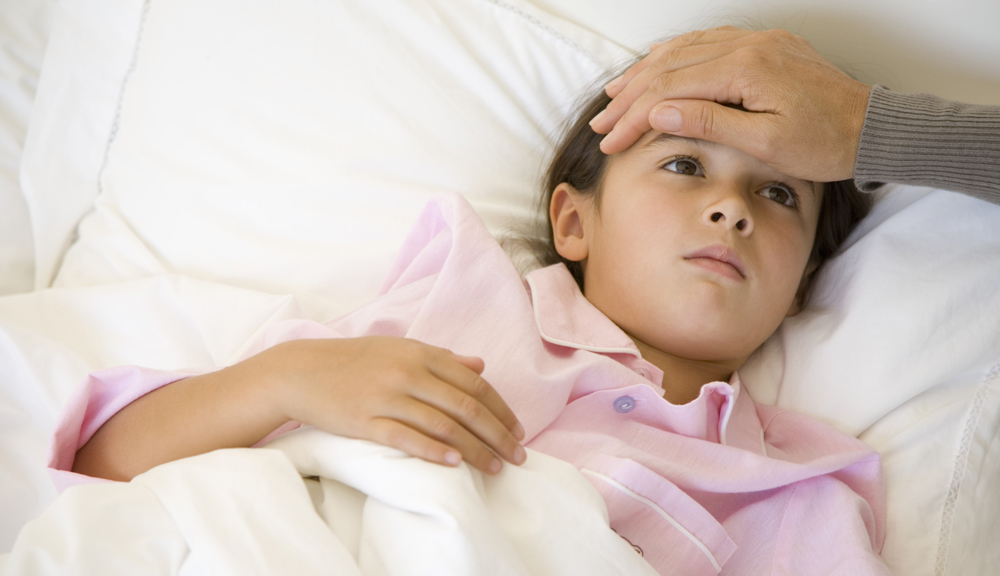
When a child has a fever, their body can ache. They are restless and they just don’t feel well. While a fever is a part of our natural response to infection, the fever itself can lead to complications. One rare complication is a febrile seizure. A febrile seizure is when your child (ages six months to six years of age) experiences convulsions that occur in the setting of a fever.
Parents can’t imagine too many things more distressing than seeing their already-ill child suffer through a seizure, but febrile seizures are usually not life threatening.
During a febrile seizure, a child:
- Will lose consciousness
- Experience body stiffness
- Have full-body shaking
A seizure lasts only a minute or two, but can go on longer. Febrile seizures rarely require medication. The majority of the cases physicians see do not require hospital admission.
Facts about febrile seizures
- Majority of seizures occur between 12 and 18 months of age.
- The most common type of childhood seizure, affecting 2 to 5 percent of children.
- The exact cause in which a fever can provoke a seizure in this age group is not fully understood, genetic predisposition is a factor.
- Children who suffer a febrile seizure do not have epilepsy. That diagnosis requires the presence of two or more seizures that were not caused by a fever.
- Seizures due to an infection of the brain and its protective lining (meninges) or seizures associated with metabolic problems are not febrile seizures.
Two categories of febrile seizures
Febrile seizures are divided into two categories: simple and complex febrile seizures.
1. Simple
These types of seizures are more common. They involve full-body shaking and last less than 15 minutes. Studies show that simple febrile seizures do not affect future school performance or intelligence.
2. Complex
A febrile seizure is considered complex if it affects only a part of the body, lasts longer than 15 minutes or recurs within 24 hours. Complex febrile seizures have a slightly higher rate of future complications.
Is there a connection between epilepsy and febrile seizures?
The chances of epilepsy developing in a healthy developmentally typical child who has had a simple febrile seizure are estimated to be 2 to 4 percent, while the rate in the general population is about 1 to 2 percent. Although febrile seizures are scary, they are usually not associated with significant health problems. Short febrile seizures do not cause brain damage.
Four Steps: What you can do if your child has a seizure
If your child has a seizure, febrile or otherwise, it is important to stay calm. While you’re remaining calm, follow these four steps:
- Your child should be placed on his or her side to prevent choking. There is no need to restrain or try to stop the shaking; the seizure will run its course regardless.
- Never put anything in your child’s mouth. This can lead to chipped teeth, damaged gums or even a blocked airway.
- Time the seizure. If your child’s seizure lasts more than five minutes, call 911. Medication may be needed to end the seizure.
- Have your child evaluated that day. While brief seizures don’t require emergency services, the evaluation is mainly to check for the cause of your child’s fever.
Follow up care after a seizure
Treatment of febrile seizures is usually limited to fever-lowering agents such as acetaminophen or ibuprofen. These will not decrease the chance of having another febrile seizure, but will make your child more comfortable. Daily anti-seizure drugs are not recommended. Even though your child will be evaluated on the day of their seizure (step 4 above), certain situations require further diagnostic testing. If your child experiences a simple febrile seizure, he or she may not need to be hospitalized once their fever evaluation is complete. Blood and urine tests are only performed if needed to evaluate the fever.
If your child has a prolonged febrile seizure, they’ll be given a medication to use only if they have another long seizure. The chance of recurrence is generally 30 to 35 percent. Factors such as young age (less than 12 months) or a family history of seizures can increase the recurrence rate.
Seizures are scary, but knowing what to do if one occurs is important. If your child has a febrile seizure, make sure he or she sees your pediatrician or an emergency department physician as soon as possible. While simple febrile seizures are not harmful, we need to make sure they are not a symptom of a more serious illness. Talk with your pediatrician to determine if a consultation with apediatric neurology specialist is appropriate for your child.
Read more here

