Showing posts with label childhood seizure. Show all posts

Sunday, June 22, 2014

What is the best medicine for children with seizures?

This article discusses what is the best medication for children with seizures.

A recently published clinical study in the Journal of the American Medical Association has answered an urgent question that long puzzled ER pediatricians: Is the drug lorazepam really safer and more effective than diazepam – the U.S. Food and Drug Administration-approved medication as first line therapy most often used by emergency room doctors to control major epileptic seizures in children?
The answer to that question – based on a double-blind, randomized clinical trial that compared outcomes in 273 seizure patients, about half of whom were given lorazepam – is a clear-cut "no," said Prashant V. Mahajan, M.D., M.P.H., M.B.A, one of the authors of the study.
"The results of our clinical trial were very convincing, and they showed clearly that the two medications are just about equally effective and equally safe when it comes to treating status epilepticus [major epileptic brain seizures in children]," Dr. Mahajan said. "This is an important step forward for all of us who frequently treat kids in the ER for [epilepsy-related] seizures, since it answers the question about the best medication to use in ending the convulsions and getting these patients back to normal brain functioning."
Describing the brain convulsions that were targeted by the study, its authors pointed out that status epilepticus occurs when an epilepsy-related seizure lasts more than 30 minutes. Such seizures – which occur in more than 10,000 U.S. pediatric epilepsy patients every year – can cause permanent brain damage or even death, if allowed to persist.
Published in JAMA, the study, "Lorazepam vs Diazepam for Pediatric Status Epilepticus: A Randomized Clinical Trial," was designed to test earlier assertions by many clinicians that lorazepam was more effective at controlling pediatric seizures. The study-authors wrote, "Potential advantages proposed in some studies of lorazepam include improved effectiveness in terminating convulsions, longer duration of action compared with diazepam, and lower incidence of respiratory depression. Specific pediatric data comparing diazepam with lorazepam suggest that lorazepam might be superior, but they are limited to reports from single institutions or retrospective studies with small sample sizes, thus limiting generalizability."
Based on data collected over four years at 11 different U.S. pediatric emergency departments, the new study found that "treatment with lorazepam [among pediatric patients with convulsive status epilepticus] did not result in improved efficacy or safety, compared with diazepam."
That determination led the study authors to conclude: "These findings do not support the preferential use of lorazepam for this condition."
Dr. Mahajan, a nationally recognized researcher in pediatric emergency medicine and a Wayne State University School of Medicine pediatrics professor recently appointed chair of the American Academy of Pediatrics Executive Committee of the Section on Emergency Medicine, said the JAMA study provides "a compelling example of how effective research in pediatric medicine, based on treatment of patients right in the clinical setting, can play a major role in improving outcomes."
Children's Hospital of Michigan Chief of Pediatrics Steven E. Lipshultz, M.D., said this recent breakthrough will "undoubtedly result in better care for pediatric patients who present in the emergency room with seizures related to epilepsy.
"There's no doubt that combining excellent research with excellent treatment is the key to achieving the highest-quality outcomes for patients – and Dr. Mahajan's cutting-edge study is a terrific example of how kids are benefiting from the research that goes on here at Children's every single day," said Dr. Lipshultz.
Read more here

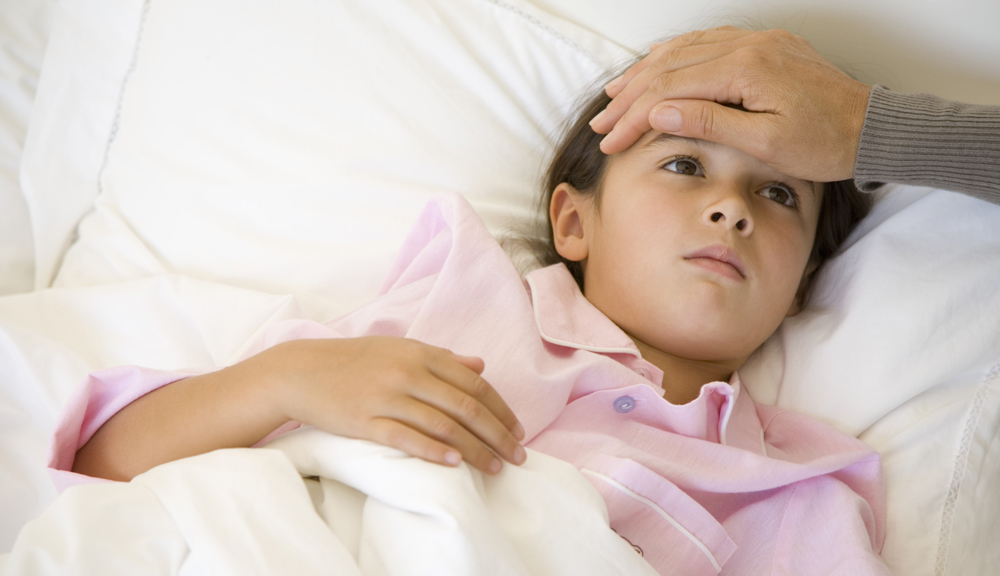
Friday, June 06, 2014

How a child's fever can turn into a seizure

This article discusses how a child's fever can turn into a seizure, and explains the different types of seizures.

When a child has a fever, their body can ache. They are restless and they just don’t feel well. While a fever is a part of our natural response to infection, the fever itself can lead to complications. One rare complication is a febrile seizure. A febrile seizure is when your child (ages six months to six years of age) experiences convulsions that occur in the setting of a fever.
Parents can’t imagine too many things more distressing than seeing their already-ill child suffer through a seizure, but febrile seizures are usually not life threatening.
During a febrile seizure, a child:
  • Will lose consciousness
  • Experience body stiffness
  • Have full-body shaking
A seizure lasts only a minute or two, but can go on longer. Febrile seizures rarely require medication. The majority of the cases physicians see do not require hospital admission.
Facts about febrile seizures
  • Majority of seizures occur between 12 and 18 months of age.
  • The most common type of childhood seizure, affecting 2 to 5 percent of children.
  • The exact cause in which a fever can provoke a seizure in this age group is not fully understood, genetic predisposition is a factor.
  • Children who suffer a febrile seizure do not have epilepsy. That diagnosis requires the presence of two or more seizures that were not caused by a fever.
  • Seizures due to an infection of the brain and its protective lining (meninges) or seizures associated with metabolic problems are not febrile seizures.
Two categories of febrile seizures
Febrile seizures are divided into two categories: simple and complex febrile seizures.
1. Simple
These types of seizures are more common. They involve full-body shaking and last less than 15 minutes. Studies show that simple febrile seizures do not affect future school performance or intelligence.
2. Complex
A febrile seizure is considered complex if it affects only a part of the body, lasts longer than 15 minutes or recurs within 24 hours. Complex febrile seizures have a slightly higher rate of future complications.
Is there a connection between epilepsy and febrile seizures?
The chances of epilepsy developing in a healthy developmentally typical child who has had a simple febrile seizure are estimated to be 2 to 4 percent, while the rate in the general population is about 1 to 2 percent. Although febrile seizures are scary, they are usually not associated with significant health problems. Short febrile seizures do not cause brain damage.
Four Steps: What you can do if your child has a seizure
If your child has a seizure, febrile or otherwise, it is important to stay calm. While you’re remaining calm, follow these four steps:
  1. Your child should be placed on his or her side to prevent choking. There is no need to restrain or try to stop the shaking; the seizure will run its course regardless.
  2. Never put anything in your child’s mouth. This can lead to chipped teeth, damaged gums or even a blocked airway.
  3. Time the seizure. If your child’s seizure lasts more than five minutes, call 911. Medication may be needed to end the seizure.
  4. Have your child evaluated that day. While brief seizures don’t require emergency services, the evaluation is mainly to check for the cause of your child’s fever.
Follow up care after a seizure
Treatment of febrile seizures is usually limited to fever-lowering agents such as acetaminophen or ibuprofen. These will not decrease the chance of having another febrile seizure, but will make your child more comfortable. Daily anti-seizure drugs are not recommended. Even though your child will be evaluated on the day of their seizure (step 4 above), certain situations require further diagnostic testing. If your child experiences a simple febrile seizure, he or she may not need to be hospitalized once their fever evaluation is complete. Blood and urine tests are only performed if needed to evaluate the fever.
If your child has a prolonged febrile seizure, they’ll be given a medication to use only if they have another long seizure. The chance of recurrence is generally 30 to 35 percent. Factors such as young age (less than 12 months) or a family history of seizures can increase the recurrence rate.
Seizures are scary, but knowing what to do if one occurs is important. If your child has a febrile seizure, make sure he or she sees your pediatrician or an emergency department physician as soon as possible. While simple febrile seizures are not harmful, we need to make sure they are not a symptom of a more serious illness. Talk with your pediatrician to determine if a consultation with apediatric neurology specialist is appropriate for your child.
Read more here

Sunday, December 01, 2013

What to do if a child has a seizure

This article details what action to take if your child has a seizure.

Seeing a child suffer a seizure can terrify a parent. As part of Epilepsy Awareness Month in November, an expert offered some advice on how to deal with such a situation.
All first seizures in children require a medical evaluation, said Dr. Adam Hartman, a pediatric neurologist and epilepsy expert at Johns Hopkins Children's Center in Baltimore.
"If this is the first time your child is having a seizure, seek emergency medical care," he said in a Johns Hopkins news release.
Children with known epilepsy who have a breakthrough seizure -- one that occurs despite treatment -- do not typically require urgent medical attention unless:
  • The seizure lasts more than five minutes.
  • The seizure looks different from previous seizures.
  • Several seizures occur in a cluster.
  • The child remains unconscious for a few minutes following the seizure.
  • The child struggles for air and is not getting enough oxygen, signaled by bluish lips or complexion.
The symptoms listed above may mean that the child is going into status epilepticus, a persistent, severe and life-threatening seizure that always requires emergency treatment, Hartman said.
During a seizure, don't put anything in the child's mouth and don't try to hold the child down. Clear the surrounding area and have the child lie on one side, rather than flat on their back, Hartman said. You can put a small pillow under the child's head.
After the seizure ends, allow the child to rest and check for injuries. Do not give the child anything to eat or drink until fully alert. Note the length of the seizure and the date and time it occurred.
Keep a seizure diary and inform the child's neurologist or primary-care pediatrician about all seizures. Pay attention to what might have triggered the seizure. Sleep deprivation, high fever, illness, and emotional or physical stress increase seizure risk among children with epilepsy.
"Children respond individually to stressors, so it's important to notice the factors that precipitate a seizure in your child and avoid them when and if possible," Hartman said.
Epilepsy, an umbrella term that encompasses more than 40 seizure disorders, affects nearly 3 million people in the United States. More than 320,000 of them are children under 15, according to the Epilepsy Foundation. About 45,000 children in the United States develop epilepsy each year.
The Epilepsy Foundation has more about epilepsy.
Read more here


Sunday, September 15, 2013

Is it migraine or occipital epilepsy? Panayiotopoulos syndrome (PS) can cause vomiting and headache!

What are the key differences between occipital seizures and migraine? 

Sometimes its hard to tell...JR 
Panayiotopoulos syndrome (PS) 

Fig. 1

Benign childhood focal epilepsies: assessment of established and newly recognized syndromes

  1. Michael Koutroumanidis
+
  1. Department of Clinical Neurophysiology and Epilepsies, St Thomas’ Hospital, Guy's and St Thomas NHS Foundation Trust, London, UK
  1. Correspondence to: Michael Koutroumanidis, MD, Department of Clinical Neurophysiology and Epilepsies, St Thomas’ Hospital, London SE1 7EH, UK E-mail:michael.koutroumanidis@gstt.nhs.uk
  • Received April 14, 2008.
  • Revision received June 30, 2008.
  • Accepted July 1, 2008.

Summary

A big advance in epileptology has been the recognition of syndromes with distinct etiology, clinical and EEG features, treatment and prognosis. A prime and common example of this is Rolandic epilepsy that is well known by the general pediatricians for over 50 years, thus allowing a precise diagnosis that predicts an excellent prognosis.

However, rolandic is not the only benign childhood epileptic syndrome.

Converging evidence from multiple and independent clinical, EEG and magnetoencephalographic studies has documented Panayiotopoulos syndrome (PS) as a model of childhood autonomic epilepsy, which is also common and benign. Despite high prevalence, lengthy and dramatic features, PS as well as autonomic status epilepticus had eluded recognition because emetic and other ictal autonomic manifestations were dismissed as non-epileptic events of other diseases.

Furthermore, PS because of frequent EEG occipital spikes has been erroneously considered as occipital epilepsy and thus confused with the idiopathic childhood occipital epilepsy of Gastaut (ICOE-G), which is another age-related but rarer and of unpredictable prognosis syndrome. Encephalitis is a common misdiagnosis for PS and migraine with visual aura for ICOE-G. Pathophysiologically, the symptomatogenic zone appears to correspond to the epileptogenic zone in rolandic epilepsy (sensory-motor symptomatology of the rolandic cortex) and the ICOE-G (occipital lobe symptomatology), while the autonomic clinical manifestations of PS are likely to be generated by variable and widely spread epileptogenic foci acting upon a temporarily hyperexcitable central autonomic network.

Rolandic epilepsy, PS, ICOE-G and other possible clinical phenotypes of benign childhood focal seizures are likely to be linked together by a genetically determined, functional derangement of the systemic brain maturation that is age related (benign childhood seizure susceptibility syndrome). This is usually mild but exceptionally it may diverge to serious epileptic disorders such as epileptic encephalopathy with continuous spike and wave during sleep.

Links with other benign and age-related seizures in early life such as febrile seizures, benign focal neonatal and infantile seizures is possible. Overlap with idiopathic generalized epilepsies is limited and of uncertain genetic significance.

Taking all these into account, benign childhood focal seizures and related epileptic syndromes would need proper multi-disciplinary re-assessment in an evidence-based manner.


Full article here....