Tuesday, June 04, 2013

Physical jobs lead to sleep duration extremes

A new study shows that jobs that are high-activity and physically demanding lead to either short sleep duration or long sleep duration.

A study from the Perelman School of Medicine at the University of Pennsylvania has found that people who work in jobs that are more physically demanding tend to be either shorter sleepers (fewer than 6 hours a night) or longer sleepers (longer than 9 hours).
Since previous research has shown that people who report short or long sleep are more likely to have worse health over time, such as weight gain, heart disease and diabetes, the new study suggests that people's jobs may predispose them to unhealthy sleep patterns that could detrimentally affect their health. The findings go against the concept that physical activity in general seems to be healthy, and physical activity tends to be good for sleep.
Penn researchers examined sleep patterns and job classifications of over 17,000 study participants. Job activity was classified as low (mostly sitting or standing), moderate (mostly walking), or high (mostly manual labor). Compared to those in low activity jobs, those working moderate activity jobs, such as postal service employees, were more likely to be short sleepers and long sleepers, and those working high-activity jobs, such as construction workers, were more likely to be short sleepers.
According to the research team, possible explanations for the findings include:
1) the higher demands of the job require longer hours, not allowing for a full night of sleep;
2) job-related stress is keeping people up at night; and
3) the physical demands of the job are causing persons to stay awake.
The research team includes Holly E. Barilla, Charles Corbitt, Subhajit Chakravorty, Michael Perlis, PhD, and Michael Grandner, PhD.
The study is scheduled to be presented June 3 at SLEEP 2013, the annual meeting of the Associated Professional Sleep Societies in Baltimore.
Read more here

Adults with ADHD

This article discusses the problems adults with ADHD face, and treatment options.

Do you remember when you used to stare out of the window in the classroom in elementary school and watch the butterfly dance on the flower? And that fly that landed on your desk was always a little more entertaining than the teacher? Or when students in the hallway outside the classroom always distracted you just when the teacher called on you? How your desk was always filled with crumpled papers and books always falling out onto the floor? When you knew the answer you blurted it out in excitement and the teacher would always remind you to raise your hand first? Sometimes people used big words to describe you like "impulsive," but you thought you just faster at reacting than everybody else was. That seemed like a good thing. It was a little hard to get along with some children, and you frequently did not get picked for teams because you weren't able to kick or throw the ball as well as the other kids.

Perhaps you were among that 10 percent of the children in school who had attention deficit hyperactivity disorder but, in your case, it was not recognized. People often said that you were just lazy and immature. It seemed as if they were probably right since you struggled with school work ever since you started school. It sure didn't help your self-esteem either because you knew you were somehow different from the other kids and sometimes you got teased. Maybe you compensated for the ADHD by working harder and being intelligent enough to overcome some of your limitations.

But that is all behind you now and you are an adult. Adults grow out of things like that. Or do they? Unfortunately, approximately 50 percent of the children who had ADHD as children continue to have some of the symptoms even into adulthood. It is important to understand that this disorder does not involve an actual deficit in attention but a problem with "attention regulation” or keeping your attention on what is most important at the time. As an adult it is may be referred to as ADD because there are few symptoms of hyperactivity. Problems of attention, concentration, organization and impulsivity are more common. Hyperactivity symptoms may look more like restlessness, getting bored easily and trying to do too many things at once. Daily routine tasks such as being on time, starting and finishing a  project, remembering things, paying attention when someone talks and staying focused on a job are just some of the common challenges that you can continue to experience. Adults may find that they have trouble keeping a job, managing finances and maintaining relationships. Self-esteem can suffer as ADHD adults struggle with things that come naturally to others.

The causes for ADHD are unclear. It seems to have a neurological basis involving the chemical messengers in the brain known  as neurotransmitters. The cerebral cortex of the brain is also believed to play a role in the areas of  "executive functioning” such as planning, problem solving, and impulse control. A genetics seems likely since parents who are ADHD are much more likely to have children with the disorder.
Making a diagnosis of ADD requires more than identifying a cluster of symptoms. Anyone can experience some of these symptoms at times. They must be of sufficient intensity, duration and frequency that they interfere with important life functions. The diagnosis can be determined by a qualified physician or psychologist after an extensive interview, psychological and cognitive testing, and gathering information from collateral sources. It is not uncommon for ADHD adults to also have other conditions such as anxiety, depression, or substance abuse ... confounding the task of making an accurate diagnosis.
Treatment for ADHD adults generally involves use of some type of medication to achieve some balance in brain neurotransmitters. Education and counseling is also recommended as an adjunct to medication to help individuals learn to manage those the most troubling characteristics of the disorder and to teach them strategies to manage problems with attention, distraction, social skills, organization, budgeting and planning. With treatment adults with this disorder can lead successful lives and develop the skills to manage work, relationships and life in general.
Read more here

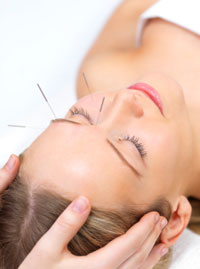
Study claims acupuncture can treat headaches

A study shows that acupuncture can effectively reduce the intensity and duration of painful headaches and may be more effective than migraine medication.

A new study concludes that acupuncture is effective for relieving headaches. Investigators note that acupuncture reduces the intensity and duration of headaches. In addition, they suggest that acupuncture can reduce the need for “drug therapies and is a valuable option for patient suffering from CDH [chronic daily headache].”
In this controlled study, verum acupuncture was compared with sham acupuncture. The verum acupuncture group improved significantly over the control group. Verum acupuncture significantly reduced the frequency, intensity and duration of chronic daily headaches. The research notes that acupuncture is effective for reducing the intensity of pain for chronic tension headaches and migraines. In addition, patients suffering from nausea due to headaches and migraines showed a significant decrease in nausea levels.
In related recent research, acupuncture was found more effective and safer than a migraine medication. Researchers discovered that acupuncture effectively reduced migraine pain intensity levels and no adverse effects occurred. In the same study, patients receiving the medication valproic acid did not have the same level of clinical benefits as acupuncture and with nearly 50% of patients experiencing adverse side effects from the drug.The outcomes were measured six months after the study had been completed. This demonstrates that acupuncture has long term benefits for patients with migraines and that it is both safe and effective.
A massive meta-analysis study measuring patient outcomes of nearly 18,000 patients concurs with the researchers. The study finds that acupuncture effectively treats neck, back, osteoarthritis, headache and shoulder pain. Published in the Archives of Internal Medicine, the researchers concluded that, “Acupuncture is effective for the treatment of chronic pain and is therefore a reasonable referral option.” US Navy sports medicine Dr. Stuessi concurs, “I’ve found phenomenal, off-the-charts results doing acupuncture for sleep, for dizziness and headaches.”
Acupuncture for pain control has received a great deal of attention in modern research. A study conducted at the University of California (San Francisco) discovered that acupuncture provides the same level of pain relief as morphine. The laboratory experiment revealed that needling ST36, an acupuncture point located on the lower leg, significantly reduces jaw pain. After one minute, the pain level reduced by over 20% and after thirty minutes of acupuncture treatment the pain level reduced by 30%. This acupuncture procedure provided the same level of pain relief that is made possible by one dose of morphine.
According to Traditional Chinese Medicine (TCM) theory, acupuncture point ST36 is located along a channel of other points starting in the head and terminating in the feet. ST36 is on the Stomach channel, which is also referred to as the Foot-Yangming Meridian. This acupuncture channel originates at another acupuncture point, LI20, runs to the inner canthus of the eye to an acupuncture point called UB1 and then descends to the gums and joins with yet another acupuncture point called DU26. The Foot-Yangming channel then circles around the mouth, meets with acupuncture point CV24 and then follows the angle of the jaw. Other details of Chinese medicine theory demonstrate that the various branches of the Foot-Yangming Stomach channel connect to the head, mouth, gums and jaw and therefore are consistent with the research demonstrating that acupuncture point ST36 relieves jaw pain.
The mounting evidence from both primary and secondary research demonstrates that acupuncture has significant effective actions in controlling pain. Acupuncture is a covered benefit in many health insurance plans, is used by the US military for the treatment of pain and PTSD and is supported by a deluge of research from prestigious universities. That, combined with publication of supportive research published in important medical journals, suggests that acupuncture is now entering a more mainstream branch of medicine.
Read more here

Monday, June 03, 2013

Drunk driving conviction vacated due to sleep walking

An interesting story about how a person whose drunk driving trial was vacating due to his history of sleep walking.

The Oregon Supreme Court on Friday threw out a drunken driving conviction on grounds the man should have had a chance to tell the jury he was actually driving in his sleep and was not responsible for his actions.

The ruling could set a new standard for drunken driving cases by requiring prosecutors to prove the driver voluntarily got behind the wheel, the Oregonian reported (http://bit.ly/14fECFO ).

Reversing the Oregon Court of Appeals, the Supreme Court ordered a new trial for 51-year-old James Robert Newman of Portland, saying Oregon law requires someone to commit a voluntary act to be held responsible for a crime.

Newman got a ride home after drinking at a restaurant in 2008 and went to sleep, but he later got into his car and started driving. When he was pulled over for running a red light, he flunked a sobriety test, and a breath test at the police station showed his blood-alcohol level was nearly twice the legal limit. While he admitted he was drunk, he did not admit to consciously or voluntarily driving.

When it came time for trial, his lawyer asked to put on evidence that Newman had a history of sleepwalking, which left him unable to make conscious decisions. He lined up an expert in sleep disorders to testify. But Multnomah County Circuit Judge Marshall Amiton ruled that would have no bearing, because the prosecution only had to prove that Newman was drunk and driving.

Newman waived a jury trial, and the judge found him guilty.

In ordering a new trial, the high court pointed to an Oregon law saying defendants must commit a voluntary act to be held responsible for a crime.

An earlier ruling held that determining if someone is under the influence of intoxicants does not require proof of a voluntary action, but in the court's ruling Friday, it said that doesn't apply to the issue of driving.

Read more here

Why you wake up in the middle of the night

This article discusses why you may be waking up in the middle of the night and having difficulty falling back asleep. It also discusses what to do and what not to do when this happens.

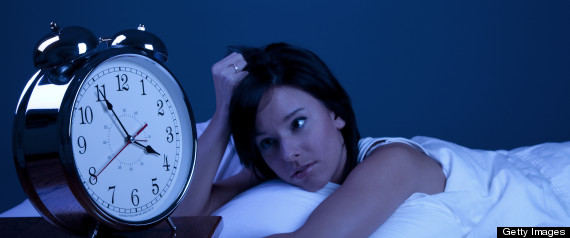
You drifted off to sleep easily enough. But all of a sudden, it's 4 a.m. and you're wide awake. What gives?
To an extent, this phenomenon -- called middle insomnia, or difficulty maintaining sleep -- is normal. After all, sleep goes in cycles throughout the night, moving from deeper, slow wave sleep to lighter sleep, explains James Findley, Ph.D., CBSM, clinical director of the Behavioral Sleep Medicine Program at the University of Pennsylvania. But as the night goes on, "we're moving toward lighter stages of sleep, so we're more likely to have an awakening," he tells HuffPost. For that reason, many people are more likely to experience fragmented sleep in the morning.
Age can also be a factor; Findley notes that people tend to wake up more often during the night as they get older.
"Usually it's one of those 'you wake up, you roll over, you fall back asleep' kind of awakenings, and those are fine," Findley says. But when your middle-of-the-night-awakenings end up being more than 30 minutes per night for three or more days a week, it's a sign there could be a deeper problem at play. It might be...
…a sleep disorder.
People with insomnia not only have trouble falling asleep, but they also tend to have more awakenings throughout the night, Findley says. And sleep apnea, where a person stops breathing intermittently throughout the night causing disrupted sleep, can also trigger you to wake up.
"With sleep apnea, you might not notice it unless you have a bed partner saying you're having pauses in breathing during sleep," he says.
A more obvious sleep disorder that can also lead to nighttime wakefulness isnarcolepsy -- which is when a person has bouts of extreme sleepiness during the day, causing them to fall asleep -- though usually people would realize that this was the root of their sleep woes due to the other more obvious symptoms, Findley says.
… an underlying condition.
Sometimes it's something else inside your body that's triggering problems with staying asleep. For instance, indigestion can wake you up in the middle of the night if you ate too big of a meal before bedtime. And people who have certain psychiatric conditions -- like anxiety or bipolar disorder -- are also known to be more prone to waking up, Findley says.
In addition, an enlarged prostate can cause middle-of-the-night wakeup calls for some men, as it may cause them to wake up to use the bathroom. Similarly, some medications (such as drugs for high blood pressure) can act as diuretics, spurring nighttime bathroom use.
Sometimes the underlying condition can be quite simple: Findley adds that stress can also be a culprit. "When people are under stress, they tend to have more awakenings during the night, but that's a transient phenomenon that comes and goes," he says.
…your environment. 
Findley says that practicing good sleep hygiene and keeping an optimal sleeping environment ("Your bedroom should be like a cave," he says) are typically important for initially falling asleep, but they could also play a role in helping you stay asleep.
For example, intermittent light shining into your room at night could wake you up without you even realizing it. "Sometimes light coming through the shades can be a problem, so you can get heavy curtains to cover that," Findley says. Same with light that may peek in from under a door, or the shine from an alarm clock. An easy fix? He suggests turning the alarm clock away from your face as you sleep.
Same goes for noise -- the sound of a loud truck or ambulance in the middle of the night could be enough to jolt you awake. Short of soundproofing your room, Findley suggests using a white noise machine (he doesn't recommend other sounds, like rainforest sounds, since they have variations in volume and pitch) or even ear plugs while sleeping if you're sensitive to noise.
While practicing good before-sleep habits -- like not eating a huge, heavy meal, or exercising, right before bedtime -- are mostly only good for falling asleep, Findley says they could play a small part in how well you stay asleep, too. He adds that people who struggle to stay asleep should try to avoid taking naps during the day so that they'll be more tired when night comes around. But -- and this is a big "but" -- if you need to do something where your or others' safety will be in danger if you don't nap (like driving home after work, for instance) he advises taking a snooze for about 45 minutes. Any longer than that, and you'll enter deep sleep, which can affect your nighttime shuteye. (For more napping tips, click here.)
Alcohol is also a known sleep disruptor, with recent research showing that it can cause disrupted sleep by affecting normal sleep rhythms. Particularly, that study, published in the journal Alcoholism: Clinical & Experimental Research, showed that alcohol seems to up the time spent in "deep sleep," but reduces time spent in REM sleep by disrupting sleep in this stage.
So what to do if you are one of those people who constantly wakes up in the middle of the night? Findley offers these tips:
Don't stay in bed. If you can't drift back to dreamland after about 20 minutes, he recommends getting out of bed and doing a quiet, relaxing activity like stretching, reading or doing crossword puzzles.
Avoid your phone or tablet. Do not turn on any electronics, because the blue-spectrum light emitted from such objects is known to impede sleep.
If you find yourself having chronic problems staying asleep at night, Findley recommends talking to your doctor about having a possible sleep study. And if it's feasible, he also says that cognitive behavioral therapy is the best treatment for insomnia -- including middle of the night insomnia.
Read more here

Study claims children with ADHD are less able to process emotions while they sleep

A study showed that children with ADHD did not process emotions as well as children without ADHD after they sleep showing that their emotional processing during sleep may work differently.

Parts of the brain thought to support consolidation of emotional memories during sleep are less active in children with attention-deficit hyperactivity disorder (ADHD), according to a new study.
This deficit in sleep-related emotional processing may worsen the emotional problems of children with this condition, researchers in Germany report.
Children with ADHD have difficulty sustaining attention, and often display hyperactivity and impulsive behavior. The neurobehavioral disorder affects 3 percent to 5 percent of U.S. children, more of them boys than girls.
For the study, published May 29 in the journal PLOS ONE, children with ADHD were shown pictures that evoked emotion, such as a scary animal, before they went to bed. They also viewed neutral pictures, such an image of an umbrella or lamp. Their brain activity was then monitored as they slept. When the kids woke up the next morning, the researchers also tested them about what they remembered. The same process was repeated with healthy children and adults.
During sleep, regions of the brain believed to be involved in consolidation of emotional memories were most active among the healthy children. The researchers noted there was less activity in this part of the brain among the healthy adults, and the least activity was noted in the children with ADHD.
The researchers concluded that sleep consolidates emotional memories in healthy children but not in those with ADHD.
"While several studies reported a benefit from sleep with respect to emotional memory in healthy individuals, our results showed for the first time that healthy children outperform healthy adults," the study authors, led by Alexander Prehn-Kristensen from University Hospital Schleswig-Holstein, said in a journal news release. They added, however, that the child-oriented pictures used in the study may have influenced this finding.
More research is needed to determine if this issues resolves over time, or if it continues to affect people of all ages with ADHD, the study authors added.
Read more here

Sunday, June 02, 2013

Link found between epilepsy and obstructive sleep apnea


Doctors find key link between epilepsy and obstructive sleep apnea

Updated Sun Jun 2, 2013 11:01pm AEST
Australian doctors have found a new link between epilepsy and obstructive sleep apnoea, a condition where patients stop breathing at night.
Professor Terry O'Brien from the Royal Melbourne Hospital says there has been some evidence from other studies that patients with epilepsy may have an increased incidence of sleep-disordered breathing.
Professor O'Brien says there are similar symptoms of daytime sleepiness and fatigue between the two conditions.
He says patients with epilepsy can gain weight as a result of their medications, something that increases their risk of sleep-disordered breathing.
"We put two and two together and thought we should look into this," he said.
Doctors recruited 87 patients with epilepsy and monitored them in a sleep unit.
They found 25 per cent had significant sleep-disordered breathing that was severe enough to require treatment.
In the general population, the prevalence of sleep-disordered breathing is 3 to 7 per cent.

Awake for up to three days straight

Thirty-six-year-old Daniel Goldstein had always had strange sleeping habits, which included rocking back and forth during the night while he slept.
Eventually, he was diagnosed with epilepsy but it was hard to stop seizures.
To identify the issue, Mr Goldstein undertook a sleep study at the Royal Melbourne Hospital and was found to have severe sleep apnoea.
He said at times he would be awake for up to three days straight.
Since being treated for sleep apnoea, Mr Goldstein has also been able to reduce his epilepsy medications.
Mr Goldstein was also given a CPAP machine which he says helps him soundly throughout the night.
"Now I've got energy in a way I didn't have before. It's like learning to walk again," he said. "I feel just phenomenal."

Well-established treatment for sleep-disordered breathing

Professor O'Brien says the beauty of this recent research is that there is a well-established treatment for sleep-disordered breathing.
He says when epilepsy patients were given a CPAP machine, there was a significant improvement.