Showing posts with label epileptic seizure. Show all posts

Tuesday, June 10, 2014

Neural transplant reduces seizures in mice

A neural transplant reduces a specific type of
epileptic seizures in mice.

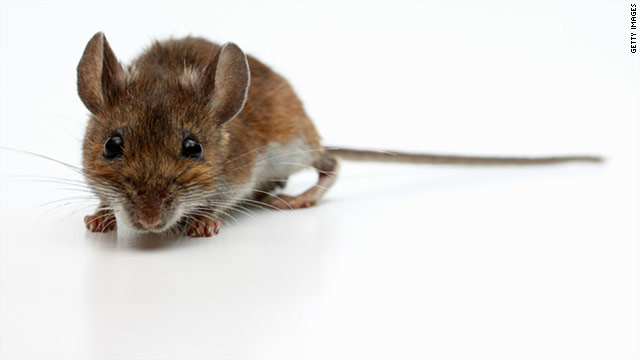
New research from North Carolina State University pinpoints the areas of the cerebral cortex that are affected in mice with absence epilepsy and shows that transplanting embryonic neural cells into these areas can alleviate symptoms of the disease by reducing seizure activity. The work may help identify the areas of the human brain affected in absence epilepsy and lead to new therapies for sufferers.
Absence epilepsy primarily affects children. These seizures differ from "clonic-tonic" seizures in that they don't cause muscle spasms; rather, patients "zone out" or stare into space for a period of time, with no memory of the episode afterward. Around one-third of patients with absence epilepsy fail to respond to medication, demonstrating the complexity of the disease.
NC State neurobiology professor Troy Ghashghaei and colleagues looked at a genetic mouse model for absence epilepsy to determine what was happening in their brains during these seizures. They found that the seizures were accompanied by hyperactivity in the areas of the brain associated with vision and touch -- areas referred to as primary visual and primary somatosensory cortices in the occipital and parietal lobes, respectively.
"There are neurons that excite brain activity, and neurons that inhibit activity," Ghashghaei says. "The inhibitory neurons work by secreting an inhibitory neurotransmitter called gamma-aminobutyric acid, or GABA. The 'GABAergic' interneurons were recently shown by others to be defective in the mice with absence seizures, and we surmised that these malfunctioning neurons might be part of the problem, especially in the visual and somatosensory cortical areas."
Ghashghaei's team took embryonic neural stem cells from a part of the developing brain that generates GABAergic interneurons for the cerebral cortex. They harvested these cells from normal mouse embryos and transplanted them into the occipital cortex of the genetic mice with absence seizures. Absence seizure activity in treated animals decreased dramatically, and the mice gained more weight and survived longer than untreated mice.
"This is a profound and remarkably effective first result, and adds to the recent body of evidence that these transplantation treatments can work in mouse models of epilepsy. But we still don't understand the mechanisms behind what the normal inhibitory cells are doing in areas of the visual cortex of absence epileptic mice," Ghashghaei says. "We know that you can get positive results even when a small number of transplanted neurons actually integrate into the cortex of affected mice, which is very interesting. But we don't know how the transplanted cells are connecting with other cells in the cortex and how they alleviate the absence seizures in the mouse model we employed.
"Our next steps will be to explore these questions. In addition, we are very interested in methods being devised by multiple labs around the world to 'reprogram' cells from transplantation patients to generate normal GABAergic and other types of neurons. Once established, this would eliminate the need for embryonic stem cells for this type of treatment. The ultimate goal is to develop new therapies for humans suffering from various forms of epilepsies, especially those for whom drugs do not work."
The research appears online in Cerebral Cortex.
Read more here

Wednesday, May 07, 2014

Epileptic and non-epileptic seizures commonly misdiagnosed

Research found that misdiagnosis of epileptic seizures and non-epileptic seizures is common.

A graduate student in Semel Institute for Neuroscience and Human Behavior, and two of his undergraduate trainees, were selected by the Council on Undergraduate Research to present their original research on Capitol Hill in Washington, D.C., on April 29.
Wesley Kerr, whose graduate studies will be completed in the UCLA Department of Biomathematics, and his trainees, Akash Patel and Sarah Barritt, will present their poster entitled "Computer-Aided Diagnosis of Epilepsy Using Clinical Information" outlining advances in the use of computational machine learning to help clinicians detect and diagnose epilepsy correctly.
"A large fraction of patients with seizure disorder are misdiagnosed and treated inappropriately," Cohen said. "As such treatments carry their own risks and negative side effects, their research could positively affect the lives of millions of Americans."
The goal of Kerr's team was to estimate the probability of epilepsy versus non-epileptic seizures based on the historical factors reported by the patient to their neurologist.
Distinguishing between epileptic and non-epileptic seizures is a challenge, Kerr said. On average, the time from the first seizure to the diagnosis of non-epileptic seizures is seven years. In the meantime, a majority of those patients are misdiagnosed with epilepsy and treated inappropriately with anti-epileptic medications.
"This can expose patients to serious, and potentially fatal, side effects," Kerr said. "One of our laboratory's goals is to create an automated system that can aid physicians in distinguishing patients with epileptic and non-epileptic seizures."
Kerr and his team accomplished this by inspecting outpatient clinical notes from patients with medication-resistant seizure disorder, who were later diagnosed as having epilepsy or non-epileptic seizure disorder, using the gold standard diagnostic assessment, 72- hour in-patient closed circuit video-electroencephalography (VEEG) monitoring.
Using a combination of the known risk factors for epilepsy and non-epileptic seizures reported in 228 clinical notes the team examined, their algorithm achieved a diagnosis accuracy of 65%. While at first glance this may appear low, it is comparable to the accuracy of neurologists prior to VEEG monitoring. In this work, they used a machine learning method known as a "decision tree."
"The structure of our decision tree also provided meaningful information about the interpretation of each risk factor in each patient. For example, the risk factors for non-epileptic seizures may not be the same for women and men," Kerr said. "This work may help diagnose, and thereby more effectively treat, patients that are in need."
In addition to serving patients with seizure disorder, the computer-aided diagnostic methods developed by Kerr and his team may be applicable to the diagnosis of other maladies in the future.
Read more here

Tuesday, October 08, 2013

Causes, symptoms and treatments for epilepsy

This article gives a great general overview of the causes, symptoms and treatment options for epilepsy.

Epilepsy is usually identified only after the occurrence of more than one seizure in a person and the chances of Epileptic seizures increases with age and leads to abnormal, excessive or hypersynchronous neuronal activity in the brain. Moreover, the condition is also very common among the infants. Presently over 50 million people are victim of Epilepsy globally of which about 80 percent cases are observed in the developing countries. So, in order to avoid Epileptic condition it is very important to know about thecauses, symptoms, treatment and prevention of Epilepsy. Moreover you should also know about the types of seizure as well as diagnosis of Epilepsy.

Types of Seizure
Depending upon the source of seizure, they are primarily classified into two types of which first is called partial or focal onset seizures in which the seizure within the brain is localized. However, in the second type of seizure called generalized seizures, the seizure within the brain is distributed.
Partial seizures depending upon the extent to which alertness is affected is further divided into two types called the simple partial seizure in which the awareness is unaffected, while the second type is called complex partial (psychomotor) seizure.
Generalized seizures are further divided as per the effect on the body but over all involve loss of consciousness and alertness. The types of generalized seizures include absence (petit mal), myoclonic, clonic, tonic, tonic-clonic (grand mal), and atonic seizures.
Causes of Epilepsy
Though, in most of the cases the reason behind Epileptic seizures are not known but the major cause of Epilepsy is injury to the brain due to some reasons. The major causes of Epilepsy can be characterized by:
  • Inadequate oxygen during birth.
  • Any head injury at the time of birth or as a result of some accident during the adulthood.
  • Recovering patients as a consequence of brain surgery.
  • Due to brain tumors.
  • Central nervous system (CNS) infections and trauma.
  • Some of the genetic factors can also result in epileptic condition such as tuberous sclerosis.
  • People suffering from meningitis or encephalitis have increased chances of Epilepsy.
  • Sudden stroke or brain injury.
  • Abnormal levels of substances such as sodium or blood sugar.
However, the major causes for Epileptic condition are mentioned above but these are not restricted to these only. There are some factors, which may also provoke Epileptic seizures. These are:
  • Not taking medicines properly.
  • Excessive consumption of alcohol.
  • Consumption of drugs like cocaine and others.
  • Emotional stress, sleep deprivation
  • Taking drugs that interfere with seizure medications.
Symptoms of Epilepsy
Symptoms of Epilepsy are seizure and may vary from person to person. While, some people show simple seizure attacks, some are diagnosed by violent seizures leading to loss of alertness. The symptoms of epilepsy depend upon the part of brain affected causing epilepsy. Some of the common symptoms of Epilepsy are:
  • Feeling strange and restless.
  • Sudden jerk in the arms.
  • Twitching and trembling.
  • Sudden unconsciousness. You may fall to the ground due to black out.
  • Sometimes you may feel stiffness in your muscles or limp.
  • You also may get a warning sign, like strange smell before the seizure provokes. These are called auras.
  • Lack of sleep is also a common symptom.
Diagnosis of Epilepsy
Diagnosis of Epilepsy is a tedious task as it requires access to various facts and figures about the patients and the cause of seizures due to lack of an absolute diagnostic tool or test. However, it you have suffered two or more seizures, you may be diagnosed with epilepsy. The diagnosis of Epilepsy is based on many factors.
In order to diagnose Epilepsy, it is very essential to know patient's medical history, which also includes if there is any case of family history of seizures, associated medical conditions, and current medications if any.
Some of the common questions asked to the patient in order to diagnose Epilepsy are:
  • At what age did you get the first seizures?
  • For how long did you felt the seizure and what was the feeling?
  • What do you think should be the reason for the seizure?
  • What do you feel before, during, and after the seizures?
  • Have you undergone for any treatment for epilepsy before?
  • What are the medications prescribed to you and in what dosages?
  • Was the treatment effective?
  • Are you suffering from any illnesses, diseases, injuries or other medical condition?
  • Do you have any family history of Epilepsy?
After analyzing and evaluating all your answers to the questions asked by the doctor, the doctor might provide the answer whether you are getting the seizure due to epilepsy or not.
Treatment of Epilepsy
Though, there is not any absolute treatment for Epilepsy yet, but there are certain methods usually used to reduce the severity of Epilepsy from being increasing.
  • Ketogenic diet is one of the common practices deployed for the treatment of Epilepsy and has also shown some success in reducing the rate of seizure to certain extent especially among the children.
  • Nerve stimulation through Vagus nerve stimulation method is another option. This treatment is mostly for people who cannot have surgery.
  • In some cases where medication does not show proper result, surgery proves to be quite effective.
Prevention of Epilepsy
As such the exact reason of Epilepsy is still unknown. There is no stiff treatment for the disease but by keeping certain common things in mind, you can certainly prevent Epilepsy from being occurring. Some of the preventive measures of Epilepsy are:
  • Try to prevent any type of head injuries by wearing seat belts and helmets while driving.
  • Immediately rush to a doctor after suffering from the first seizure for medical help.
  • Start taking proper medication on doctor's advice after the first or second seizure.
  • Avoid the consumption of alcohol.
  • Avoid the intake of tobacco products and harmful drugs
  • If you are suffering from high blood pressure or any other infection, take proper treatment for that.
  • Proper diet enriched with vitamins and minerals is recommended.
Read more here

Wednesday, August 07, 2013

What should you do if someone has a seizure?

This article details what one can do if one sees someone having a seizure. Remember to call EMS if you have concerns.!

THIS IS A GENERAL INFORMATION article and is not meant to substitute for seeing your dcotor. Always check with your neurologist about specifics for you or your child.  JR


If a friend, family member or co-worker has epilepsy, you should know what to do if he or she has a seizure.
Once a seizure begins, nothing can be done to make it end more quickly. But you can take steps to prevent seizure victims from hurting themselves:
  • Move furniture and sharp objects away from the victim.
  • Should the victim vomit, turn his or her head to the side so he or she does not choke.
  • If the victim is unconscious, make sure nothing is obstructing the nose or mouth.
After a seizure ends, most people sleep deeply. Do not try to prevent this deep sleep. Once the victim awakens, he or she may be disoriented for a while.

Be sure to stay with the victim until he or she recovers fully, or until emergency medical help arrives. Also, keep an eye on the victim’s breathing rate and pulse.
Do not do the following things for a seizure victim. You will risk hurting the seizure victim and yourself:
  • Do not restrain someone having a seizure.
  • Do not put a spoon, tongue depressor or anything else in his or her mouth, especially not your fingers. It is a myth that seizure victims can swallow their tongues.
  • Do not move the victim unless he or she is in immediate danger or near a hazard.
  • Do not perform artificial respiration during a seizure, even if the victim is turning blue. Most seizures are over long before brain damage from lack of oxygen begins. However, if a seizure lasts longer than two minutes, call for emergency medical help.
  • Do not give the victim food, drink or medication by mouth until the seizure has stopped and he or she is completely awake and alert.
Call immediately for emergency medical help for someone who:
  • has seizures lasting longer than two minutes or has more than one seizure per hour
  • does not wake up between two seizures
  • is injured, ill or intoxicated
  • has a seizure for the first time
  • is pregnant or has diabetes or high blood pressure
  • has a seizure in water
After other seizures, call the seizure victim’s healthcare provider.
Read more here

Tuesday, December 04, 2012

Study of Non-Epileptic Seizures Produced Surprising Results

This study discusses the results of a study showing the differences between epileptic seizures and non-epileptic seizures.

A Loyola University Medical Center neurologist is reporting surprising results of a study of patients who experience both epileptic and non-epileptic seizures.
Non-epileptic seizures resemble epileptic seizures, but are not accompanied by abnormal electrical discharges. Rather, these seizures are believed to be brought on by psychological stresses.
Dr. Diane Thomas reported that 15.7 percent of hospital patients who experienced non-epileptic seizures also had epileptic seizures during the same hospital stay. Previous studies found the percentage of such patients experiencing both types of seizures was less than 10 percent.
Thomas reported the findings Dec. 2 at a meeting of the American Epilepsy Society. The finding is significant because epileptic and non-epileptic seizures are treated differently. Non-epileptic seizures do not respond to epilepsy medications, and typically are treated with psychotherapy, anti-depressants, or both, Thomas said.
Non-epileptic seizures used to be called pseudoseizures. But they are quite real, and the preferred term now is psychogenic non-epileptic seizure. A non-epileptic seizure can resemble the convulsions characteristic of a grand mal epileptic seizure, or the staring-into-space characteristic of a petit mal epileptic seizure. But unlike an epileptic seizure, the brain waves during a non-epileptic seizure are normal.
Non-epileptic seizures can be triggered by stresses such as physical or sexual abuse, incest, job loss, divorce or death of a loved one. In some cases, the traumatic event may be blocked from the patient's conscious memory.
Non-epileptic seizures often are mistaken for epileptic seizures. While some patients who have both types can distinguish between the two, others find it difficult to distinguish when they are having non-epileptic seizures.
The only way to make a definitive seizure diagnosis is to monitor a patient with an electroencephalogram (EEG) and a video camera. (The EEG can detect abnormal electrical discharges that indicate an epileptic seizure.) The patient is monitored with the camera until a seizure occurs, and the EEG recordings from the event are then analyzed.
Thomas conducted her study at the University of Maryland Medical Center, where she did a fellowship in epilepsy before recently joining Loyola. Thomas and colleagues reviewed 256 patients who had come to the hospital to have their seizures monitored. Seventy of the patients had documented non-epileptic seizures. Of these, 11 patients (15.7 percent) also experienced epileptic seizures during their hospital stays.
Read more here