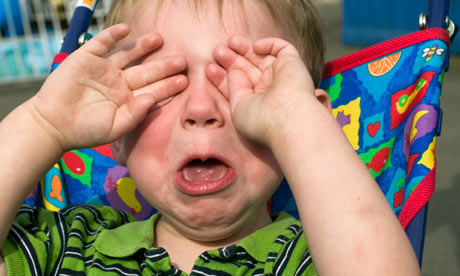
Most babies wake up at night. And although some superhero babies sleep 10-12 hours straight starting around 3-4 months of age, most infants wake up during the night and cry out for their parents. There are scientific reasons and some developmental and behavioral explanations for these awakenings. I spoke with my friend Dr. Maida Chen, a pediatric pulmonologist, mother to three and director of the Pediatric Sleep Disorders Center in Seattle. I put this list together regarding why babies wake up at night. I'll author a follow-up blog on ways you can help your baby when they wake up, too.
10 Reasons Babies Wake Up At Night:
1. Sleep Cycle: Babies wake up during the night primarily because their brain waves shift and change cycles as they move from REM (rapid eye movement) sleep to other stages of non-REM sleep. The different wave patterns our brains make during certain periods define these sleep cycles or "stages" of sleep. As babies move from one stage of sleep to another during the night, they transition. In that transition, many babies will awaken. Sometimes they call out or cry. Sometimes they wake hungry. It's normal for babies (and adults) to wake 4-5 times a night during these times of transition. However, most adults wake up and then fall back to sleep so rapidly that we rarely remember awakening. At 4 months of age, many parents notice awakenings after a first chunk of deeper sleep. This is normal, and often due to development of delta wave sleep (deep sleep). The trick for parents is to do less and less as each month of infancy unfolds during these awakenings; we want to help our babies self-soothe more and more independently (without our help) during these awakenings so that sleeping through the night becomes a reality.
2. Brain Waves: The majority of babies are really capable of sleeping for a prolonged 6+ hour period of time 1/2 way through infancy, around 6 months. As Dr. Chen explains, "When doing sleep studies we follow brain wave activity." After 6 months of age she says, "We see brain waves at 6 months of age and up that are similar in pattern to that of adults." Now that doesn't mean that babies that wake throughout the night have abnormal brain waves, but it does mean as they progress through infancy, they get more and more mature when it comes to sleep. Dr Chen says, "If you look at sleep studies on newborns and infants, they will look very different compared to older children. But by 6 months of age, the baby's brain wave patterns will look much like an 18-year-olds." That being said, unlike an 18-year-old, once some babies are awakened during transitions, they may call out for your help!
3. "Good Sleepers" Versus "Bad Sleepers": Some babies are just better sleepers right out of the gate. Dr Chen reminded me, "There are good sleepers and there are bad sleepers. Part of that is organically hard-wired. But there are also good sleepers with bad habits." Our job as parents is to do the best we can in creating good sleep habits. Most of that has to do with consistency from one night to the next. Some babies make habitual associations like always nursing to sleep, always being rocked to sleep or always being held to fall asleep. Then, when they have awakenings at night, they may cry out to have those associations (bottle, nursing or rocking to sleep) to get back to sleep. These associations can cause a good sleeper to have bad sleep, because of the habit.
4. Crying Is Part Of Being A Baby: There is a pretty serious ongoing debate and national dialogue between parents, psychologists, pediatricians, lactation consultants and scientists about letting babies cry-it-out versus not cry-it out. I'll not delve into much of the debate here, but if you're worried that letting your baby cry-it-out will damage them, try to relax. Dr Chen says, "We don't think that some crying is bad for a baby. The evidence to support long-term damage from crying at night is nil." Many pediatricians recommend letting your baby gradually learn to self-soothe or cry-it-out once they have self-soothing skills (turning over, sucking on fingers or hand, and more mobility) starting somewhere around 4-6 months of age.
5. Mom or Dad's Role At Night: Studies have evaluated how parents can change an infant's sleep. Studies have found that infant sleep disorders are affected by how many times a parent comforts them at night. The more parents camp out (remain in the room until baby is asleep), the more parents transfer the baby into the crib after asleep and the more they picked the baby up at night, the more likely the baby has sleep challenges. And although most studies have evaluated a mother's role in overnight awakenings, a2010 Tel Aviv study found that when fathers were more involved in infant care (day and night), in addition to mothers, their babies had fewer overnight awakenings. Take turns!
6. Development: Developmental milestones shift and change sleep. As described in the video, after 4 months of age, most babies have a prolonged period of sleep and then wake up every couple of hours because of sleep cycle changes. Sometimes they will wake up and roll over and then freak out and cry when they get stuck or move into a new position. The rolling milestone may translate into awakenings. At 6 months of age, babies are exploring the world, putting all sorts of objects and germs in their mouths, and subject to more infection. They're also learning to sit at 6 months of age and this milestones often triggers awakenings. At 9 months of age, babies learn how to pull themselves up in the crib and stand-up -- don't be surprised if they are awake more. Most parents are unpleasantly surprised to find their 9-month-old up and awake in the middle of the night standing up, ready to rock and roll.
7. Teething: There's no question that teething wakes children at night and disrupts sleep. Teething typically commences around 6 months of age but I hear about teething waking babies all the way through their toddlerhood. Acetaminophen is the only medication I recommend for teething.
8. Behavioral Changes: Many babies will have more frequent awakenings around 6 or 9 months of age due to advancing sense of independence and self-awareness. At 6 months of age, I often hear from parents their babies will wake up in the middle of the night and start talking, just go through their different sounds. No need to go to them if they are not fussing! When babies develop separation anxiety around 9 months of age, they will often change their sleep patterns. Often during those times of behavior change they will wake and scream out when they realize you're not at their side.
9. Infection: Infants and children typically have an upswing in infections after 6 months of age. This occurs primarily because once a baby reaches 6 months, they are capable of putting lots of new objects (including their hands) in their mouths, so their exposure to germs increases dramatically. Many babies who have colds or upper respiratory infections will wake due to congestion or coughing. Fever, vomiting and diarrhea will awaken babies at night, too. Hang on and support your baby with a little TLC. Sleep schedules typically go back to normal within a few weeks after the illness began, especially if you can keep up good sleep routines.
10. Pacifiers/Bottle: Many babies are conditioned to fall asleep (or fall back to sleep) while sucking on something. This starts just after birth, when newborns instantly fall asleep with breastfeeding or a bottle in their mouth. Many infants who use a pacifier will wake up between 6-12 months of age when the pacifier falls out. The easiest solution is to get rid of it all together! But remember, big habits die hard, if a baby learns to fall asleep sucking and does so for 6+ months, it can take awhile to unlearn the habit.
Read more here