Showing posts with label brain injury specialist. Show all posts

Saturday, January 17, 2015

Reducing severity of brain injury in children - Recreational Safety

A study of brain injury in children indicated that education and attempts at prevention can reduce the severity of a brain injury.

An exhaustive analysis of data from more than 40,000 cases of brain trauma in children -- published by the New England Journal of Medicine -- provides convincing evidence that protecting children in advance from head injuries is the key to reducing their severity.


The new findings, obtained during one of the largest multi-center prospective studies of its kind ever conducted in the United States, show that the most common cause of brain injury among children younger than 12 is falling -- typically from a moving bicycle, scooter or other wheeled device. Among U.S. adolescents, the three major causes of brain trauma are automobile accidents, assaults and sports-related injuries. Based on a previous study of pediatric brain trauma that studied children's medical histories at 25 sites in the Pediatric Emergency Care Applied Research Network (PECARN), the newly-released findings send a clear safety message to parents and caregivers alike, said Children's Hospital of Michigan Division Chief and Research Director of Emergency Medicine Prashant V. Mahajan, M.D., one of the authors.

"We studied a very large cohort of patients in our secondary analysis of this previously collected data," said Dr. Mahajan, professor of pediatrics and emergency medicine at the Wayne State University School of Medicine, "and the good news for all of us is that they demonstrate clearly the importance of prevention in protecting children from brain trauma. The bottom line on this prospective study of more than 43,000 pediatric brain injuries is that it identifies falls -- often from bicycles -- as the major cause of trauma in children under age 12. Knowing that, we're now better able to help educate parents and policymakers alike about the great value of safety helmets for this population of kids."

Dr. Mahajan said the data on adolescent brain trauma similarly underlines the vital importance of providing sports safety equipment and automobile seatbelts for teenagers.

"Once again, the implications of this very large study are crystal clear," said Dr. Mahajan, who has spent the past 18 years treating injured tots and teenagers at the Children's Hospital of Michigan, part of the Detroit Medical Center. "Our study really emphasizes the importance for pediatricians of educating parents as a key strategy for reducing the severity of such brain injuries among children everywhere."

Dr. Mahajan said his 18 years in pediatric emergency rooms have shown him the importance of prevention, and sometimes in very dramatic fashion. "As a specialist in emergency medicine, I've seen how important such preventive measures as bike safety helmets and automobile seatbelts truly are."

"On several occasions," he added, "I've treated injured children who had been protected by safety equipment and also injured children who have not been protected, during the same eight-hour shift in the emergency room. In most cases, the children who had benefited from wearing the helmets or seatbelts sustained less severe injuries.

"That's the lifesaving message contained in this study -- and it's the message I want to convey to parents and pediatricians everywhere, as a doctor who cares passionately about preventing fatal or disabling brain trauma in children."

Dr. Steven E. Lipshultz, pediatrician-in-chief at the Children's Hospital of Michigan and chair of pediatrics for the Wayne State University School of Medicine, noted, "Dr. Mahajan has long been a dedicated researcher with a great passion for conducting clinical studies that help improve patient care. As his new study reveals in compelling detail, the knowledge that our Children's Hospital of Michigan researchers gain every day is extremely important in improving the quality of the health care we provide to children day in and day out."
Read more here

Wednesday, May 07, 2014

Depletion of Brain Docosahexaenoic Acid (DHA) Impairs Recovery from Traumatic Brain Injury...in Rats....

An external file that holds a picture, illustration, etc.
Object name is pone.0086472.g001.jpgAre you a rat pup who will be playing contact sports like football? Optimize your DHA! JR


Depletion of Brain Docosahexaenoic Acid (DHA) Impairs Recovery from Traumatic Brain Injury

Omega-3 fatty acids are crucial for proper development and function of the brain where docosahexaenoic acid (DHA), the primary omega-3 fatty acid in the brain, is retained avidly by the neuronal membranes. We investigated the effect of DHA depletion in the brain on the outcome of traumatic brain injury (TBI). Pregnant mice were put on an omega-3 fatty acid adequate or deficient diet from gestation day 14 and the pups were raised on the respective diets. Continuation of this dietary regime for three generations resulted in approximately 70% loss of DHA in the brain. Controlled cortical impact was delivered to both groups of mice to produce severe TBI and the functional recovery was compared. Compared to the omega-3 adequate mice, the DHA depleted mice exhibited significantly slower recovery from motor deficits evaluated by the rotarod and the beam walk tests. Furthermore, the DHA deficient mice showed greater anxiety-like behavior tested in the open field test as well as cognitive deficits evaluated by the novel object recognition test. The level of alpha spectrin II breakdown products, the markers of TBI, was significantly elevated in the deficient mouse cortices, indicating that the injury is greater in the deficient brains. This observation was further supported by the reduction of NeuN positive cells around the site of injury in the deficient mice, indicating exacerbated neuronal death after injury. These results suggest an important influence of the brain DHA status on TBI outcome.


Friday, December 28, 2012

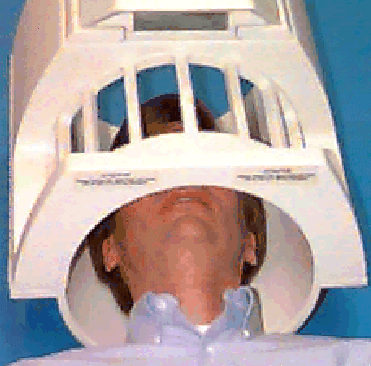
MRIs Show Signs of Brain Injuries Missed in CT Scans

MRIs can show signs of traumatic brain injuries that cannot be seen in CT scans. 

The second best test is a history and exam by a specialist. 

The most sensitive test is a parent saying that their child is not right. JR

Hospital MRIs may be better at predicting long-term outcomes for people with mild traumatic brain injuries than CT scans, the standard technique for evaluating such injuries in the emergency room, according to a clinical trial led by researchers at the University of California, San Francisco (UCSF) and the San Francisco General Hospital and Trauma Center (SFGH).

Published this month in the journalAnnals of Neurology, the study was led by UCSF neuroradiologist Esther Yuh, MD, PhD and followed 135 people treated for mild traumatic brain injuries over the past two years at one of three urban hospitals with level-one trauma centers: SFGH, the University of Pittsburgh Medical Center and University Medical Center Brackenridge in Austin, Texas as part of a study called NIH-funded TRACK-TBI (Transforming Research and Clinical Knowledge in Traumatic Brain Injury).
All 135 patients with mild traumatic brain injuries received CT scans when they were first admitted, and all were given MRIs about a week later. Most of them (99) had no detectable signs of injury on a CT scan, but more than a quarter (27/99) who had a "normal" CT scans also had detectable spots on their MRI scans called "focal lesions," which are signs of microscopic bleeding in the brain.
Spotting these focal lesions helped the doctors predict whether the patients were likely to suffer persistent neurological problems. About 15 percent of people who have mild traumatic brain injuries do suffer long-term neurological consequences, but doctors currently have no definitive way of predicting whether any one patient will or not.
"This work raises questions of how we're currently managing patients via CT scan," said senior author on the study Geoff Manley, MD, PhD, the chief of neurosurgery at SFGH and vice-chair of the Department of Neurological Surgery at UCSF. "Having a normal CT scan doesn't, in fact, say you're normal," he added.
Better Precision Tools Needed for Head Injuries, Doctors Say
At least 1.7 million Americans seek medical attention every year for acute head injuries, and three quarters of them have mild traumatic brain injuries -- which generally do not involve skull fractures, comas or severe bleeding in the brain but have a variety of more mild symptoms, such as temporary loss of consciousness, vomiting or amnesia.
The U.S. Centers for Disease Control and Prevention (CDC) estimates that far more mild traumatic brain injuries may occur each year in the United States but the true number is unknown because only injuries severe enough to bring someone to an emergency room are counted.
Most of those who do show up at emergency rooms are treated and released without being admitted to the hospital. In general, most people with mild traumatic brain injuries recover fully, but about one in six go on to develop persistent, sometimes permanent disability.
The problem, Manley said, is that there is no way to tell which patients are going to have the poor long-term outcomes. Some socioeconomic indicators can help predict prolonged disability, but until now there have been no proven imaging features, or blood tests for predicting how well or how fast a patient will recover. Nor is there a consensus on how to treat mild traumatic brain injuries.
"The treatment's all over the place -- if you're getting treatment at all," Manley said.
The new work is an important step towards defining a more quantitative way of assessing patients with mild traumatic brain injuries and developing more precision medical tools to detect, monitor and treat them, he added.
If doctors knew which patients were at risk of greater disabilities, they could be followed more closely. Being able to identify patients at risk of long-term consequences would also speed the development of new therapeutics because it would allow doctors to identify patients who would benefit the most from treatment and improve their ability to test potential new drugs in clinical trials.
Read more here