Showing posts with label sleep tracking device. Show all posts

Friday, November 21, 2014

Tips on how to use a sleep tracker

Sleep experts provide tips on how to use a sleep tracking device.

Sleeping in the 21st century has changed — these days, there are loads of gadgets to help you track every snore, shift and 2 a.m. bathroom break.

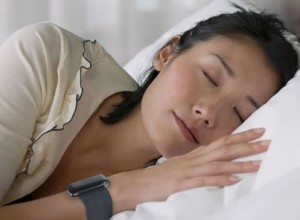
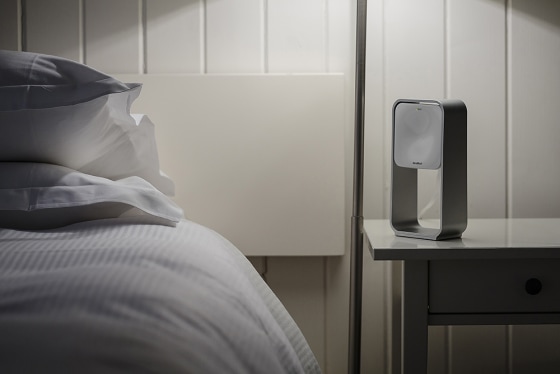
Sleep trackers come in all shapes and sizes. There are the wristbands, like the ones from Jawbone and FitBit. Smart watches could become all the rage once the Apple Watch goes on sale. And other sleep trackers do everything from sense movement from under the mattress and track breathing from the nightstand. 

Ultimately, they are trying to do the same thing: collect data on how much sleep people are getting and whether that sleep is any good. But once people get all of those numbers, what are they supposed to do with them? 

We asked three sleep experts how to get the most out of their sleep trackers. 

1. Take the long view

Don't freak out if you only got five hours of sleep last night. It's better to "examine the trends (e.g., several nights in a row), instead of just focusing on one night's data," Dr. Clete Kushida, medical director of the Stanford Sleep Medicine Center, told TODAY via email. 
It's about looking for troubling long-term trends, not fretting over whether last night's Frappuccino was a bad idea

2. Don't make things worse

Most likely, you don't sleep on your remote control or wear your favorite watch to bed. There is a reason for that.

"The problem can be in some cases that the wearable disrupts sleep itself," Michael Breus, a clinical psychologist known as the "Sleep Doctor," told NBC News. 

If wearing something like a FitBit or the Microsoft Band to bed is comfortable for you, go for it. Breus is currently trying two gadgets that hopes can make sleep trackers less intrusive: the ResMed S+ and the Beddit, both of which don't need to be connected to the body. 

3. Go to the pros

Every professional contacted for this story warned that if you think you have a sleep disorder, you should tell a doctor or sleep specialist. 

"If you are interested in learning more, then I am fine with [using sleep trackers]," Breus said. "If you are trying to diagnose a sleep disorder, then you are much better off seeing a sleep specialist and getting a sleep study."

Most sleep trackers overestimate how long people sleep and underestimate how many times they wake up at night, Hawley Montgomery-Downs, a sleep researcher at West Virginia University, told NBC News.

Essentially, people may think they are getting more sleep than they really are. 
"It's very detailed information, but the details are wrong," she said. 

That could be dangerous for people who really need professional help, she said. 

The technology Montgomery-Downs uses tracks everything from eye movement to brain waves. While she doesn't think any gadget she has tested comes close to what the pros use, she hopes that the boom in sleep trackers could result in something that delivers the whole package. 

"I'm very optimistic," she said. "I think it's entirely possible that within the next decade we could have technology that will be able to replace 40 external sensors on someone."

Read more here

Thursday, October 23, 2014

Do sleep trackers actually work?

This article explains the effectiveness of devices that track a person's sleep.

According to the Center for Disease Control (CDC), insufficient sleep is a public health epidemic. Four in 10Americans get less than the recommended amount of sleep each night and 70 millionAmericans have a sleep disorder. Not only does too little sleep affect how we feel during the day, it also raises our risk for heart trouble,diabetes, weight gain, accidents and other problems.
So, what’s the solution?
Unfortunately, the fix isn’t as easy as it may seem. While most experts recommend between seven to nine hours of sleep per night, there’s no “one-size-fits-all” answer. A good night’s sleep varies from person to person, and our sleep patterns change as we age. And beyond amount of sleep, it’s also important to look at quality of sleep and whether you complete sleep cycles.
Enter wearable sleep trackers.
We live in the era of the “Quantified Self,” where we can self-monitor practically every aspect of our health. Hundreds of fitness trackers can now measure our steps, distance traveled, calories burned, heart rate, skin temperature and even perspiration. Not only do many of these trackers claim to monitor sleep, but some promise data on sleep quality – generally meaning how long we spend in each of the five stages of sleep, from light sleep to REM to deep sleep.
Before we try to understand how that works and whether it’s accurate, let’s back up and look at how sleep is typically measured by experts. In traditional sleep studies, or polysomnography (PSG) tests, patients spend the night in a sleep lab hooked up with equipment that measures their sleep cycles and stages. According to National Institutes of Health, this test records a number of physical activities including:
  • Air flow in and out of your lungs as you breathe
  • The level of oxygen in your blood
  • Body position
  • Brain waves (EEG)
  • Breathing effort and rate
  • Electrical activity of muscles
  • Eye movement
  • Heart rate
Back to personal sleep trackers. Most of these wearable gadgets measure sleep through actigraphy with a device called an accelerometer… which is basically a fancy way of saying they simply measure sleep by movement.
“They are measuring an indirect approximation of sleep through movement,” Michelle Primeau, clinical instructor at the Stanford Center for Sleep Sciences and Medicine told CNET. “In order to make these estimations of deep or light sleep they are probably using an algorithm that takes into account the relative amount of movement that a person is having in the course of a night.”
As for whether these sleep trackers “work” or not, it depends on how you use them and what you’re hoping to gain from them.
While trackers can be a good benchmark for the amount of sleep you’re getting, many are still skeptical about their ability to measure the quality. So if you’re looking to log hours, great. If you’re looking to compare light verse deep sleep, take the analysis with a grain of salt.
As Dr. Irshaad Ebrahim of the London Sleep Centre told The Guardian, “They’re not measuring sleep, simply motion – not muscle tone, brain waves, heart rate or eye movement. You cannot infer quality of sleep from motion and tell what is crucial REM [rapid eye movement] sleep and what is not.”
Experts also warn that these types of devices are not a substitute for medical advice or lab testing.
However, that doesn’t mean these gadgets are useless. If you’re trying to adopt a healthier sleep routine, the instant feedback that comes from self-monitoring may motivate you to adhere to your goals. These devices can also help keep sleep – an often overlooked health issue – on the top of our mind.
“The bottom line is that any device on your wrist that makes you think twice about staying up too late is a good thing,” said Dr. Christopher Winter, medical director at Charlottesville Neurology & Sleep Medicine, in his Huffington Post review of various trackers.
Read more here

Friday, August 01, 2014

Usefulness of sleep tracking devices

This article discusses how useful sleep tracking devices are to those who may have issues sleeping.

The average adult needs at least seven hours of sleep each night, though unfortunately many get a lot less. Approximately 70 million Americans have a sleep disorder, which may be why there's tremendous interest in popular fitness trackers that allow you to quantify and evaluate the quality of your sleep -- without the expense of a sleep specialist.
Personal sleep trackers seem like a great investment for anyone suffering from insomnia or sleep deprivation. But are they accurate?
"The reason why these devices are so good is it puts greater emphasis on sleep," Michelle Primeau, clinical instructor at the Stanford Center for Sleep Sciences & Medicine told CNET reporter Sumi Das. "Most adults in the U.S. are somewhat sleep deprived."
Fitness trackers with sleep tracking capabilities, such as Fitbit, work by keeping track of how much you toss and turn in your bed to provide data on your sleep quality. This is done with accelerometers.
"They are measuring an indirect approximation of sleep through movement," said Primeau. "In order to make these estimations of deep or light sleep they are probably using an algorithm that takes into account the relative amount of movement that a person is having in the course of a night."
On the other hand, sleep specialists base their treatments and diagnoses on polysomnography, a special multifaceted test that typically involves sleeping in a controlled environment -- a sleep lab -- hooked up to plenty of wires. This gold-standard for sleep specialists measures everything from your brain activity, heart rate and breathing to your eye and muscle movements. Polysomnography generates far more information than currently any personal sleep tracker can, and is used to diagnose problems such as sleep apnea, circadian rhythm disorders, nighttime movement disorders and other health issues.
"Polysomnography is a collection of different physiological measurements that we use to define and characterize sleep," explained Primeau. "We start with EEG which are little electrical wires that measure your brainwaves. It also includes measures like a snore mic. Belts around you chest and abdomen will also record your breathing."
But some experts argue that sleeping in a controlled setting, such as a sleep lab, messes up the evaluation before it even has the chance to begin, since the person won't sleep the same as in their own bed. In general, a personal sleep tracker could be a good starting point for a better night of sleep, but these devices may not be enough to diagnose and solve your shuteye challenges.
If you're desperately tired but still skeptical, a sleep app for a smartphone may be a good place to start, since it will only set you back a few dollars compared with a hundred or more for a tracker device. Sleep Cycle, Sleep as Android and Sleepbot operate on the accelerometers built into a phone.
Read more here