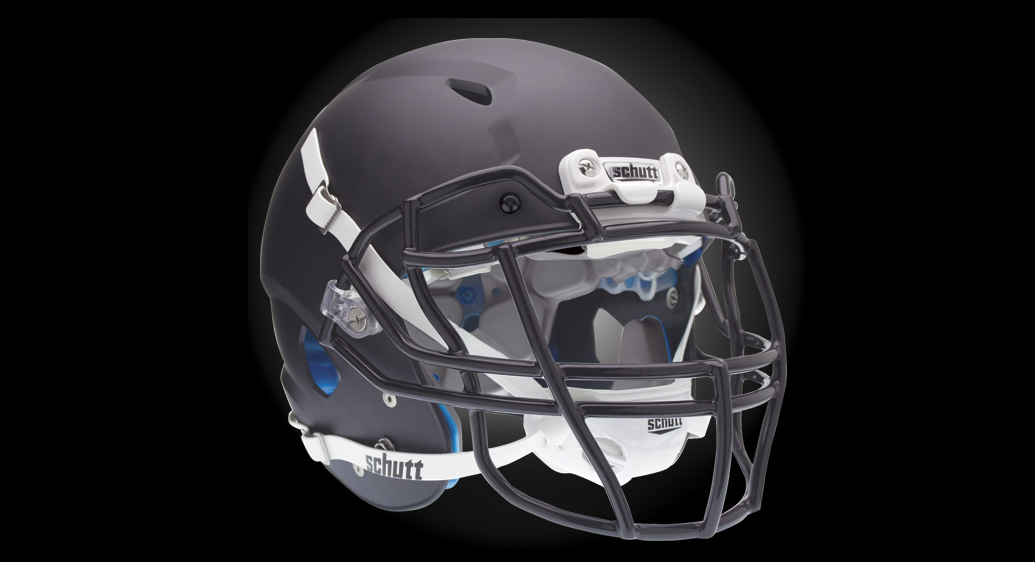
Showing posts with label concussion prevention. Show all posts

Wednesday, March 11, 2015

Experts claim better concussion prevention is needed in youth sports

This article discusses an expert's claim that better preventative measures for concussions are needed in youth sports.

Dina Morrissey, M.D., M.P.H., research associate for The Injury Prevention Center at Hasbro Children's Hospital, recently led a study that found that while compliance with mandated provisions in youth sports concussion laws was high among Rhode Island Interscholastic League (RIIL) high schools, compliance with recommended concussion protocols was very limited. The study, recently published in the Journal of Trauma and Acute Care Surgery, suggests that more concussion related standards and protocols need to be written into law in order to raise compliance rates among youth sports groups.
"An estimated 7.7 million children and adolescents participate in organized sports each year and the Centers for Disease Control and Prevention estimates that they sustain between 1.6 and 3.8 million sports-related concussions annually," said Morrissey. "In response to this, the state of Rhode Island passed the School and Youth Programs Concussion Act (SYPCA) in July 2010. The law outlines both mandatory and recommended provisions in regard to managing student athletes with a suspected concussion. Our study assessed compliance with this law among Rhode Island high schools and community league organizations."
In a 2013 statewide assessment of Rhode Island concussion law compliance among RIIL member high schools, non-member high schools and selected community league sports organizations, the study team found nearly universal compliance with mandated elements of SYPCA.
All athletic directors surveyed reported that they require concussion information sheets to be signed by both student athletes and parents prior to the start of each sports season. The research team also found that all coaches and 93 percent of volunteers have completed annual concussion training.
One hundred percent of surveyed groups also reported that any student athlete with a suspected concussion is immediately removed from play, and 93 percent reported that those students cannot return to play until they receive written clearance from a licensed physician, all per the SYPCA mandates.
"These SYPCA laws only apply to schools that are RIIL members," said Michael Mello, M.D., M.P.H., director of the Injury Prevention Center and co-author of the study. "When we explored other non-RIIL schools and sports organizations where SYPCA is recommended but not required, and also any of the recommendations that are not legally required of RIIL members, we found a very different compliance rate."
Only a handful of schools require student athletes to complete any type of pre-season neurocognitive testing, and nearly 20 percent don't offer it to student athletes at all. Half of the surveyed groups reported developing a written return to play protocol.
"These compliance statistics show us that in order to best protect youth athletes in Rhode Island, all recommendations outlined in the SYPCA law should be made mandatory," said Mello. "Additionally, non-RIIL schools, as well as community sports organizations, should also be required to comply with the law."
Neha Raukar, M.D., director of the Center for Sports Medicine and a co-author of the study, sees many youth athletes in her clinic for concussion treatment. "If a concussion is not treated properly and student athletes return to play too soon, they are at high risk for prolonging their symptoms, meaning more time out of the classroom and on the bench. They are also at risk for experiencing a devastating post-concussion event, such as second impact syndrome, which can be fatal," said Raukar.
"We are only just beginning to understand the long-term consequences of sustaining repeated head trauma and concussions," said Raukar. "Physicians, coaches and school staff alike all need to know the importance of properly diagnosing concussions, as well as the criteria for when a student athlete can both return to school and return to sports."
But, Morrissey also urges that the public needs to play a role and ensure that their school or community sports organization follows all the recommendations in the concussion law. "One example of our community pushing for better concussion protection for our students can be seen in school nurse annual training," said Morrissey. "At the time of our survey, only one quarter of surveyed groups required school nurses to complete annual concussion training. But now there is a new law in place to try to correct this, and Rhode Island is one of only a handful of states to reach out to school nurses for training. This is a clear step in the right direction."
Read more here

Thursday, January 08, 2015

Helmet technology may help with concussions

Forbes recently published the following article explaining why current helmets cannot prevent concussions, but that new helmet technology may be able to help.

The veil of denial and misinformation that has clouded awareness of the long term dangers of athletic concussion has started to lift.  As the general public and especially families of collision sports athletes begin to realize the threat to a normal life posed by the heightened risk of Alzheimers, ALS, Parkinson’s, dementia, Chronic Traumatic Encepalopathy and depression that multiple concussions trigger–the search for solution becomes more intense. One focus in prevention is helmets. Athletes in football, baseball, hockey, field hockey, auto and horse racing all wear helmets.

There is a prevalent belief that those helmets play a major role in preventing concussion–they do not. Current helmets are primarily designed to prevent skull fracture. There obviously is some protective benefit–but the energy wave from a collision currently moves through the plastic and the liner of a helmet and enters the athlete’s head. Tate Technology, headed by CEO Jenny Tate Morgan, has devised a solution. Morgan comes from a family background in helmetry. Her grandfather, John Tate Riddell designed the first plastic helmet, and founded Riddell Football. Her father, also CEO of Riddell, co-ventured with Jack Welch and GE Plastics to use new polycarbonate materials on helmets in 1957. Riddell innovated a series of designs also used in military helmets.

Tate Technology assembled a scientific team of industry experts, engineers, PhD’s and MD’s along with a seasoned board of directors from Fortune 500 companies to find better solutions.  ”Advanced Concussion Technology” (ACT) is a solution which has gone through research, development and some testing. It uses a system of coils designed to dissipate energy and attenuate at the first point of impact. This is done through ”compression” instead of the energy flowing into “tension.” The energy wave moves directly into the head. The system of coil and compression in the helmet can reduce the impact of a hit by as much as half. This company is licensing the technology, which can adapt to any of the currently made helmets; it will not manufacture them itself.

I don’t pretend to be an engineer with in-depth knowledge of energy attentuation. But in lay terms, reducing the energy in a hit so it never penetrates the head and the brain, seems like a solution that could revolutionize helmetry. What works on sports helmets, can work on military, bicycle and motorcycle helmets. Tate’s ACT is ready to be installed in helmets now.

Kudos to those inventive individuals and companies that are trying to tackle a problem that is a largely undiagnosed public health epidemic. Otherwise, the number of concussions will continue to rise, and the trauma will manifest earlier than ever before. This is the result of larger, stronger, faster bodies colliding. It will be exciting to see how fast Jenny Morgan’s ACT technology can begin providing relief.I have always felt that once American corporations with engineering capacity worked on the helmet problem, progress would occur. In the same way neutraceutical and pharmaceutical solutions to brain damage have occurred. The race for solution is producing a variety of promising approaches, such as Prevacus nasal spray. In helmetry, Vicis Company has developed a helmet with impact absorbing filaments that also offers hope.

Read more here

Thursday, July 17, 2014

Do doctors have an obligation to protect athletes from concussions?

This article discusses if doctors have an ethical obligation to teach and protect athletes from concussions.

The American Academy of Neurology (AAN), the largest professional association of neurologists and a leading authority on sports concussion, is releasing a new position paper that states doctors have an ethical obligation to educate and protect athletes from sports concussion and clear them to play only when the athlete is medically ready, standing firm against objections from players, parents or coaches. The statement is published in the July 9, 2014, online issue of Neurology®, the medical journal of the AAN, and is being released ahead of The Sports Concussion Conference, July 11-13, 2014, in Chicago, where the AAN will share the latest scientific advances in diagnosing and treating sports concussion.
The AAN position statement calls for doctors to safeguard the future mental and physical health of athletes as a top priority, especially regarding return-to-play decision-making. Physicians also must educate patients and their families about the dangers of concussion in all relevant sports, according to the statement.
The Academy has spent several years analyzing all of the available research and ethical issues to develop this official position paper, which corresponds with the AAN's guideline on sports concussion.
"With nearly four million sports-related concussions in the US each year, it is imperative doctors are educated and protect these athletes who may have sustained a concussion," said lead author Matthew P. Kirschen, MD, PhD, a neurologist with The Children's Hospital of Philadelphia and a member of the American Academy of Neurology. "Concussions can have devastating effects such as short-term impairments in athletes' cognitive and athletic performance. Repeat concussions have been linked to long-term impairments in brain function, such as problems with learning, memory and behavior."
The statement also:
• Supports wider use of baseline cognitive testing
• Recommends that concussion evaluation and management training be added to neurology residency programs
• Suggests the development of a national concussion registry with mandatory reporting, which may help to document more rigorously the incidence and recurrence of concussion at all levels of play
Ethically, the statement concludes that physicians caring for athletes during and after a sports-related concussion should have adequate training and experience in the recognition and evaluation of both the existence and severity of potential brain injury.
"These strategies could help identify the threshold at which the number and severity of head injuries leads to irreversible brain injury. They may also help to clarify how concussion risk varies with factors like age, gender, puberty stage and ethnicity so athletes and parents can make informed decisions about playing contact sports," said Kirschen.
Read more here

Saturday, January 04, 2014

Why no helmet can prevent concussions

This comprehensive article gives an overview of the research that has been done on helmets and concussions, and the article discusses what this research means for football players.

It's a glorious time to be a football fan.
The NFL playoffs are underway, the Super Bowl is just weeks away. The national rite of football gives so many people so many exciting moments. Maybe that's why it can be hard to wrap one's mind around one of the game's huge downsides: what it may do to the brains of the young men who play it.
The spotlight on head injuries in sports, particularly football, has grown more intense in recent years. Last fall, the NFL settled for $765 million dollars in a class action lawsuit by former players over concussions, a case heard in Philadelphia.
Last week, a Mississippi father filed a federal class action suit on behalf of all student athletes asking the bodies governing college and high school sports to provide better and more uniform information on concussion risks.
Many of the sports Americans and young adults in particular love to play – not just football, but hockey, soccer and the rest – risk collisions and jolts to the head that can lead to concussions. Sometimes the signs are obvious, as was the case with Emily Panchak and Patrick Crowley, high school athletes in the Wilmington area.
"I didn't get knocked out, but I was crying, and it hurt really bad," says Panchak, who right after a head collision last spring, couldn't remember the bus ride over to the soccer game that day.
"The way I landed, the way I hit the back of my head on the ground, it just riled me pretty bad," recalls Patrick Crowley, Concord Raiders' football captain, of a concussion that put him out of play for several weeks a few years ago.
Injuries can also be more subtle, cautions Rosemarie Scolaro Moser, a neuropsychologist who runs the Sports Concussion Center of New Jersey.
"The problem with a concussion is true symptoms often don't show till hours or days later," Moser recently told The Pulse. "And with youth, they're more vulnerable to a second hit. So for example, if they haven't fully recovered and they get hit again, that second hit, even if it might not have caused a concussion to begin with on its own, can cause serious damage."
Searching for the magic bullet
Trying to change how games are played to avoid collisions has proven difficult and controversial. It has led to a search for the magic bullet, in hopes of sharply reducing the risk of concussion: better equipment. In football, this often means the helmet.
Some companies have marketed claims to young athletes their headgear could be the better mousetrap.
At Schuylkill Valley Sports in Easton, Pa., Mike Morris estimates two to three high school football players per team have come in to buy their own, more expensive, helmet this past season.
"They're looking to get something better," says Morris. "They're just looking for something that will minimize the risk of concussion."
But do any football helmets really cut down the risk of concussion? And are certain models worth the extra money?
What role do helmets play? 
Halfway across the country, Alison Brooks had a similar experience to Mike Morris at Schuylkill Valley Sports. Brooks specializes in sports medicine at the University of Wisconsin. Parents and young athletes kept asking her which helmets they should get. Many were feeling pressure at school to buy newer ones.
So she designed a prospective study, observing over 1,000 high school football players last year who wore the three most common helmets, including some of the newest models. She parsed out the number of reported concussions based on helmet brand, model and age, to see if there was any big variation.
There wasn't.
"You know as best we can tell they all adequately do what they were designed to do, which is prevent skull fractures, prevent intracranial bleeds, prevent superficial scalp and face injuries," Brooks recently told The Pulse. "But there's not any evidence that any one of them is particularly going to reduce your concussion risk."
Brooks' findings are preliminary, and may not account for other possible external factors. But the results don't surprise Robb Rehberg, a concussion specialist and professor of athletic training at William Patterson University in New Jersey. Rehberg thinks some helmets are doing a better job at protecting the head and "attenuating the forces that typically cause concussion," but while helmet design has improved a lot compared to ten years ago none can, nor should, claim to prevent a concussion.
Other research points to similar takeaways.
Evidence limited
In general, scientists don't know how effective helmets are when it comes to concussions in kids ages 5 to 21.
Kristy Arbogast and Susan Margulies reviewed all the evidence to date for a recent Institute of Medicine Report: Sports-Related Concussions in Youth – Improving the Science, Changing the Culture. Margulies, a bioengineer at the University of Pennsylvania, says part of the challenge is the science behind concussions isn't there yet. There's no standard, objective way for actually identifying and reporting them.
"Evidence that a concussion has occurred is really entirely based on the athlete saying that I think I've had a head injury," says Margulies.
So imagine trying to diagnose an ACL tear and come up with a rehab plan solely on the athlete's description of knee pain rather than an MRI, where the actual injury can be objectively visualized. The IOM report points to another major challenge when it comes to identifying concussions: the culture of sports and pressure to hide injuries.
"Probably one of the most important things we stress to the kids is you have to be honest," George Kasonovich recently told The Pulse.
Kasonovich, head football coach at Concord High School in Delaware, says schools have much better protocols nowadays,thanks to improved education, regulations and awarenessregarding concussions. If one is even suspected on the field, a player's out and can't return without a physician's note.
But Kasonovich's mindset isn't universal. And, athletes also face a lot of pressure to hide injuries. Seniors Patrick Crowley and Keyon Powell are Concord's co-captains. Both have suffered from concussions in the past, and had to sit out for several weeks.
"Some of the worst people to talk to about that are your teammates and your friends because they're always going to want you go out there no matter what you're feeling," says Crowley.
"It's basically the pride of it, you don't want to sit on the sideline, you always want to be out there helping your teammates," says Powell.
It makes the job of the school's athletic trainer, Scott Klabunde even trickier. He doesn't joke around.
"I'm not going to lie, I've threatened them," says Klabunde. "It was 'hey, if you really screw this up, you could die.'"
Technology outpacing science
While helmets do protect against head injuries like skull fractures, relying on them to prevent concussions is problematic for another reason: the limitations in how helmets are assessed.
Arbogast, with the Children's Hospital of Philadelphia, says helmet standards and effectiveness have historically been based on a drop test.
"They take a helmet, they put a humanoid head form - a plastic rubber head form in the helmet - and they drop it a given height and measure its acceleration," says Arbogast. "And there are thresholds below which every helmet must meet."
But in the real world you don't always hit your head in a straight line that way. Arbogast and Margulies both say the manor and direction your head moves are big factors in developing a concussion.
"We know it's a combination of linear movements along a straight line and rotational movements," says Arbogast. "But we don't know the specific level, the magnitude of those movements."
"Nodding your head yes verses 'I don't know' are two rotational motions," says Margulies. "They could have very different risks associated with concussion.
Those concussion risks could also vary based on a kids' age and individual experience. No one hit and reaction is alike. The science, they say, just hasn't caught up with the product development.
"And so without that fundamental data we can't really answer a question about whether a given helmet protects against concussion or not," says Arbogast.
"Current helmets may mitigate rotational accelerations, but we're not measuring it now," Margulies adds.
For the recent IOM youth concussion report, Margulies and Arbogast also examined other kinds of protective equipment, like facial masks and mouth guards. They found no evidence those devices reduce concussion risk, though they are important when it comes to protecting against other kinds of injuries.
Their chapter notes that solely relying on helmets as a way to reduce concussions might have another unintended effect, a phenomenon called "risk compensation" which has been studied a lot in safety literature: "the athlete may be emboldened by the increased protection to take additional risks, thus mitigating any benefits of the protective device."
More to preventing concussions
Despite helmet limitations, concussion specialists caution against relying only on that bit of equipment to prevent or lessen the risk of getting a concussion, anyway.
"The helmet isn't all of the story here," says Arbogast. "We need to understand how particular practice methods or aspects of the game might be able to be modified to protect the head."
Arbogast says that includes teaching different tackling techniques, and developing strategies that go well beyond the playing field, in terms of education and following up for when a concussion occurs, to ensure a full a recovery.
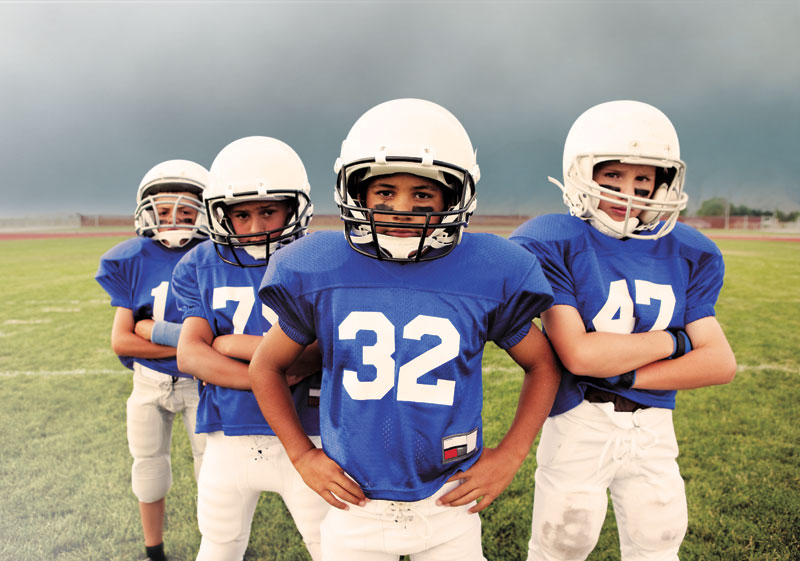
Read more here

Tuesday, November 05, 2013

No helmet can prevent concussions, regardless of manufacturer's claims

A study by the American Academy of Pediatrics claims that regardless of claims made by manufacturers, no specific helmet can prevent or reduce incidence of concussions.

While many football helmet and mouth guard manufacturers claim that their equipment will lessen impact forces and reduce concussion risk, neither a specific brand nor a higher cost were associated with fewer concussions in adolescent athletes, according to an abstract presented Monday, Oct. 28 at the American Academy of Pediatrics (AAP) National Conference and Exhibition in Orlando.
"Our preliminary findings suggest that neither any specific brand of football helmet nor custom mouth guards result in fewer concussions in kids who use them," said lead co-investigator Margaret Alison Brooks, MD, MPH, FAAP. "Despite what manufacturers might claim, newer and more expensive equipment may not reduce concussion risk. So is it worth the significant extra cost to families and schools?"
Each year, approximately 40,000 sport related concussions (SRC) occur in U.S. high schools. In the abstract, "Association of Helmet Brand and Mouth Guard Type with Incidence of Sport Related Concussion in High School Football Players," researchers tested various mouth guard brands, including custom-fit mouth guards, and new and older football helmets.
The study involved 1,332 football players at 36 high schools during the 2012 football season.Players completed a pre-season demographic and injury questionnaire, and athletic trainers recorded incidence and severity of SRC throughout the year.
Helmets worn by players were manufactured by Riddell (52 percent), Schutt (35 percent) and Xenith (13 percent). The helmets were purchased in 2011-2012 (39 percent), 2009-2010 (33 percent) and 2002-2008 (28 percent). Mouth guards worn by players included generic models provided by schools (61 percent) and specialized mouth guards (39 percent) custom fitted by dental professionals or specifically marketed to reduce SRC.
A total of 115 players (8.5 percent) sustained 116 SRCs in 2012.There was no difference in SRC rate based on the type of helmet worn, or the year the helmet was purchased. Concussion severity (based on the number of days lost from play) was no different for players wearing Riddell, Schutt or Xenith helmets. The SRC rate for players who wore a specialized or custom-fitted mouth guard was higher than for players who wore a generic mouth guards.
Properly maintained and fitted helmets remain important to prevent skull fractures and scalp lacerations in football players, said Dr. Brooks. However, "because the brain is floating freely inside the skull, I think most experts doubt whether it is possible to ever develop a helmet design that can prevent concussion."
Read more here

Monday, September 30, 2013

There's no such thing as a concussion-proof helmet

This article explains why parents should be weary of helmets claiming to be "concussion-proof"and what to do about concussions in their children.

Football season is upon us and many parents of young players may be swayed by helmets claiming to be "concussion-proof." There is no such thing, experts warn.
Some manufacturers are promoting aftermarket add-ons for football helmets – such as liners, bumpers, pads and electronic devices – that promise to reduce the risk of concussion. However, there is little research evaluating the effect of physical impact on young athletes, and risk-reduction claims about helmets designed for adult players may not be relevant to younger players, New York Attorney General Eric Scheiderman warned. 
“It’s important to remember that no helmet can fully prevent a concussion,” Schneiderman said, as he cautioned manufacturers against making claims they can't back up. “Ensuring that manufacturers don’t mislead the public and endanger young New Yorkers is a key concern for my office."
Head injuries, including concussions, can happen at any time on the field of play, regardless of the type of helmet being worn. False claims may give players and parents a false sense of security. Instead, parents, coaches and young football players should rely on a number of tips and strategies to help reduce the risk of head injury, including: learning and recognizing symptoms of a concussion; minimizing head-to-head hits on the field, and enforcing stronger and stricter penalties against such behavior.

What to do

Although the age, condition, type and fit of the helmet are important factors, reducing the risk of concussion is not “all about the helmet.” Schneiderman issued these tips to reduce the risk of concussion and head injury in youth football:
  • Players, parents and coaches must be trained on the symptoms and risks of concussion.
     
  • Recognizing the signs of concussion and removing a player immediately is extremely important.
     
  • New York State law requires that players be removed from play until they are asymptomatic for a minimum of 24 hours and have written approval from their physician to return to play. Many other states have similar laws.
     
  • The number of concussions can be significantly reduced with modifications to practice format and an emphasis on penalty enforcement.
     
  • Reducing the number of hits is instrumental to reducing the risk of concussion because of the cumulative risk from repeated hits. Limit the amount of contact in practice and forbid drills that involve full-speed, head-on blocking and tackling that begins with players lined up more than three yards apart.
     
  • Players need to be trained to focus on techniques that minimize head-to-head hits. Coaches and referees must strictly enforce penalties against such behavior.
Read more here

Sunday, September 15, 2013

New York's Attorney General releases consumer alert on helmets

New York Attorney General released a statement alerting people to the fact that no helmet can prevent youth concussions.

New York Attorney General Eric Schneiderman issued a consumer alert Thursday about the risk of concussions to youth football players.
Schneiderman
Schneiderman
Schneiderman reminded consumers that head injuries, such as concussions, can happen at any time on the football field, no matter what helmet is worn. Any claims suggesting a certain helmet is anti-concussive or concussion-proof may be misleading and possibly dangerous if they give parents and players a false sense of security.
Parents, coaches and young football players should instead rely on tips and strategies to reduce the risk of head injuries. Such strategies include learning and recognizing the symptoms of a concussion, reducing head-to-head hits on the field and enforcing more stringent penalties against such behavior.
“It’s important to remember that no helmet can fully prevent a concussion,” Schneiderman said. “Ensuring that manufacturers don’t mislead the public and endanger young New Yorkers is a key concern for my office. Just as important, we must work to educate young athletes and their parents about how to reduce the risk of concussion and detect early warning signs on the field.”
New York State’s Concussion Management and Awareness Act, which became effective in July 2012, requires training for athletic trainers, school nurses, physical education teachers and coaches in the symptoms and risks of concussion.
A recent Virginia Tech University study of seven- and eight-year-old football players found that youth players recorded impacts to the head with severity levels compared to players found in collegiate football, even though young players play at slower speeds and have less body mass. According to the National Federation of State High School Athletic Associations, about 3.5 million children between the ages of six and 14 play in youth football leagues in the United States.
Read more here

Tuesday, May 21, 2013

Virginia Tech 2013 Football Helmet Ratings

Virginia Tech's 2013 Football Helmet Ratings gives ratings on a five-star scale to indicate the likelihood of a helmet to help prevent concussions.

Virginia Tech released today the results of its 2013 adult football helmet ratings, designed to identify differences between the abilities of helmets to reduce the risk of concussion. A total of four helmets achieved a 5 star mark, which is the highest rating awarded by the Virginia Tech Helmet Ratings-. The newly redesigned Xenith X2 joined the Riddell 360, Rawlings Quantum Plus, and Riddell Revolution Speed as the only helmets with a 5 star rating.

Two additional new helmet models introduced this year, the SG Adult Helmet and the Schutt Vengeance, were rated as 4 star helmets, denoted as very good. This category includes six existing helmets that have been rated with 4 stars in the 2012 Virginia Tech Helmet Ratings-: Schutt ION 4D, Rawlings Impulse, Xenith X1, Riddell Revolution, Rawlings Quantum, and Riddell Revolution IQ. The complete ratings are publicly available online so that consumers can make informed decisions when purchasing football helmets.

The Virginia Tech Helmet Ratings- for adult football helmets was created in 2011 based on research that included analysis of over 2 million head impacts recorded in high school and collegiate football games. The process used for evaluating helmets involves mapping the on-field exposure to laboratory tests. For each helmet model, 120 impacts are performed at multiple locations and impact energies. The exposure and impact data are then combined and compared to concussion risk using the STAR equation, an acronym for the Summation of Tests for the Analysis of Risk. Helmets that better manage the impact energy will result in lower head accelerations and thereby lower the risk of concussion. To date, 18 helmet models have been evaluated through the analysis of over 2000 laboratory tests.

"It is encouraging to see the progress in helmet design over the past two years. We were able to utilize funding from the National Institutes of Health (NIH) to collect data that provided the foundation for this translational research. In addition to the high performing Riddell and Rawlings helmets of last year, you saw Xenith, SG, and Schutt all introduce new helmets this year that are performing very well," said project director Stefan Duma, the Harry C. Wyatt Professor and Department Head of the Virginia Tech - Wake Forest School of Biomedical Engineering and Sciences (SBES).

As observed in previous years, cost was not associated with performance, as the most expensive helmet was not the best performer. "Overall, we recommend players select one of the 4 or 5 star helmets. The specific helmet a player chooses will be dependent on additional factors such as a fit and comfort," said Duma. The other new helmet model introduced in the 2013 ratings was the Schutt Air XP Ultralite, which earned a 3 star rating. The remaining five football helmet models were rated with 3 stars or less.

"It's great to see manufacturers tweaking their current helmet models to reduce head acceleration. When you consider the millions of athletes participating in organized football, selecting helmets that reduce head acceleration can have a large impact across the sport," said Steven Rowson, assistant professor of biomedical engineering at Virginia Tech. Rowson was responsible for the development of the STAR Evaluation System and testing the helmets. "Three of the four new helmet models introduced in this past year earned a 4 or 5 star rating. This helps demonstrate that a data-driven approach can be utilized to optimize helmet design to reduce concussion risk," he said.

These will be the last ratings based solely on linear acceleration, as the research team announced their five year plan that will add rotational acceleration to all future Virginia Tech Helmet Ratings-. Concussion risk will be determined from both linear and rotational head accelerations using methods developed in their recently published study in Annals of Biomedical Engineering. "All head impacts result in linear and rotational head accelerations, and starting this fall, we will include both in our evaluation of adult and youth football helmets. We will also apply these methods to other sports, including: hockey, lacrosse, and baseball," Duma added.

Read more here

Thursday, October 11, 2012

How To Prevent Sports Concussions Among Children

A great article from the New York Times discusses ways to prevents concussions in children by sport.

This fall, about three million children younger than 14 are playing organized tackle football in the United States. Is that a good thing?


For many parents and coaches, that means three million children are getting some pretty serious exercise, hanging out with old friends and making new ones, and unplugging from technology, for a few hours at least.
I see those positives. Yet if it were my call, those millions would be playing touch football instead. Many would be learning the fundamentals of tackling and other football skills. But they would not be playing tackle football until they turned 14.
The reason is simple. Tackle football is too dangerous for youngsters. Exposure to head trauma is too risky. What we know about football and the vulnerabilities of children’s brains leads me to this conclusion. More worrisome is what we don’t know. How will the hits absorbed by a 9-year-old today be felt at 30, or 50?
I’ve been treating young athletes for concussions and other head trauma for four decades. In an average year, I’ll meet with patients to discuss their concussion symptoms 1,500 times or more. I’ve treated children for concussions in any sport you can name, and a few you wouldn’t think of. I’ve seen pole-vaulters, BMX riders and tennis players. Not that long ago, I treated a young man injured playing Ultimate Frisbee.
I’m not in favor of abolishing any sport for children, football included. Sports have too much to offer young people. There is nothing like being part of a Little League team or competing as a swimmer, tennis player or golfer to promote perseverance, sportsmanship, fair play, to keep fighting until the last point in the match or the last out. These are traits that carry us through life’s challenges.
In light of what we now know about concussions and the brains of children, though, many sports should be fine-tuned. But many parents and coaches are satisfied with the rules as they are. They like seeing youngsters in helmets and pads, and watching them slide headfirst into second base. The closer the peewee games resemble those of the professionals, the happier we are. It’s natural for a parent or a coach. Even a neurosurgeon.
But children are not adults. Their bodies are still maturing. Their vulnerabilities to head trauma are far greater.
A child’s brain and head are disproportionately large for the rest of the body, especially through the first five to eight years of life. And a child’s weak neck cannot brace for a hit the way an adult’s can. (Think of a bobblehead doll.) A child’s cranium at 4 is about 90 percent the size an adult’s. That’s important to a discussion of concussions and concussion risk.
We cannot eliminate head trauma from youth sports. What we can change is our mind-set so protecting the head and the brain is always a top consideration.
The guiding principle should be that no head trauma is good head trauma. Let’s re-examine youth sports and take steps to keep young athletes safe. I would like to see these changes written into the rules across the country.
SOCCER Many parents and coaches are surprised to learn that soccer is not among the safer sports for head trauma. It is actually one of the riskiest. In 2010, more high school soccer players sustained concussions than did athletes in basketball, baseball, wrestling and softball combined, according to the Center for Injury Research and Policy in Columbus, Ohio.
Most of that risk comes from one play: heading the ball. When two or more leap to direct the ball with their heads, a number of collisions can occur with heads, shoulders and elbows. From a neurological standpoint, nearly all are bad. About 90 percent of the patients I see with soccer head trauma and concussion are related to heading accidents.
It’s an easy call for me: take heading out of soccer until the players are 14.
ICE HOCKEY The progressive leadership of USA Hockey and Hockey Canada have done most of the heavy lifting in this sport. Hockey Canada outlawed checking to the head throughout amateur hockey. In 2011, USA Hockey approved a ban on body checking before the age of 13. I would extend the ban on body checking to 14. (The previous rule permitted body checking for players as young as 11.)
BASEBALL AND SOFTBALL Batting helmets are mandatory at every level of baseball, yet it’s surprising how little we do to ensure that they stay on. Some youth leagues around the country have mandated chin straps for years. All youth and high school leagues should require them.
In addition, headfirst slides should be eliminated. When a child’s head plows into an ankle or a shin, the leg always wins. Worse are home-plate collisions in which the head of the base runner can crash into the catcher’s hard shinguards.
FIELD HOCKEY AND GIRLS’ LACROSSE
I have heard that girls would be emboldened to play more aggressively if helmets were required in these sports, and that the net effect would be more injuries, not fewer. I say hold officials accountable for enforcing the rules, and that will not happen.
In lacrosse, some officials now favor something like a bike helmet to protect the top of the head. That is not good enough. When helmets that cover the entire head are required, fewer young women will sustain concussions.
Field hockey rules state that players should not raise their sticks above the knee. But that rule is broken in every game, often resulting in concussions, eye injuries, cuts, broken noses and more. Helmets are needed, although they do not have to be as robust as football helmets.
]I would expect resistance to these recommendations from parents of the 16,000 players in Pop Warner football’s tackle division for 5- to 7-year-olds, for example. But let’s begin the debate.
Read more here

Friday, September 14, 2012

An expert argues that the rules in youth's sports need to change in order to prevent concussions. He believes this will better reduce concussions than helmets can.

Imagine ice hockey without body checking and football with less hitting. What might sound blasphemous to hockey and football fans and players could protect youngsters from potentially deadly concussions.

L. Syd Johnson, an assistant professor at Michigan Technological University who has studied the disastrous effects of concussions in professional sports, argues that the time has come for major changes in hockey and football.
"Helmets don't really help," Johnson says. "A concussion occurs when your skull goes one way and your brain the other. Helmets help with skull fractures, but they don't help for concussions, though players still think they do."
Johnson favors banning fighting in hockey, which is accepted in the NHL and North American junior leagues but illegal in European and Olympic hockey. The Canadian Academy of Sports and Exercise has called for a ban on body checking in all levels of minor hockey, she points out.
Johnson acknowledges that 100 percent of hits can never be taken out of football, but they can be can be lessened, she says.
"I'm most interested in changes in the way hockey and football are played for the recreational and junior players who won't make professional leagues," Johnson says. "Youth are a neglected population of players when it comes to studying the effects of concussions. Nobody really knows the long-term consequences, nobody has studied them."
Johnson's research also taps into the culture of sports, she says. Fighting in hockey, for example, is celebrated in venues like Don Cherry's twenty-volume video series, "Rock 'Em, Sock 'Em Hockey," that focuses on fisticuffs and body checking.
"As adults, we need to protect kids from injury," she says. "Sports are valuable. They help fight obesity, for example. But there are ethical implications. What's important in sports? What are we teaching kids?"
Johnson says that players in sports need to be respected as humans, not merely replaceable beings for our entertainment.
Read more here

Monday, September 03, 2012

Football helmets and mouth guards cannot completely stop concussions

This article discusses how helmets and mouth guards can not guard against concussions. The only safe way to make sure a child does not get a concussion is if they do not play.

Before the football game between Navy and Army in 1893, Navy player Joseph Mason Reeves was advised by a doctor not to participate.
Another kick to the head could be fatal, the physician warned.
But Reeves was determined not to watch the game from the bench, so he hired a local shoemaker to fashion a leather hat for him to wear during the contest. And thus, according to legend at least, the first football helmet was invented.
More than a century later, helmets are not used only in football, but in other collision sports such as lacrosse and hockey. And even though the rudimentary headgear of the late 1800s has developed into the hard-shelled plastic helmets used today, modern head protection’s ability to prevent concussions is still questionable.
First, let’s get one thing straight: helmets (not only those of the football variety, but also hockey and lacrosse ones among others) do a great job of preventing most head injuries. Helmets were designed to keep the number of skull fractures at bay, and, in that regard, they have performed well. But helmets cannot keep the brain from shaking, rotating or twisting underneath the skull, and that is the cause of concussions.

Studies have shown, however, that the facemasks of hockey helmets can reduce the severity of concussions, and studies at Virginia Tech University show that some football helmets are better at preventing concussion-like symptoms than others.
Overall, though, football helmets cannot keep concussions from happening, particularly at the speed with which the game is played. According to the 2010 National Football League Concussion Report, of a total 167 concussions sustained in the 2010 regular season, just more than half (84) happened to the fastest players on the field: receivers, running backs and defensive backs.
Another piece of equipment aimed at reducing head injuries is the rubber mouth guard. The main way mouth guards are meant to protect from concussions is absorbing contact to the jaw and preventing the force of the contact from reaching the brain.
However, there still is no evidence suggesting that mouth guards perform this duty well.
Lastly, headgear for the non-collision sport of soccer is a controversial piece of equipment. Studies are still being done on the padded headbands, which the International Federation of Association Football (FIFA) first allowed in 2003. No concrete results have been settled on, and for now the effectiveness of soccer headgear is still unknown.
Head injuries, including concussions, have been prevalent in contact sports since the advent of those sports.
And although helmets, mouth guards and headbands are meant to reduce such injuries (and often do), concussions present an entirely different monster. Because concussions are unique injuries caused by violent motion of the brain, more research and development will be needed before any device can cut the number of concussions down to zero.
As it stands right now, there exists only one piece of equipment that can prevent concussions with 100 percent effectiveness: the bench.
Read more here

Sunday, June 17, 2012

Amidst Concern About Head Injuries, Youth Football League Issues New Practice Rules

I am happy to see changes to football practice policies based on data of childhood head impacts. JR


Amidst Concern About Head Injuries, Youth Football League Issues New Practice Rules

see article by 

 by 
Football has never been more popular. But is it worth the risks? Watch FRONTLINE’sFootball High for more on head injuries, heatstroke and other issues facing young athletes.
Starting in August, Pop Warner youth football league practices will likely look a bit different.
The league announced yesterday that it’s revamping its practice rules in response toincreased concern about head injuries in football. The rules include:
  • A ban on full speed head-on blocking or tackling drills when players line up more than 3 yards away from one another. Intentional helmet-to-helmet hits are not allowed.
  • A limit on hits during practice. Only one-third of practice time per week can be devoted to drills that use contact, which breaks down to about 40 minutes per practice.
In a press release about the revamp, Pop Warner also reiterated that certain blocking and tackling techniques, including face tacking and spearing, remain prohibited. The league is in the process of updating its website to include easily accessible information about concussions and safety.


Full article here


Virginia Tech researchers placed helmets with sensors on 7- and 8-year-old football players and collected data on more than 750 hits to the head over a season. The findings are the first quantitative study of the acceleration and risk that young brains face in youth football. Special correspondent Stone Phillips reports.


Initial report here