Showing posts with label alertness. Show all posts

Wednesday, June 10, 2015

Limiting late night eating can ward off negative effects of sleep deprivation

A study indicates that eating less late at night may help curb negative effects of sleep deprivation such as concentration and alertness deficits.

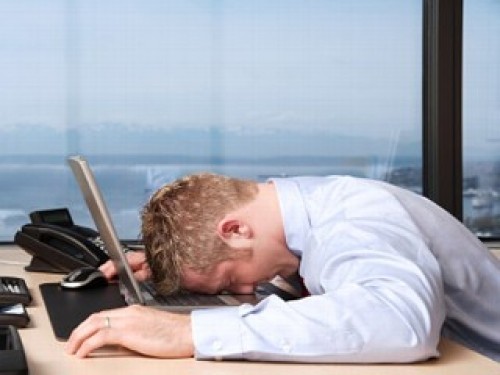
Eating less late at night may help curb the concentration and alertness deficits that accompany sleep deprivation, according to results of a new study from researchers at the Perelman School of Medicine at the University of Pennsylvania that will be presented at SLEEP 2015, the 29th annual meeting of the Associated Professional Sleep Societies LLC.
"Adults consume approximately 500 additional calories during late-night hours when they are sleep restricted," said the study's senior author David F. Dinges, PhD, director of the Unit for Experimental Psychiatry and chief of the division of Sleep and Chronobiology. "Our research found that refraining from late-night calories helps prevent some of the decline those individuals may otherwise experience in neurobehavioral performance during sleep restriction."
The study gave 44 subjects, ages 21 to 50, unlimited access to food and drink during the day, followed by only four hours of sleep each night for three nights. On the fourth night, 20 participants received continued access to food and drinks, while the 24 others were allowed only to consume water from 10:00 p.m. until they went to sleep at 4:00 a.m.
At 2 a.m. each night, all subjects completed a variety of tests to measure their working memory, cognitive skills, sleepiness, stress level and mood.
During the fourth night, subjects who fasted performed better on reaction time and attention lapses than subjects who had eaten during those late-night hours. In addition, subjects who ate showed significantly slower reaction times and more attention lapses on the fourth night of sleep restriction compared to the first three nights whereas study subjects who had fasted did not show this performance decline.
While countless studies associate numerous physical and mental health benefits with a healthy night's sleep, the Centers for Disease Control Prevention reports that "insufficient sleep is a public health epidemic" in the United States, including the estimated 50 to 70 million U.S. adults suffering from sleep and wakefulness disorders.
The new study results serve as a book end to other research on the links between eating and sleep deprivation. A 2013 study from the same Penn team found that individuals with late bedtimes and chronic sleep restriction may be more susceptible to weight gain due to the increased consumption of calories during late-night hours.
The research team also includes Andrea Spaeth, PhD, and Namni Goel, PhD.
The study was supported by the National Institutes of Health (R01 NR004281, F31 AG044102); the Penn Clinical and Translational Research Center (UL1RR024134); and the Department of the Navy, Office of Naval Research (Award No. N00014-11-1-0361).
In a related study (Abstract #0332), the same team of Goel, Spaeth and Dinges, found that adults who are chronically sleep restricted may need to compensate for decreased morning resting metabolic rate by reducing caloric intake or increasing physical activity to prevent weight gain. That research was led by senior author Namni Goel, PhD, a research associate professor of psychology in Psychiatry and the Unit for Experimental Psychiatry.
"Short sleep duration is a significant risk factor for weight gain and obesity, particularly in African Americans and men," Goel said. "This research suggests that reducing the number of calories consumed can help prevent that weight gain and some of the health issues associated with obesity in Caucasians and particularly in African Americans."
The NIH reports that 69 percent of U.S. adults are overweight or obese. Being overweight or obese increases your risk of coronary heart disease, high blood pressure, stroke, type 2 diabetes, cancer, sleep apnea, and other health problems.
In the study, 36 healthy adults, ages 21 to 50, slept for their usual amount for two nights. Next, they spent four hours in bed each night for five nights, followed by one night of 12 hours of recovery sleep. The control group of 11 subjects received 10 hours in bed each night for six nights. Resting metabolic rate, or measure of the amount of energy used in a relaxed condition, and respiratory quotient, or the ratio of the volume of carbon dioxide to oxygen used in a time period, were measured after overnight fasting.
In the experimental group, resting metabolic rate decreased after five nights of sleep restriction and returned to baseline levels after recovery sleep. No changes in resting metabolic rate were observed in control subjects. In the experimental group, African Americans exhibited comparable daily caloric intake relative to Caucasians, but a lower resting metabolic rate and higher respiratory quotient.
Read more here


Wednesday, March 11, 2015

Is my iPad disrupting my sleep?

This article explains how an iPad can disrupt a person's sleep.

Using an iPad or other backlit electronic tablet in the hours before bedtime not only prevents you from falling asleep, it may also affect your alertness the next day, according to a report published in the Proceedings of the National Academy of Sciences, Dec. 22, 2014. Researchers at Harvard-affiliated Brigham and Women’s Hospital found that the light emitted by the devices reset the body’s circadian clock, which synchronizes the daily rhythm of sleep to daylight. As a result, people reading e-books took longer to fall asleep and were less alert the next morning than when they read print books instead.

During the two-week study, 12 men and women read digital books on an iPad for four hours before bedtime each night for five consecutive nights. They also followed the same routine using printed books. When they read the iPad, participants were less sleepy before bedtime but were less alert the following morning, even after eight hours of sleep.

If you’re a bedtime reader who’s addicted to her iPad, don’t despair. The researchers used a 2010
iPad set at maximum brightness. Newer iPads and other e-readers have night-reading modes.

Read more here

Friday, August 22, 2014

Medications for shift workers show little effectiveness

A review of medications shift workers take both for alertness and to help them sleep have little effectiveness.

Shift workers are taking drugs to help them stay awake or get to sleep despite weak evidence for their benefit, according to a new Cochrane review. The authors of the review found only small numbers of trials testing over-the-counter and prescription drugs used by shift workers, and the results suggest that for some people they might do more harm than good.

In most developed countries, at least 10% of the workforce is involved in some form of shift work. European statistics suggest that as many as three quarters of the population have 'non-standard' working hours. Disturbances to normal sleeping and waking patterns increase the risk of accidents and affect shift workers' health. It is therefore important to avoid shift work where possible and improve shift work schedules to help shift workers achieve more normal sleeping and waking patterns. In jobs where shift work cannot be avoided, such as health care, the police force or the military, drugs can potentially offer short-term benefits.
The review included 15 trials involving a total of 718 people. In nine trials, the over-the- counter hormone drug melatonin helped shift workers sleep for around 24 minutes longer during the night or day, compared to placebos. However, it did not help them get to sleep any quicker. Data from only one trial of the hypnotic drug zoplicone was available. The drug was no more effective than placebos for helping shift workers sleep during the day.
The remaining trials focused on caffeine and two drugs, modafinil and armodafinil, that are prescribed for sleepiness during night shifts. In one trial, caffeine reduced sleepiness during night shifts, when workers also napped before shifts. Modafinil and armodafinil, used by shift workers in one and two trials respectively, increased alertness and reduced sleepiness. However, they also caused headaches, nausea and a rise in blood pressure in a substantial number of people. Due to the limited benefits and frequent side effects, neither of these drugs is approved for shift workers in Europe.
"For lots of people who do shift work, it would be really useful if they could take a pill that would help them go to sleep or stay awake at the right time," said lead author of the review, Juha Liira, who is based at the Finnish Institute of Occupational Health in Helsinki, Finland. "But from what we have seen in our review, there isn't good evidence that these drugs can be considered for more than temporary use and some may have quite serious side effects."
Most of the data reported in the review was from small, low quality trials. In addition, trials tended to be carried out in specific settings, such as health care or oil rigs, so their results may be less relevant for workers in other types of roles.
"It's curious that there's such a clear gap in the research," said Liira. "It may well be that studying the effects of these drugs or others drugs in properly designed trials would be seen as unethical because workers should not need drugs to get along with their work. So the studies just haven't been done or if they have, our review has not been able to identify relevant data."
Read more here

Sunday, December 16, 2012

More sleep could mean less pain. But what about quality sleep?

A study claims that getting more sleep each night could reduce a person's sensitivity to pain.

In fact, its also the quality and depth of sleep that is also important. I often see patients with fibromylagia or other painful conditions who improve vastly with better sleep.

JR

A new study suggests that extending nightly sleep in mildly sleepy, healthy adults increases daytime alertness and reduces pain sensitivity.

"Our results suggest the importance of adequate sleep in various chronic pain conditions or in preparation for elective surgical procedures," said Timothy Roehrs, PhD, the study's principal investigator and lead author. "We were surprised by the magnitude of the reduction in pain sensitivity, when compared to the reduction produced by taking codeine."
The study, appearing in the December issue of the journalSLEEP, involved 18 healthy, pain-free, sleepy volunteers. They were randomly assigned to four nights of either maintaining their habitual sleep time or extending their sleep time by spending 10 hours in bed per night. Objective daytime sleepiness was measured using the multiple sleep latency test (MSLT), and pain sensitivity was assessed using a radiant heat stimulus.
Results show that the extended sleep group slept 1.8 hours more per night than the habitual sleep group. This nightly increase in sleep time during the four experimental nights was correlated with increased daytime alertness, which was associated with less pain sensitivity.
In the extended sleep group, the length of time before participants removed their finger from a radiant heat source increased by 25 percent, reflecting a reduction in pain sensitivity. The authors report that the magnitude of this increase in finger withdrawal latency is greater than the effect found in a previous study of 60 mg of codeine.
According to the authors, this is the first study to show that extended sleep in mildly, chronically sleep deprived volunteers reduces their pain sensitivity. The results, combined with data from previous research, suggest that increased pain sensitivity in sleepy individuals is the result of their underlying sleepiness.
Read more here