Showing posts with label naps. Show all posts

Monday, June 01, 2015

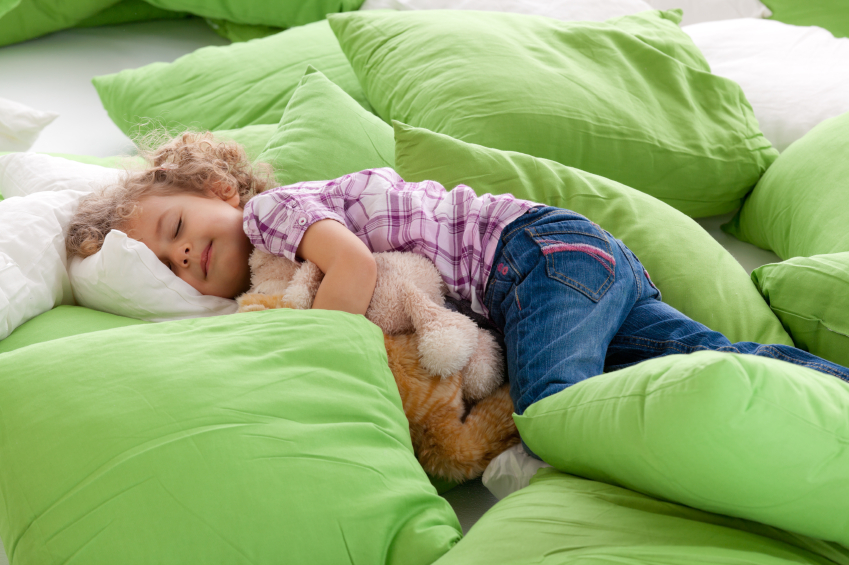
Naps may mean worse sleep in children

A study out of Australia shows that napping may be tied to children getting worse quality sleep.

New research has raised questions about something that's common practice in 80 per cent of Queensland childcare centers.
The Sleep in Early Childhood Research group found children exposed to more than an hour of forced napping at centers slept worse at night, even when they started school a year later.
Lead researcher Dr. Sally Staton, from the Queensland University of Technology, said childcare providers needed to question whether mandatory nap times were appropriate.
"Certainly we're not suggesting that sleep time is not an important component or providing for sleep is not an important component," she said.
"But certainly (they need to be) thinking about whether mandatory sleep times, in particular really long mandatory sleep times, are actually the most appropriate way of meeting sleep needs, particularly for these pre-school aged children where their needs are so diverse."
Dr. Staton said another recent study found children had grown out of napping by the time they were three or four years old.
Federal legislation calls for centers to cater to the individual sleep needs of all their students but there is limited guidance about what exactly that means.
In practice, Dr. Staton's previous research found about 80 per cent of centers enforced mandatory nap times, where children were forced to lie on their sleeping mat without access to any other activities.
Those sleep periods could be as long as two and a half hours but were about an hour on average.
But the study, to be published in the US-based Journal of Developmental and Behavioral Pediatrics next month, found even in long mandatory nap periods only half of the children actually slept.
The QUT research fellow's study of 168 children across 130 services, which were selected from a larger representative study, found children exposed to mandatory napping slept an average of 24 minutes less at night.
"I guess what's particularly concerning is when we got to the second year of the study, so once the children were in school, they were getting less sleep overall," Dr. Staton said.
"So their total sleep was less, probably because now they weren't napping and the amount of sleep they were getting was actually dropping below what we could consider the normal range for children of that age group."
Australian Childcare Alliance CEO Gwynn Bridge disputed the 80 per cent figure, saying most centers gave children options to cater for their individual needs.
"Most of them are encouraged to read a book or they can lay next to their friend and have a chat," she said.
"A lot in the older groups aren't even putting mats out now.
"[For] the children who want to sleep and the ones the educators know will sleep mats will be offered, but it's certainly not the case where every child must sleep for an hour and a half."
Read more here

Saturday, February 28, 2015

At what age should a child stop napping?

This article discusses at what age a child should stop napping.

Whether you’re a helicopter, free-range, or pro-attachment parent, one thing most moms and dads can agree upon is that young kids need daily naps. But that blessed hour or so of peace and quiet may not actually be such a great thing, according to a new report. 
The study, published online Sunday in the Archives of Disease in Childhood by lead author Karen Thorpe of Queensland University of Technology, posits that daytime snoozing after the age of two can actually have a negative impact on kids’ nighttime sleep. Researchers arrived at their findings after analyzing 26 studies to assess “evidence regarding the effects of napping” on child development and health. 
“The evidence suggests that beyond the age of 2, when cessation of napping becomes more common, daytime sleep is associated with shorter and more disrupted night sleep,” Thorpe, a professor in development science, told Today. In other words, so much for that “sleep begets sleep” mantra.

Just keep in mind that “as children will crawl, walk and talk at different times, so too will sleep patterns differ for each child,” Thorpe tells Yahoo Parenting. “The age of cessation of napping varies considerably for individual children typically between 2 and 5 years and likely reflects individual differences in development.” What this study suggests she explains “is that is important for parents to respond to their individual sleep need.”
Two is a pivotal age for sleep, Heidi Connolly,  M.D., director of pediatric sleep medicine services at the University of Rochester Medical Center’s Pediatric Sleep Disorders Center tells Yahoo Parenting, but that’s because “around two is when most toddlers stop napping twice a day and consolidate to once a day,” not because napping becomes a negative practice for all kids at that age. “There are still a lot of kids who nap at age 4 and 5.” 
The aim for children under five should be to get between 11 and 14 hours of shuteye during a 24-hour period, she says, also acknowledging that “the more a child is sleeping during the day, the less they need to sleep at night.” 
To determine if a child of any age needs a nap, observe how they behave in the morning. “If he doesn’t wake up on his own, or is very hard to wake up, he isn’t getting enough sleep and likely needs a daytime nap,” she says. Likewise, if he’s having afternoon meltdowns on daily basis, he may need naps. “But if he’s functioning fine during the day and chipper in the morning, a nap just is not needed,” says Connolly. 
For the restless snoozers, Connolly says to first consider whether a nap is needed, then change behaviors around bed- and naptimes to help kids become better sleepers. For example, establish consistent evening routines and a cool, quiet, dark environment for optimal shuteye. Without help, “Some kids are just good sleepers,” she says, “and some just aren’t, regardless of their age.” 
Read more here

Wednesday, February 11, 2015

Tips to beat insomnia

This article gives 10 tips to help you beat insomnia.

Insomnia is the inability to get enough sleep needed to wake up feeling refreshed and well-rested.  Millions of people are suffering from this sleeping disorder.   You can cure insomnia without the additional cost of medication with just little changes in your lifestyle.
  1. What you drink and eat before bedtime are also factors that can induce insomnia.  Cut down on alcohol, and do not eat heavy meals before bedtime.  Stick to light snacks and chamomile tea.Cut the caffeine – caffeine is a stimulant.  Cut down on other drinks and foods that have caffeine also, like sodas, teas, and tiramisus.  Coffee should be drank in the morning or at least eight hours before sleep.
  2. Keep a quite, dark, and cool bedroom – an uncomfortable sleeping area will not induce sleep. Noise, light, and heat interfere with sleep.
  3. The bed is for sleeping and sex – train your brain and body that the bed is for sleeping and sex. Doing office work and reading in bed is a no-no.  The goal is to associate the bed with relaxation and sleep.  Avoid watching TV while lying down in bed, watching TV stimulates your brain to think.  It may make your eyes tired, but the brain is busy converting images to thoughts.  Better yet, transfer the TV to the living room.
  4. Avoid naps – try hard not to get that super nap in the afternoon. Naps disrupts sleep at night.  If you really can’t avoid it, limit it to 30 minutes before 3 pm.
  5. Quit Smoking – nicotine, like caffeine, is a stimulant. The more you smoke, the more awake you’ll be.  Aside from the hazards of smoking, quitting will do wonders on your sleeping habits.
  6. Change the way you think about insomnia – self-defeating thoughts help fuel insomnia. Think positive.  Instead of thoughts like “It’s the same every night,  another night of misery’, think this way instead “This does not every nught, some nights I get enough rest.”  Don’t worry too much, quit this mental habit.
  7. Do away with stressful situations before bedtime – avoid heated discussions, heavy mental activities, even strenious activities before bedtime. Try some relaxing activities instead, listening to soft music with keeping the lights low will help in relaxing the brain.
  8. Ban Blue Light in the bedroom – Short waves from blue light interferes with sleep. Use devices that have blue light an hour before going to sleep.  This includes TV, cellphones, and digital clocks.
  9. Fat or Flat – not the body types, this refers to pillows. The discomfort you give your necks affects the quality of sleep, aside from having a sore neck upon waking up.  Pillows should be just the right size.  Side sleepers should have their nose align with the center of the body while sleeping.  Stomach sleeping should be avoided as this cranes the neck.
  10. Control your body clock – go to sleep and wake up around the same time daily, irregardless if its a holiday or a weekend the next day. Our bodies have biological clocks and it is light regulated.  Try getting a ray of sunshine the minute you wake up, for 5 to 30 minutes.
Read more here

Thursday, September 04, 2014

Confused arousal associated with behavioral issues

Confused arousal or "sleep drunkenness," which is waking up in a state of confusion, is linked to other behavioral issues.

"Sleep drunkenness" is more common than previously thought, affecting about one in seven Americans, or 15 percent, according to a new study that looked at the sleeping habits of more than 19,000 adults.
Also called confusional arousal, the condition causes people to wake up in a confused state, not knowing where they are. In the most severe cases, they can injure themselves or others, explained lead researcher Dr. Maurice Ohayon, a professor of psychiatry at Stanford University School of Medicine.
"There was a case of a man on a ship who awoke in a confused state and fell off the deck to his death," Ohayon said.
In addition to such extreme cases, there have been cases where waking up in a confused state led to the person striking a bedmate. Most people can't remember the incident afterwards.
Ohayon noted that these episodes can occur even while taking a nap. "This happens to most people occasionally, like when you are jet-lagged," he said. The difference is that these episodes are frequent among those who suffer from confusional arousal, he noted.
Treatment for confusional arousal hinges on treating the other sleep problems patients have, Ohayon said. When these problems are treated, the condition often disappears.
Whether sleep drunkenness is its own condition or a symptom of other sleep problems is an ongoing debate, Ohayon noted.
The report was published in the Aug. 26 issue of the journal Neurology.
Dr. David Rye, a professor of neurology at Emory University in Atlanta, said, "Confusional arousals exist -- and are probably more common than we thought."
But, he added, "As in most epidemiological surveys, what is reported are associations, not causes and effects."
For the study, researchers interviewed more than 19,000 people aged 18 and older about their sleep habits and if they had experienced any symptoms of confusional arousal. They were also asked whether they had been diagnosed with a mental illness and about the medications they took.
The researchers found that 15 percent of the participants had a confusional arousal episode in the last year. Over half of those people said they had more than one episode per week.
In most cases -- 84 percent -- the study participants said in addition to sleep drunkenness, they had other sleep disorders, a mental health disorder or used psychotropic medications such as antidepressants. Less than 1 percent of those with sleep drunkenness didn't have another sleep problem, the researchers found.
Among those suffering from confusional arousal, 37 percent also had a mental health problem. Those with depression, bipolar disorder, alcoholism, panic or post-traumatic stress disorder and anxiety tended to be more likely to also have sleep drunkenness, the study authors noted.
Sleep drunkenness was also associated with sleeping too little or too much. About 20 percent of those who slept less than six hours a night and 15 percent of those who slept at least nine hours suffered from sleep drunkenness, the investigators found. In addition, people with sleep apnea were also more likely to have the problem.
Rye doesn't think the study pinpoints the most common problems associated with sleep drunkenness.
Confusional arousal is poorly defined, he said. "We need to know more about how to define and recognize those with the problem, how it negatively impacts patients' lives, how large is the unmet clinical need, and determine whether a doc should care about the complaint," Rye said.
Dr. Scott Krakower, assistant unit chief of psychiatry at Zucker Hillside Hospital in Glen Oaks, N.Y., said, "Many patients and doctors are not aware of what confusional arousals are. They can often be misinterpreted for other neurologic and psychiatric conditions."
Krakower noted that it is important to treat the underlying medical problem to avoid confusional arousals.
"In addition, staying on a proper sleep regimen is very important to prevent these premature arousals," he said.
Read more here

Thursday, January 30, 2014

Sleeping during the day can hurt your genes

This study shows that sleeping during the day can mess up a third or a person's genes.

Sleeping during the day -- a necessity for jet-lagged travelers and those who work overnight shifts -- disrupts the rhythms of about one-third of your genes, a new study suggests.
What's more, shifted sleep appears to disrupt gene activity even more than not getting enough sleep, according to the research.
For the new study, which was published in this week's issue of the journal Proceedings of the National Academy of Sciences, British researchers put 22 healthy, young volunteers in a dimly lit sleep lab for three days.
During the first day, they disrupted the participants' sleep at regular intervals to reset their body clock to its innate rhythm. On the second and third days, the volunteers ate and slept on a 28-hour schedule, so their longest period of sleep was from noon until about 6:30 p.m.
The researchers drew blood samples all three days so they could watch what happened to the timing of gene activity.
During the first day, when the body reset its circadian rhythm, nearly 1,400 genes -- about 6.4 percent of all genes that were analyzed -- were in sync with that rhythm. On the days of shifted sleep, however, the number of genes tied to the body's clock dropped dramatically, to 228 genes, or only 1 percent of genes analyzed.
The researchers estimated that the sleep disruptions would ultimately impact about a third of a person's genes.
That's an even greater disruption than scientists saw in a previous study when they tested the effects of sleep deprivation on gene activity. In that study, which had study volunteers sleeping about five and half hours each night, the number of genes that were in sync with the body's clock dropped from about 9 percent to 7 percent.
"These are quite fundamental processes that are being affected," said senior study author Derk-Jan Dijk, a professor of sleep and physiology at the University of Surrey, in the United Kingdom.
"We think that may be related to the negative health outcomes associated with long-term shift work," Dijk said. Shift workers are at higher risk for many health problems, including obesity, diabetes, high blood pressure, heart disease, disrupted menstrual cycles and cancer, he said.
This study didn't directly connect health problems and night-shift work, but experts said it does start to help them understand why sleep might have such a powerful influence on a person's health.
"This study suggests that mistimed sleep can alter circadian rhythms, so the cycling of many, many genes is impaired," said Dr. Mark Wu, assistant professor of neurology, medicine, genetic medicine and neuroscience at Johns Hopkins University. "What this could cause, they can't really say -- except it's probably not good." Wu was not involved in the new research.
Genes carry the instructions for making proteins. Proteins make up just about every kind of chemical signal, hormone and tissue in the body, the researchers said.
The timing of when proteins are made is important because their production should correspond to our behaviors, said Frank Scheer, a neuroscientist at Harvard and director of the Medical Chronobiology Program at Brigham and Women's Hospital in Boston.
When the body anticipates a meal, for example, the liver has to stop releasing into the blood the carbohydrates it has stored and the pancreas has to make more insulin, while the muscles have to become more sensitive to insulin that's released so they can take in blood sugar, Scheer said.
"If these processes are working in concert and they're synchronized to when you eat and when you fast, then the system is very efficient and effective at absorbing these sugars quickly and minimizing any adverse consequences of elevated blood sugar levels," Scheer said.
"If these are not rhythmic, then you can easily imagine that, during the nighttime, you have this machinery up and running without need," he said. "During the daytime, when you actually do need it, it's only running half speed."
Read more here

Tuesday, October 01, 2013

Preschoolers learn better with midday naps

Research shows that a midday nap helps preschool children retain what they learned that morning showing how important sleep is for learning and creating memories.

A midday nap can help pre-school children remember what they learned in the morning, according to a study by psychologists in the US.
The research suggests that carers and nurseries that phase out after-lunch sleeps may be harming children's ability to learn, by disrupting the way their brains store memories.
Pre-schoolers who went without a midday sleep fared worse on memory tests than those who napped. They also failed to improve their scores even after a good night's sleep, the researchers found.
The findings highlight the crucial role of sleep in consolidating memories, a process that underpins the brain's ability to learn new information.
The children who benefited most were "habitual nappers" who would sleep when carers encouraged them to, rather than more mature children who had outgrown the need for a nap.
For the study, psychologists went into pre-school classrooms and taught 40 children aged three to nearly five years old a simple computer game. It required them to memorize the positions on a grid of images including a cat, an umbrella, and a policeman. The children were trained from 10am until they could remember the positions of around 75% of the pictures.
The scientists visited each child twice over the course of the study. On one visit, the child slept for an hour or so between 1pm and 3pm, and stayed awake on the other. To see how sleep affected their memory, the scientists tested each child again later the same afternoon.
Those who napped saw no change in their morning score of 75%, but the ones who stayed awake fared much worse, averaging scores of 65%, according to a report in the Proceedings of the National Academy of Sciences.
"If they stayed awake they forgot more of the items they had remembered in the morning, whereas if they took a nap, they remembered all the items they had learned in the morning," said Rebecca Spencer at the University of Massachusetts in Amherst.
To check whether the nappers were simply more alert and attentive than the others, the scientists returned the next day and tested the children again. Their scores did not change, suggesting that daytime sleep was crucial.
Spencer said that parents and pre-schools are steadily cutting down the time given to children's naps to fit a convenient schedule, or to make more time for a curriculum.
"You often see children forced out of napping, and hopefully this will help parents and pre-schools to understand that maybe that's not the best decision, and that a nap is an important part of the day," said Spencer.
"This is the science that's needed to preserve nap time. If our goals are to prepare children for early education, the naps are consistent with that goal because it's really helping them to learn," she added.
The scientists went on to look at the brain activity of 14 children while they slept in the unversity's sleep lab. They found that children with the best memory recall experienced more "sleep spindles" – brief bursts of activity thought to happen when the brain shunts memories from short-term storage in the hippocampus to the neocortex.
"This demonstrates very vividly the value of sleep for consolidating memories. Very young children find it quite difficult to retain information over the course of a full day, so in those circumstances, a nap is going to be useful for ensuring that whatever they learn is retained in the longer term," said Gareth Gaskell, professor of psychology at York University.
"At these ages, children are shifting from multiple sleeps in 24 hours to a single sleep overnight. It may well be that non-habitual nappers are becoming more adult-like, and have got that little bit further in the process."
Read more here

Thursday, August 22, 2013

Ways to get children to sleep more

This article discusses why children may not be sleeping much and how to get them to sleep more.

Asking sleep experts for advice on how to put children to bed often feels like an exercise in futility. The standard tips are banal and predictable: avoid caffeine; remove the TV from their bedroom; don’t sleep on a full stomach; put up dark blinds. You have the feeling the experts are holding out on us—there has to be something more. And there is. Here’s the stuff they’d love to tell you, if they weren’t afraid of overwhelming you with science.
• Ever wonder why most people sleep better when their bedrooms are cool? It’s because the circadian rhythm system that helps regulate sleep cycles is not just light sensitive, it’s temperature sensitive. Anything above a neutral air temperature both slows the body’s initiation of sleep and changes sleep patterns—a hotter room means an increase in non-REM sleep.
• 77 percent of children use television as part of their pre-bedtime routine. Sitting still and vegging out for half an hour should, theoretically, help a child unwind, as long as they’re not watching a show that excites them too much. However, the brightness of the screen undermines the theory. The light from a television or computer can delay both the necessary drop in core body temperature and melatonin production—and thus delaying sleep onset—by two hours.
• We’re all familiar with the agony of being super exhausted, yet not being able to fall asleep for hours. What gives? It’s because after just a few days of shortened sleep, the brain starts making extra stress hormone cortisol. It takes six times as long for this stress hormone to drop to a low-enough level that sleep is possible.
• In one study of 170 children, those in white-collar families tended to be in bed later and get up earlier than those in working-class families. Yet they actually got more actual sleep. How is that possible? It’s because their bedtimes and wake-times were more consistent; they stuck to their routine. This made their sleep more efficient—they rolled around in bed far less.
• Inconsistent bedtimes are, for all practical purposes, homemade jet lag—the desynchronization of the two systems that regulate sleep, the circadian rhythm and the homeostatic pressure system. Staying up three hours later on weekends is equivalent to flying across three time zones every weekend.
• With children averaging three hours of television per day, it’s hard to make the case children are universally overscheduled. But the most driven children are the most overscheduled—and the most sleep deprived. In some ways, these busy overachievers are those who concern the experts the most. According to University of Minnesota’s Dr. Kyla Wahlstrom, a motivated student can sacrifice sleep to maintain high GPAs, but she may pay for that success with higher levels of depression and stress. Teen boys who have a high number of extracurriculars are significantly more likely to be involved in a fall-asleep car crash. And those with part-time jobs both sleep less and have lower grades.
• For the majority of kids, rather than thinking it’s a choice between sleep and activities, the opposite is true: Students who sleep more are involved in more afterschool activities—with no detriment to their grades. They have the energy to be involved. Schools that have delayed start times have seen their students sleep more and increase their participation in sports and extracurriculars.
• Naps are not quite the salve we imagine. They appease the homeostatic pressure system, but not the circadian. You wake up feeling better—a two-hour nap is equivalent to 150 mg of caffeine—but naps do nothing to repair diminished cognitive functioning. The intellect is just as dulled after the nap as before. Kindergartners who take long naps, for instance, do worse on puzzle-solving.
• 16 percent of kids snore a few times a week. As recently as 2002, the American Academy of Pediatrics opined that children’s snoring was a benign condition not warranting treatment. Just five years later, researchers now caution that kids’ snoring is not like adult snoring at all—even a little snoring is a major cause for concern, because their developing brains can be deprived of oxygen.
• Common sleep disorders such as nightmares, restless leg syndrome, and frequent night waking can have a startlingly negative impact on children’s development—from using drugs at 14 to having clinical-level anxiety as adults. Research by University of Michigan’s Dr. Ronald Chervin indicates as many as 25 percent of kids diagnosed with ADHD have an underlying sleep disorder causing their symptoms. If treated for their sleep disorder, the ADHD would magically disappear. Despite the risks posed by sleep disturbance, the number of children treated for them is “vanishingly small.” Parents should consult a qualified sleep specialist—few pediatricians have expertise with sleep problems. Waiting to see if a child grows out of a sleep problem isn’t the answer.

Read more here

Wednesday, August 21, 2013

Tips for getting kids on a sleep schedule after summer

With summer vacation ending, it is important to get children back on a regular sleep schedule. This article discusses seven tips to effectively get children on their sleep schedule.

Summer vacation is coming to an end. It’s now time to get back to school and to a regular bedtime.
And as the school year looms, parents are scrambling to get their kids accustomed to the new sleep schedule. Getting good quality and enough sleep is crucial for a child’s health and behavior, says Shalini Paruthi, M.D., assistant professor of pediatrics and a SLUCare sleep expert at Saint Louis University.
“If kids don’t go to sleep on time, they tend to wake up late and not be ready for bed on time the next night. Sleep deprivation can also cause them to lose focus and make more mistakes at school,” Paruthi said.
She offers some tips on how to get your kids to sleep at a regular time.
1. Sleep schedule: One of the most important parts of maintaining a proper sleep schedule is for parents to get their kids into a regular sleep schedule a week before school starts. “It takes time to change a child’s schedule, so it’s really important for parents to wake them up at their usual school time a few days before school starts,” Paruthi said, a pediatric sleep specialist at SSM Cardinal Glennon Children’s Medical Center.
2. Avoid naps: Once kids are up at their usual school time, parents should have activities lined up to keep them busy throughout the day, so they don’t nap during the day.
3. Put away electronics at least 30 minutes before bed: In this tech-savvy age, a lot of kids are used to playing games or watching videos on computers, tablets and smartphones. Paruthi says parents should minimize their child’s activity on these devices at least a half hour before bed time. “The light on the screen can inhibit the production of melatonin. Using electronic devices can stimulate brain activities, which can make it difficult to fall asleep.”
4. Wind down: Having a bedtime routine can help a child fall asleep. The goal is to do the same exact activities in the same order every night. Usually a 15-minute bedtime routine is ideal. “Taking a shower, changing into pajamas, brushing teeth and listening to a bedtime story are good bedtime routine activities. This helps the brain and body wind down from active to quiet, to help fall asleep. ”
5. Bedtime should not be used as a punishment: “Parents should avoid using bedtime as a punishment. For example if a parent sends their child to bed early as a punishment for bad behavior, the child may begin to develop a bad association with going to sleep. We want sleep to be a good, positive nightly experience,” she said.
6. Bedtime passes: “I need to go to the bathroom,” or “I’m scared,” are phrases some kids often use when stalling at bedtime. Paruthi suggests using the bedtime pass concept – two handmade decorated cards. Each night, at the time of lights out, the child is given two passes, which he or she can use each time they need to speak with a parent or get out of bed. If the child is able to keep one or both passes until morning, then each pass can be redeemed for an incentive. Great incentives include stickers or five minutes of extra TV time.
7. Be sure to treat underlying medical sleep disorders: “If a parent has tried all of the above and other ideas, and their child is still having difficulty falling asleep or has awakenings during the night, talk with your pediatrician or local pediatric sleep expert to determine if your child might have a sleep disorder. Two common, easily treatable sleep disorders are obstructive sleep apnea and restless legs syndrome.” Paruthi says.
Read more here