Showing posts with label deep sleep. Show all posts

Monday, July 07, 2014

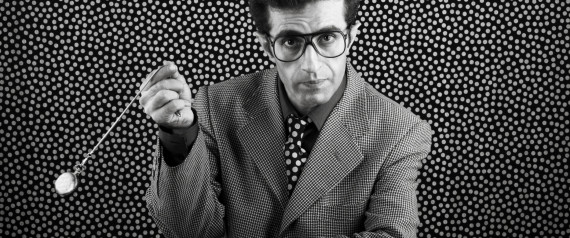
Hypnosis helps with deep sleep

Hypnosis may help people sleep more deeply.

A short session of hypnosis might lead to a better night's sleep, says a team of Swiss researchers.


After listening to a sleep-promoting audio tape containing hypnotic suggestion, women who are suggestible to hypnosis spent two-thirds less time awake, and about 80 percent more time in deep sleep compared to those who slept without the hypnotic suggestion.
"There have been many reports that hypnosis can be a good thing for promoting sleep," said study co-author Bjorn Rasch, a professor with the department of psychology in the division of biopsychology and methods at the University of Fribourg in Switzerland.
"However, usually they've been based on people just subjectively indicating how well they feel they've slept as a result," Rasch noted.
The new study is the first to assess via measures of brain-wave activity "the positive impact hypnosis has on deep sleep and to show that it is, in fact, real," he said.
At issue is the desire to boost so-called deep sleep, also known as slow-wave sleep.
This type of sleep "often correlates with the most restorative sleep -- it's a time for your brain to process and rejuvenate from the challenges of the day," explained Dr. Kim Hutchison, assistant professor of neurology and sleep medicine at the Oregon Health and Science University in Portland.
"Over the course of people's lives, with age, the amount of deep sleep drops off significantly. And by the time you're 50 or 60 you hardly have any, depending on the person," said Hutchison, who was not involved in the new research. "With age, non-refreshing sleep becomes a very common complaint, and one of the reasons can be not getting enough slow-wave sleep."
To explore how hypnotic suggestion might help improve deep sleep, the Swiss team enlisted 70 healthy Swiss women aged 18 to 35. All participated in a series of five in-laboratory experiments, successively staged once a week for five weeks.
None of the participants had any history of sleep trouble. None were taking any kind of sleep medication. Some of the women, however, were deemed (in pre-study testing) to be "highly suggestible" to hypnosis, while others were categorized as "low suggestible" patients.
For each experiment, the women were outfitted with electrodes to monitor brain-wave activity and sleep patterns.
While lying in a bed with the lights off, the women were exposed to varying audio tapes of about 13 minutes in length. Some provided a hypnotic suggestion to sleep deeper, while others were designed to be neutral in content.
The women were allowed to fall asleep during or after the audio feeds, and all were woken up after they had spent a total of 90 minutes napping.
Hypnosis did not improve sleep in those deemed low-suggestible to hypnosis, the study found. However, women in the highly suggestible group slept 67 percent more and saw their "deep sleep" time rise by roughly 80 percent following exposure to audio hypnosis.
Other phases of sleep did not appear to be affected by hypnotic suggestion. However, the team further observed that slow-wave activity during the deep sleep phase was "significantly enhanced" following hypnosis. This suggests that not only does hypnosis boost deep sleep quantity, it may also improve deep sleep quality.
The team acknowledged that the study only included female participants. This was by design because men have a tendency to be less suggestible to hypnosis overall. However, men who are highly suggestible would probably derive similar sleep benefits from hypnosis, Rasch's team said.
And given that roughly half the general population is believed to be moderately suggestible to hypnosis, the team concluded that hypnosis could ultimately prove to be a very useful -- and side-effect free -- way to help improve sleep.
"I have to emphasize that we did not focus on sleep-disorder patients," said Rasch. "These were all healthy people. So while our findings are really promising, we do not yet have proof that hypnosis will help people who suffer from sleep disturbances. I would say it would. But it's not yet proven," he added.
"Also, although the impact of hypnosis on suggestible people was really clear and, I would say, amazing, I do not think that hypnosis would ever completely replace the need for sleep medication for those who need it," Rasch said. "It could certainly reduce the need. But I don't expect miracles from hypnosis. It's a technique to consider. But in really strong cases of sleep disturbance a medical intervention might be necessary."
Hutchison believes hypnosis can play a role in helping some people sleep better.
"I have found hypnosis can be helpful, even for non-susceptible patients," she said. "Because it gives them something to focus on, and helps them to relax and quiet their mind before sleeping."
Hutchison added that "there's anecdotal evidence that the relaxation achieved can help improve sleep quality. In fact, I have been recommending sleep hypnosis phone apps for about the past five years."
Findings from the study were published this month in the journal Sleep.
Read more here

Wednesday, June 11, 2014

Hypnosis to help with sleeping problems

This article explains how hypnosis could help people with sleep problems.

Insomniacs and light sleepers alike might benefit from hypnosis to coax them into a deep sleep, suggests a new study published in the journal Sleep.
Researchers from the University of Zurich and Fribourg concluded that hypnosis can increase the quality of sleep, eliminating the need for medications the effects of which have long been questioned by the medical community.
"It opens up new, promising opportunities for improving the quality of sleep without drugs," says biopsychologist Björn Rasch, who headed the study at the Psychological Institute of the University of Zurich in conjunction with the Sleep and Learning project.
The study limited its participants to women, due to their increased susceptibility to hypnosis on average. A total of 70 healthy young women were divided into groups according to their susceptibility to hypnosis and invited to the sleep laboratory for a 90-minute midday nap.
The test group listened to 13 minutes of pre-recorded hypnosis before sleeping, and the control group listened to neutral dialogue over loudspeakers.
The most hypnotizable participants experienced an 80 per cent increase in slow wave sleep.
"The results may be of major importance for patients with sleep problems and for older adults," says psychologist and study leader Maren Cordi. "In contrast to many sleep-inducing drugs, hypnosis has no adverse side effects."
The findings indicate that even healthy individuals with a delayed circadian preference could further increase their health by taking steps to get to sleep earlier.
Deep sleep is referred to in the scientific community as slow wave sleep (SWS) and is measured by the actual speed of the brainwaves.
It is understood to be the most restorative of the sleep phases, for during SWS growth hormones are secreted, promoting cell repair and stimulating the body's immune system.
Read more here

Why you shouldn't wake a sleepwalker

This article discusses sleep walking and why waking a sleep walker is not a good idea.

It’s a common belief that waking a sleepwalker can trigger a heart attack or cause them to go into shock – it won’t. The real problem is they’re likely to injure you.
“You shouldn’t touch or shout at an adult sleepwalker to wake them,” says Dr Zenobia Zaiwalla, a consultant neurophysiologist at John Radcliffe Hospital’s Sleep Disorder Centre in Oxford.
“But, not because it can harm their brain or anything like that.
“Trying to wake a sleepwalker can alarm them, causing them to perceive you as a threat and lash out. The primitive part of the brain has been woken out of deep sleep, but the more conscious part stays asleep. This leads to people physically carrying out what’s being processed in their brain.
“Unless they’re somewhere where they might injure themselves, sleepwalking isn’t going to do any harm.
“You should go along with whatever they’re doing, speak to them gently and persuade them to go back to bed, avoiding physical contact.
“It’s different for children. If you put them back to bed without waking them, they’re more likely to have another incident because they spend longer in deep sleep. Instead, guide them to bed, then wake them.”
Read more here

Sunday, August 04, 2013

The moon may be causing you to not sleep well

A recent publication claims that people get worse sleep when there is a full moon.

Many people complain about poor sleep around the full moon, and now a report appearing in Current Biology, a Cell Press publication, on July 25 offers some of the first convincing scientific evidence to suggest that this really is true. The findings add to evidence that humans -- despite the comforts of our civilized world -- still respond to the geophysical rhythms of the moon, driven by a circalunar clock.
"The lunar cycle seems to influence human sleep, even when one does not 'see' the moon and is not aware of the actual moon phase," says Christian Cajochen of the Psychiatric Hospital of the University of Basel.
In the new study, the researchers studied 33 volunteers in two age groups in the lab while they slept. Their brain patterns were monitored while sleeping, along with eye movements and hormone secretions.
The data show that around the full moon, brain activity related to deep sleep dropped by 30 percent. People also took five minutes longer to fall asleep, and they slept for twenty minutes less time overall. Study participants felt as though their sleep was poorer when the moon was full, and they showed diminished levels of melatonin, a hormone known to regulate sleep and wake cycles.
"This is the first reliable evidence that a lunar rhythm can modulate sleep structure in humans when measured under the highly controlled conditions of a circadian laboratory study protocol without time cues," the researchers say.
Cajochen adds that this circalunar rhythm might be a relic from a past in which the moon could have synchronized human behaviors for reproductive or other purposes, much as it does in other animals. Today, the moon's hold over us is usually masked by the influence of electrical lighting and other aspects of modern life.
The researchers say it would be interesting to look more deeply into the anatomical location of the circalunar clock and its molecular and neuronal underpinnings. And, they say, it could turn out that the moon has power over other aspects of our behavior as well, such as our cognitive performance and our moods.
Read more here

Wednesday, July 10, 2013

Study: Cause of Narcolepsy may have been discovered

Scientists believe that brain cells that produce histamine may be the key behind determining the cause of narcolepsy.

Scientists have found that an excess number of brain cells that produce the chemical histamine may play a key role in human narcolepsy - a disorder of the central nervous system characterised by uncontrollable periods of deep sleep.

Researchers at the University of California, Los Angeles Center for Sleep Research, in 2000, published findings showing that people suffering from narcolepsy had 90 per cent fewer neurons containing the neuropeptide hypocretin in their brains than healthy people.

Subsequent work by this group and others demonstrated that hypocretin is an arousing chemical that keeps us awake and elevates both mood and alertness; the death of hypocretin cells, the researchers said, helps explain the sleepiness of narcolepsy. But it has remained unclear what kills these cells.

Now, the same UCLA team has found that an excess of another brain cell type containing histamine may be the cause of the loss of hypocretin cells in human narcoleptics.

UCLA professor of psychiatry Jerome Siegel and colleagues reported in the journal Annals of Neurology that people with the disorder have nearly 65 per cent more brain cells containing the chemical histamine.

Their research suggests that this excess of histamine cells causes the loss of hypocretin cells in human narcoleptics.

Narcolepsy is a chronic neurological disorder caused by the brain`s inability to control sleep?wake cycles. It causes sudden bouts of sleep and is often accompanied by cataplexy, an abrupt loss of voluntary muscle tone that can cause a person to collapse.

For the study, researchers examined five narcoleptic brains and seven control brains from human cadavers. Prior to death, all the narcoleptics had been diagnosed by a sleep disorder center as having narcolepsy with cataplexy.

These brains were also compared with the brains of three narcoleptic mouse models and to the brains of narcoleptic dogs.

The researchers found that the humans with narcolepsy had an average of 64 per cent more histamine neurons. The team did not see an increased number of these cells in any of the animal models of narcolepsy.

"Humans and animals with narcolepsy share the same symptoms, but we did not see the histamine cell changes we saw in humans in the animal models we examined," said Siegel, senior author of the research.

"We know that narcolepsy in the animal models is caused by engineered genetic changes that block hypocretin function. However, in humans, we did not know why the hypocretin cells die. "Our current findings indicate that the increase of histamine cells that we see in human narcolepsy may cause the loss of hypocretin cells," he said. 

Read more here

Friday, September 14, 2012

Study Shows A Lack of Sleep May Affect When Kids Enter Puberty

A new study claims that the amount of deep sleep a child gets may help determine when they enter puberty.


Getting enough deep sleep may play an important role in determining when puberty begins.

In a small new study, adolescents ages 10 to 15 were examined while they slept for increases in luteinizing hormone, which triggers ovulation in females and stimulates the production of testosterone in males.

Previous research showed that luteinizing hormone levels increase dramatically before puberty, and that this increase occurs initially only at night. The new study found that most of the surges occurred during slow-wave sleep, or deep sleep, from which it is particularly hard to wake people up.

The findings "raise concerns that the disordered or restricted sleep that is increasingly prevalent in the adolescent population may compromise normal pubertal development," the researchers said.

Because the study, conducted at Massachusetts General Hospital in Boston, involved only nine participants, the researchers noted that more work would be needed to confirm the results.

The participants spent a night sleeping in a laboratory, and blood samples were collected through a catheter every 10 minutes. The blood samples were analyzed for levels of luteinizing hormone.

Participants experienced an average of four to six surges of luteinizing hormone during the night. Fifty-two percent of these surges began during deep sleep, the researchers said.

Participants initially had been recruited for a study on obstructive sleep apnea, but during the sleep study, they did not meet the criteria for the condition.

The study is to be published in an upcoming issue of theJournal of Clinical Endocrinology and Metabolism.

Read more here