Showing posts with label catching up on lost sleep. Show all posts

Wednesday, January 27, 2016

Sleeping in on weekends can lessen risk of diabetes

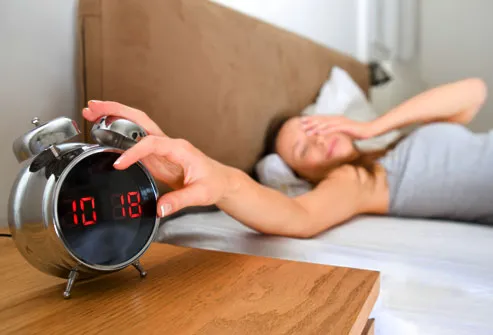
Sleeping in on weekends and playing "catch up" on lost sleep can lessen the risk of diabetes due to sleep deprivation.

Two consecutive nights of extended sleep, a typical weekend occurrence, appears to counteract the increased risk of diabetes associated with short-term sleep restriction during the work week, at least in lean, healthy, young men eating a controlled diet.
The finding, based on a study performed at the University of Chicago sleep laboratory published early online by the journal Diabetes Care, could affect large numbers of people who work long hours.
The pattern of cutting back on sleep during the work week followed by catching up on sleep over the weekend is common. Even short-term sleep restriction, with four or five hours of sleep per night, can increase the risk of developing diabetes by about 16 percent--comparable to the increase in risk caused by obesity.
"In this short-term study, we found that two long nights spent catching up on lost sleep can reverse the negative metabolic effects of four consecutive nights of restricted sleep," said study author Josiane Broussard, PhD, now an assistant research professor in the Department of Integrative Physiology at the University of Colorado, Boulder.
The researchers recruited 19 volunteers, all healthy young men. On one occasion, they were allowed to sleep normally, spending 8.5 hours in bed for four nights. On another occasion, the same volunteers were first sleep deprived, allowed only 4.5 hours in bed for four consecutive nights. They spent an average of 4.3 of those hours asleep each night. Subsequently, they were allowed 2 nights of extended sleep, during which they averaged 9.7 hours of sleep.
Investigators then determined the subjects' insulin sensitivity--the ability of insulin to regulate blood sugars--and the disposition index, a predictor of diabetes risk. After four nights of sleep restriction, the volunteers' insulin sensitivity decreased by 23 percent and their diabetes risk increased by 16 percent.
After two nights of extended sleep, however, insulin sensitivity and the risk of diabetes returned to normal sleep levels.
"The metabolic response to this extra sleep was very interesting and encouraging," said senior author Esra Tasali, MD, associate professor of medicine at the University of Chicago. "It shows that young, healthy people who sporadically fail to get sufficient sleep during the work week can reduce their diabetes risk if they catch up on sleep during the weekend."
"Though this is evidence that weekend catch-up sleep may help someone recover from a sleep-deprived week," Broussard said, "this was not a long-term study and our subjects went through this process only once. Going forward we intend to study the effects of extended weekend sleep schedules in people who repeatedly curtail their weekday sleep."
Increased risk of developing diabetes is not the only drawback associated with inadequate sleep, the authors point out. The volunteers in this study were given a calorie-controlled diet, but sleep-deprived adults outside the laboratory setting tend to eat more, with a strong preference for sweets and high-fat foods. Chronically sleep deprived people are more likely to develop other health problems such as increased inflammation and high blood pressure. They also show cognitive problems, tend to be less alert and have difficulty concentrating, reasoning and solving problems. They are prone to traffic accidents. The impact of extra weekend sleep on other adverse health and safety outcomes remains to be determined.
Read more here

Monday, October 21, 2013

Sleeping more on the weekends can make you more tired

This article claims that sleeping more on the weekends and catching up on sleep can make a person more tired.

A few extra hours of sleep in the weekend to make up for lost sleep during the work week isn’t going to help you reverse the effects of sleep deprivation, suggests an international study released this week.
Sleep experts in the UAE estimate that 20-30 per cent of the working population in the country complains of poor sleep quality.
The consequences of sleep deprivation are manifold.
Medical opinion states sleep deprivation could lead to impaired cognitive function, irritability, decreased libido, poor judgement, weight gain, fatigue, high blood pressure (hypertension), weakened immune system, and general low quality of life.
The international study on the “Effects of Recovery Sleep After One Workweek of Mild Sleep Restriction…” is published by American Physiological Society.
The study posits that recouping lost sleep of the work-week or “recovery sleep” does little to help the damage already caused by a sleep-restricted working days.
The US-based researchers led by Alexandros N. Vgontzas studied 30 volunteers on a 13-day schedule whose performance on the attention test didn’t improve after recovery sleep. Further their ability to pay attention deteriorated significantly after sleep restriction and did not improve after recovery.
Norma Cairns, Counselling Psychologist at the American Centre for Psychiatry and Neurology in Dubai told Gulf News, “Sleeping is a restorative process. It is recommended that we get seven to eight hours sleep per night in order to function well. Skipping out on a few hours each night during the work-week in the hope that it can be ‘made up for’ by sleeping longer at the weekend can be unhealthy in the longer term.”
She explained that the term “functioning well” means a person has good concentration, feels alert, enthusiastic, balanced and focused. She said balanced life style is a significant key to psychological well-being. A balanced life can be achieved by having a healthy routine in terms of sleep, nutrition and exercise alongside work.
She warned against oversleeping during the weekend as it can leave a person feeling more tired.
Speaking to Gulf News, Dr Emmad Kowatli, an American-board certified specialist in pulmonary medicine and sleep disorders, and director of the Sleep Centre at the American Hospital, Dubai said, “poor sleep is linked to medical conditions like hypertension (high blood pressure), stroke, sexual dysfunction, and heart failure and heart disease.”
“It is also associated with certain cancers, diabetes and high cholesterol. Any sleep disorder negatively impacts natural sleep cycle, affecting daily functioning. Activities like driving and overall performance is affected. Sleep deprivation causes drowsiness that can slow reaction time and is linked to motor vehicle crashes,” Dr Kowatli added.
Read more here

Friday, August 30, 2013

Can people "catch up" on lost sleep?

This article claims that the idea of "catch up" on lost sleep is a myth.

Has "catching up" on sleep as a means to get your body and mind back to normal after going for days without been scientifically proven ineffective?
TRUE: You may feel better, but your body and mind won’t be as sharp as if you regularly got enough
Many people try to "catch up" on an extra couple hours of rest following a busy, sleepless week. But a sleep specialist told MSN News that those extra hours of slumber aren't as effective as you think.
Kevin Taylor, director of the Sleep Disorder Center at Cullman Regional Medical Center in Alabama, said the physical and mental toll of missing out on sustained lack of sleep won't just go away after getting one full night's worth.
"You can smoke for 30 years and quit today. Will you prolong your life? Yes. Has the damage already been done? Yes. Same thing with sleep," he said. "You miss a night's sleep, the damage to your body is still done."
The Huffington Post reported on a recent study, published in the American Journal of Physiology — Endocrinology and Metabolism, that found sleeping in for three nights after six nights of deprivation won’t improve the sharpness of brain performance, which can affect reaction time during activities like driving or playing sports.
The study is one of several that have explored "sleep debt" — the mental and physical toll that occurs when you don’t get enough rest. Scientific American wrote: "A 2005 survey by the National Sleep Foundation reports that, on average, Americans sleep 6.9 hours per night — 6.8 hours during the week and 7.4 hours on the weekends. Generally, experts recommend eight hours of sleep per night … that means on average, we're losing one hour of sleep each night — more than two full weeks of slumber every year."
Taylor said that getting proper sleep means eliminating certain practices, including keeping the television on during bedtime and consuming caffeine late.
"You don't just want the hours, you want quality of sleep," he said. "You need to train your body that when you get in the bedroom, it's time to sleep."
Read more here