Showing posts with label autism treatment models. Show all posts

Wednesday, March 11, 2015

Persistent debunked autism fads

This study from Emory University discusses why debunked autism treatment fads continue to persist.

The communication struggles of children with autism spectrum disorder can drive parents and educators to try anything to understand their thoughts, needs and wants. Unfortunately, specialists in psychology and communication disorders do not always communicate the latest science so well.
These factors make the autism community especially vulnerable to interventions and "therapies" that have been thoroughly discredited, says Scott Lilienfeld, a psychologist at Emory University.
"Hope is a great thing, I'm a strong believer in it," Lilienfeld says. "But the false hope buoyed by discredited therapies can be cruel, and it may prevent people from trying an intervention that actually could deliver benefits."
Lilienfeld is lead author of a commentary, "The persistence of fad interventions in the face of negative scientific evidence: Facilitated communication for autism as a case example," recently published by the journal Evidence-Based Communication Assessment and Intervention. Co-authors of the commentary are Julia Marshall (also from Emory) and psychologists James Todd (from Eastern Michigan University), and Howard Shane (director of the Autism Language Program at Boston Children's Hospital).
The authors describe a litany of treatments for autism that have been attempted with little or no success over the years, including gluten- and casein-free diets, antifungal interventions, chelation therapy, magnetic shoe inserts, hyperbaric oxygen sessions, weighted vests, bleach enemas, sheep-stem-cell injections and many more.
As a case study, however, the article focuses on one intervention in particular: Facilitated Communication, or FC.
FC purports to allow previously nonverbal individuals with autism and related disorders to type by using a keyboard or letter pad. A facilitator offers support to the individual's arms, allowing him or her to type words and complete sentences.
Soon after its introduction into the United States in the early 1990s, however, FC was convincingly debunked. Studies overwhelmingly demonstrated that facilitators were unconsciously guiding the hands of individuals with autism toward the desired letters, much as individuals using a Ouija board unknowingly guide the planchette to certain numbers and letters.
"The emotional appeal of FC is very powerful and understandable," Lilienfeld says. "And no doubt the overwhelming majority of people who use FC are sincere and well-meaning. The problem is, it doesn't work."
In some cases, the authors note, FC has resurfaced with minor variations in the technique and a new name, such as "rapid prompting," or "supported typing."
By reviewing published surveys of practitioner use and canvassing the popular and academic literatures, Lilienfeld and his co-authors show that FC continues to be widely used and widely disseminated in much of the autism community despite its scientific refutation. They examine a number of potential reasons for the surprising persistence of FC and other autism fads. They note that the inherent difficulties in treating autism may give rise to an understandable desire for quick fixes of many kinds.
Lilienfeld and his colleagues underscore the pressing need for experts in the autism field to better educate the public about not only what works for the condition, but what does not.
Read more here

Saturday, November 08, 2014

Success of "Integrated Play Groups" for children with autism

This article explains how "Integrated Play Groups" where children interact with each other instead of with adults helps children with autism.

It's an often agonizing challenge facing any parent of a child with autism: How can I help my son or daughter socialize with his or her typically developing peers? The solution, SF State's Pamela Wolfberg found, may lie in a different type of playgroup that focuses on collaborative rather than adult-directed activities.
A new study shows that "Integrated Play Groups," or IPGs, developed by Wolfberg over several years, are effective in teaching children with autism the skills they need to interact with their peers and engage in symbolic play such as pretending. In IPGs, adults help children with autism and their typically developing peers engage in playful activities of mutual interest, but do not direct the play themselves. That sets them apart from more traditional interventions, according to Wolfberg, a professor of special education and communicative disorders.
"Children learn much better how to play through interactions with peers than they do from adults, because adults are not like children anymore," she said. "We can definitely have wonderful interactions with kids through play, and we should. But this is qualitatively different."
Wolfberg and her colleagues studied 48 children with autism during free-play activities, in which they did not know the other children, twice before and once after those same children participated in an Integrated Play Groups program with familiar peers. They found that, following the IPG intervention, the children's ability to interact with kids they did not know and to engage in pretend play had risen dramatically, indicating the IPGs were successful in providing them with transferable social and symbolic play skills.
Children with autism, according to Wolfberg, tend to have a "very restrictive play repertoire," in which they may have unusual interests and repeat the same activity, most often by themselves. The goal of Integrated Play Groups is to move children from engaging in lower levels of play, such as simply banging something, to engaging in more symbolic play that involves reciprocal interaction with peers.
"The earthquake-rescue theme is the most popular in San Francisco, and we had a little boy just like that, who had an affinity to bang things," she said. "So the kids came up with this idea of building cardboard blocks and having an earthquake, and he was the construction worker. He was able to participate in other kids' interest, build something more elaborate and have a whole fantasy about it."
The success of IPGs is an opportunity for parents, educators and therapists seeking to help children with autism in socializing with their peers. In addition, the IPG model also teaches typically developing children about autism and lets them learn how to form friendships with kids who might play, communicate or relate differently.
"This is what families want for their kids," added Wolfberg. "This flips around the idea that kids with autism are incapable of socializing or incapable of pretending. They have the same innate drive to participate with peers and to engage in playful experiences, but what has been happening is we have not been able to tap into their potential."
Future research will involve collaboration with assistant professor Betty Yu and graduate students to look more closely at how Integrated Play Groups can help children with autism better communicate with their typically developing peers, another challenge they face. Wolfberg also has been adapting the IPG model to be used in other countries, including Saudi Arabia, where she traveled this fall.
Read more here

Wednesday, December 25, 2013

New and odd ideas for treating autism symptoms.

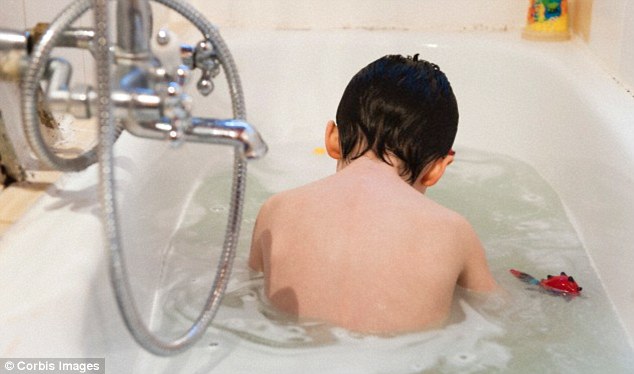
Fasten your seatbelt - new and unusual autism treatments (???): hot baths and worm eggs, were presented at a recent meeting  to help with autism symptoms. 

I was asked what I thought of these treatments... My impression, from a medical  standpoint is..."YIKES", "OMG" and "You are kidding, right?". 

It goes without saying, but Ill say it....I DO NOT recommend these therapies.   1) There does not seem to be biologic plausibility. 2) This is not nearly convincing data. 3) There may be dangers in these treatments (the picture of the child sitting alone in the bath is intended to be alarming).  

http://www.autism-watch.org/ is still a good site. 

Hardly a nihilist on therapeutics, I look forward to more data on effective treatments.    - JR

A new study shows that two unusual treatment approaches may have beneficial effects on the symptoms of autism in children and adults with the disorder. Using a hot bath to raise body temperature and thereby mimic the effects of infection, or using worm eggs to stimulate the production of immunoregulatory factors in the gut to diminish inflammatory signals, both attenuated symptoms of autism. These findings support the idea that disruption of systems in the body that control inflammation may contribute to the disorder. The study was presented at the American College of Neuropsychopharmacology (ACNP) Annual Meeting.
Approximately 1 in 88 children are afflicted with autism spectrum disorder (ASD). A prevailing hypothesis of ASD is that a hyperactive immune system, resulting in elevated levels of inflammation, may contribute to the disorder. Consistent with this possibility, it is known that approximately one third of those with ASD show a clinical improvement in symptoms in response to a fever.
In a new study led by Eric Hollander MD, a professor at Albert Einstein College of Medicine in New York, the effects of two novel treatment approaches that modify aspects of inflammation were tested on ASD symptoms.
First, as fever may trigger the release of protective anti-inflammatory signals in the body, the effects of raising body temperature to mimic fever on ASD symptoms were assessed. It was found that children with ASD and a history of positive behavioral response to fever had improved social behaviors when bathed each day in a hot tub at 102oF compared with water at 98 oF.
Second, using a more unusual approach, adults with ASD were treated for 12 weeks with Trichuris suis ova (TSO), which are the eggs of the worm helminth trichura (whip worm). This worm is safe in humans as it does not multiply in the host, is not transmittable by contact, and is cleared spontaneously. However, the worms can inhibit immune-mediated responses and diminish inflammation.
The subjects for this study were 10 high functioning ASD patients who were able to give informed consent and who had a history of allergies or a family history of immune-inflammatory illness. Patients were treated for 12 weeks with the worm eggs (2500 eggs every two weeks) but were also subjected to a 12 week placebo phase in a randomized order. It was found that adults with ASD had improvement in repetitive and ritualistic behaviors in response to treatment with the worm eggs.
This is not the first time that worm eggs have been used successfully to treat diseases, particularly immune-related diseases, in humans such as Crohn's Disease. As noted by Dr. Hollander, "TSO has been shown to improve various immune inflammatory illness by shifting the ratio of T regulator/T helper cells and their respective cytokines.."
The findings support the idea that inflammation may contribute to the symptoms of autism, at least in some individuals, and highlight novel treatment approaches. However, as noted by Dr. Hollander, the small sample size and unusual treatment approach means that caution should be exercised when interpreting the studies:
"Future studies in autism spectrum disorders are needed to replicate and expand these findings, and to study younger subjects with more severe irritability."
Nevertheless, the findings raise the intriguing possibility that approaches designed to module immune responses in ASD patients may be future treatment approaches for the disorder.
Read more here

Monday, December 02, 2013

Teaching children with Autism to turn their symptoms into strengths

This article looks at how some treat Autism symptoms by helping the child turn his or her symptoms into strengths.

A novel approach to treating children diagnosed with autism spectrum disorder could help them navigate their world by teaching them to turn their symptoms into strengths.
In the article "Symptoms as Solutions: Hypnosis and Biofeedback for Autonomic Regulation in Autism Spectrum Disorders," published in the winter edition of the American Journal of Clinical Hypnosis, Dr. Laurence Sugarman, a pediatrician and researcher at Rochester Institute of Technology, details a treatment method that teaches affected children how to control their psychophysiology and behavior using computerized biofeedback and clinical hypnosis.
The article coincides with the publication of the second edition of Sugarman's textbook, Therapeutic Hypnosis with Children and Adolescents, Crown House Publishing, 2013, written with William Wester.
Sugarman's model is tied to learning to self-regulate the autonomic nervous system -- including the fight or flight mechanism -- that, for many people with autism, is an engine idling on high.
"Teaching kids with autism spectrum disorder skills in turning down their fight or flight response and turning up the opposite may fundamentally allow them to be more socially engaging, decrease some of the need for cognitive rigidity and repetitive behaviors and, more importantly, allow them to feel better," says Sugarman, director of RIT's Center for Applied Psychophysiology and Self-regulation in the Institute for Health Sciences and Technology.
His treatment model underlies three ongoing projects at the center involving different age groups: teaching coping skills to RIT students with anxiety or autism; developing a computer-based role-playing game using autonomous biofeedback for teenagers; and creating a new service and research program for family members with autism for AutismUp (formerly Upstate New York Families for Effective Autism Treatment). The latter, called the Parent Effectiveness Program, began this fall and will repeat in the spring. The study trains parents of young children diagnosed with autism and measures results of their training on the behaviors of their affected children.
Sugarman developed his method in response to the rise in autism spectrum disorders he has witnessed in his 30 years working with children in primary care and, then, in developmental behavioral pediatrics at the Easter Seals Diagnostic and Treatment Center in Rochester. Instead of trying to change the symptoms associated with autism, his approach recognizes the symptoms as an effort to self-regulate inner turmoil.
The treatment integrates autonomic biofeedback and clinical hypnosis into his therapy. Sensors attached to his patients measure respiration, perspiration, heart rate and variation, and blood flow/circulation. Children with autism learn to correlate the signals and visual representations displayed on the computer screen (the "Dynamic Feedback Signal Set") with their emotions. During therapy sessions, the children practice changing their feedback response and learn to manipulate their own internal wiring. Sugarman uses clinical hypnosis to generalize and internalize feedback techniques -- discerning situations and controlling their responses -- into their daily lives.
Sugarman is a proponent of clinical hypnosis. He is the past-president of the American Board of Medical Hypnosis, the credentialing body for competency in clinical hypnosis for physicians in the United States. He also has a long association with the American Society of Clinical Hypnosis as an approved consultant, fellow in clinical hypnosis, past vice president and past co-director of education for the society.
"Hypnosis is a 250-year-old Western study of how social influence and internal physiology can be changed," he says. "Mindfulness is a slice of this."
Sugarman teaches pediatric hypnosis workshops around the world. This fall, he presented at the Regional Center for Child and Adolescent Psychiatry in Oslo, Norway, and the Milton Erickson Geselleschaft in Heidelberg, Germany. In Heidelberg, Sugarman also presented his treatment model and research using biofeedback and hypnosis with children with autism receiving "very affirmative responses."
"We think we can make a big difference for young people with autism spectrum disorder," Sugarman says. "The need is there."
Read more here

Sunday, July 28, 2013

Autism treatment found beneficial regardless of treatment model

A new study shows that children who receive early treatment for autism benefit regardless of the approach or treatment model used.

Researchers at the University of North Carolina at Chapel Hill have found that preschoolers with Autism Spectrum Disorder (ASD) who receive high-quality early intervention benefit developmentally regardless of the treatment model used -- a surprising result that may have important implications for special-education programs and school classrooms across the country.
"This is the first study designed to compare long-standing comprehensive treatment models for young children with ASD," said Brian Boyd, a fellow at UNC's Frank Porter Graham Child Development Institute (FPG) and one of the study's co-principal investigators. Boyd also is an assistant professor in occupational science and occupational therapy in UNC's School of Medicine.
"We know that more children are being diagnosed with ASD each year, and that it can cost an estimated $3.2 million to treat each child over a lifetime. Understanding that a child can benefit from a high-quality program, rather than a specialized program, may help reduce those costs by decreasing the need for teachers and other school practitioners to be trained to deliver multiple specialized services," Boyd said. He stressed it remains important to ensure educators are trained to provide high-quality programs that meet the special behavioral, communication and other needs of children with ASD.
Previous research has shown that when children with ASD have access to early intervention via treatment programs, they improve developmentally. Until now, however, debate has persisted over which approach to use, said Boyd. The study appeared in the June issue of Journal of Autism and Developmental Disorders.
Two frequently used comprehensive treatment models have a long history: LEAP (Learning Experiences and Alternative Program for Preschoolers and their Parents) and TEACCH (now known only by its acronym).
FPG's study examined the relative effects of the LEAP and TEACCH school-based comprehensive treatment models when compared to each other and to special-education programs that do not use a specific model. The multisite study took place only in high-quality classrooms and enrolled 74 teachers and 198 3- to 5-year-olds in public school districts.
The study found that children made gains over the school year regardless of the classroom's use of LEAP, TEACCH or no specific comprehensive treatment model. "Each group of children showed significant positive change in autism severity, communication and fine- motor skills," said Kara Hume, FPG scientist and co-author. "No statistically significant differences were found among models, which challenged our initial expectations -- and likely the field's."
"This study may shift the field's thinking about comprehensive treatment models designed for young children with ASD," said co-author Samuel L. Odom, FPG's director and the study's principal investigator. "Perhaps it's not the unique features of the models that most contribute to child gains but the common features of the models that most influence child growth."
Read more here